Bracelets are quietly one of the best-selling pieces in fine jewelry. They stack, they layer, they are affordable enough for a first luxury purchase, and they photograph beautifully on a wrist. But the word “gold bracelet” covers a huge range — from a delicate chain to a rigid diamond bangle — and the differences in cost, care and wearability are enormous. This guide walks through the main bracelet styles so buyers and retailers can choose with confidence.
The Four Main Bracelet Styles
Tennis Bracelets
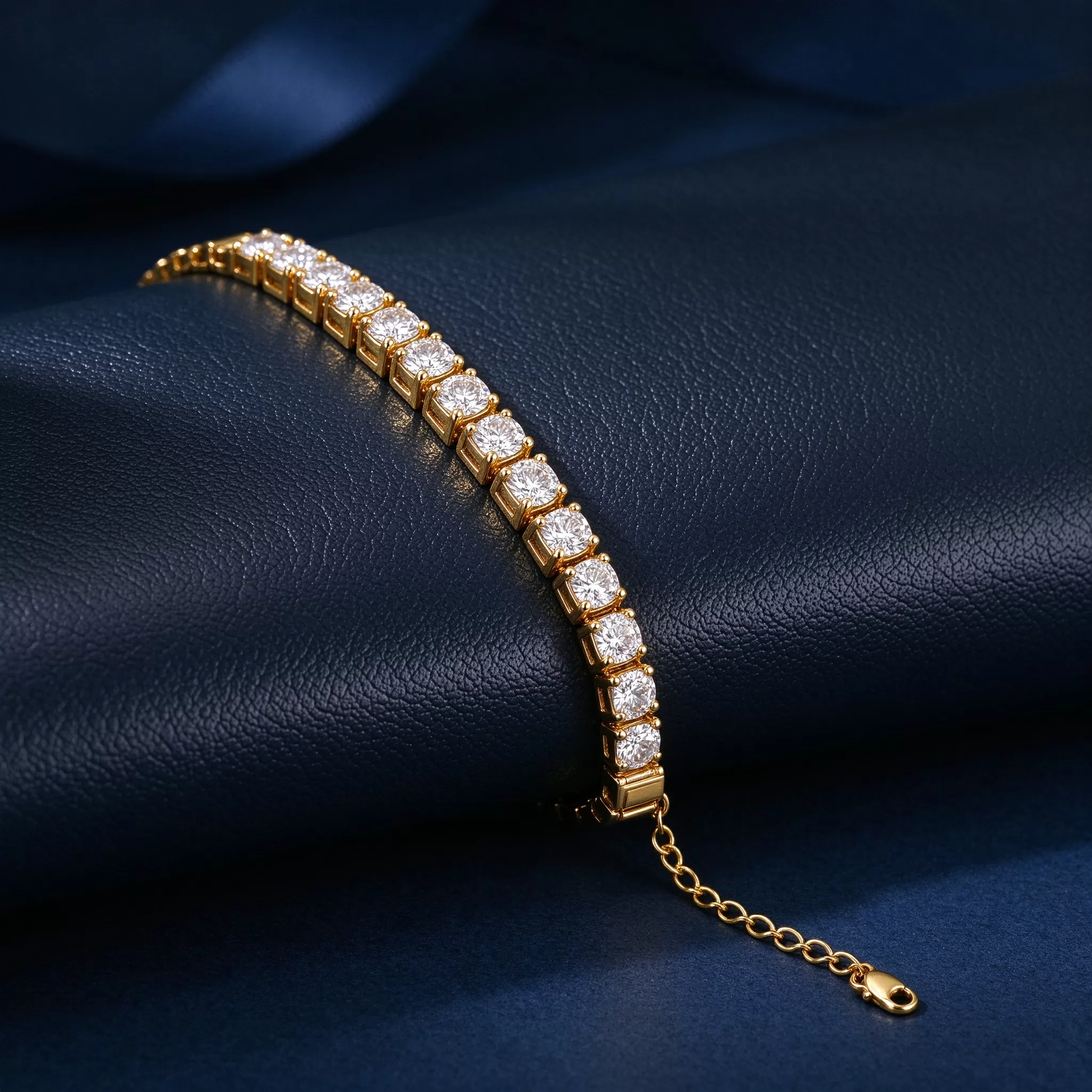
The tennis bracelet is a continuous line of diamonds or moissanite set in a flexible gold chain. It is elegant, versatile and the most formal bracelet style. Tennis bracelets are measured by total carat weight and wrist size, and they need a secure clasp because they wrap the wrist fully. They work alone as a statement or stacked with a watch.
Cuff Bracelets
A cuff is an open, rigid band that slips on from the side. It needs no clasp and is easy to take on and off. Cuffs range from thin and minimal to wide, sculptural statement pieces. Because they are rigid, sizing is forgiving — they fit most wrists within a range — but a poorly fitted cuff can spin around the wrist.
Chain Bracelets
Fine gold chains — cable, rope, figaro, curb — are the everyday workhorses. They are lightweight, affordable and layer effortlessly. Charm bracelets are a variation where personal charms attach over time. Chain bracelets are where most customers start their fine jewelry collection.
Bangles
Bangles are rigid, closed circles that slide over the hand. They stack beautifully and clink softly when you move. Because they are closed, sizing matters more — a bangle must pass over your knuckles but not slide off your hand.

Choosing the Right Karat and Metal
Bracelets take more knocks than rings — they bump desks, keyboards and doorframes. That makes durability a real consideration. 18K gold is rich in color but softer; 14K is harder and more scratch-resistant for very active wearers. White gold will need periodic rhodium replating, while yellow and rose gold age naturally. For a bracelet that survives daily office and gym life, a slightly lower karat or a sturdy chain construction pays off.
How Bracelet Sizing Works
The rule of thumb for most bracelets: you should be able to slip one finger between the bracelet and your wrist. Too tight and it digs; too loose and it slides over the hand and risks falling off. Tennis and chain bracelets fasten at a measured wrist length. Bangles need to pass over your knuckles — measure the widest part of your hand, not your wrist. When buying online, always check the retailer’s size guide and whether extension links are available.
Buying and Selling Bracelets for Profit
For retailers, bracelets are a margin-rich category because they sell in stacks. A customer who buys one tennis bracelet often returns for a chain and a bangle. Price tiers matter: carry an affordable entry-level chain, a mid-range diamond tennis bracelet, and a higher statement cuff so every budget has an option. Our gold bracelet collection spans all four styles, and our wholesale program helps retailers build a stacked bracelet wall that drives multiple-item sales.
Frequently Asked Questions
Can I shower with a gold bracelet? It is fine for solid gold, but take off diamond tennis bracelets to protect stones and clasp.
How tight should a tennis bracelet be? One finger of slack — it should not slide over your hand when unclasped.
Do bangles scratch easily? Gold bangles develop micro-scratches from clinking against each other; that patina is part of their look.
What is the most popular bracelet? The diamond or moissanite tennis bracelet consistently tops wishlists for gifting and self-purchase.
How Bracelet Metal and Karat Handle Daily Wear
Bracelets endure more punishment than rings. They bump desks, keyboards, door handles and handbags all day long, and they rub against whatever else is on the wrist. That makes metal choice a practical decision rather than a purely aesthetic one. 18K gold looks richest and most luxurious, but it is softer and will show scratches faster on a bracelet that takes constant knocks. Fourteen karat gold is slightly harder and more resistant to abrasion, which is why many everyday bracelets lean that way. White gold will need periodic rhodium replating; yellow and rose gold age naturally without coating.
For a tennis bracelet set with stones, the flexibility of the chain is a strength but also a weak point — links can open if roughly treated. A gold curb or cable chain bracelet is tougher than a diamond tennis bracelet for rough daily use. Match the bracelet to the wearer’s life: an office worker can enjoy a delicate 18K tennis bracelet; a hands-on worker is better served by a sturdier chain or a wider cuff. Our bracelet collection spans the full durability range, and we advise retail buyers on which styles suit which customer.
Bracelet Stacking Rules That Actually Work
Stacking bracelets is a skill, and the common mistake is piling identical thin bands together until the wrist looks crowded. The formula is contrast: one bold piece (a cuff or a diamond tennis bracelet), one medium chain, and one delicate charm or bangle. Vary the widths and textures so the eye moves. Leave a little bare skin between stacks — a wrist fully covered looks heavy. If you wear a watch, give it its own wrist or keep the bracelets on the other side. Done well, a stack looks collected over years; done badly, it looks costume. We share stacking photography with our wholesale partners so customers can see how the range layers.
Matching Bracelets to Your Lifestyle
The best bracelet is the one that fits how you actually live. If you work at a desk and want everyday sparkle, a slim tennis bracelet or fine chain works. If you are active, a sturdy curb chain or a wide cuff handles knocks better. If you want evening glamour, a diamond or moissanite tennis bracelet is the classic. Consider your daily routine before choosing: delicate pieces and active hands do not mix. When you match the bracelet to your lifestyle, you wear it constantly instead of storing it for rare occasions. Our range covers every lifestyle so you can choose the right fit.