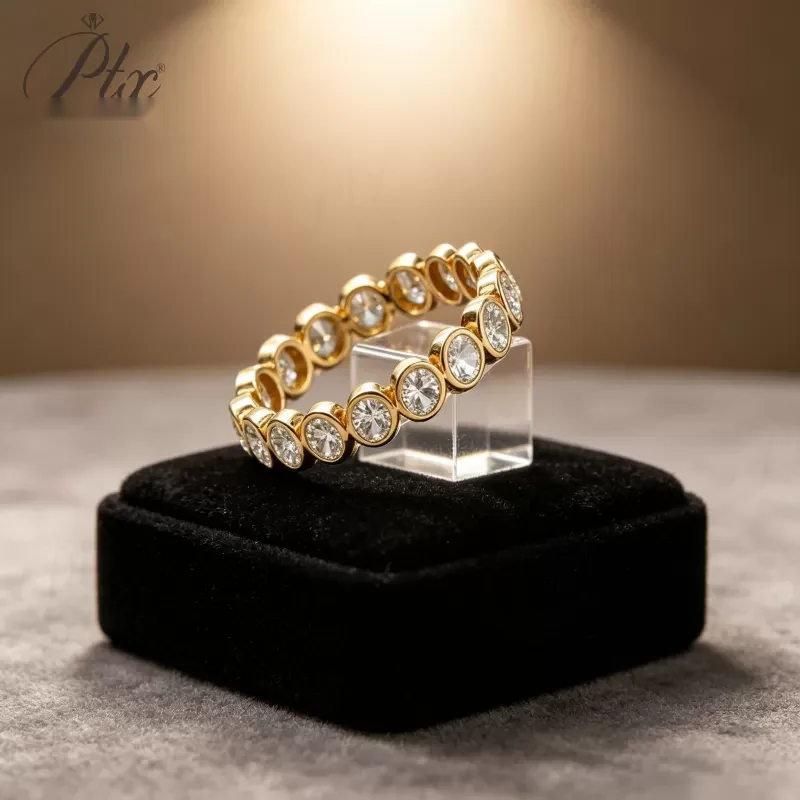
Choosing the right moissanite vendor is one of the most important business decisions a jewelry retailer, brand, or custom jeweler makes. Your supplier determines the quality of every stone you sell, the reliability of your delivery timelines, the consistency of your reorders, and ultimately the reputation of your brand with end customers. After working with over 480 jewelry businesses as their moissanite vendor since 2014, we have seen buyers make the same sourcing mistakes repeatedly—and we have seen what happens when they get their supplier relationship right. This guide walks through how to evaluate a moissanite vendor, what questions to ask before placing a bulk order, and how to structure a supplier partnership that supports long-term growth.
The global moissanite supply chain is concentrated in a small number of regions, with Wuzhou, China producing the vast majority of jewelry-grade moissanite for brands worldwide. Within that concentration, there is enormous variation in quality, reliability, and business practice. Some vendors are direct manufacturers with in-house crystal growth, cutting, and finished jewelry production. Others are trading companies or resellers who source from multiple factories and add a margin without adding value. Still others are small cutting shops that produce decent stones but lack quality control, certifications, or the capacity to scale with growing brands. Knowing which type of vendor you are dealing with—and verifying their claims—is essential.
Types of Moissanite Vendors in the Supply Chain
Before evaluating individual vendors, understand the different types of suppliers in the market and the tradeoffs of each:
| Vendor Type | Description | Typical Pricing | MOQ | Best For |
|---|---|---|---|---|
| Direct Integrated Manufacturer | Owns crystal growth, cutting, and jewelry production; full QC control | Lowest (factory direct) | 30–50 pcs | Brands scaling volume, consistent quality needs |
| Cutting Shop (Stones Only) | Specializes in cutting/polishing moissanite; no finished jewelry | Low for stones only | 50+ stones | Jewelers doing own settings, loose stone sellers |
| Trading Company / Reseller | Sources from multiple factories; adds QC, packaging, logistics | 15–35% markup | 10–30 pcs | Small buyers needing mixed inventory, language support |
| Domestic Distributor | Imports in bulk to USA/EU; stocks locally for fast shipping | 50–100% markup | 1–5 pcs | Immediate sample needs, emergency reorders |
| Private Label Brand | Rebranded moissanite with premium positioning (e.g. branded names) | Highest (3–10x factory) | 1 pce (retail) | Reference samples, quality benchmarking only |
Direct manufacturers offer the best combination of pricing, customization, quality control, and scale for serious jewelry businesses—but only if you can find one that communicates well in English, understands export requirements, and is willing to work with smaller brands (some large factories only accept orders of 1,000+ pieces). Trading companies are easier for beginners to work with and often offer more responsive English-language service, but you pay for that convenience. Domestic distributors are essential for emergency restocks but too expensive for regular inventory sourcing.
How to Vet a Moissanite Vendor
The following vetting process separates legitimate vendors from the trading companies and substandard producers that waste buyers' time and money:
1. Ask for Factory Photos and Video Walkthrough
A real manufacturer will have photos and video of their actual production facility—not stock photos from Alibaba. Ask for a video call tour of the cutting floor, setting benches, QC area, and packaging department. Trading companies will deflect or provide generic promotional content. We offer all prospective wholesale partners a live factory tour via video call so they can see our 2,800m² Wuzhou facility, meet our production team, and watch stones being cut and jewelry being made in real time.
2. Order Samples Before Bulk
Never place a bulk moissanite order without evaluating physical samples first. Even a vendor with excellent photos and promises can deliver stones that are poorly cut, tinted, or mis-matched. Order 3–5 stones or pieces across different sizes and grades, and evaluate them yourself under natural light, LED light, and 10x loupe. Pay attention to: whether the stones face up white in natural light, whether cut symmetry is consistent, whether girdles are properly finished (not chipped or frosted), and whether any clouding, inclusions, or tint are visible to the naked eye.
3. Verify Certification and Grading Consistency
Ask how the vendor grades moissanite color and clarity. Reliable vendors will have a documented grading system aligned to diamond standards (D-E-F, G-H-I, etc.) and will provide a grading report or certificate with stones over 0.5ct. Be wary of vendors who use vague terms like "white," "premium white," or "super white" without defined grade boundaries—this is a common tactic for shipping inconsistent material.
4. Check References and Reviews
Ask for 2–3 existing wholesale customers in your country or region who are willing to speak with you. A confident vendor will provide references. Also check independent platforms (Trade Assurance reviews on Alibaba, Trustpilot for Western-facing vendors, and jewelry industry forums) for feedback. Be cautious of vendors with only 5-star reviews that look manufactured, or with no verifiable track record at all.
5. Evaluate Communication Responsiveness
How quickly a vendor responds during the sales process predicts how they will handle problems during production. If it takes 5+ days to get a reply to a simple pre-sales question, imagine how long it will take to resolve a quality issue after you have paid. Our standard response time for wholesale inquiries is under 24 hours on business days, with a dedicated account manager for every active wholesale client.
Critical Questions to Ask Before Placing an Order
These are the questions we recommend every buyer ask before committing to a moissanite vendor:
- Are you a direct manufacturer or a trading company? Get a clear answer. If they claim to be a factory, verify during the video tour.
- Where is your crystal grown? Some vendors buy rough SiC from third-party crystal growers; others grow their own. Both models work, but you should know which you are dealing with.
- What is your defect rate, and what is your return/replacement policy? Reliable factories track defect rates and should be able to give you a number. Ours is under 0.2%.
- What grading scale do you use? Ask for a physical color master set or a grade reference chart.
- What are your standard lead times for loose stones vs. finished jewelry? Get this in writing. Lead times that sound too good to be true usually are.
- What are your payment terms for new customers vs. established accounts? New accounts are typically 30/70 (deposit/balance); established accounts may qualify for NET 30.
- Do you offer OEM/private label services? If building a brand is important, ensure the vendor supports custom packaging, laser engraving, and blind drop shipping.
- What shipping carriers do you use, and who covers customs/duties? Clarify Incoterms (most vendors ship DAP—you cover import duties; some offer DDP with duties included).
- Can you provide IGI or GIA-grade third-party reports for premium stones? Not all orders need third-party reports, but the vendor should be able to offer them.
- What happens if a stone or piece is defective? Clear replacement policy, who pays return shipping, and turnaround time for replacements.
Red Flags to Watch For
Certain warning signs indicate a moissanite vendor you should avoid:
- Prices 40%+ below market average for equivalent grades. These are either old-generation tinted moissanite, seconds/rejects from reputable factories, or outright scams taking payment without shipping.
- Refusal to provide samples before bulk orders, or requiring wire transfer to a personal bank account (as opposed to a corporate account or platform-protected payment system).
- Inconsistent grading: stones from the "same grade" look visibly different from parcel to parcel.
- No written terms, no invoice, no proforma documentation. Reputable vendors issue formal PI (proforma invoice) with all specifications, pricing, and terms documented.
- Pressure to place large orders immediately ("discount expires today," "only 2 spots left at this price"). Professional B2B vendors do not use high-pressure sales tactics.
- Unwillingness to do video calls or show the factory. Real factories have nothing to hide.
- High-pressure upselling to premium brands or proprietary "unique" moissanite types at 2–3x standard pricing. Most branded moissanite is the same SiC material produced in the same region, just rebranded at markup.
The FTC Jewelry Guides provide clear rules on material disclosure that apply to both vendors and retailers—ensure your vendor provides accurate material documentation so you can stay compliant. The Wikipedia entry on moissanite provides useful background on material properties that will help you evaluate stone quality knowledgeably.
Building a Long-Term Vendor Relationship
The best wholesale partnerships are not transactional—they are long-term relationships where both parties invest in each other's success. Here is how to build that kind of relationship with your moissanite vendor:
Start Small, Scale Gradually
Begin with a sample order, then a trial production order of 30–50 pieces, then scale up as you build confidence. Rushing into a 500-piece first order with a vendor you do not know is a recipe for problems. We specifically designed our wholesale program to support this gradual scaling: 1–5 samples, then 30-piece MOQ production, then volume tiers with better pricing as you grow.
Communicate Clearly and Specifically
Vendor errors often come from ambiguous specifications. Send photos, CAD renders, stone grade references, ring size distribution charts, and any other details that remove ambiguity. Specify metal alloy (e.g. "14K white gold, nickel-free, with rhodium plating"—not just "white gold"), stone grade ("DEF colorless, VVS clarity, Excellent cut"—not just "white moissanite"), and finish requirements ("high polish, no matte accents"—not just "polished").
Pay On Time
Vendors prioritize reliable payers. If you consistently pay deposits and balances on time, you get better production scheduling priority, faster responses to issues, and more flexibility when you need rush orders or special terms. This is especially important during peak season (August–October for holiday production, January–March for bridal season) when factory capacity is tight.
Provide Feedback
If something is not perfect, tell your vendor immediately and specifically. Good factories want feedback—it is how they improve. Sending photos of defective pieces with clear explanations of the problem helps vendors adjust their QC to prevent recurrence.
What Our Vendor Program Offers
As a direct moissanite manufacturer and wholesale vendor, we serve jewelry brands, independent jewelry stores, e-commerce sellers, and custom jewelers with:
- Loose moissanite in rounds (1mm–12mm) and all major fancy shapes, DEF/GHI grades, VVS-VS clarity, Excellent cut
- Finished moissanite jewelry: moissanite rings (bridal solitaire, halo, vintage, three-stone), moissanite earrings (studs, drops, huggies), moissanite necklaces (pendants, station necklaces), and moissanite bracelets (tennis, bangles, cuffs)
- OEM/ODM services: custom designs from CAD through production, private label with logo engraving, custom packaging and branded certificates
- Flexible MOQs: samples at 1–5 pieces, standard wholesale starting at 20–30 pieces, volume pricing at 100/500 piece tiers
- 12-month warranty on all manufacturing defects, with replacement shipping covered
- Dedicated account manager, English-language communication, DHL/FedEx shipping worldwide
Explore our moissanite sourcing program for detailed terms, or contact our wholesale team directly to request a catalog, arrange a video factory tour, or order evaluation samples.
Frequently Asked Questions
How long does it take to receive a first order?
Sample orders ship within 3–7 days. First production orders (30–50 pieces) typically deliver within 25–35 business days of deposit payment, including DHL Express shipping time to the U.S. (3–5 days).
Can I mix sizes and styles in one MOQ order?
Yes. Our MOQs are per style, but within a style you can mix sizes (e.g., ring sizes 4–9, bracelet lengths, earring sizes) at no additional charge. Mixed-style orders are possible but may not qualify for the deepest volume discounts.
Do you dropship directly to my customers?
Yes, we offer blind drop shipping for wholesale partners with no factory branding on packaging or paperwork. Drop ship orders ship within 3–5 business days for in-stock items, 15–20 days for made-to-order.
What payment methods do you accept?
We accept bank wire transfer (T/T), PayPal (for sample orders under $500), Western Union, Trade Assurance (Alibaba), and major credit cards through our secure payment portal. For established accounts, we can discuss NET 30 terms after a credit review.
How do I know your moissanite is not cubic zirconia or glass?
Every order ships with a certificate of authenticity identifying the material as lab-created silicon carbide (moissanite). Moissanite passes diamond thermal testers and has unique optical properties (2.65 refractive index, double refraction) that make it distinguishable from CZ and diamond with basic gemological testing. We encourage buyers to verify stones with their own loupe and dual diamond/moissanite tester.
What happens if stones arrive damaged or wrong size?
We photograph every order before shipment to confirm contents and condition. If items arrive damaged, defective, or not matching your order specifications, we replace them at no cost within 30 days of delivery, with return shipping covered. Just email photos of the issue to your account manager.
Finding the right moissanite vendor is not just about getting the lowest price—it is about finding a manufacturing partner who will deliver consistent quality, meet delivery deadlines, communicate honestly, and stand behind their product when issues arise. We built our vendor program around these principles because we have seen what a difference reliable supply makes for growing jewelry brands. Reach out to our wholesale team to start the conversation, request samples, or schedule a factory video tour.



