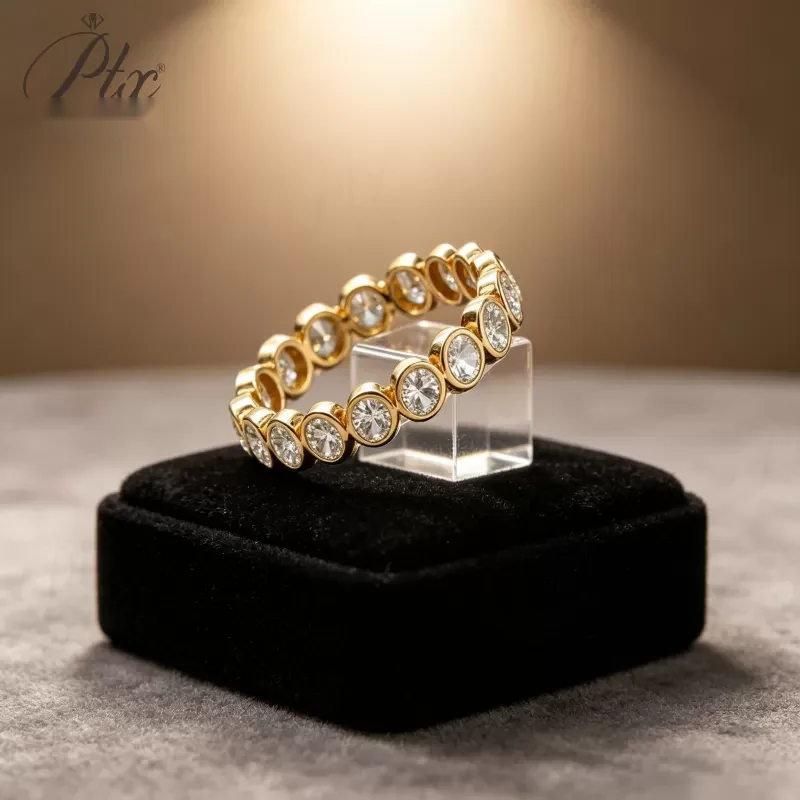
A Scandinavian bridal brand went through three engagement ring suppliers between 2022 and 2024. The first delivered rings with uneven prongs that caught on fabric. The second used thin rhodium plating that wore off in 8 weeks. The third went silent after receiving a $68,000 deposit for a holiday order. They started working with us in January 2025. We reviewed their existing quality issues, tightened their QC requirements beyond standard, and delivered 1,200 rings for their spring launch. Their return rate dropped from 9% to 1.8%, and they have now consolidated all ring production with our factory.
Finding the right moissanite engagement ring supplier determines your brand's reputation more than any other decision. Rings carry emotional weight—customers wear them daily, show them to friends, and expect them to last for decades. A supplier that cuts corners on setting quality, plating thickness, or stone consistency creates returns, bad reviews, and damage that takes years to repair. This guide covers how to evaluate, select, and work with a moissanite engagement ring supplier—including the specific questions to ask, samples to test, and contract terms to negotiate.
What a Good Moissanite Engagement Ring Supplier Provides
The best ring suppliers do more than manufacture pieces. They act as an extension of your team, catching design issues before production, recommending cost-saving material choices, and standing behind quality problems long after shipment leaves the factory. A competent supplier should deliver:
- Consistent quality across production runs: Ring #500 in your third order should be indistinguishable from ring #1 in your first order. That means documented processes, calibrated equipment, and QC checkpoints—not just "we do good work." Prong height, stone seat depth, and plating thickness should have measurable tolerances.
- Realistic, reliable lead times: Launch dates make or break seasonal sales. A supplier who quotes 15 days and delivers in 35 wrecks your marketing calendar. Reliable vendors give specific ship dates, communicate delays early, and offer rush options when needed.
- Transparent pricing with no hidden fees: Quoted unit prices should include everything: stones, metal, setting, polish, standard plating, standard packaging. Setup fees, mold fees, plating upgrades, and packaging costs should be disclosed up front, not added mid-production.
- Design and engineering feedback: Experienced suppliers look at your CAD designs and flag issues that cause production problems or customer returns—before you cut molds. Prong angles that will catch, shank thickness that will bend, stone sizes that create setting risk all get caught early.
- Defect accountability: Problems happen. The difference between good and bad suppliers is who pays when they do. A quality supplier replaces manufacturing defects at their cost, including shipping, and fixes process issues to prevent recurrence.
IGI and GIA both provide educational resources on ring manufacturing quality, but neither certifies finished ring production. That responsibility falls on you and your supplier's QC processes. Browse our moissanite engagement ring supplier catalog for available styles and manufacturing capabilities.
Supplier Comparison: Red Flags vs Reliable Partners
We have audited 18 ring factories over the past 7 years. The table below distinguishes suppliers that deliver consistently from those that cause problems:
| Evaluation Factor | High-Risk Supplier | Reliable Manufacturing Partner |
|---|---|---|
| Pricing transparency | Quote excludes stones, plating, packaging | All-inclusive EXW/FOB pricing on quote |
| Lead time quoting | "15-20 days" without production visibility | Specific date, weekly production updates |
| Prong setting | Hand-set without torque calibration | Calibrated torque (4.5-5.0 in-lbs for moissanite) |
| Plating thickness | 0.5-1.0μm rhodium, no E-coat | 2-3μm rhodium over E-coat primer |
| QC inspection | No documented process, visual "look over" | AQL 1.5 100% inspection with checklists |
| Sample policy | Samples at retail pricing or no samples | Refundable samples against first bulk order |
| Communication | 1 contact, disappears after deposit | Dedicated account rep + QC contact |
| Factory audit | Only show showroom, refuse live video | Live production tours, ISO 9001 documentation |
| MOQ | 200+ pieces per style, no mixing | 50 pieces per style, mixed sizes/styles allowed |
| Defect replacement | "Buyer's problem after shipment" | Free replacement including shipping |
Prong torque calibration is the spec that separates factories that know what they're doing from those that don't. We started using calibrated torque screwdrivers in 2021 after analyzing a year of defect data and finding loose stones correlated directly with setter-to-setter torque variation. After standardizing to 4.5-5.0 in-lbs for moissanite and retorquing after final polish, our stone loss defect rate dropped by 72%. ISO 9001 certification correlates strongly with this kind of data-driven process improvement.
How to Evaluate an Engagement Ring Supplier: Step-by-Step
You do not need to place a $50,000 order to evaluate a supplier. These eight steps will tell you everything you need to know before committing significant capital:
- Request their ring catalog with full specifications: A legitimate supplier has a catalog with metal options, stone sizes, setting types, available plating, and pricing tiers. If they cannot produce a spec sheet, they are a trading company, not a factory.
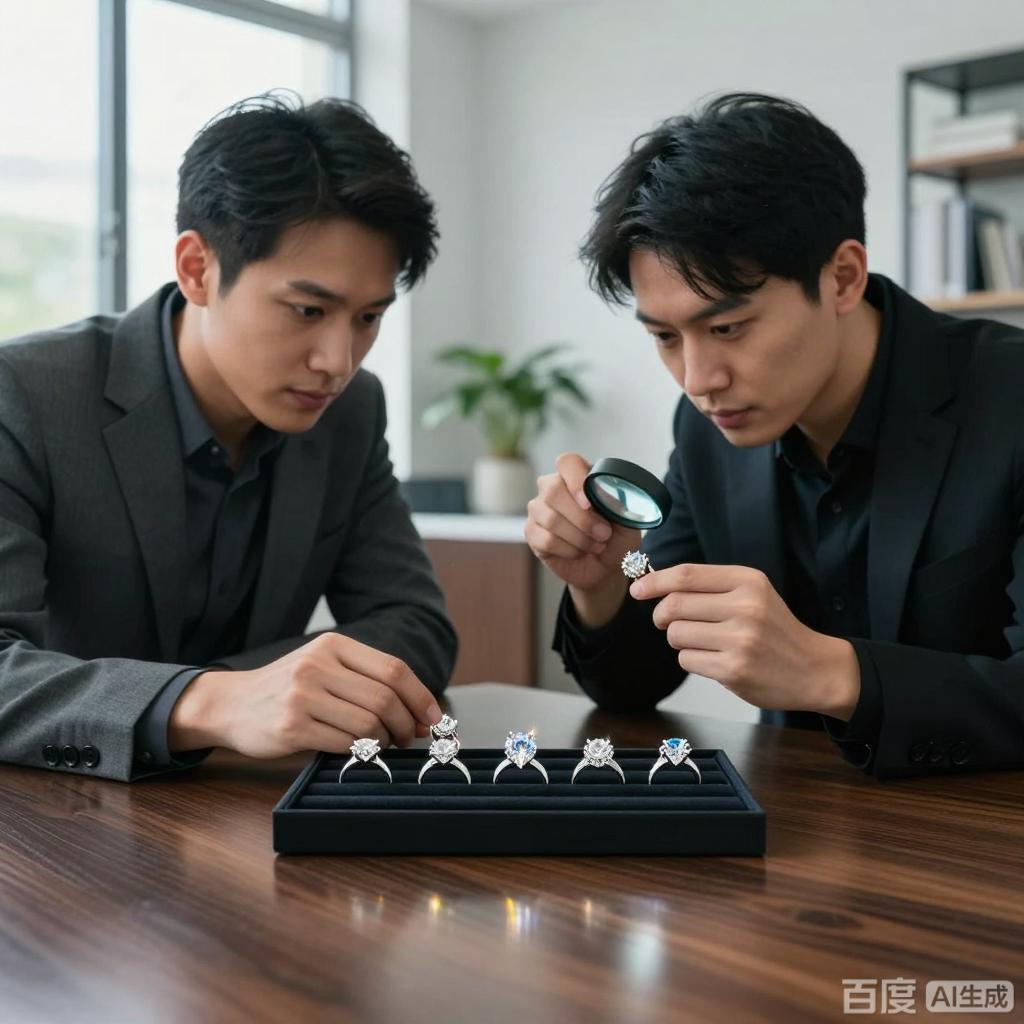
- Order 3-5 sample rings in different styles: Pick one solitaire, one halo, and one multi-stone ring to test different setting types. Pay the sample fee (reputable suppliers credit samples against first bulk order). Evaluate samples for: stone tightness (shake and tap firmly), prong smoothness (run nylon over prongs to check for snags), plating uniformity (check inside ring and under prongs), stamping clarity, and overall finish.
- Perform a wear test on samples: Wear one sample ring daily for 2-3 weeks. Wear it washing hands, typing, opening doors. Check for stone loosening, plating wear, and prong catch issues. This simple test catches 80% of quality problems before you place bulk orders.
- Ask for their QC checklist: Every factory with real QC has a written checklist. Ask for a copy. It should include stone security, prong smoothness, polish marks, plating thickness, stamping, sizing accuracy, and pair matching (for pairs). If they cannot produce a checklist, they do not do systematic QC.
- Ask specific technical questions: What torque do you use for setting moissanite prongs? How thick is your rhodium plating? What is your stone seat diameter tolerance? What pull force do you test prongs to? Suppliers who answer these questions precisely know their craft; suppliers who give vague responses ("we set them securely") don't.
- Request a live video production tour: Ask to see the casting area, setting stations, polishing stations, QC inspection area, and stone inventory. Live video lets you see if production is actually happening (not just a showroom). Count how many workers you see setting stones—that tells you their real capacity.
- Place a trial order of 50 pieces: After samples pass your tests, place a 50-piece order in one or two styles. This confirms quality holds up at production volume, not just on hand-picked samples. Inspect 100% of the trial order for defects on arrival.
- Test their defect resolution: If your trial order has any issues, how does the supplier respond? Do they acknowledge problems, explain the root cause, and ship replacements quickly? Or do they argue, delay, and blame you? Defect handling predicts your long-term relationship better than any other factor.
The wear test on samples is the most underutilized evaluation step. We recommend it to every prospect. A ring that looks perfect on a shelf can develop issues after two weeks of real wear—prongs catch on fabric, plating wears thin on high-contact areas, and stones that were borderline loose start to rattle. If a supplier hesitates to let you test samples, that tells you everything you need to know.
Pricing Realities for Wholesale Moissanite Engagement Rings
Engagement ring pricing varies widely by metal type, stone size, setting complexity, and order volume. Be suspicious of quotes that seem dramatically lower than competitors—those suppliers are cutting corners that will cost you later. Our standard Q3 2025 EXW pricing for 14K white gold with D-E-F VVS moissanite:
- 1ct round solitaire (6.5mm): $82-$98 depending on volume (50-200+ pieces)
- 1.5ct round halo (7.5mm + melee): $122-$145 depending on volume
- 2ct oval three-stone (8x10mm + sides): $148-$178 depending on volume
- 2ct cushion halo (7mm + melee): $137-$165 depending on volume
- Sterling silver versions: 45-55% less than 14K gold
When comparing quotes, verify what is included. A low quote might exclude center stones, charge extra for rhodium plating, use thinner prongs to save metal, or skip E-coat entirely. One common trick is quoting with G-H color stones and then "upgrading" you to D-E-F for an added fee. We quote all-inclusive with D-E-F VVS stones, 2-3μm rhodium over E-coat, box clasp (where applicable), standard velvet pouch packaging, and individual poly bagging. For matching pieces, coordinate ring orders with wedding/bridal earrings and bridal pendants for set programs.
Which Engagement Ring Supplier Program Is Right for You?
Different brands need different levels of service and customization. Here is how to decide what to ask for:
If you are launching a new DTC brand (under 100 rings/month): Start with 50-piece orders in 2-3 proven styles (round solitaire, round halo, oval solitaire). Use stock designs first—custom CAD has mold costs that do not make sense until you have proven sales. Prioritize suppliers with fast turnaround and low MOQ over custom design capability. Ask for AQL 1.5 inspection on all orders.
If you are scaling (100-500 rings/month): Move to OEM/private label with custom logo, branded packaging, and a dedicated account contact. Negotiate volume pricing tiers and safety stock for your top 3 sellers. Ask for weekly production updates and batch photos before shipment. At this volume, you should also request quarterly quality review calls to discuss any return trends.
If you are an established brand (500+ rings/month): Full custom CAD program with your exclusive designs. Negotiate priority production scheduling, Net 30 payment terms after 6 months of consistent orders, and dedicated QC contact who signs off on batches before shipment. We hold 4 weeks of safety stock for clients at this volume, cutting replenishment lead time to 5-7 days. You should also be able to visit the factory in person annually.
If you sell on Etsy/small boutiques: Mixed size runs with 10-50 piece MOQ work best. Ask for ring boxes and inserts with your branding—good packaging immediately elevates perceived value even for small brands. Focus on styles that photograph well for social media: halos, ovals, and unique shapes get more engagement online than plain solitaires.
Frequently Asked Questions
Q: What is the standard MOQ for engagement ring orders?
A: 50 pieces per style is our standard OEM MOQ. Stock designs are available at 10 pieces per style. Mixed sizes are allowed within an order (we recommend size distribution: 15% size 5, 25% size 6, 30% size 7, 20% size 8, 10% size 9). Orders under 50 pieces have a 15% small-batch surcharge. Custom CAD designs require 50 pieces minimum to cover mold costs.
Q: How do you handle custom ring designs?
A: Custom designs start with your sketch or reference image. We create CAD renders within 3-5 days, send them for your approval, then produce a metal sample (silver prototype) for $50-$100. After sample approval, bulk production takes 20-25 days. Custom design files and molds remain your exclusive property with NDA on request.
Q: What certifications and documentation come with rings?
A: Center stones 0.3ct+ include GRA certificates. IGI certification is available for $4-$7 per stone. Metal purity stamps (10K/14K/18K/.925) are XRF verified per batch. We provide QC reports for orders over 200 pieces. ISO 9001 and BSCI audit reports are available on request for retail partner compliance.
Q: Can I mix metals and stone sizes to hit MOQ?
A: Yes. You can mix styles, metals, and stone sizes across an order to hit MOQ for volume pricing. For example: 20 white gold solitaires, 15 yellow gold halos, and 15 rose gold ovals all count toward the 50-piece threshold. We do not require you to order 50 of one exact configuration unless you want dedicated production batches.
Q: What happens if my customers receive defective rings?
A: Manufacturing defects (loose stones, cracked stones from setting, prong issues, plating failure, stamping errors) are replaced at our cost, including direct shipping to your customer if you provide the address. We process replacement requests within 48 hours. Our overall defect rate runs under 1.8%. Damage from customer resizing or wear is evaluated case by case.
Q: Can I get catalogs and line sheets to plan my collection?
A: Yes. We provide full digital catalogs with pricing sheets, stone size options, metal choices, and packaging options. We can also create custom line sheets with your branding for wholesale buyer meetings. New collections for Spring and Fall are released twice yearly with updated designs and trend forecasts.
Key Takeaways for Choosing an Engagement Ring Supplier
Your ring supplier becomes a long-term partner. These are the non-negotiable criteria to evaluate:
- Ask specific technical questions (torque, plating thickness, seat tolerance)—suppliers who can't answer precisely don't control their processes
- Order samples and actually wear them for 2-3 weeks before placing bulk orders
- Require AQL 1.5 inspection with written checklists, not "visual inspection"
- 4.5-5.0 in-lbs prong torque prevents loose stones; 2-3μm rhodium over E-coat prevents premature wear
- Test defect resolution responsiveness on a trial order—it predicts long-term satisfaction
- Compare all-inclusive pricing, not just unit cost; hidden fees add 15-25% to cheap quotes
Request our 2026 engagement ring catalog with complete specifications, pricing tiers, metal options, and sample availability. We include 5 free ring samples with your first 50+ piece order so you can verify quality on production pieces before your launch. Send us your style preferences, target retail price point, and monthly volume projections, and we will put together a custom proposal within 24 hours. We can also arrange a live video factory tour to show you our setting and QC processes before you commit.


