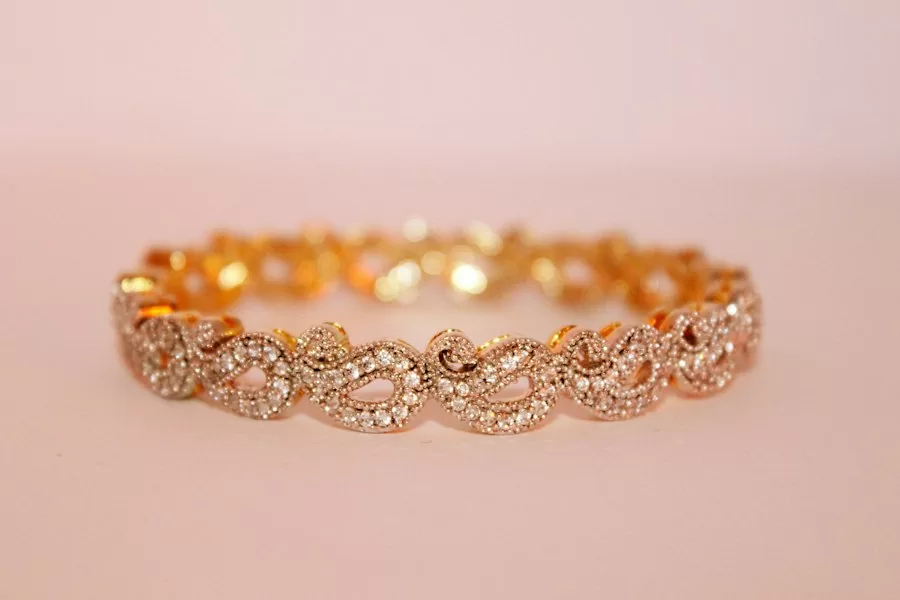
There is a misconception worth clearing up immediately: moissanite itself does not tarnish. The stone is silicon carbide, an extremely hard and stable material rated around 9.25 on the Mohs scale. What tarnishes, dulls, and spots is the metal. Sterling silver sulfides in the wrong air, plated silver wears, and even gold and platinum develop surface grime if they sit in a damp, crowded room for months. A retailer who treats storage as an afterthought is quietly turning sale-ready inventory into clearance stock, piece by piece.
Control the humidity first
Tarnish and corrosion accelerate in damp air. Aim to keep a stockroom between thirty and fifty percent relative humidity, and below that figure for sterling silver specifically. A small dehumidifier in the storage area costs far less than the silver it saves. Avoid placing stock against exterior walls or near loading doors where temperature swings cause condensation. If your warehouse is in a humid climate, this single step does more than any polish cloth.
Segregate by metal and by piece
Jewelry scratches jewelry. A loose tray of rings rubbing against each other for three months will arrive at the selling floor covered in fine marks. Store each piece in its own pouch or compartment. Keep sterling silver separated from gold, because silver tarnish can transfer onto lighter metals. Keep plated pieces away from unplated ones, and do not store a moissanite ring directly against a piece with rough prongs. This is the same discipline your wholesale partner uses in its own stock; see loose moissanite inventory and warehouse stock for how the factory side handles it.
Use anti-tarnish materials deliberately
Anti-tarnish strips and treated cloths absorb the sulfur compounds that blacken silver. Place one strip per sealed storage tub, not per tray, and replace them every six months. For long-stocked silver, add a small silica gel packet alongside. Avoid old-school tricks like storing chalk, which is inconsistent. And whatever you do, keep jewelry out of newspaper and rubber: both release chemicals that discolor metal. The basic care habits that apply to customers apply to you, scaled up, as covered in ring care, soap, perfume, and storage.
Inspect on a schedule, not when a problem appears
Build a quarterly inspection into the inventory cycle. Pull a sample from every tray, check for loose prongs, spotting on silver, and worn plating, and clean anything that has dulled. Catching a loosened prong early prevents a lost stone, and catching early tarnish means a simple polish instead of a deep cleaning. Tie the inspection to your receiving and quality routine from the receiving QC checklist, so the same team that checks new stock also checks stored stock.
Handle the packaging sensibly
Do not leave inventory in the thin plastic bags it arrived in if those bags trap moisture long term. Move pieces into lined boxes or anti-tarnish pouches once they are in your control. Keep your branded display boxes separate; pieces sell better when presented in fresh packaging, and a box that has sat in a drawer for a year looks tired. First impressions matter as much in the case as they do at home, per our packaging first-impressions guide.
Rotate stock so nothing sits too long
The best tarnish prevention is turnover. Inventory that moves within ninety days almost never develops storage issues; inventory that sits for a year does. Apply first-in, first-out discipline even when styles repeat, and run slow movers through a promotion before they need rescue. A small, fast-turning stock stored in dry, segregated conditions will always look newer than a large, slow stock left in open trays. On humid days, run a quick check of any silver stock that has sat more than a month, because spotting can appear overnight once the air turns.
Train the team that touches the stock
Storage discipline only works if everyone on the floor follows it. Whoever unpacks a delivery should know that pieces go straight into pouches, not onto a shared tray, and that the dehumidifier gets checked weekly. A simple sign on the stockroom door listing the three rules: seal it, segregate it, rotate it, removes most of the mistakes that happen when a new hire is shown the room in a hurry. The same team should also know not to store jewelry near perfumes, aerosols, or cleaning products, whose fumes discolor metal far faster than ordinary humidity.
Storage is not glamorous, but it is where your margin is quietly protected or quietly lost. Moissanite will outlast almost anything you set it in; the job is to make sure the metal does too. Control humidity, segregate the pieces, inspect on a schedule, and keep the stock turning. The inventory that reaches your sales floor should look as good as the day it arrived.
Independent background on moissanite — how its hardness and refractive index compare with diamond — is documented in the Wikipedia article on moissanite.
Frequently Asked Questions
Is moissanite a good diamond alternative for retail buyers?
Yes for price-sensitive customers who want brilliance and hardness. Moissanite ranks 9.25 on the Mohs scale, holds up to daily wear and costs a fraction of a natural diamond of the same size, so it resells fast in bridal and fashion lines.
What is the minimum order for wholesale moissanite?
MOQ starts at 50 pieces per design for stock items. Custom cuts and private-label settings usually start at 100–300 pieces depending on the mold.
Do you provide certificates with moissanite stones?
Yes. Every parcel ships with GRA or IGI documentation listing carat weight, color grade and cut. We recommend passing the certificate to your end customer for trust.
How long does sample and bulk production take?
Samples ship in 3–5 days. Bulk runs take 15–20 days under 500 pieces, and 25–30 days for custom work.