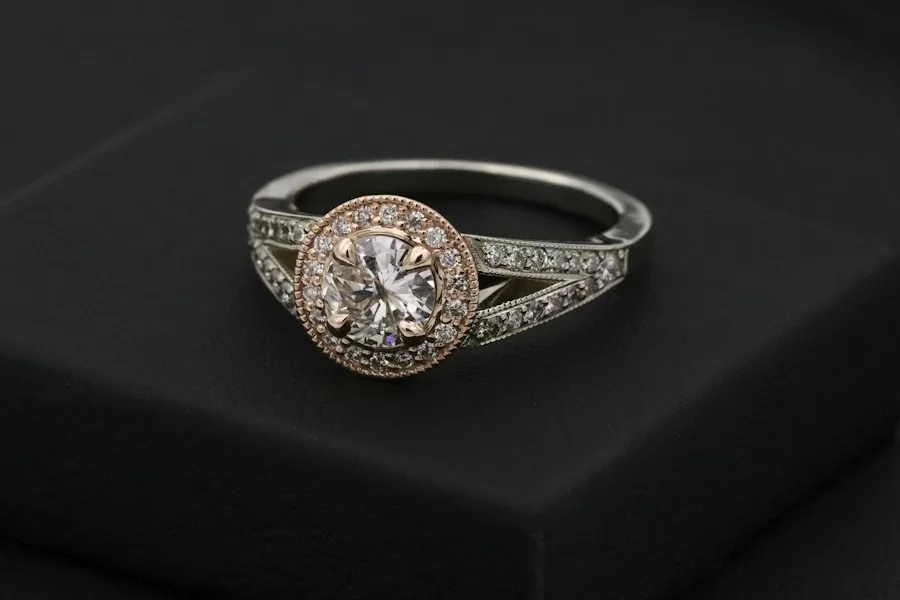
The stone on a moissanite ring rarely falls out because the stone fails. It falls out because the metal holding it wears thin, bends, or loosens. Prongs are the quiet engineering of every fine ring, and they are also the part customers never think about until they notice a wobble. For a retailer, prong care is more than a service; it is one of the most reliable ways to turn a one-time bridal sale into a years-long relationship.
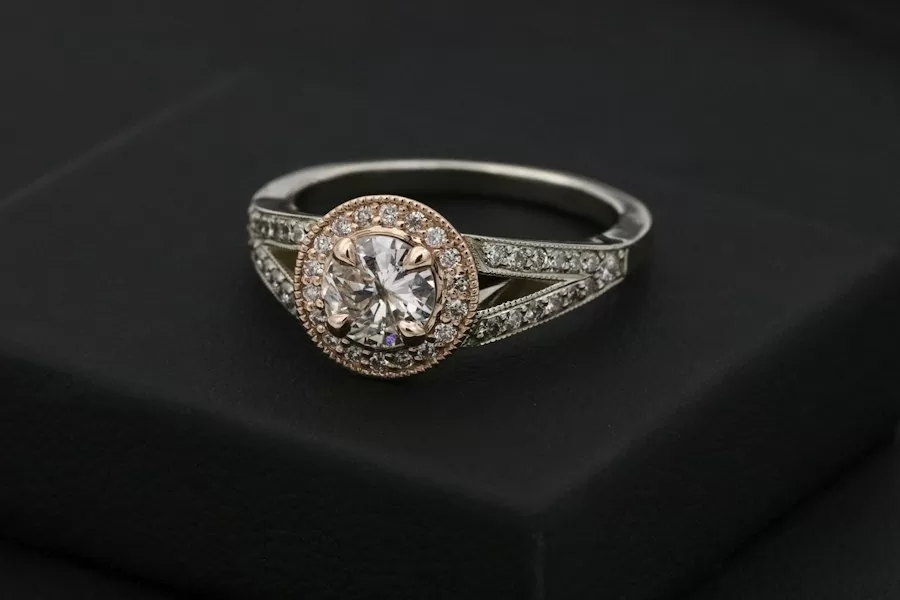
What healthy prongs look like
In a well-made setting, each prong curves smoothly over the girdle of the stone and rests flush against it. The tips are rounded and intact, not sharp, bent, or flattened. When you gently touch the stone with a soft tool, it should not shift or click. A loose stone often makes a faint ticking sound when tapped because it moves fractionally in its seat. That tick is the earliest warning sign, long before any customer sees a gap.
Healthy prongs are also a function of the original setting design. A secure, well-proportioned setting protects the stone far better than a trendy, fragile one. For the design tradeoffs behind this, our overview of moissanite ring settings, from prong to bezel is a useful reference when advising buyers.
How prongs wear over time
Prongs wear down through ordinary friction. Hands bump against desks, pockets, and keyboards. Soap and lotion soften and abrade. Over months and years, the tips thin out, the metal polishes smooth, and a once-tight grip can loosen. In rings worn daily, many jewelers recommend a prong check roughly every six months to a year, and sooner if the wearer notices the stone feels loose or catches on clothing.
Catching is the symptom customers report first. A prong that has bent outward or thinned until sharp will snag on sweaters, hair, or gloves. When a customer brings a ring in saying "it keeps catching," that is a prong inspection appointment, not a cleaning appointment. Catching means the metal has moved, and a stone can follow.
Tightening, retipping, and reshaping
Most prong issues are simple repairs. A jeweler can gently press a bent prong back into position and snug it against the stone. When a tip has worn down to a nub, the repair is a retipping: rebuilding the lost metal with solder and finishing it to match the rest of the setting. Neither repair is expensive relative to the cost of losing a stone, and both take little bench time.
The key is to catch these early. A prong that has loosened enough to let the stone rock is one small bump away from a lost center stone. Selling the habit of regular checks is far cheaper than replacing a stone later. This kind of ongoing care is part of the durability story covered in our guide to everyday moissanite hardness and durability.
Turning prong checks into loyalty
Here is where the retail opportunity lives. Offer every moissanite buyer a free prong and cleaning check six months after purchase, again at the one-year mark, and annually thereafter. Most customers will take you up on it. Each visit is a chance to inspect the setting, polish the band, tighten what needs tightening, and reintroduce your store to a happy, already-converted customer.
That visit is also a soft moment to show complementary pieces: a wedding band that now pairs with an anniversary style, upgraded earrings, a pendant in the same line. You are not pushing. You are serving. But a customer who comes in for a prong check and leaves with a trusted relationship is worth more than any cold marketing campaign.
Training staff to spot it
Teach your team the quick checklist: does the stone move when gently touched? Do any prongs look bent, thin, or sharp? Does the ring catch on a polishing cloth? Any yes means a repair ticket, not a sales pitch. A staff member who catches a loose prong before a stone is lost becomes the hero of that customer's story. That is the kind of detail that earns word-of-mouth referrals.
Making the check feel welcome
Frame the free inspection as a perk the buyer already owns, not as an upsell. Send a short reminder email six months after purchase inviting them in for a quick prong and cleaning check. Most people are flattered by the attention, and the ones who do come in almost always leave happier than they arrived. The trust compounds quietly over years.
The bottom line
Prongs are what keep a moissanite on a customer's finger for decades. Inspect them early, tighten and retip before wear becomes loss, and turn the care check into a standing ritual. The stone itself will last; the metal around it needs occasional attention, and offering that attention is one of the most profitable services a moissanite retailer can provide.
The International Gem Society moissanite guide explains how moissanite performs in daily wear compared with diamond.
Authoritative References
For buyers who need to verify the technical and regulatory basis of this guide, the following independent institutions publish authoritative reference data:
- GIA Gem Encyclopedia - independent grading and identification reference for natural and lab-grown gems.
- Wikipedia: Moissanite - peer-reviewed background on moissanite chemistry, optics and history.
Frequently Asked Questions
Is moissanite a good diamond alternative for retail buyers?
Yes for price-sensitive customers who want brilliance and hardness. Moissanite ranks 9.25 on the Mohs scale, holds up to daily wear and costs a fraction of a natural diamond of the same size, so it resells fast in bridal and fashion lines.
What is the minimum order for wholesale moissanite?
MOQ starts at 50 pieces per design for stock items. Custom cuts and private-label settings usually start at 100–300 pieces depending on the mold.
Do you provide certificates with moissanite stones?
Yes. Every parcel ships with GRA or IGI documentation listing carat weight, color grade and cut. We recommend passing the certificate to your end customer for trust.
How long does sample and bulk production take?
Samples ship in 3–5 days. Bulk runs take 15–20 days under 500 pieces, and 25–30 days for custom work.