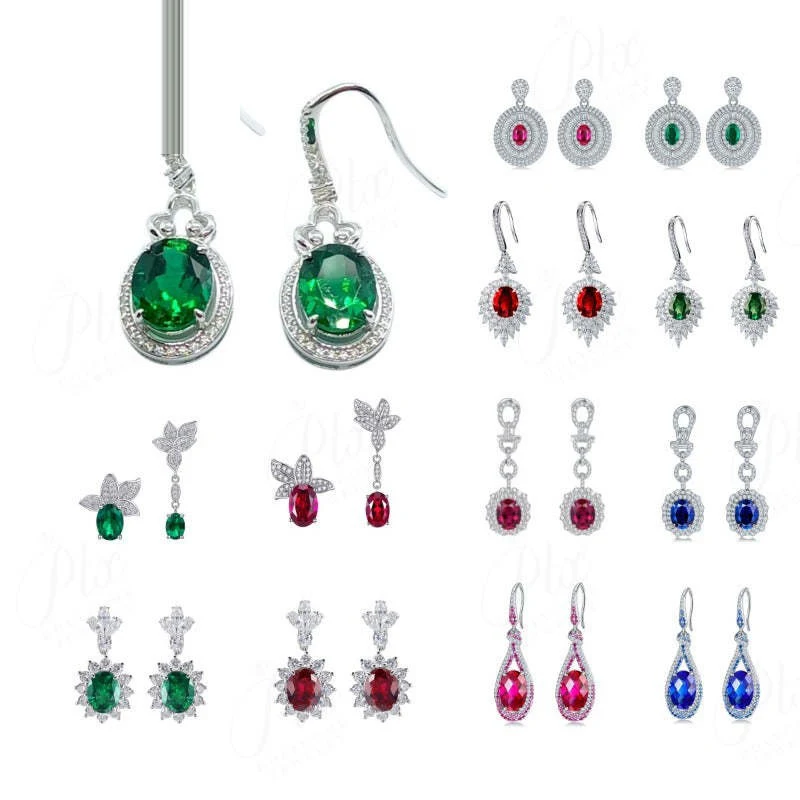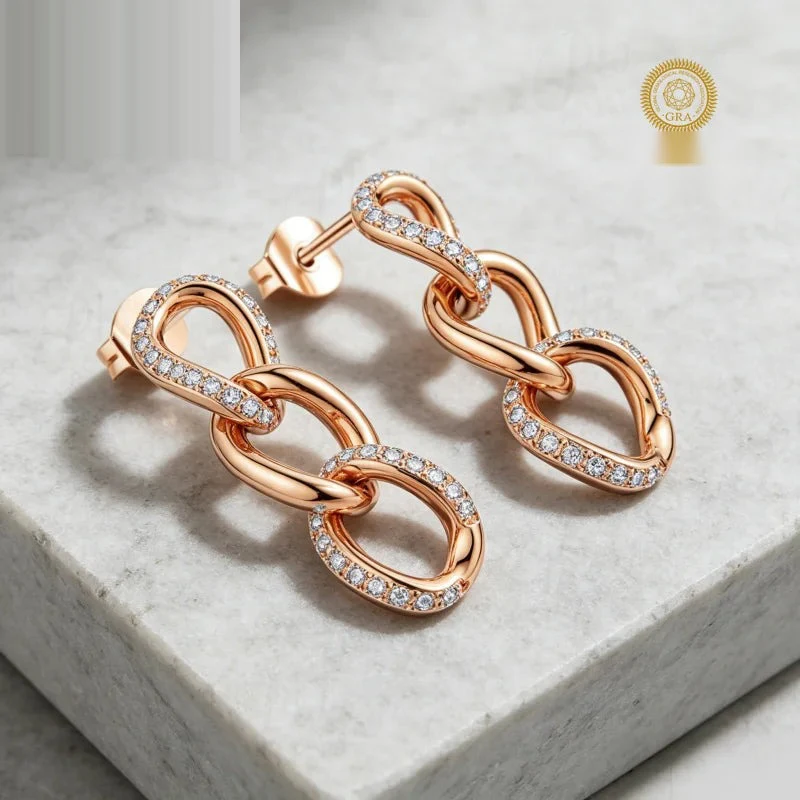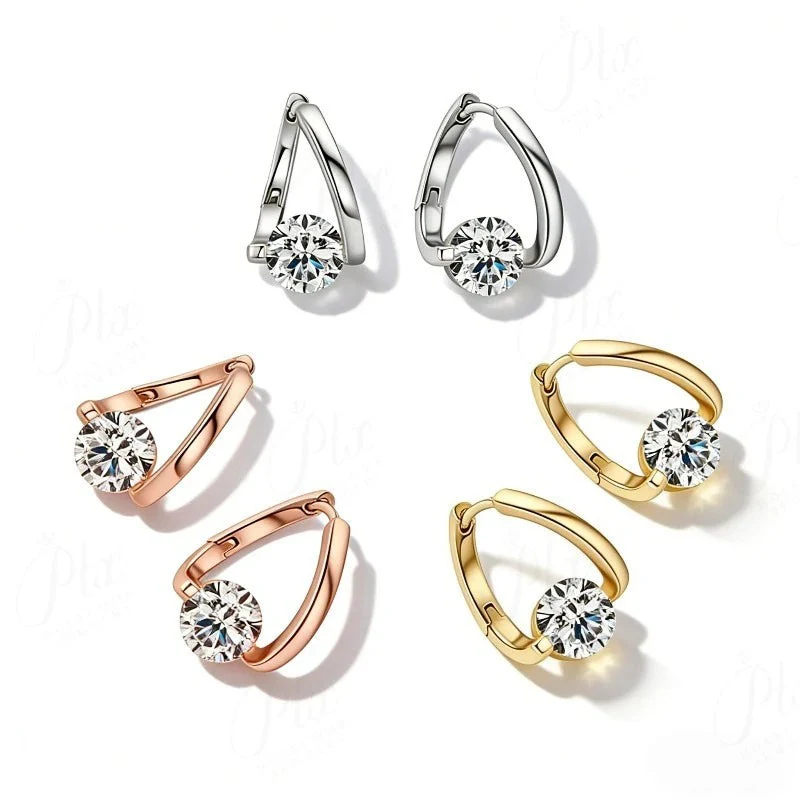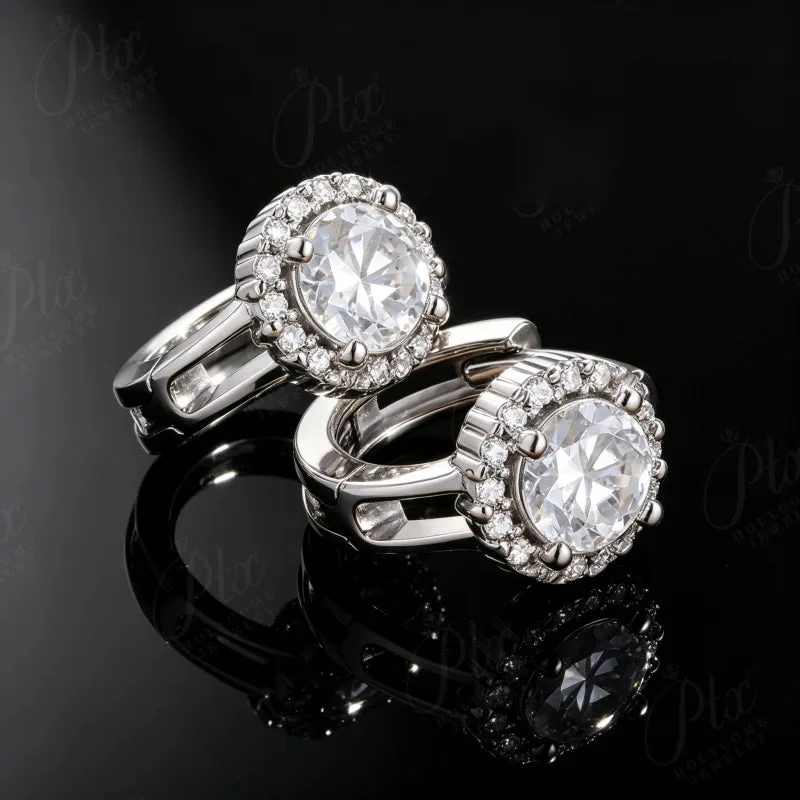
A California-based jewelry brand sourced moissanite stud earrings from three different suppliers over 18 months. Their first supplier shipped pairs with visibly mismatched stone colors—customers immediately noticed and returned them. Their second used thin 0.7mm posts that bent with normal wear, leading to bent-post complaints and lost earrings. Their third supplier had inconsistent packaging—half the earrings arrived without backs. They switched to our factory in April 2025. We implemented 0.9mm surgical steel posts, hand-matched stone pairs, and standardized packaging QC. Their return rate dropped from 12% to 1.3% and they now do 8,000 pairs per month across 6 earring styles.
Stud earrings look like a simple product. That simplicity makes supplier selection trickier than buyers expect—when everything is visible and the construction is exposed, every manufacturing flaw shows. The post thickness, back quality, pair matching, and setting security all directly impact customer satisfaction and return rates. A good stud earring supplier controls tolerances that most buyers do not even know to ask about. This guide covers how to evaluate a moissanite stud earring supplier, what specs to require in your PO, and how to test samples before committing to bulk orders.
What Separates Good Stud Earring Suppliers from Bad Ones
Most buyers select earring suppliers on per-pair price and available sizes. That approach misses the mechanical details that determine whether your customers are happy or angry. A competent stud earring supplier controls these critical variables:
- Post material and thickness: Cheap studs use 0.6-0.7mm brass posts that bend easily, can snap at the weld joint, and may release nickel causing skin reactions. We use 0.8mm posts for stones under 0.5ct and 0.9mm surgical stainless steel posts for 0.5ct and up—posts that stay straight, resist breaking, and meet EU nickel release standards.
- Back quality and type: Friction backs (push-backs) work for small stones but lose tension over months of use. Threaded screw backs are far more secure for 0.5ct and up. The best suppliers use heavy-weight friction backs with strong internal springs for standard pairs and screw backs as an option for premium lines.
- Pair matching process: Mismatched stud pairs are the #1 return cause for earrings. Good suppliers sort stones by color, clarity, and size under standardized 5500K lighting and visually verify every pair before pairing. Bad suppliers randomly grab two stones of the same labeled size and call it a pair.
- Post welding quality: Posts that are cold-welded or glued snap off with minimal force. TIG welding followed by stress-relieving creates a bond stronger than the surrounding metal. Ask how posts are attached and what pull force they withstand.
- Edge finishing: The back of earring settings sits against the earlobe all day. Sharp, unpolished edges cause irritation and discomfort. Quality suppliers fully radiused and polish the back of every setting.
Nickel release is not optional for EU sales. ECHA's REACH regulations limit nickel release to less than 0.5μg/cm²/week for items in direct and prolonged skin contact. Our posts and metal alloys test at under 0.2μg/cm²/week with independent lab verification. Suppliers who cannot provide nickel test reports are a compliance risk for European market access. Browse our moissanite stud earring supplier catalog for available styles.
Supplier Comparison: What to Look For
We evaluated earring quality from 11 wholesale suppliers in 2025. The table below benchmarks key specifications:
| Specification | Low-Cost Supplier | Quality Earring Manufacturer |
|---|---|---|
| Post material | Brass or low-grade steel | Surgical stainless steel 316L |
| Post thickness (0.5ct+) | 0.6-0.7mm (bends easily) | 0.9mm with stress relief |
| Post weld strength | Cold weld/glue, snaps at 2-3 lbs | TIG welded, withstands 5+ lbs pull |
| Pair matching | Random same-grade, 2-3 color grades variance | Hand-matched, <1 color grade variance |
| Back type | Light friction backs, weak springs | Heavy friction or screw backs (0.5ct+) |
| Edge finish (back side) | Sharp edges common | Fully radiused and polished |
| Setting torque | 2.0-2.5 in-lbs, not calibrated | 3.5-4.0 in-lbs, calibrated drivers |
| Plating thickness | 0.5-1.0μm rhodium | 2.0-3.0μm over E-coat |
| Nickel compliance | Often untested | REACH certified <0.2μg/cm²/week |
| Inspection | AQL 2.5 spot check | AQL 1.5 100% pair match + post straightness |
| MOQ | 100-200 pairs per size | 50 pairs per size, mixed allowed |
| Defect rate | 4-10% | Under 1.5% |
Pair matching is where cheap suppliers visibly fail. A 3mm stud pair where one stone is D color and the other F color (with slightly different proportions) looks obviously mismatched when held next to an earlobe. That customer returns both pairs, leaves a one-star review, and never buys from you again. The labor cost of hand-matching pairs adds about $1.00-$1.20 per pair—an absolutely trivial amount compared to the cost of returns. We sort every pair under standardized 5500K daylight lighting and verify visual match before bagging. FTC Jewelry Guides require accurate grading disclosure, and pairs that don't match the grade you purchased are a misrepresentation issue.
How to Evaluate a Stud Earring Supplier Before Ordering
Follow these seven steps to identify stud earring suppliers that will deliver consistent quality over time:
- Request sample pairs in 3-4 sizes: Order samples in 3mm, 4mm, 5mm, and 6.5mm. Small sizes have different issues than large sizes (post thickness matters more as stone size increases). Evaluate every pair for post straightness, stone security, back fit, edge smoothness, and visual pair matching.
- Measure post thickness with a caliper: Suppliers often claim 0.8mm posts but deliver 0.7mm. A digital caliper costs $15 and will verify immediately. Posts under 0.8mm on 0.5ct+ stones will bend in regular use.
- Bend test the post (gently): Apply moderate sideways pressure to posts on sample pairs. Posts that bend easily are too thin or use soft metal. Quality posts resist bending under normal finger pressure.
- Test back retention: Put backs on and pull firmly away from the earring. Friction backs should hold with noticeable resistance; backs that slide off with light pull have weak springs that will fail after months of use. Screw backs should engage threads smoothly and lock securely.
- Wear test for 3-5 days: Wear sample studs continuously for several days. Note any skin irritation (indicating high nickel content), post rotation (loose settings), back loosening, or discomfort from sharp edges. This simple test catches most quality problems.
- Examine pair matching carefully: Lay sample pairs on a white surface under daylight (not warm indoor light). Compare stone color, brilliance, and millimeter size side by side. Visible mismatch even on sample pairs means bulk orders will be worse.
- Request QC and compliance documentation: Ask for nickel test reports, plating thickness specs, and a copy of their QC checklist. Suppliers who produce these documents have real processes; those who cannot do not.
ISO 9001 certification is a strong indicator of process discipline in earring manufacturing. Our ISO-certified process requires documented checks for post straightness, post weld integrity, stone security, pair matching, and edge smoothness on every batch. Every defect gets logged and traced back to the operator so we can address root causes rather than just replacing bad pieces.
Wholesale Pricing for Moissanite Stud Earrings (Q3 2025)
Our EXW Shenzhen pricing for sterling silver studs with D-E-F VVS moissanite, 0.8-0.9mm surgical steel posts, heavy friction backs, 2-3μm rhodium plating, and fully finished edges:
- 0.3ctw (2x0.15ct, 3mm): $14/pair (100+), $16/pair (50-99)
- 0.5ctw (2x0.25ct, 4mm): $18/pair (100+), $21/pair (50-99)
- 1.0ctw (2x0.5ct, 5mm): $29/pair (100+), $33/pair (50-99)
- 1.5ctw (2x0.75ct, 6mm): $38/pair (100+), $44/pair (50-99)
- 2.0ctw (2x1.0ct, 6.5mm): $52/pair (100+), $59/pair (50-99)
- 3.0ctw (2x1.5ct, 7.5mm): $78/pair (100+), $89/pair (50-99)
14K gold adds $45-$120 per pair depending on size. Screw backs are a $2.50 per pair upgrade and are included as standard on 14K gold studs 1.0ctw and above. Bezel settings add $4-$6 per pair over prongs. Custom logo engraving is free on orders over 200 pairs. When building a full collection, coordinate stud orders with engagement rings, solitaire pendants, and tennis bracelets for coordinated jewelry programs.
Which Earring Program Fits Your Business Model?
Different sales channels need different specifications and service levels:
If you sell everyday/fashion jewelry under $150 retail: Sterling silver with heavy friction backs in sizes 3mm through 6mm covers your range. 4mm and 5mm are the top sellers across all demographics. D-E-F color is worth the small premium for bridal-adjacent positioning; G-H works for pure fashion lines where direct diamond comparison is unlikely.
If you sell bridal and gifting $150-$400: 14K gold with screw backs for 5mm and up. Offer sizes in 1mm increments and coordinate with solitaire pendants and wedding bands for gift sets. Include GRA certificates and branded gift boxes at this price point.
If you sell premium fine jewelry $400+: 14K or 18K gold, screw backs as standard, D-E-F VVS stones only. Offer larger sizes (6-8mm) with IGI certification. Premium packaging with certificate cards and velvet boxes elevates the unboxing experience to match the price point.
If you sell on marketplaces (Amazon, Etsy): Pay extra for posts, backs, and pair matching. Marketplace returns are expensive, and negative reviews about bent posts, lost earrings, or mismatched pairs kill search rankings. The $1.50-$2.50 per pair upgrade cost reduces return rates by 50-60% based on our marketplace clients' data.
Frequently Asked Questions
Q: What is the MOQ for wholesale stud earrings?
A: 50 pairs per size/style for sterling silver OEM, 30 pairs for stock designs. 14K gold studs have a 20-pair MOQ due to metal cost. You can mix sizes within an order to hit MOQ totals—for example, 15 pairs of 4mm, 20 pairs of 5mm, and 15 pairs of 6mm all count together.
Q: Are your earrings REACH/nickel compliant for EU sales?
A: Yes. Our surgical stainless steel posts and all metal alloys are tested by independent labs at under 0.2μg/cm²/week nickel release, well below the 0.5μg/cm²/week CE threshold. We provide lab test reports for EU compliance documentation on request. We supply multiple European brands and pass customs inspections consistently.
Q: Do you offer screw backs, and are they worth the upgrade?
A: Screw backs are a $2.50 per pair upgrade, included free on 14K gold studs 1.0ctw and above. We recommend them for all pairs 0.5ct and larger. They reduce stone loss by over 90% compared to friction backs because they cannot work loose with movement. Extra backs are available at $0.30 each wholesale.
Q: How do you ensure pairs match in color and size?
A: All stones are sorted by hand under 5500K daylight-equivalent lighting in our grading room. We match pairs within one color grade (D-E, E-F) and verify visual match side-by-side before pairing. Cut quality is matched by table percentage and crown height within 1%. No pair leaves the factory without a final visual match check.
Q: What is production lead time for stud earring orders?
A: Stock studs ship in 3-7 days. OEM sterling silver orders take 12-18 days, 14K gold orders take 16-22 days. Rush production at 15% surcharge delivers in 8-10 days. For clients with consistent volume over 3,000 pairs/month, we hold safety stock of top-selling sizes for 3-5 day replenishment.
Q: Can I get sample pairs before ordering in bulk?
A: Yes. Sample pairs are available at 1.5x wholesale pricing, fully refundable against your first bulk order (up to 5 pairs). We recommend samples in 4mm, 5mm, and 6.5mm so you can evaluate build quality across small, medium, and large sizes. Sample packs include material spec sheets and nickel test data.
Key Takeaways for Selecting a Stud Earring Supplier
Stud earrings are a high-volume, high-margin category that rewards attention to mechanical details. These are the non-negotiable specs to require from your supplier:
- 0.8mm minimum post thickness (0.9mm for 0.5ct+); surgical stainless steel for nickel compliance
- Screw backs for 0.5ct+ stones cut stone loss reports by 90%+
- Hand-matched pairs under standardized lighting—mismatched stones are instant returns
- REACH-compliant nickel release (under 0.5μg/cm²/week) with test reports for EU market access
- 2-3μm rhodium plating over E-coat lasts 3-4x longer than cheap thin plating
- TIG welded posts with stress relief withstand 5+ pounds of pull without breaking
- Fully radiused edges on the back prevent ear irritation and discomfort
Request our full moissanite earring catalog with pricing, size matrix, setting options, and packaging choices. We recommend starting with 4mm, 5mm, and 6.5mm in prong settings for your initial order—these three sizes cover over 70% of stud earring demand. Send us your target quantities, metal preference, and target market, and we will return a detailed quote with sample availability within 24 hours. We can also arrange a live video tour of our earring production and QC stations before you order.