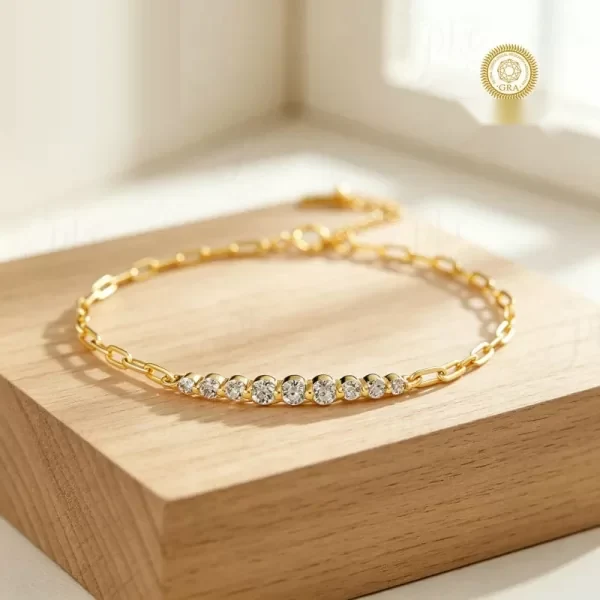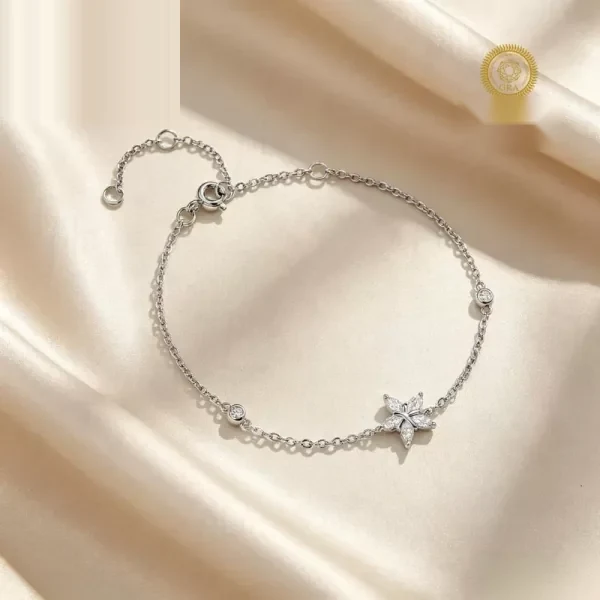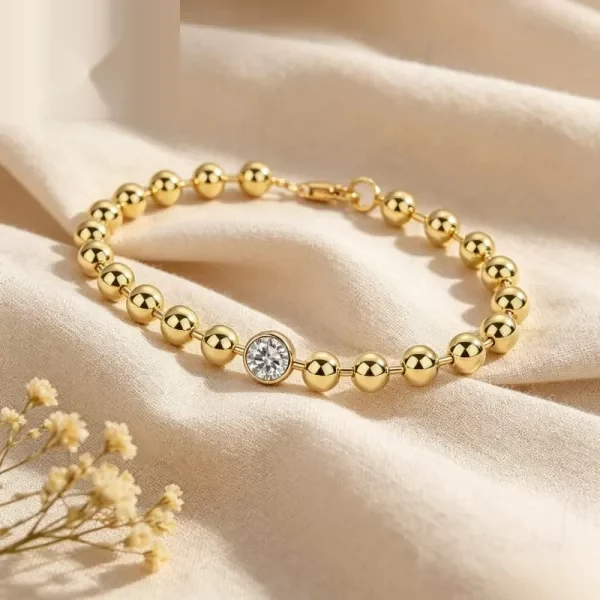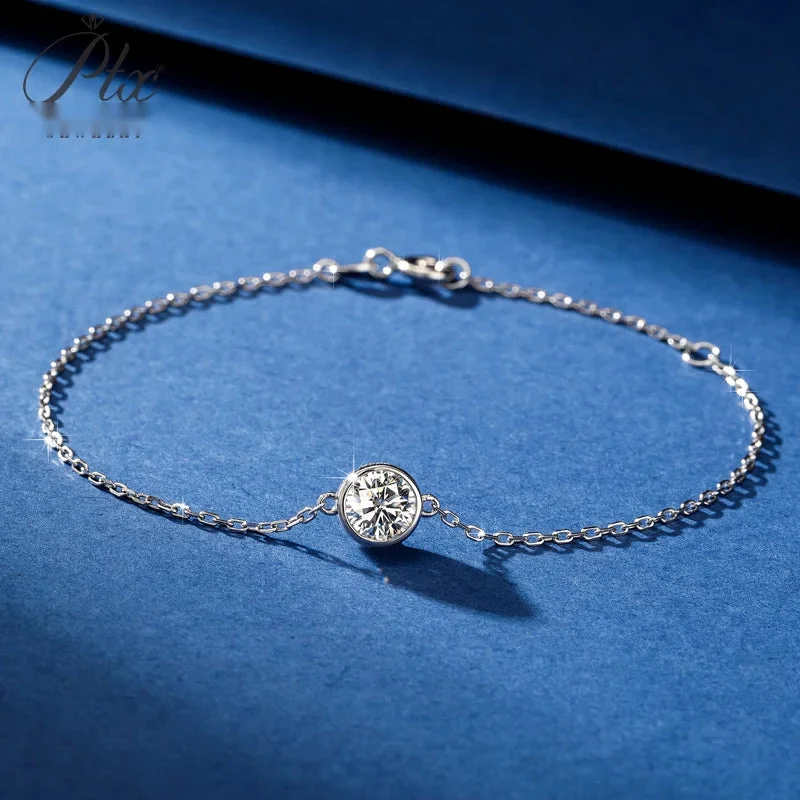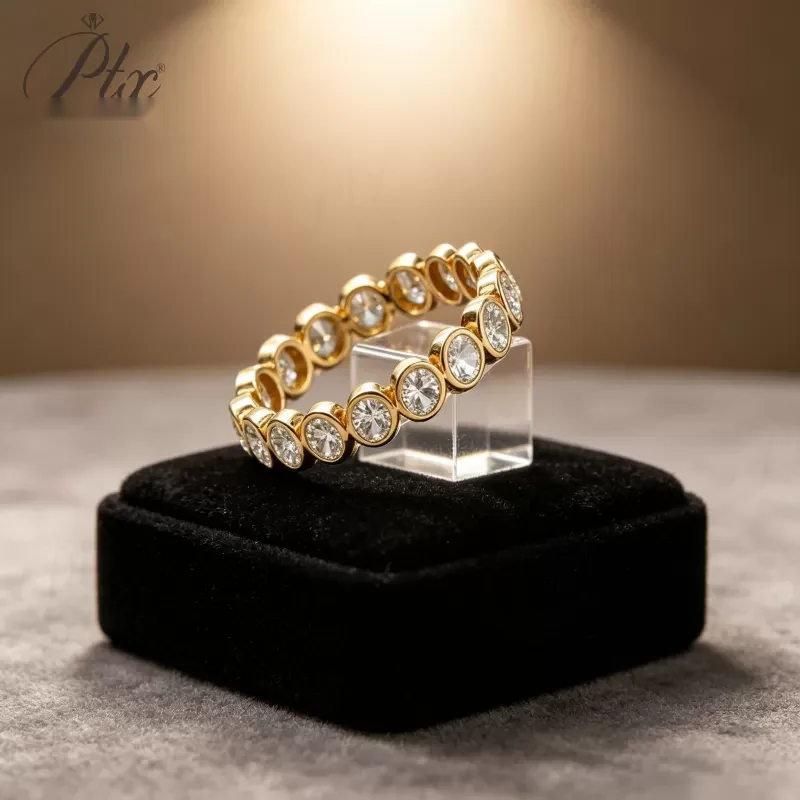
The tennis bracelet is one of the highest-dollar-volume items in moissanite jewelry. A classic round-brilliant channel-set bracelet in silver wholesales for $60–$180 and retails for $250–$800 depending on stone size and metal weight. Those numbers make tennis bracelets attractive for wholesale accounts, but they also create risk: a tennis bracelet that comes unclasped and falls off a customer's wrist can mean losing a $500 piece and a lifetime of customer trust. The clasp is the single most important functional component on the bracelet, and it is the part most often compromised in cheaply made production.
Moissanite tennis bracelet clasp types vary widely in security, durability, ease of use, and cost. Wholesale buyers who understand the tradeoffs between clasp styles can select the right option for their price point and reduce bracelet-loss complaints to near zero. This guide covers the five clasp types used in production today, their durability in real-world wear, failure modes to inspect for in QC, and the clasp we recommend for every quality tier.
Why Clasp Design Matters on Tennis Bracelets
Tennis bracelets hang from the wrist and move with every hand gesture, keyboard stroke, sleeve adjustment, and door handle grab. Unlike a necklace clasp that sits at the back of the neck and moves very little during the day, a bracelet clasp is constantly subject to torque, tugging from clothing, and occasional impact. The original tennis bracelet story—Chris Evert stopping a 1978 US Open match to find her diamond bracelet that had fallen off mid-point—is a literal example of the category's signature failure. She asked officials to pause the match until her bracelet was found, and the style has been called a tennis bracelet ever since. The clasp on her bracelet failed during active movement.
Good clasps prevent that failure. Poor clasps guarantee it. A bracelet that falls off in a store, at dinner, or during a workout generates one of three outcomes for the retailer: refund, replacement, or an angry customer telling every friend and review platform not to buy from you. None of those outcomes are acceptable at $250+ price points, and all of them are preventable with proper clasp selection and QC.
Five Clasp Types Compared
1. Box-with-Tongue-and-Safety (Industry Standard)
The box-and-tongue clasp with a double safety latch is the industry standard for fine jewelry tennis bracelets. A flat metal tongue slides into a precision-fit box and clicks into place; one or two fold-over safety latches on the sides prevent the tongue from accidentally depressing if the clasp is knocked. This is the clasp we use on every HOLYCOME tennis bracelet above the $50 wholesale price point.
Box clasps have the best security-to-usability ratio of any clasp style. They close with a satisfying click, are easy for a customer to operate one-handed (with a little practice), and provide two levels of security (tongue + safety latch). When correctly manufactured with tight tolerances, a box-clasp tennis bracelet will not come off unless both safeties are opened and the tongue is deliberately depressed. Our standard QC test pulls 20lb of force laterally on a closed box clasp—well beyond the forces the bracelet sees in normal wear.
The downside: box clasps require precision manufacturing. The tongue must be the correct thickness and hardness to hold its spring tension; the box must be tight enough that the tongue does not rattle or slide out with impact. Cheaply made box clasps with soft metal tongues wear out in 6–18 months and stop clicking securely.
2. Lobster Claw
Lobster claw clasps are spring-loaded, trigger-operated clasps shaped like a lobster claw. They are the most common clasp on fashion jewelry and charm bracelets. For tennis bracelets, lobster claws are a budget option: they are inexpensive to produce, familiar to customers, and easy to operate one-handed.
However, lobster clasps have two weaknesses for tennis bracelets. First, they attach to a jump ring at the bracelet end, and that jump ring is a single point of failure—if it opens under tension, the bracelet comes off regardless of how good the clasp is. Second, lobster claws rely entirely on a small internal spring; if that spring weakens (which it does over 1–3 years of daily wear), the claw opens too easily and the bracelet can fall off. Lobster clasps are acceptable for low-cost fashion tennis bracelets under $40 wholesale; they are not recommended for bridal, heirloom, or premium pieces.
3. Spring Ring
Spring rings are small circular clasps with a tiny trigger that opens a gap on the ring. They are the cheapest clasp used in jewelry production and the least secure. Spring rings are too small for easy one-handed operation on a tennis bracelet and the internal spring is tiny, fragile, and prone to failure. We do not ship any tennis bracelet with a spring ring clasp and we advise all wholesale buyers to reject any supplier offering spring rings on tennis bracelets above fashion price points.
4. Figure-8 Safety Clasp
The figure-8 clasp is a variant of the box clasp specifically designed for tennis and link bracelets. It uses two interlocking figure-8 shaped loops that fold into a closed position, secured by a fold-over safety latch. Figure-8 clasps provide excellent security and distribute tension across two connection points rather than one, making them particularly good for heavier bracelets (4ct+ total stone weight, 10+ grams of metal). They are slightly bulkier than standard box clasps and are considered a more traditional or vintage look.
5. Hidden Slide Clasp (Invisible)
Hidden slide clasps are designed to disappear into the bracelet line, with a small internal slide mechanism that locks two halves of the bracelet together when pushed end-to-end. They provide the cleanest look because there is no visible clasp interrupting the stone line, and they are popular in premium designer tennis bracelets. Hidden slides require extremely tight manufacturing tolerances and are the most expensive clasp type to produce. They are also the hardest for customers to operate without instruction. Hidden slide clasps are a premium OEM option for brands that want a completely seamless look; they are not practical for budget or mid-tier lines.
| Clasp type | Security (1–10) | Durability | Ease of use | Cost premium | Recommended tier |
|---|---|---|---|---|---|
| Box + tongue + double safety | 9 | Excellent | Good (with practice) | $2–$5 vs lobster | All quality tiers |
| Figure-8 safety | 10 | Excellent | Medium | $3–$6 vs lobster | Heavy/heirloom pieces |
| Hidden slide | 8 | Excellent | Requires instruction | $8–$15 vs lobster | Premium designer |
| Lobster claw | 6 | Moderate | Easy | Base | Budget fashion only |
| Spring ring | 4 | Poor | Difficult | Cheapest | Not recommended |
Safety Chains and Extra Security
Every quality tennis bracelet, regardless of clasp type, should include a safety chain. A safety chain is a short (approximately 1 inch) fine chain that runs alongside the bracelet clasp, attached at both ends on either side of the clasp. If the clasp opens accidentally, the safety chain holds the bracelet on the wrist long enough for the wearer to notice and re-fasten it. It is the jewelry equivalent of a seatbelt for your bracelet.
Safety chains add roughly $1.50–$3.00 to wholesale cost and prevent nearly all bracelet-loss incidents. We include safety chains as standard on every tennis bracelet over $40 wholesale; for budget fashion lobster-clasp bracelets, we recommend adding them as a $1.00 upcharge SKU rather than skipping them.
Common Clasp Failure Modes to Inspect
When receiving wholesale tennis bracelet inventory, five specific clasp defects should be checked every time:
- Soft tongue. The metal tongue on a box clasp should be hard-tempered to hold its spring. If you can depress the tongue with minimal finger pressure and it stays down, the metal is too soft and the clasp will fail within months.
- Box fit too loose. A properly fit box clasp holds the tongue with no play. If the tongue rattles inside the box or pulls out with light lateral tension, the box tolerance is too loose.
- Safety latch does not snap. Fold-over safety latches should click firmly into place. If a safety flops open with light pressure or does not click at all, the latch tension is wrong.
- Jump ring not soldered closed. On lobster-claw bracelets, the jump ring connecting the clasp to the bracelet must be soldered shut. An unsoldered jump ring will eventually pull open under tension.
- Safety chain missing or attached to weak points. A safety chain attached only to a weak jump ring provides no real security. Confirm both ends of the safety chain are soldered to the bracelet body itself (not to the clasp or jump ring).
MOQ, Pricing, and Customization
| Bracelet tier | Stones | Clasp | Safety chain | Wholesale price | Lead time |
|---|---|---|---|---|---|
| Fashion lobster | 2–3mm rounds, silver | Lobster claw | Optional | $28–$55 | 7–10 days |
| Standard box | 3–4mm rounds, silver | Box + double safety | Included | $55–$120 | 10–14 days |
| Premium figure-8 | 4–5mm rounds, silver/gold plate | Figure-8 safety | Included | $95–$195 | 14–20 days |
| Premium hidden | 3–5mm rounds, all stone sizes | Hidden slide | Included | $135–$260 | 25–30 days (OEM) |
| Custom OEM logo | Custom stone sizes/layout | Customer choice | Included | Quote | 25–35 days |
Stock-style MOQ starts at 5 pieces per style for in-stock designs and 20 pieces per style for made-to-order lengths or plating colors. OEM custom logo or custom-length production starts at 50 pieces per SKU. Moissanite tennis bracelet wholesale orders with box clasps and safety chains as standard configuration have had a bracelet-loss complaint rate below 0.2% across our wholesale accounts over the past three years.
Length Sizing and Clasp Integration
Tennis bracelet sizing follows the same principle as ring sizing: the bracelet must fit the wrist snugly enough to not slide over the hand but loosely enough to be comfortable. Standard women's tennis bracelet lengths are 6.5", 7", and 7.5". A 7-inch bracelet fits roughly 70% of women; 6.5" and 7.5" cover most of the remaining population. Men's tennis bracelets are typically 8–8.5 inches.
The clasp adds length to a tennis bracelet. A standard box clasp adds roughly 0.3–0.5 inches to the total wearable length; manufacturers measure bracelets including the clasp in total length, but buyers should confirm this. If a bracelet is described as "7 inches including clasp," the actual wearable circumference is 7 inches. If it is described as "7 inches of stones," add the clasp length and order slightly shorter.
Customer Education Drives Returns Down
One of the most effective steps wholesale buyers can take to reduce bracelet loss is to educate customers about the clasp at point of sale. A simple instruction card explaining three steps—(1) hook the safety chain first, (2) fasten the clasp until you hear it click, (3) close the safety latches—prevents a high percentage of "my bracelet fell off" complaints where the clasp was never actually closed correctly. We provide free printed clasp-instruction cards for all wholesale tennis bracelet orders; for DTC brands, a 10-second video demonstrating proper closure on the product page reduces clasp-related returns by roughly 40% based on data from our accounts.
GIA provides consumer-facing guidance on jewelry care that brands can reference when explaining clasp maintenance, regular inspection, and proper closure. The FTC Jewelry Guides also apply to metal quality markings on clasps—every sterling silver clasp should be stamped 925 along with the bracelet itself.
FAQ
What type of clasp is most secure for a moissanite tennis bracelet?
A box-with-tongue clasp with double fold-over safety latches is the most secure standard clasp for everyday tennis bracelets. For heavy bracelets over 10g or heirloom pieces, a figure-8 safety clasp adds extra security.
Do tennis bracelets come with safety chains?
Every HOLYCOME tennis bracelet over $40 wholesale includes a safety chain as standard. Budget lobster-clasp fashion bracelets offer safety chains as an optional upgrade. We strongly recommend never selling a tennis bracelet without a safety chain.
How can I tell if a box clasp is high quality?
A good box clasp makes a crisp "click" when closing, the tongue springs back firmly when depressed, there is no rattle when the clasp is closed and shaken, and the safety latches snap firmly into place. If any of these are missing, the clasp is below quality standard.
Can clasps be replaced or repaired?
Yes. Any local jeweler can replace a worn clasp on a sterling silver bracelet for roughly $25–$50. For wholesale accounts, we sell replacement clasps in packs of 10 for after-sales service.
What length bracelet should I stock?
Start with 7 inches as the primary length (about 70% of women), with supporting stock in 6.5" and 7.5". For men's lines, stock 8 inches as primary with 8.5" secondary.
How long should a tennis bracelet clasp last?
A correctly made box clasp in sterling silver with proper use and occasional cleaning lasts 10–20+ years. Lobster claw springs typically weaken after 2–5 years of daily wear and may need replacement during the bracelet's life.
The clasp is not a decorative component—it is the single functional piece that determines whether a customer still owns their tennis bracelet six months after purchase. Investing a few extra dollars per unit in a quality box clasp with safety chain pays for itself many times over in reduced returns, avoided replacements, and the long-term trust of customers who can wear their bracelet without fear of losing it. Browse our tennis bracelet catalog or request a clasp sample pack to compare styles side by side.
Related reading: Moissanite Bracelet Clasp Types Compared, Moissanite Tennis Bracelet Wholesale Buying Guide, Moissanite Tennis Bracelet Supplier: Wholesale.