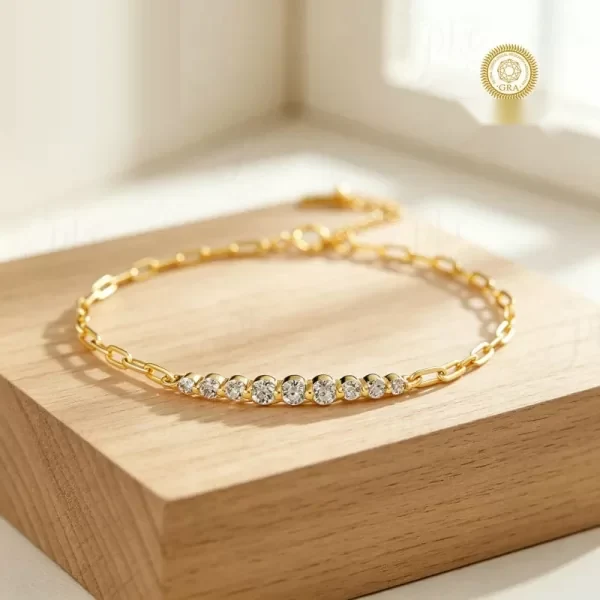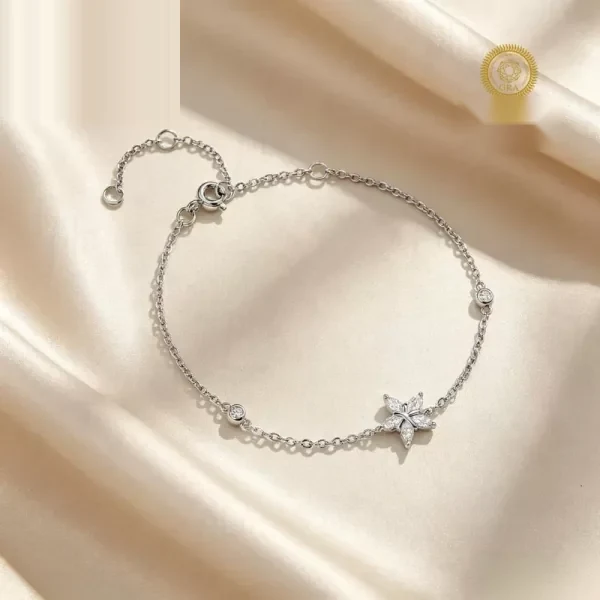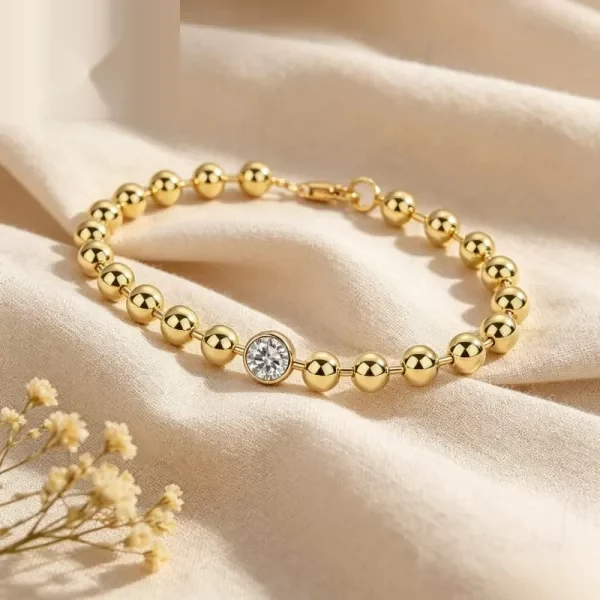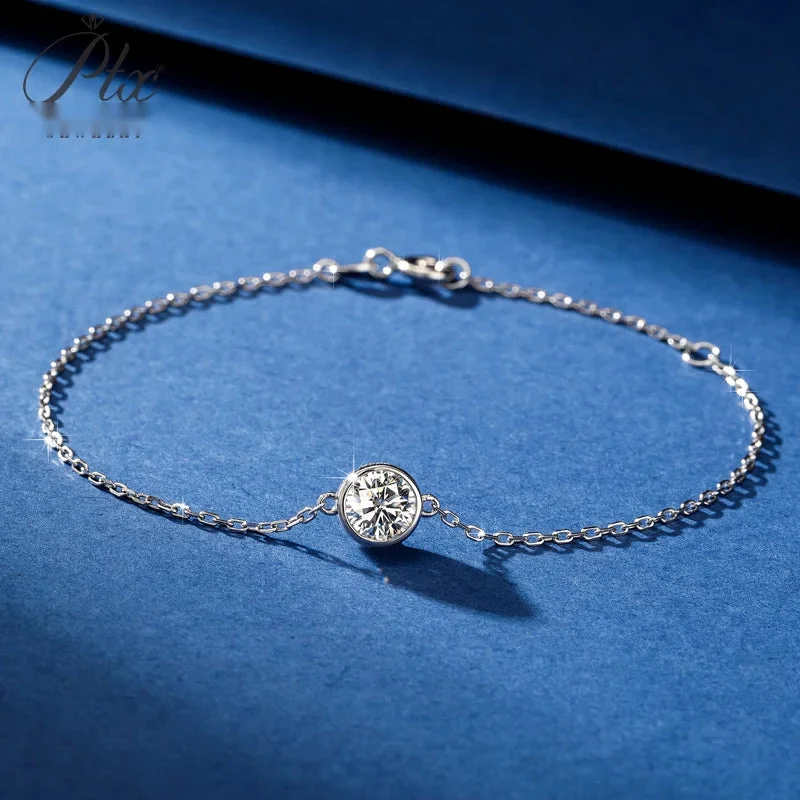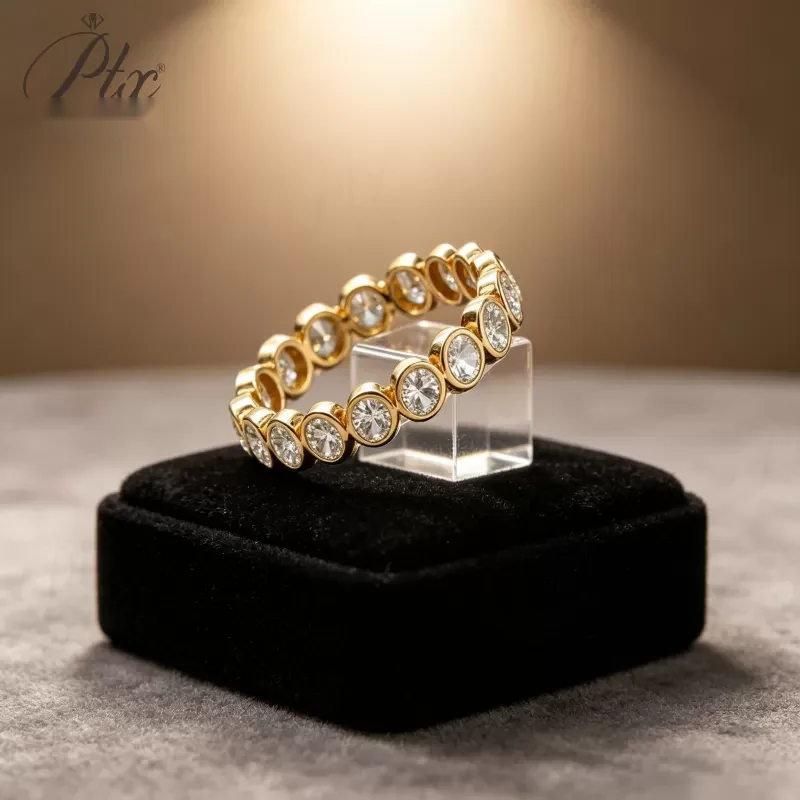
An Australian jewelry brand ordered 1,000 moissanite tennis bracelets from a low-cost supplier in 2024. The bracelets looked great when they arrived. But within 90 days, customers returned 13% with stones falling out and clasps opening on their own. The supplier had used snap-set stones without proper seats, weak single-box clasps without safety chains, and thin links that kinked. When the brand requested replacements, the supplier stopped responding to emails. They reached out to us in March 2025. We analyzed the defective bracelets, quoted production to our standards, and delivered 1,200 replacement pieces with proper seat-cut settings, figure-8 safety clasps, and 1-inch extension chains. Their return rate dropped to 1.3% and they now run 2,000+ pieces per quarter with us.
Tennis bracelets are consistently one of the top three best-selling moissanite jewelry categories. They are also one of the highest return categories when sourced from under-spec factories. Bracelets face unique stresses—constant wrist bending, impact against desks and steering wheels, frequent clasp opening and closing—that expose manufacturing shortcuts quickly. This guide covers how to select a moissanite tennis bracelet supplier, the specific specs to require, and how to test samples to avoid the costly mistakes many brands make.
What a Competent Tennis Bracelet Supplier Delivers
Tennis bracelets share construction principles with tennis necklaces but operate in a much harsher wear environment. Wrists move constantly, bang against hard surfaces, and twist in ways that put direct leverage on stone settings and clasps. Good suppliers understand these stresses and engineer for them:
- Safety clasps with backup: A single box clasp without safety is a failure waiting to happen. We use box clasps with figure-8 safety chains as standard on every tennis bracelet. If the clasp somehow opens, the safety chain keeps the bracelet on the wrist. The chain also provides 1 inch of size flexibility, covering 6.5-7.5 inch wrists on a 7-inch bracelet.
- Impact-resistant stone settings: Wrist impact means stones need deeper seats than necklaces. We cut seats to 55-60% of girdle depth for bracelets vs 50-55% for necklaces, and set at slightly higher torque (3.8-4.2 in-lbs) to resist impact dislodgement. Shallow-set stones pop out the first time the wearer bangs their wrist on a desk.
- Articulated links that flex without kinking: Bracelet links must bend smoothly with wrist movement but not so loosely that gaps open between stones. Links should be 0.6mm+ thick and connected with precision pins (not jump rings) for consistent articulation. Links that are too thin kink permanently; links that are too rigid create leverage that pries stones loose.
- Comfort-finished edges: The inner surface of a tennis bracelet sits against the wrist all day. Sharp channel edges or unpolished prong tips scratch skin and catch sleeves. Quality suppliers fully radius and polish all inner surfaces and perform a nylon cloth drag test to catch snags.
- Durable clasps rated for repeated use: Bracelet clasps open and close daily—far more often than necklace clasps. Cheap springs lose tension in 6-12 months. We use music-wire springs rated for 10,000+ open/close cycles and function-test every clasp 10 times before shipment.
IGI and GIA recognize that bracelet settings require extra security due to impact exposure. The 1-inch safety chain is not a luxury—it is a basic safety feature that prevents customers from losing their bracelets entirely. Browse our moissanite tennis bracelet supplier catalog for available styles and specifications.
Supplier Comparison: Quality Standards
We evaluated tennis bracelet quality from 12 competing suppliers in Q1 2025. The table below shows where quality differences appear:
| Specification | Low-Cost Supplier | Reliable Bracelet Manufacturer |
|---|---|---|
| Clasp type | Single box, no safety | Box clasp + figure-8 safety chain |
| Safety chain | Not included | 1-inch extender included as standard |
| Clasp spring rating | ~2,000 cycles, weak | Music-wire spring, 10,000+ cycles |
| Link thickness | 0.4-0.5mm (kinks easily) | 0.6mm+ with pin connectors |
| Stone seat depth | 40-45% of girdle | 55-60% (impact resistant) |
| Setting method | Snap-set/burnished no seat | Individual seat per stone, calibrated |
| Inner edge finish | Sharp edges common | Fully radiused, polished, snag-tested |
| Plating | 0.5-1.0μm rhodium | 2.0-3.0μm over E-coat |
| Testing | Visual check only | 100% flex + rattle, 10% pull tested |
| MOQ | 100-200 pieces | 50 pieces per style |
| Defect rate | 5-14% | Under 1.5% |
The safety chain's dual function (security + size flexibility) is one of the highest-ROI features in bracelet manufacturing. Including it as standard eliminates the need to stock 6.5, 7, and 7.5 inch lengths separately—a single 7-inch bracelet with 1-inch extender fits all three sizes. This reduces your SKU count by two-thirds while preventing lost-bracelet incidents. We include the safety chain on every tennis bracelet at every price point. The $1.80 per unit cost is trivial compared to a customer losing a $400 bracelet. FTC guidelines require accurate metal stamping, but safety features like chains are supplier decisions that directly affect customer satisfaction.
How to Evaluate a Tennis Bracelet Supplier
Follow this evaluation process to identify bracelet suppliers that will deliver consistent quality:
- Order samples in 3mm and 4mm widths: These are the top-selling sizes and cover both lightweight fashion and statement-piece expectations. Order 7-inch length.
- Inspect the clasp and safety chain first: Open and close the clasp 15-20 times. It should snap shut positively with no wiggle. The safety chain should clip firmly and require deliberate pressure to open. If there is no safety chain, the supplier does not understand bracelet engineering.
- Flex the bracelet fully: Bend the bracelet as if it were on a wrist typing, gripping a steering wheel, and flexing. It should articulate smoothly without kinking or feeling stiff. Kinks indicate thin links or poor pin construction.
- Rattle test aggressively: Hold the bracelet by one end and shake hard next to your ear. Tap it firmly against your palm 10-15 times. Any rattle means loose stones that will fall out on wrist impact.
- Check inner edge comfort: Run the bracelet's inner surface along your forearm and across a nylon cloth. Any catch or scratch indicates sharp edges that will irritate skin and catch on sleeves.
- Lay flat and check stone alignment: Place the bracelet flat on a dark surface under bright light. Stones should form a perfectly straight, continuous line. Gaps, high/low stones, or crooked alignment indicate poor setting work.
- Pull test the clasp (firmly): Clip the clasp and pull with 15 pounds of force (about as hard as you can pull with one hand without pain). The clasp should hold; the safety chain should hold if the clasp somehow releases. Anything that opens under this load will fail in real wear.
- Wear test for 3-5 full days: Wear the sample bracelet day and night—typing, washing hands, sleeping, exercising. Note any clasp loosening, stone rattle, skin irritation, or fabric catching. This is the ultimate test.
ISO 9001 quality management processes ensure these tests happen on every batch, not just samples. We run every bracelet through flex-and-rattle testing after setting and again after plating, pull-test 10% of every batch, and do a nylon cloth drag test for edge smoothness. In 2025 YTD, our tennis bracelet defect rate is 1.4%.
Tennis Bracelet Wholesale Pricing (Q3 2025)
Our EXW Shenzhen pricing for sterling silver, D-E-F VVS moissanite, box clasp with figure-8 safety + 1-inch extender, 7-inch length:
- 2mm (~2ctw): $36/piece (100+), $42/piece (50-99)
- 3mm (~3.5ctw): $49/piece (100+), $56/piece (50-99)
- 4mm (~6.5ctw): $72/piece (100+), $82/piece (50-99)
- 5mm (~10ctw): $105/piece (100+), $118/piece (50-99)
- 6mm (~15ctw): $148/piece (100+), $168/piece (50-99)
14K gold runs 2.2-3x silver pricing. Lengths: 6.5-inch (petite), 7-inch (standard with extender fits 6.5-7.5). Four-prong settings add 10% over channel; bezel settings add 18-22%. Bolo adjustable closures (one-size-fits-all gifting) are a $5 upgrade, fully adjustable from 5-9 inches, eliminating size selection entirely. Bracelets pair naturally with tennis necklaces as matching sets (35% cross-sell rate), and work as add-ons with stud earrings and engagement rings for gift programs.
Which Bracelet Program Fits Your Business?
Different channels require different specifications:
If you sell everyday fashion/Instagram brands under $200 retail: 3mm sterling silver channel-set is the top-selling SKU. 7-inch with safety chain covers sizing. 2mm works as a layering piece for customers who stack bracelets. Lead with 3mm silver in white gold finish—this is the volume driver.
If you sell bridal/gifting $200-$500: 3-4mm in sterling silver or 10K gold, prong settings for maximum sparkle. 7-inch with extender covers sizing. Position tennis bracelets as "wedding party gifts" and "push presents." Offer necklace + bracelet bundle sets at 10% discount—35% of customers take the bundle when offered.
If you sell premium fine jewelry $500+: 4-5mm in 14K gold, four-prong hand-set, IGI certification available. Include premium packaging and appraisal documentation. Offer custom engraving on the clasp for heirloom positioning. Graduated designs (smaller stones at the clasp, larger at center top) add visual interest for this segment.
If you sell at pop-ups/trade shows: Bring 3mm and 4mm in 7-inch as your core display. Tennis bracelets sell incredibly well in person—customers love trying them on and seeing the sparkle on their wrist. The safety chain/extender is perfect for shows because customers can fasten the bracelet immediately without worrying about exact sizing. We offer velvet display trays for wholesale clients doing events.
Frequently Asked Questions
Q: What is the MOQ for wholesale tennis bracelets?
A: 50 pieces per style/width for sterling silver OEM, 30 pieces for stock designs. 14K gold has a 20-piece MOQ. Because every bracelet includes a 1-inch safety chain extender, the 7-inch length covers wrists 6.5 to 7.5 inches—eliminating the need to stock multiple lengths. Mixed widths (2/3/4mm) can be combined to hit volume pricing.
Q: Do all your tennis bracelets include safety chains?
A: Yes. The figure-8 safety chain with dual connector is standard on every tennis bracelet we make, regardless of price point. We do not offer tennis bracelets without safety chains—the $1.80 per unit cost is trivial compared to a customer losing their bracelet. For clients who prefer a cleaner look, we can attach the chain discreetly against the clasp side.
Q: How long does tennis bracelet production take?
A: Stock bracelets ship in 3-7 days. OEM sterling silver orders take 15-25 days; 14K gold takes 20-28 days. Bracelets set slightly faster than necklaces (fewer stones per piece). Rush production at 15% surcharge delivers in 10-14 days. For consistent-volume clients, we maintain safety stock of 3mm and 4mm silver in 7-inch for 3-5 day replenishment.
Q: Can you make bolo adjustable tennis bracelets?
A: Yes. Bolo closures are popular for gifting because they eliminate size selection entirely. We use stainless steel bolo cords with silicone tension sliders that hold position without slipping. Bolos add $5 per unit over box clasps at 50 piece MOQ. Bolo bracelets adjust from 5 to 9 inches to fit virtually any wrist.
Q: What testing do you perform on bracelets?
A: Every bracelet receives 10 open/close clasp function tests, a full-length flex test for kinks, and an aggressive rattle test for loose stones. 10% of each batch gets a 15-pound pull test on clasp and safety chain. We also run a nylon cloth drag test over the entire surface to detect sharp edges that could scratch or catch fabric.
Q: Can I order matching tennis bracelet and necklace sets?
A: Absolutely. Matching sets in the same stone size, setting type, and finish are available and count together toward volume pricing. We can package sets in a single gift box for $1.50 per set premium. Our data shows clients who buy bracelet+necklace sets have 23% higher AOV and lower return rates due to the coordinated aesthetic.
Key Takeaways for Selecting a Tennis Bracelet Supplier
Tennis bracelets are high-volume, high-margin pieces where mechanical quality directly determines your return rate. These are the non-negotiable requirements to put in your POs:
- Box clasp with figure-8 safety chain (1-inch extender) as standard on every piece
- Individual stone seats cut to 55-60% girdle depth for impact resistance
- Music-wire clasp springs rated for 10,000+ open/close cycles
- 100% flex-and-rattle testing plus 10% pull testing to 15 lbs
- Fully radiused and polished inner edges with nylon snag testing
- 0.6mm+ link thickness with precision pin connectors (not jump rings)
- 2-3μm rhodium plating over E-coat for extended wear life
Request our full moissanite bracelet catalog with all stone sizes, setting options, clasp types, and wholesale pricing. We recommend starting with 3mm and 4mm sterling silver in 7-inch for most brands—these two SKUs cover over 60% of tennis bracelet demand. Send us your target quantities, metal preference, and retail price point, and we will return a detailed quote with sample availability, matching necklace options, and production timeline within 24 hours. Live video factory tours are available to see our setting, flex testing, and QC processes in person before you order.