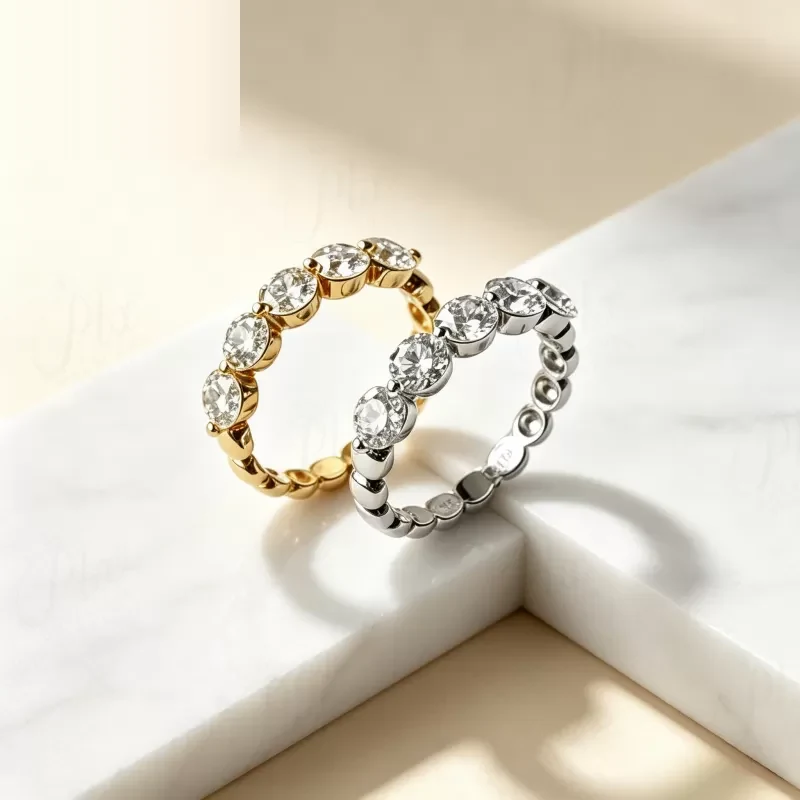
Most independent jewelers treat the engagement ring as the sale. The stores that grow fastest treat it as the front door. A wedding registry is the mechanism that pulls a couple through that door and keeps them buying for twelve to eighteen months: bands, gifts from guests, shower presents, anniversary upgrades, and eventually the next generation. Moissanite is unusually well suited to a registry because it gives couples a premium look at a price point their friends and family can actually afford to contribute toward.

The logic is simple. A couple registering for a $12,000 diamond ring asks their guests to fund a single large item most of them cannot realistically chip in on. A couple registering for a $1,800 moissanite engagement ring plus a $600 band, a $250 pair of stud earrings, and a $180 pendant creates a menu of gift prices that a cousin, a coworker, and a set of parents can each participate in. That is the core commercial advantage, and it is why moissanite registries convert guest contributions at a far higher rate than traditional diamond registries.
Curate the registry around price tiers, not just pretty pieces
A registry only works if it has items at several price points. Aim for roughly a third of the list under $200, a third between $200 and $600, and a handful of anchor pieces above $600. Under $200, stock moissanite stud earrings, small pendants, and stackable bands. In the middle tier, offer matching wedding bands, tennis bracelets, and halo earrings. The anchor pieces are the engagement rings themselves and a few statement necklaces that guests can group-fund through a contribution pool.
Because moissanite sits at a comfortable wholesale-to-retail margin, you can carry this breadth without tying up working capital the way a diamond inventory would. Pull your best movers from your best-selling moissanite stock list rather than guessing at what couples will want. Familiar, proven shapes like round and oval should make up the bulk of the bridal anchors; see our guide on which moissanite shapes to stock for the breakdown.
Set up the contribution pool correctly
Couples increasingly prefer a digital contribution pool over a physical gift table. When you set this up, make the funding rules explicit: guests pay online, funds accumulate against a chosen piece, and the couple redeems the balance when the ring or band is ready. The operational detail most retailers miss is reserving the actual inventory. If a couple has pooled $1,400 toward a specific 7mm oval solitaire, that ring should be pulled and held in their name until redemption. Otherwise you risk selling the piece out from under them and destroying trust at the exact moment they are happiest with you.
Train your staff to walk couples through it
A registry is sold, not discovered. Your sales team should introduce it at the end of the engagement ring appointment, not on the way out the door. A short script works well: show the couple the ring they just tried on, then explain that friends and family can contribute toward it or choose from a matched set. Staff should also know how to answer the questions couples will hear from guests, which is the same set of objections covered in our guide to customer questions moissanite resellers face.
Track the numbers that matter
Run the registry as a measured program. Track four metrics each month: the number of couples who open a registry, the percentage who actually receive at least one guest contribution, the average redeemed value per couple, and the attach rate of add-on sales at redemption. Most stores see the engagement ring itself as the KPI, but the redeemed add-ons are where the margin hides. A couple who registers for a solitaire and redeems it six weeks later will almost always leave with a band, a cleaning kit, and insurance paperwork if those are waiting for them.
Refresh the list with the season
Couples register year-round, but the spring and early fall wedding seasons pull inventory fast. Rebuild your list before each peak so the under-$200 tier never goes bare. If you work from a wholesale partner that can replenish in two to three weeks, you can keep the list lean and order against committed demand rather than guessing at volume. That discipline is the difference between a registry that builds goodwill and one that ties up cash in slow-moving bridal stock.
A moissanite registry does more than add revenue. It turns guests into your customers: every aunt who buys a pendant from the list is a lead for her own future purchases. Treat the registry as a customer-acquisition channel, curate it honestly across price tiers, and the engagement ring stops being a one-off transaction and becomes the start of a decades-long relationship.
The history and conventions of engagement rings are outlined in the Wikipedia entry on engagement rings.
Frequently Asked Questions
Is moissanite a good diamond alternative for retail buyers?
Yes for price-sensitive customers who want brilliance and hardness. Moissanite ranks 9.25 on the Mohs scale, holds up to daily wear and costs a fraction of a natural diamond of the same size, so it resells fast in bridal and fashion lines.
What is the minimum order for wholesale moissanite?
MOQ starts at 50 pieces per design for stock items. Custom cuts and private-label settings usually start at 100–300 pieces depending on the mold.
Do you provide certificates with moissanite stones?
Yes. Every parcel ships with GRA or IGI documentation listing carat weight, color grade and cut. We recommend passing the certificate to your end customer for trust.
How long does sample and bulk production take?
Samples ship in 3–5 days. Bulk runs take 15–20 days under 500 pieces, and 25–30 days for custom work.