Moissanite scores 9.25 on the Mohs scale — just below sapphire and well above any everyday abrasive. What it does not have is diamond's toughness against impact. A sharp blow to the girdle can chip it, and a poorly cut seat can do slow damage over years of wear. The setting you choose is as much a structural decision as an aesthetic one, and the wrong setting turns a 9.25-hard stone into a warranty problem.
Prong settings: the bridal default, with caveats
A six-prong round solitaire is the safest, most resize-friendly setting you can buy. Four-prong shows more stone but concentrates pressure on four contact points instead of six, which matters more on moissanite than on diamond. For ovals, pears and marquises, ask for claw prongs that lift over the points — flat prongs on a pear point catch on knits and accelerate wear, and the point itself is the most chip-prone part of a fancy shape. Insist on prongs that are burnished or laser-tipped rather than just bent over the stone; a prong that lifts by even a fraction is a lost stone waiting to happen.
Bezel settings: great for active lifestyles, risky on poor seats
A full or half bezel protects the girdle from knocks and is the right call for customers who work with their hands, play sports, or simply hate the look of prongs. The catch is that a bezel seat must be cut to the exact millimeter of the stone. A bezel that grips too hard presses unevenly on moissanite and can chip the girdle over months of wear; a bezel that is too loose lets the stone rotate, which ruins a faceted edge within a year. If you are buying bezel-set moissanite from a factory, ask for a close-up of the seat edge on a sample before approving bulk. A clean, even seat with no gaps is what you are checking for.
Pavé and micro-pavé: beautiful, harder to resize
Micro-pavé in 1.0 to 1.3mm melee is where most modern bridal lines live. Moissanite melee takes the heat of setting well, but tiny beads loosen with daily wear. Specify laser-set beads rather than hand-bent beads, and tell customers in the care card that pavé bands cannot be resized more than one size up or down without losing stones. A full-eternity pavé band should be sold as a final-sale piece with accurate sizing, not as something your bench will adjust later.
Channel and tension settings
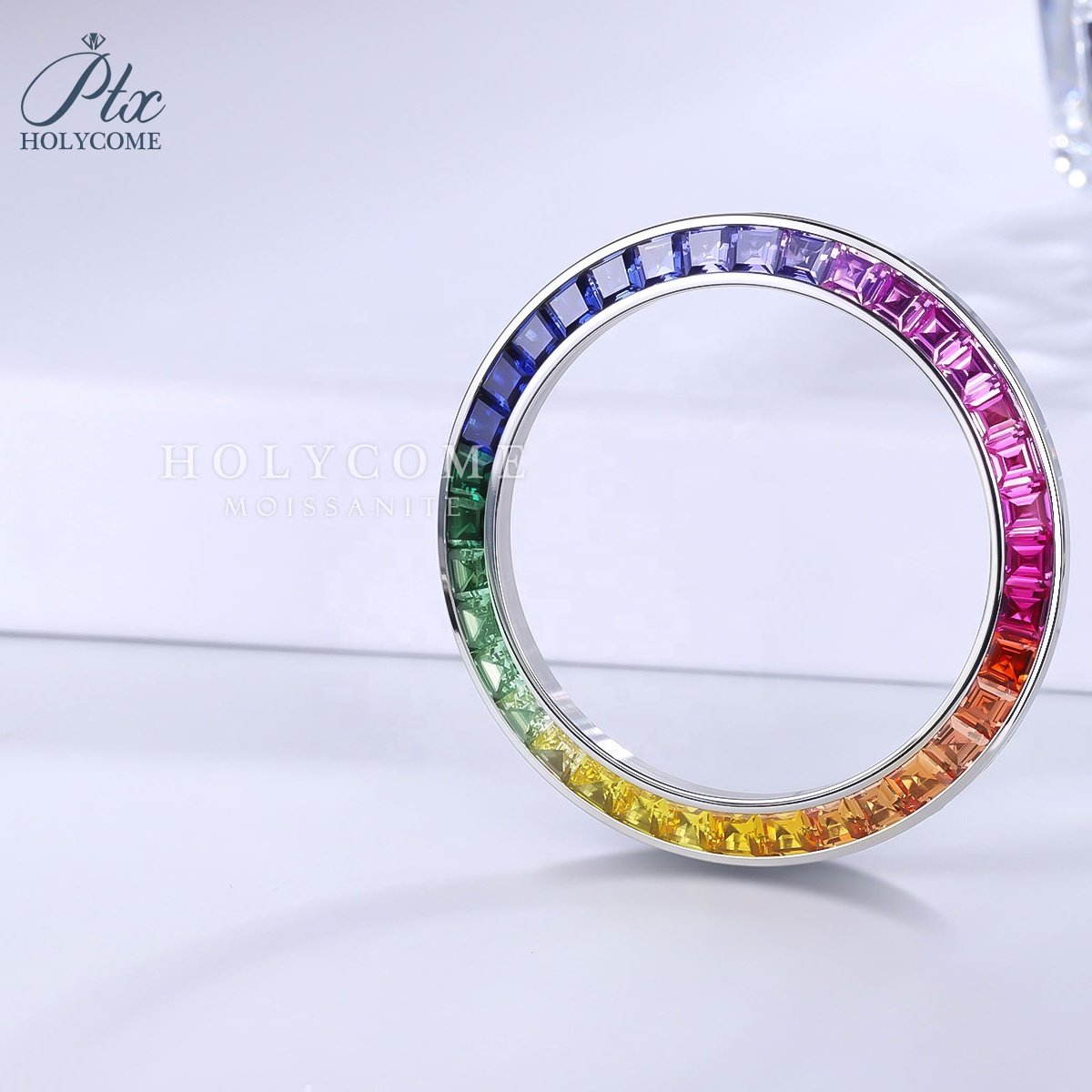
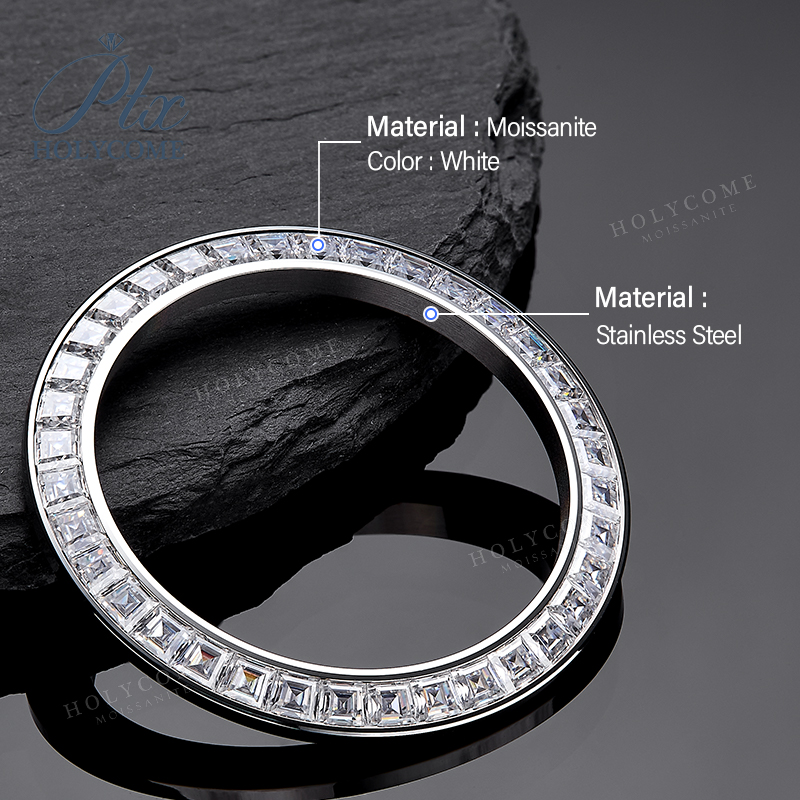
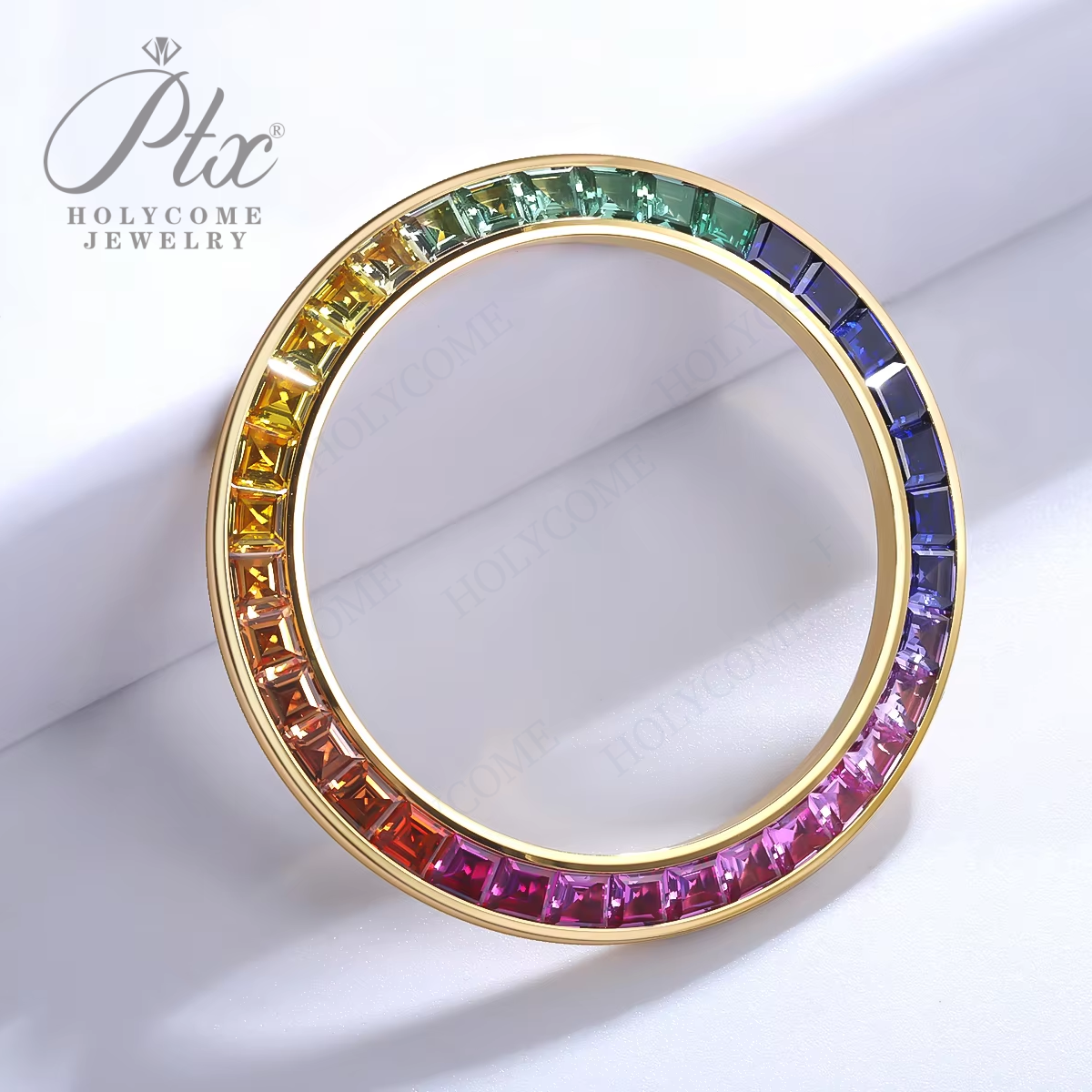
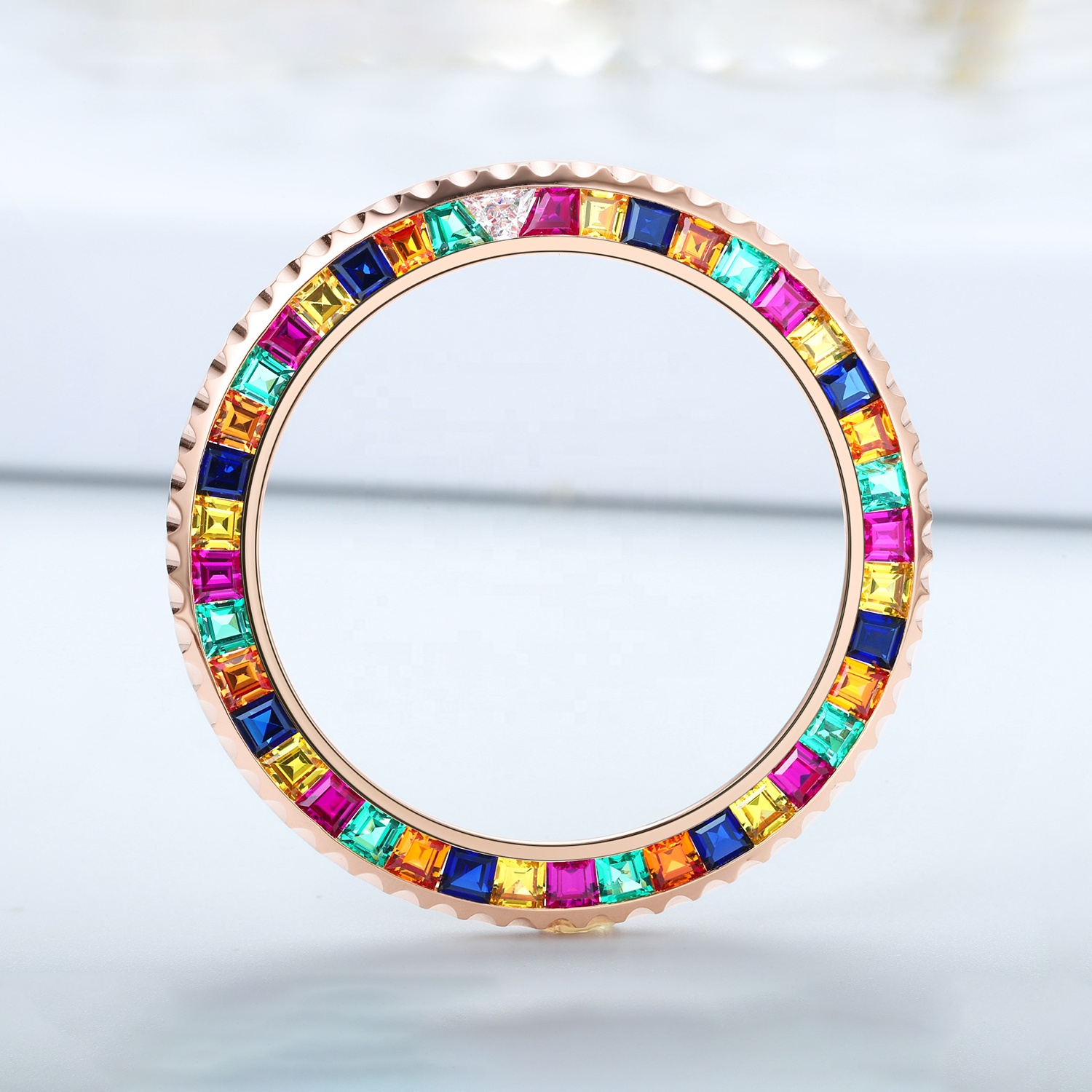
Channel settings are reliable for men's bands and wedding stackers, as long as the channel walls are polished so they do not abrade the stone edges. A rough channel wall slowly wears a flat spot on the stone over years, which dulls the sparkle. Tension settings are a different story. The even, high-pressure grip that holds a diamond securely is unforgiving on moissanite; uneven seating is a common chip point, and the dramatic floating look is not worth the return rate. Unless the factory warrants the setting against stone loss in writing, skip tension mounts for moissanite.
Resizeability is a merchandising decision
Bridal customers change ring size. A solitaire resizes cleanly. A full pavé eternity band does not. If your store offers free resizing, weight your line toward solitaires, half-eternity bands and three-stone settings, and treat full-eternity rings as final-sale pieces. That one choice quietly reduces your repair bench load by half and removes a source of customer frustration that has nothing to do with the stone itself.
The core that works for most boutiques
Whatever setting you choose, the care card should match it. A prong-set ring needs a line about checking prongs every six months. A bezel-set ring needs a line about removing it before heavy lifting. A pavé band needs a line about resizing limits. A customer who gets a generic care card and then bends a prong in the gym will blame the ring; a customer who got the specific warning will remember it. The care card is part of the setting decision, not an afterthought.
One more structural point: ask the factory whether the setting is cast as one piece or assembled. A cast shank with prongs added on is common and fine. A ring assembled from thin sheet with soldered-on prongs is cheaper to make but more likely to lift a prong over time. If the price on a solitaire looks too good to be true, the assembly method is usually where the cost came out.
If you are building a line from scratch, the safest core is a six-prong solitaire plus a half-bezel halo. Both resize-friendly, both forgiving of small size differences, both proven sellers across price points. Add pavé half-eternity bands as a stacker, and avoid tension and full-eternity rings until you know your repair bench can handle them. You can see examples of the core settings in our range of moissanite engagement rings.
Independent background on moissanite — how its hardness and refractive index compare with diamond — is documented in the Wikipedia article on moissanite.
Frequently Asked Questions
Is moissanite a good diamond alternative for retail buyers?
Yes for price-sensitive customers who want brilliance and hardness. Moissanite ranks 9.25 on the Mohs scale, holds up to daily wear and costs a fraction of a natural diamond of the same size, so it resells fast in bridal and fashion lines.
What is the minimum order for wholesale moissanite?
MOQ starts at 50 pieces per design for stock items. Custom cuts and private-label settings usually start at 100–300 pieces depending on the mold.
Do you provide certificates with moissanite stones?
Yes. Every parcel ships with GRA or IGI documentation listing carat weight, color grade and cut. We recommend passing the certificate to your end customer for trust.
How long does sample and bulk production take?
Samples ship in 3–5 days. Bulk runs take 15–20 days under 500 pieces, and 25–30 days for custom work.