The first wholesale moissanite order feels like a transaction. The second, third, and twentieth orders reveal that it was actually a hiring decision. The supplier you choose will set your defect rate, your lead times, your reorder friction, and eventually your store's reputation. A structured audit before the first PO takes an afternoon and saves a season of headaches.
Ask for certificate consistency, not just certificates
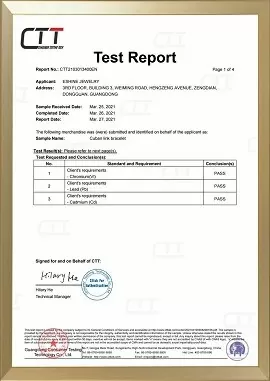
Every supplier can hand over a single GRA certificate (FTC jewelry industry guides). The question is whether every stone above 0.3 carat in an order arrives with one, whether the laser inscription matches the certificate number, and whether the certificate's carat and cut match the stone in the box. Order a sample of three to five solitaires, check the girdle inscription under 10x magnification against the paperwork, and keep the photos. A supplier who is hiding inconsistency will usually drop out of the conversation at this point.
Require pre-shipment QC photos
Photographs of every finished piece before packing are cheap for the factory and a serious filter for you. Ask for shots of the top, the profile, the stamp inside the shank, and the certificate. If the supplier agrees without hesitation, that is a sign they run a clean line. If they push back with "you will see it when it arrives," treat that as a red flag. You cannot un-receive a defective batch.
Compare DDP and FOB in writing
A supplier's listed wholesale price is meaningless without the shipping and duty terms attached. Ask for two proformas on the same order: one DDP to your warehouse, one FOB at their airport. The DDP number is what your finance team should plan around; the FOB number is what you compare against competitors. Suppliers who only quote one are either hiding a high freight markup or forcing you into logistics work you did not sign up for.
Test the sample policy honestly
Most wholesale buyers expect a small sample order at near-wholesale rates. A supplier who refuses samples entirely is either overconfident or overstocked on bad inventory. A supplier who offers free samples with no strings attached is usually over-eager and new to B2B. The healthy middle is a low-cost sample order that ships with the rest of the catalog and is credited against your first bulk PO.
Measure communication speed and specificity
Email response time on weekdays is a useful proxy. A supplier who replies within four hours with a specific answer about an SKU will handle your reorders well. A supplier who replies in two days with "we will check" will lose your urgent bridal order in November. Watch how they handle a hard question, too. "Our stones are great quality" is a generic answer. "Our round 6.5mm stones run DEF color, VS-equivalent clarity, with GRA cert numbers in the 28xxxx range" is a specific one.
Check capacity against your growth
A supplier who handles your first 30-piece order may not handle a 500-piece reorder during bridal season. Ask plainly: what is the largest single order they have shipped in the last twelve months, and how long did it take? If their largest is similar to yours, fine. If their largest is ten times yours, also fine—you will not be lost in the queue. If their largest is half yours, you may be a problem customer they tolerate rather than prioritize.
Read the warranty and RMA fine print
A supplier who sounds confident on email is one thing; a supplier who puts a written defect warranty on the proforma invoice is another. The standard is a 30-day RMA window from delivery, with the supplier covering replacement cost on manufacturing defects and the buyer covering return freight. Anything shorter than 30 days is a warning. Anything that excludes loose stones or faulty clasps is a warning. Get the RMA terms in writing on the first PO and keep a copy; you will need it the first time a batch arrives with a loose setting.
Compare payment terms and trade protection
New accounts usually open on a 30/70 split—30 percent deposit, 70 percent before shipment. Once you have six months of clean history, many suppliers move you to net-15 or net-30 on reorders, which changes your cash-flow math. For the first few orders, prefer a platform that offers trade assurance or escrow; it costs a small fee but keeps your deposit protected until the parcel arrives. Wire transfers directly to a supplier you have never met are how buyers lose four-figure deposits to companies that vanish before production.
Talk to two references
Suppliers will happily provide references of happy buyers. Call them. Ask the unglamorous questions: how often do you file an RMA, how long do reorders take, would you switch if a competitor offered five percent off. Two reference calls tell you more than a catalog ever will. Buyers who want to benchmark their current supplier against a second option can start from our buying guides before requesting samples.
For HS classification of jewellery in customs and export documentation, the WCO Harmonized System nomenclature is the authoritative nomenclature.
Frequently Asked Questions
Is moissanite a good diamond alternative for retail buyers?
Yes for price-sensitive customers who want brilliance and hardness. Moissanite ranks 9.25 on the Mohs scale, holds up to daily wear and costs a fraction of a natural diamond of the same size, so it resells fast in bridal and fashion lines.
What is the minimum order for wholesale moissanite?
MOQ starts at 50 pieces per design for stock items. Custom cuts and private-label settings usually start at 100–300 pieces depending on the mold.
Do you provide certificates with moissanite stones?
Yes. Every parcel ships with GRA or IGI documentation listing carat weight, color grade and cut. We recommend passing the certificate to your end customer for trust.
How long does sample and bulk production take?
Samples ship in 3–5 days. Bulk runs take 15–20 days under 500 pieces, and 25–30 days for custom work.