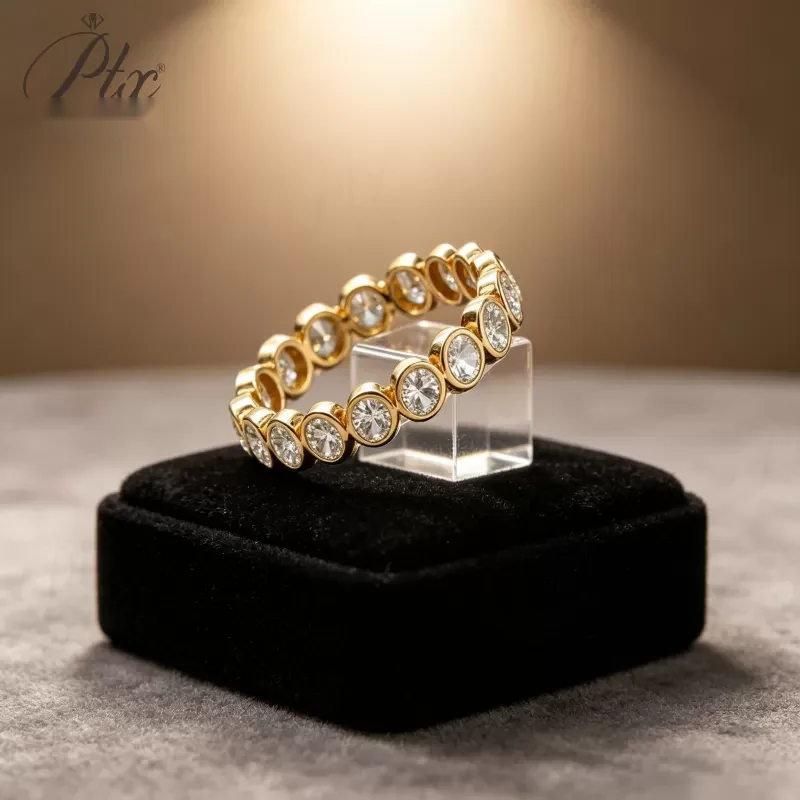
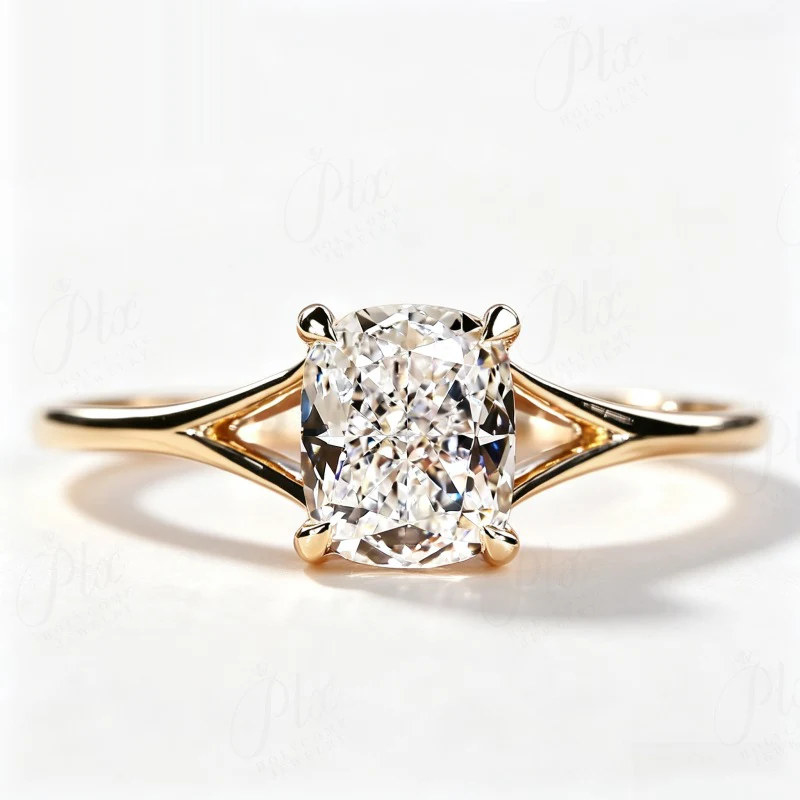
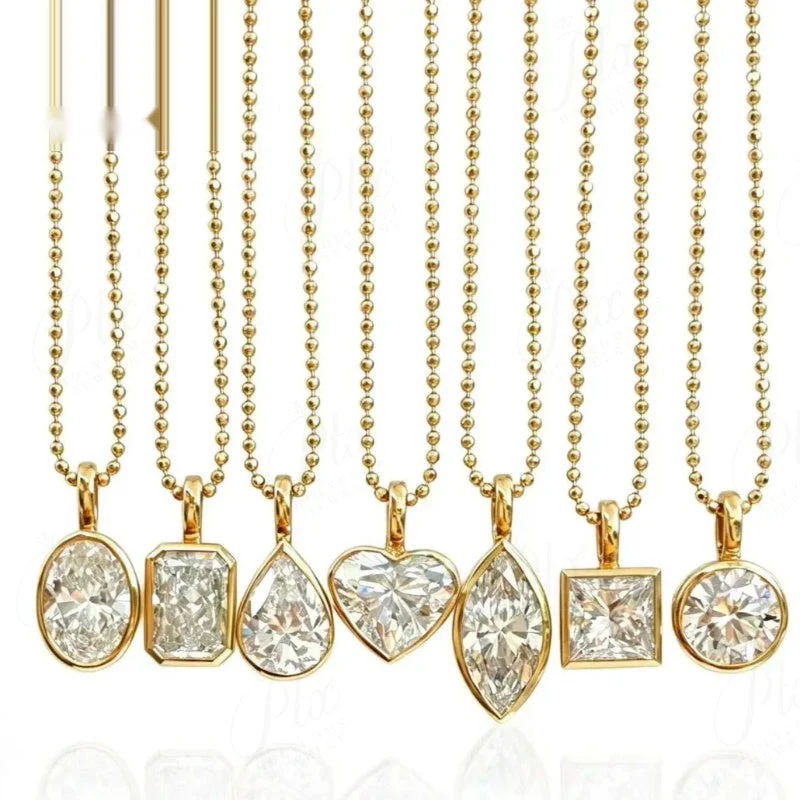
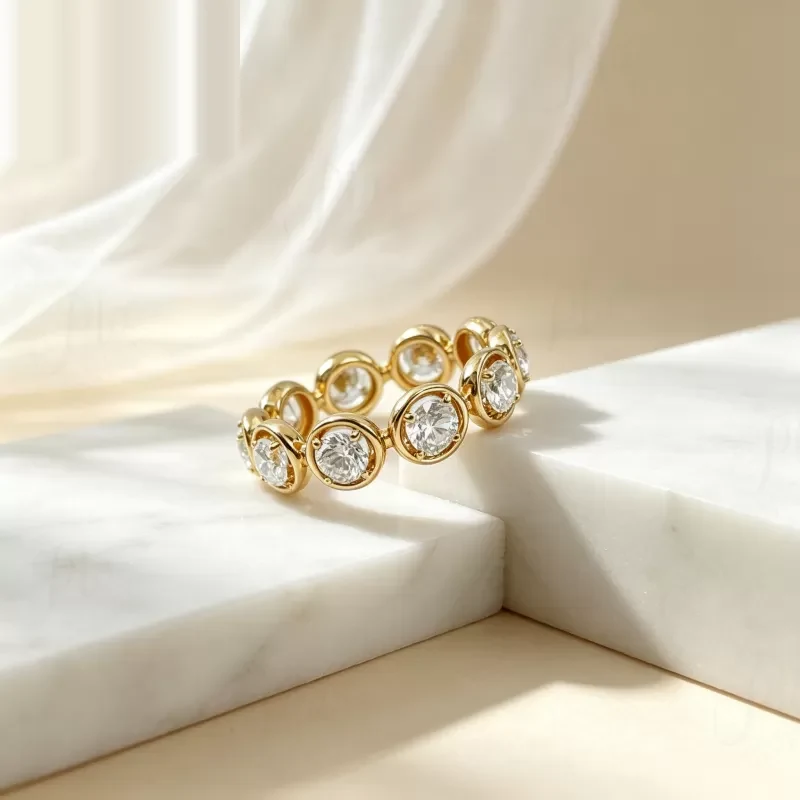
The question retailers ask most often is not whether moissanite looks like diamond. Their customers already answered that. The real question is which one to buy into: do you carry moissanite, do you carry diamond, or do you carry both and split your cash between them? That is an inventory decision, and it deserves the same math you would apply to any other line.
The cost-per-carat gap is the starting point
Compare like for like. A round, near-colorless stone in a solitaire setting, priced at wholesale. Diamond runs on a supply chain where a 1.0ct near-colorless, eye-clean stone costs you thousands before the setting. A comparable-looking moissanite arrives at a small fraction of that, because the supply chain is controlled and the stone is lab-grown rather than mined. That gap does not shrink at retail. It is the whole commercial case.
For a boutique with limited cash, that math is decisive. You can open a moissanite case with a dozen varied pieces for the price of one mid-tier diamond solitaire. The turn on those twelve pieces covers rent before the diamond has even been sized and sold.
Margin structure is not the same shape
Diamond carries a wide but slow margin. You mark it up heavily, but a $2,000 ring may sit in the case for months before the right buyer walks in. Moissanite carries a thinner per-unit markup but a much faster turn, because the ticket lands in the impulse-to-gift range. The two lines reward different operating styles.
Most profitable independents run moissanite as a volume driver and diamond as a high-ticket appointment line. The moissanite case pays the daily overhead; the diamond appointment books the month's standout sale. Trying to make moissanite behave like diamond—holding it for slow, high-ticket turns—wastes the one advantage it has.
Who buys what, and when
Map your customer segments honestly. The proposal customer who wants a "real diamond, forever" certificate (FTC jewelry industry guides) behind the ring is not your moissanite customer, and chasing them with a moissanite pitch costs you trust. The customer who wants a 2ct look on a 1ct budget, or who wants a stackable wardrobe of pieces that does not require insurance paperwork, is exactly the moissanite buyer.
There is also a growing middle: buyers who want a moissanite engagement ring for daily wear and a diamond band, or who buy moissanite as the travel and second-piece option. These shoppers want both on the same visit. A store that carries only one side of that conversation sends them to a competitor that does.
What to stock on each side
For moissanite, lean into the sizes that win on size-per-dollar: the 1.5ct, 2ct, and above looks that a customer could never reach in diamond. Halo settings and ovals do this best because they exaggerate face-up size. For diamond, keep a narrow but credible selection—a handful of solitaire mounts in the most popular sizes—and order the stone to the customer.
A common beginner mistake is stocking equal dollar amounts in both. Equal dollars does not mean equal sales. Moissanite will outrun diamond on a per-square-inch basis most months, and overstocking diamond ties up cash that your moissanite line would have turned several times.
Certification and the trust question
Customers ask for papers. Diamond buyers expect a grading report; moissanite buyers increasingly expect the same. Stock pieces that ship with a GRA document stating color, clarity, and carat equivalent, and be ready to show it. Do not tell a customer moissanite is "the same as diamond." It is not. It is a different stone with a different hardness, a different refractive index, and a different price. Saying it is the same invites a claim later. Say what it is, show the certificate, and let the price do the convincing.
Insurance, paperwork, and the after-sale
One practical difference between the two lines shows up the moment a customer walks out the door. Diamond pieces above a certain value are often insured and appraised; the buyer expects documentation, and your store may be asked to help with the paperwork. Moissanite pieces rarely require that conversation, which means faster transactions and fewer after-sale disputes. That lowers your operating cost on every sale, even before you count the margin.
It also changes how you handle repairs. A pronged moissanite solitaire can be re-set, re-sized, and re-plated the same way a diamond mount can, and customers are less anxious about sending the piece away. A diamond customer treats a resize as a high-stakes event; a moissanite customer treats it as routine. That difference in customer stress compounds across a year of appointments.
How to decide for your store
Run a ninety-day test. Open a focused moissanite case, track turns and sell-through weekly, and keep your diamond line as-is. At the end of the test, compare cash turned per square foot and per dollar invested. If moissanite wins on both, reallocate. The answer will be specific to your location and your customer mix, and it is the only answer that actually matters. You can review the range on our buying guides before you place either order.
Gemstone grading terminology used here follows the Gemological Institute of America’s gem encyclopedia.
Frequently Asked Questions
Is moissanite a good diamond alternative for retail buyers?
Yes for price-sensitive customers who want brilliance and hardness. Moissanite ranks 9.25 on the Mohs scale, holds up to daily wear and costs a fraction of a natural diamond of the same size, so it resells fast in bridal and fashion lines.
What is the minimum order for wholesale moissanite?
MOQ starts at 50 pieces per design for stock items. Custom cuts and private-label settings usually start at 100–300 pieces depending on the mold.
Do you provide certificates with moissanite stones?
Yes. Every parcel ships with GRA or IGI documentation listing carat weight, color grade and cut. We recommend passing the certificate to your end customer for trust.
How long does sample and bulk production take?
Samples ship in 3–5 days. Bulk runs take 15–20 days under 500 pieces, and 25–30 days for custom work.