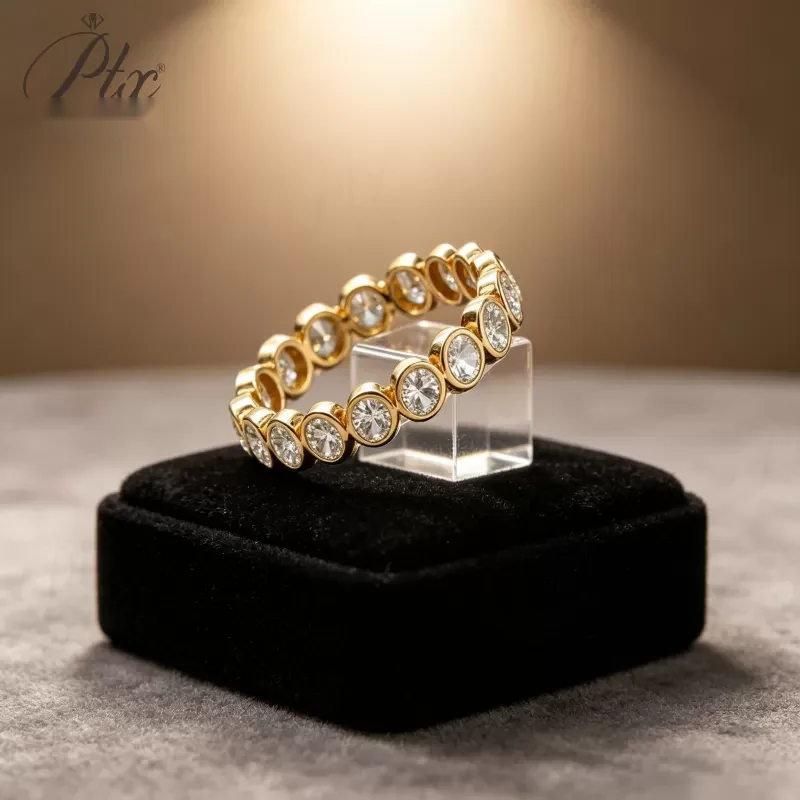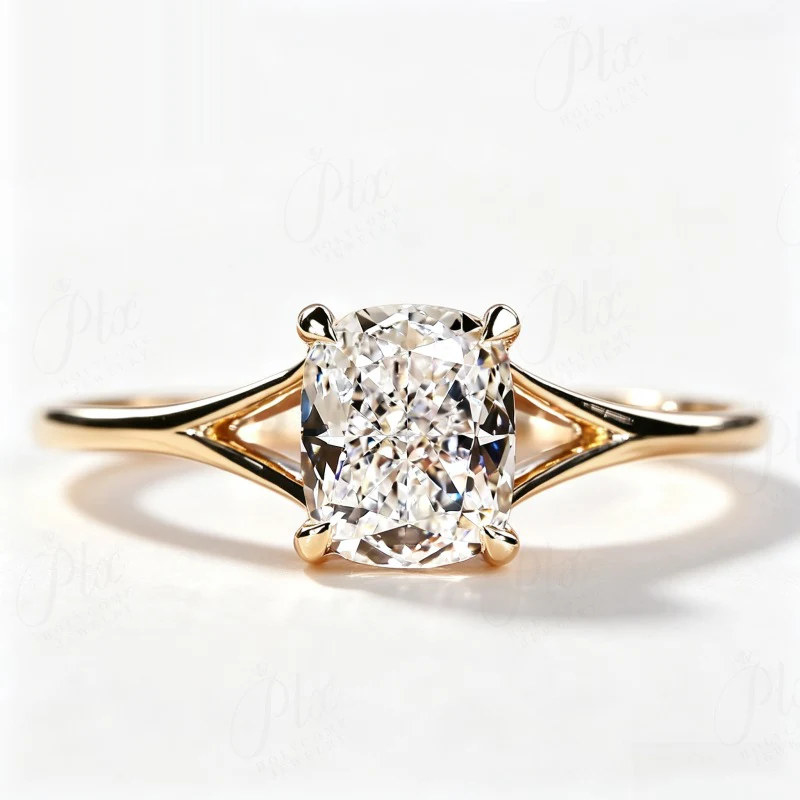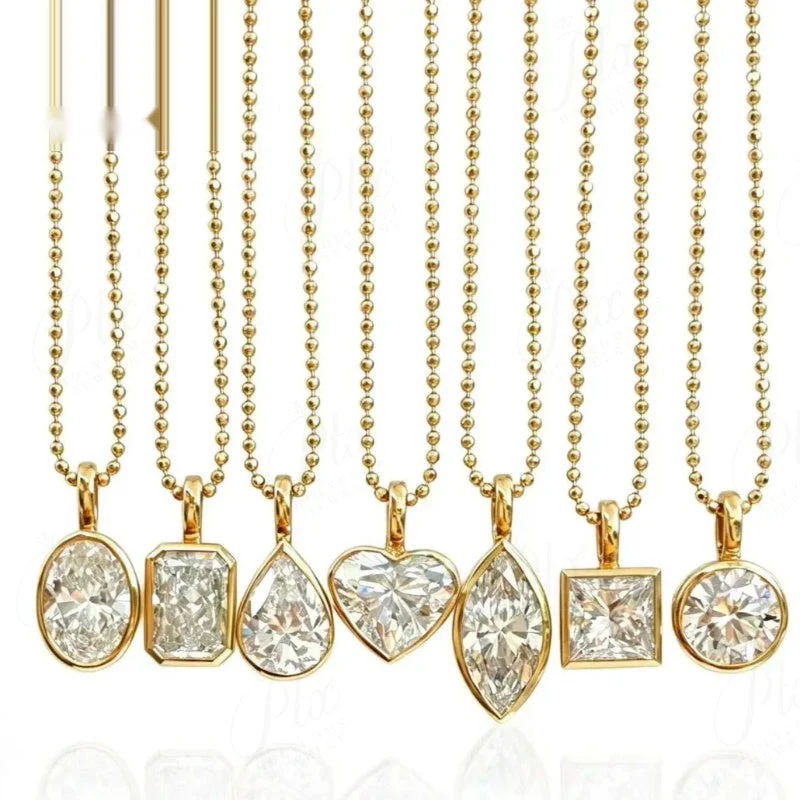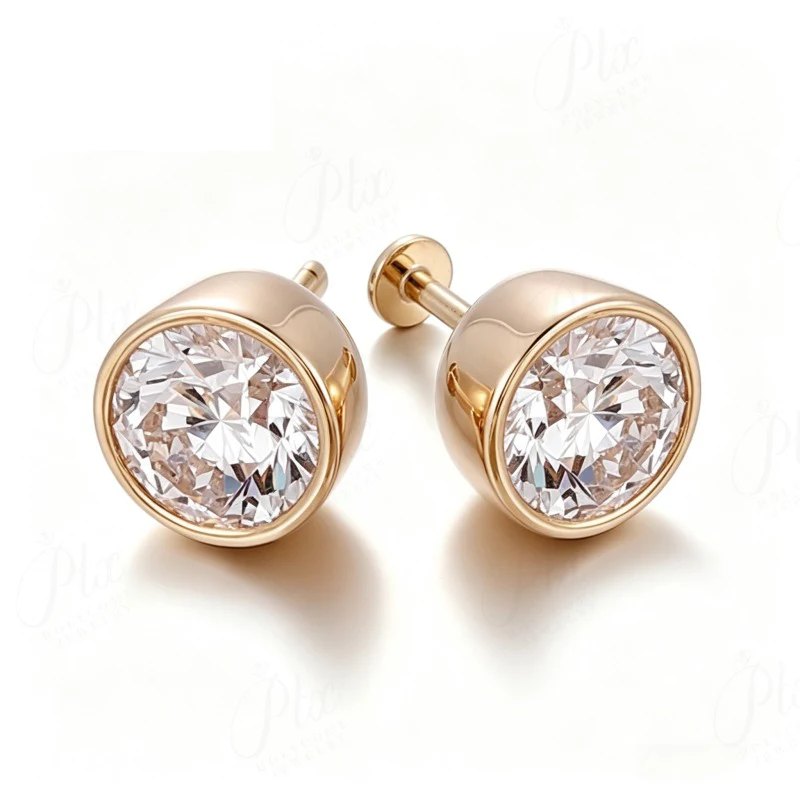
Customers routinely ask "what is the difference between moissanite and a lab-grown diamond?" The honest answer is that they are different stones at different price points, aimed at different buyers. A retailer who treats them as interchangeable ends up competing on price with everyone else and squeezing margin to nothing. A retailer who positions them correctly sells both—to different customers, at different tickets, with different expectations.
The stones themselves
Moissanite is silicon carbide, grown in a lab, with a Mohs hardness of 9.25 and a refractive index higher than diamond, which means it flashes more color under light. Lab-grown diamond is physically identical to mined diamond—same carbon crystal, same hardness of 10, same optics—just produced in weeks rather than mined. To a trained eye in daylight, a well-cut moissanite can show slight rainbow fire that a diamond does not; to a casual eye at ten feet, both read as a bright white stone.
Price and margin structure
A 1 ct equivalent moissanite finished piece retails at a small fraction of a 1 ct lab-grown diamond piece, and the wholesale cost gap is even wider. That means moissanite supports a healthier retail margin on a lower ticket—often 3 to 4 times wholesale—while lab-grown diamond margins are thinner because the customer can price-check the stone itself online in seconds. For a boutique with overhead, moissanite is usually the better margin play; for a jeweler with credibility in diamonds, lab-grown is the credibility play.
Certification and customer expectation
Lab-grown diamonds are sold with IGI or GIA laboratory reports that grade color, clarity and cut exactly like mined stones. Customers who buy lab-grown expect that paper, and they expect to compare it with other lab-grown prices online. Moissanite is sold with GRA-style grading, but the buyer of moissanite is not shopping the certificate—they are shopping the look at the price. If your store wants to lean into the certification conversation, lab-grown is the easier story. If your store wants to lean into the "look, not the paperwork" conversation, moissanite is.
Who buys which
Moissanite buyers tend to be: first-engagement buyers on a tight budget, gift buyers who want a 1 ct look without a 1 ct price, and customers who want a travel or second ring. Lab-grown diamond buyers tend to be: traditional engagement buyers who want diamond optics and a paper trail, clients upgrading a mined stone, and investors who already understand diamond grading. There is overlap, but the two groups do not fully collide.
Resale and insurance: the quiet difference
Neither stone holds retail value the way a mined diamond historically has, but the gap matters to a sophisticated buyer. Lab-grown diamonds have a (depreciating) wholesale resale market; moissanite does not—it is bought for wear, not for investment. Be honest about this with customers who ask. A buyer who expects to resell a moissanite engagement ring in ten years will be disappointed; a buyer who expects to wear a beautiful ring every day for a fraction of a diamond price will be delighted. Insurance premiums on moissanite are low because the replacement cost is low—that is a selling point, not a weakness, and you should say so plainly.
Stocking both: how to think about it
A store with a bridal case can carry both without confusing the customer. Keep lab-grown in the main engagement case with certificates in hand. Keep moissanite in a separate case or section, priced clearly, and lead with the look rather than the certification. Do not try to justify moissanite by comparing it to lab-grown price—justify it by the ticket the customer can afford and the sparkle they get. Trying to argue moissanite is "just as good" as lab-grown pushes the customer into a comparison they will lose on your floor.
The question to ask yourself
Disclosure: say what the stone is
Customers remember a retailer who was upfront. A small sign in the moissanite case reading "Lab-grown moissanite, hardness 9.25, GRA-certified loose stones" builds more trust than a sign that says "Diamond alternative" or "Looks like a diamond." Staff who answer "this is moissanite, not diamond, and here is why it is a great choice" close more sales than staff who let the customer assume it is diamond. The disclosure also protects you from the customer who comes back upset because they thought they were buying a diamond. Honesty here is not a cost; it is the marketing that wins referrals.
If your customer walks in wanting a diamond ring with a certificate, send them to lab-grown. If they walk in wanting a beautiful white stone at a price they can pay today, sell them moissanite. Stock both when your foot traffic is mixed; lead with moissanite when your price points are below $1,000. Compare moissanite rings against your lab-grown line before you decide how much shelf space each earns.
The Gemological Institute of America’s gem encyclopedia is an authoritative, widely cited reference on moissanite and diamond quality factors.
Frequently Asked Questions
Is moissanite a good diamond alternative for retail buyers?
Yes for price-sensitive customers who want brilliance and hardness. Moissanite ranks 9.25 on the Mohs scale, holds up to daily wear and costs a fraction of a natural diamond of the same size, so it resells fast in bridal and fashion lines.
What is the minimum order for wholesale moissanite?
MOQ starts at 50 pieces per design for stock items. Custom cuts and private-label settings usually start at 100–300 pieces depending on the mold.
Do you provide certificates with moissanite stones?
Yes. Every parcel ships with GRA or IGI documentation listing carat weight, color grade and cut. We recommend passing the certificate to your end customer for trust.
How long does sample and bulk production take?
Samples ship in 3–5 days. Bulk runs take 15–20 days under 500 pieces, and 25–30 days for custom work.