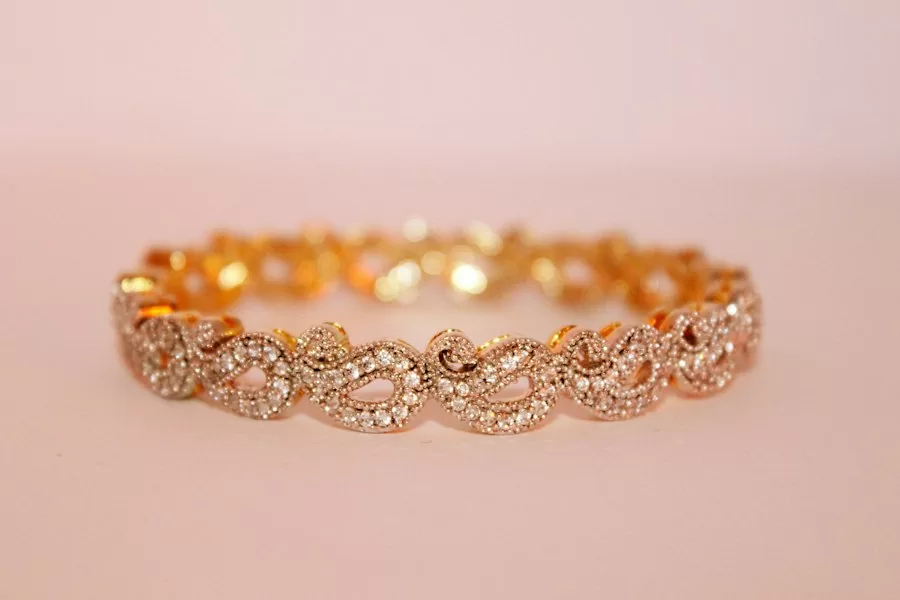
A common assumption among new buyers is that because moissanite ranks near the top of the hardness scale, the whole piece is indestructible. The stone is. The jewelry around it is not. In humid climates, the metal, the plating, the clasps, and the packaging degrade long before the moissanite does. Retailers in coastal, tropical, and summer-humid regions lose more inventory to storage than to wear, and most of that loss is preventable.
What actually goes wrong in humidity
Moissanite does not absorb water, cloud, or discolor with moisture. That is the good news. The problems come from everything adjacent:
- Rhodium plating on white gold wears faster when sweat, perfume, and salt air settle on the surface, turning once-bright white pieces slightly yellow.
- Sterling silver and lower-karat pieces tarnish, and humidity accelerates it visibly within weeks.
- Glue and adhesives in certain settings can soften, loosening stones that were set to last.
- Paper packaging and velvet inserts absorb moisture, stain the jewelry, and grow spots.
- Wooden trays release tannins and hold dampness against the metal.
None of this is dramatic in a dry climate. In a coastal or subtropical summer, the same effects show up inside a single season.
The storage environment that protects stock
You do not need a museum vault. You need controlled, dry, stable conditions. Aim for a storage room that sits between 40% and 50% relative humidity and a steady temperature, out of direct sunlight. A small dehumidifier in the stock closet costs little and pays for itself in avoided tarnish.
Never store inventory in a basement or an attic. Both swing with the weather, and that swing is worse than a steady high humidity. Closets on an interior wall, away from exterior windows, are the simplest correct choice.
Containers and liners that help
Individual plastic-lined compartments beat open velvet trays for long storage. Each piece should have its own slot so stones do not knock against one another. Moissanite is hard enough to scratch softer metals and to chip a neighboring gem, so separation is not cosmetic; it prevents real damage.
Use acid-free tissue and anti-tarnish strips in silver and mixed-metal stock. Silica gel packs, refreshed regularly, pull ambient moisture out of sealed storage bins. Replace the gel once it saturates, because a spent pack does nothing. Our broader notes on professional cleaning and care cover how to restore pieces that have already dulled.
Handling pieces that have been in storage
Pulling stock out after a damp period should not mean wiping it with whatever cloth is nearby. Start with a soft dry microfiber to remove dust, then a gentle jewelry solution if needed. Never use paper towels, which contain wood fibers that scratch polished gold. Inspect every setting under magnification before the piece goes into the case, especially stones set with adhesive or in bezel settings that may have shifted.
Train whoever opens the stock room to look for the early signs: a film on the metal, darkening in the crevices, a musty smell from the packaging. Catching those early means a free polishing cloth and ten seconds of work. Missing them means a piece goes out looking tired and comes back as a return.
A seasonal checklist for damp climates
Build two quick checks into your retail calendar, one at the start of summer humidity and one after the wettest month. Open the stock trays and look for three things: a film on the metal, tarnish in the crevices of silver pieces, and any scent from the packaging. Run a fresh polishing cloth across a few random pieces; if it comes away gray, the plating is starting to wear and those pieces should go back for refinishing before they reach the case. Rotate stock so the oldest pieces move out first, and keep a log of which SKUs sat the longest. In a humid climate, stagnant inventory is the one you will regret. A ten-minute check twice a season prevents a drawer of tired stock you have to discount to clear.
Buy less stock than you think, but buy it protected
In humid climates, overstocking is the enemy. The longer a piece sits in storage, the more opportunities moisture has to attack the plating and packaging. Lean on smaller, more frequent reorders so stock moves through your shop faster than the climate can age it. Fresh inventory also photographs and displays better, which helps online sales.
Moissanite's durability is one of its selling points to customers. Protecting the metal and packaging around it is the quiet operational side of that promise. A dehumidifier, clean compartments, and a twice-yearly stock check will keep your moissanite inventory looking the day it arrived, season after season.
The Wikipedia article on rhodium explains why rhodium plating is applied to white gold and silver jewellery.
Frequently Asked Questions
Is moissanite a good diamond alternative for retail buyers?
Yes for price-sensitive customers who want brilliance and hardness. Moissanite ranks 9.25 on the Mohs scale, holds up to daily wear and costs a fraction of a natural diamond of the same size, so it resells fast in bridal and fashion lines.
What is the minimum order for wholesale moissanite?
MOQ starts at 50 pieces per design for stock items. Custom cuts and private-label settings usually start at 100–300 pieces depending on the mold.
Do you provide certificates with moissanite stones?
Yes. Every parcel ships with GRA or IGI documentation listing carat weight, color grade and cut. We recommend passing the certificate to your end customer for trust.
How long does sample and bulk production take?
Samples ship in 3–5 days. Bulk runs take 15–20 days under 500 pieces, and 25–30 days for custom work.