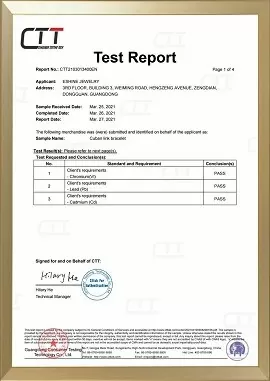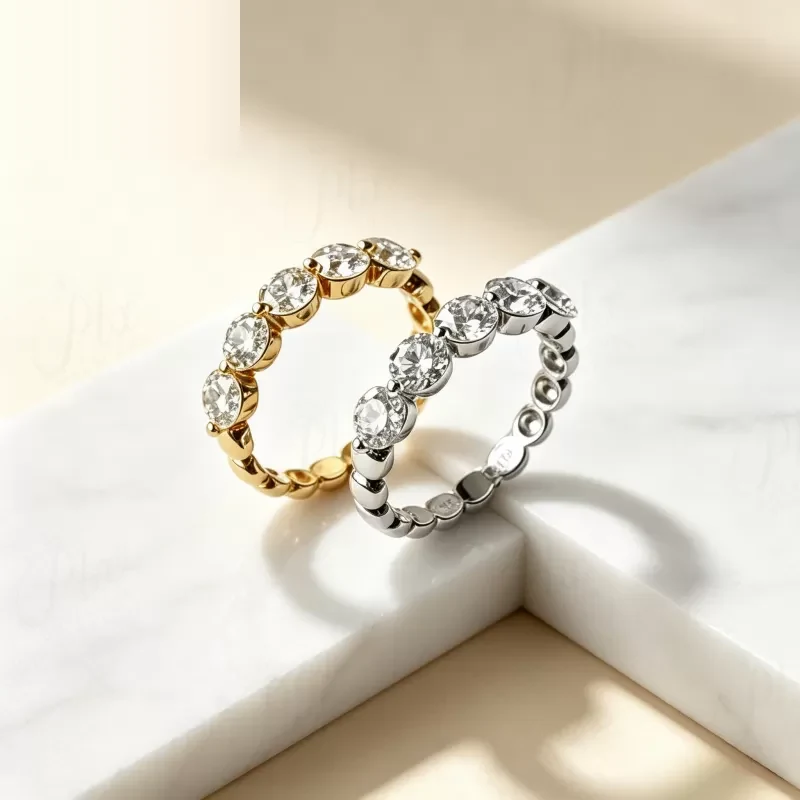
A moissanite tennis bracelet is the piece that turns a window shopper into a high-ticket customer. It is also the piece that comes back more often than any other category—not because the stones fail, but because the clasp fails. Buyers who skip past the hardware details to compare stone counts end up managing a steady trickle of warranty claims. This guide separates the bracelet styles that earn their place on the bracelet bar from the ones that sit.
Tennis bracelets: the centerpiece
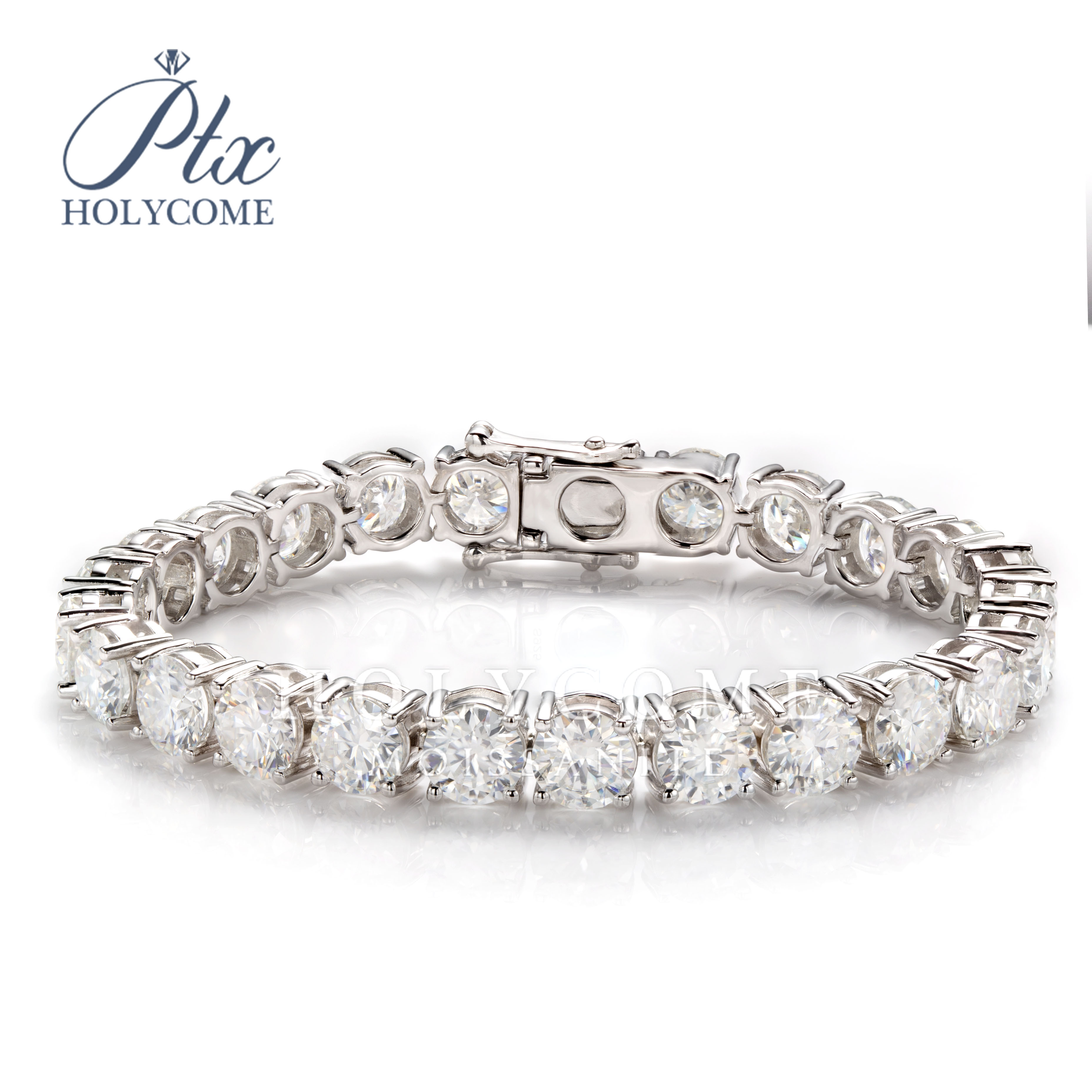
A classic tennis bracelet lines the wrist with identically set round moissanites, usually between 1.5 mm and 3 mm per stone. The 2 mm version is the everyday sweet spot; the 3 mm version is evening wear and gift-grade. When you buy wholesale, ask whether the stones are matched for color in a single production run—a tennis bracelet with two slightly off-white stones in the middle of the row reads as defective under store light even though each stone is fine on its own.
The clasp conversation
Box clasps with a figure-8 safety are the minimum acceptable hardware. Lobster clasps on a tennis bracelet are a red flag—they open too easily when the wrist rotates. Ask for a double-latch box clasp, and ask whether the safety is soldered or hinged. Hinged safeties wear out; soldered ones last. The cost difference at wholesale is small; the warranty cost difference is enormous.
Station and by-the-yard bracelets
Station bracelets place a single moissanite at intervals along a fine chain, usually 3, 5 or 7 stones. They are lower ticket than a full tennis bracelet, easier to stack, and sell to younger buyers who would not wear a full row. By-the-yard pendants share the same DNA—a fine chain with spaced stones—and the two categories cross-sell naturally. Stock 3-station and 5-station versions before you add 7.
Stackable bangles and cuffs
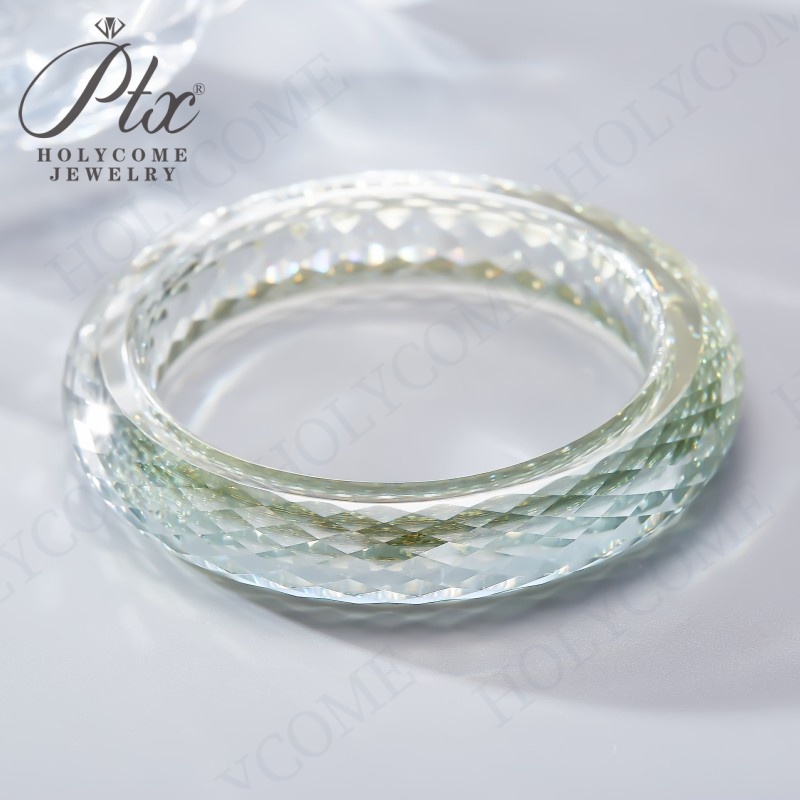
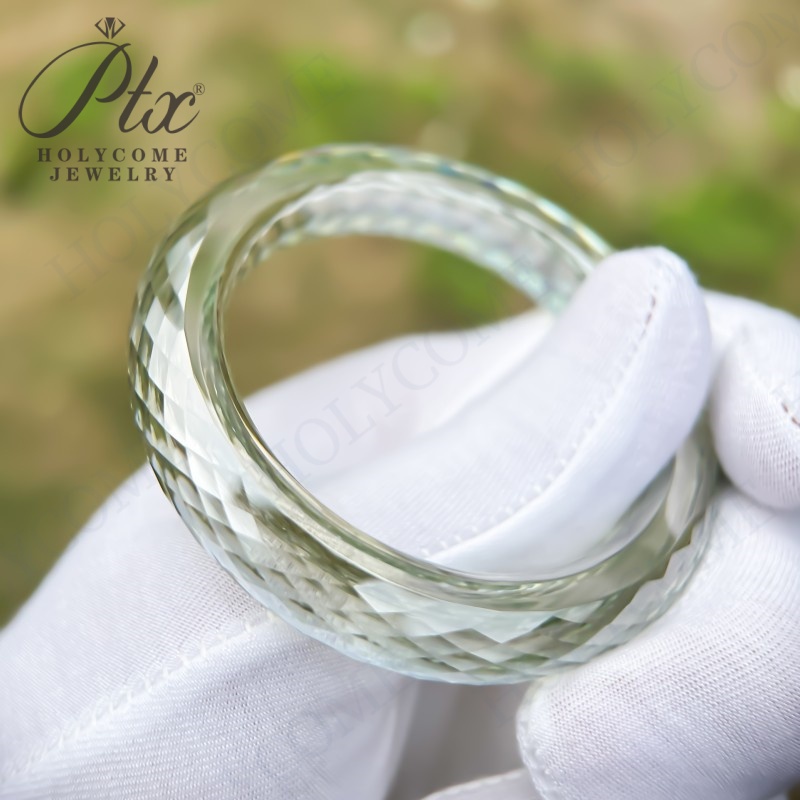
Thin bangles with a single moissanite at the top are the highest-turnover bracelet category in many boutiques. They sell in threes, fours and fives, which lifts the ticket faster than any single piece. They are also cheap to stock because the unit cost is low. Buy them in mixed metal finishes—rhodium, warm gold plate and rose gold plate—so customers can mix the stack on the wrist. Display them fanned on a small stand rather than lying flat; a fanned bangle stand lets a customer see three finishes at once and usually leads to a two- or three-bangle purchase.
Men's moissanite bracelets are a small but growing niche. A 4–6 mm curb chain with a single 6 mm moissanite station, or a flat ID-style bar set with a row of small stones, sells to groomsmen gifts and to male clients buying for themselves. Stock one or two pieces—do not build a men's wall until the data says to.
Sizing and fit
Bracelets are usually sold in 6.5, 7 and 7.5 inch lengths. The 7 inch length covers most adult wrists; the 6.5 inch suits smaller wrists and teens; the 7.5 inch suits larger wrists and men's pieces. Confirm the supplier includes an extender chain on station and tennis styles—a one-inch extender solves most fit complaints without a return.
Defects to inspect on arrival
- Run a finger along the pavé edge—no stone should catch on a cotton glove.
- Open and close the clasp ten times; it should snap firmly every time.
- The safety should lie flat against the chain, not protrude.
- Stones should be level with the metal, not tilted.
- The chain should flex without kinking at the jump rings.
Layering with watches and other bracelets
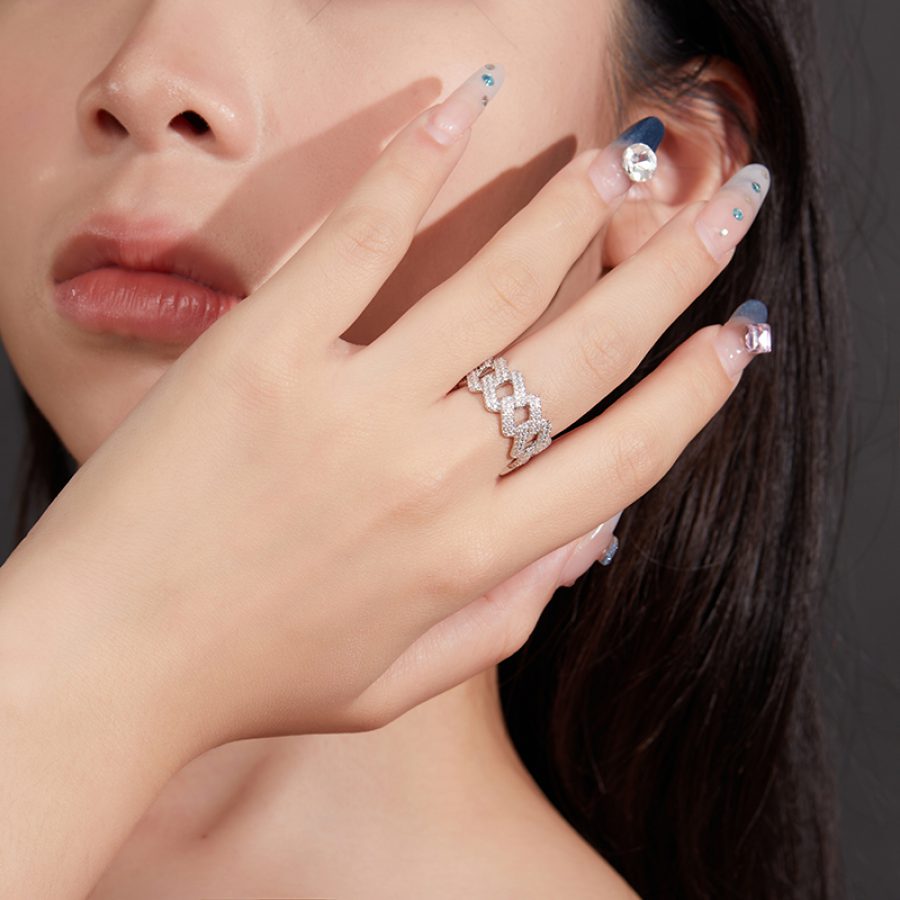
Customers who buy a moissanite bracelet usually want to stack it with a watch or a thinner chain. A 2 mm tennis bracelet sits cleanly next to a dress watch; a station bracelet layers over a leather cuff; a thin pavé bangle stacks with two other bangles. When you display the bracelet bar, show one stacked look on a display wrist—a customer who pictures the bracelet on their own arm buys twice as often as one who sees it alone on a pad. Update the display wrist every season so the look stays current.
What to skip at wholesale
A few bracelet styles look good in a catalog and disappoint in a case. Oversized charm bracelets with multiple moissanite drops are hard to clean and tangle easily. Heavy rope-chain bracelets with embedded stones look masculine but wear out the inner wrist. Stretch bracelets with moissanite set into elastic lose tension within months. Skip all three in your first year; add them only if a specific customer asks repeatedly.
Bracelets reward careful buying. A tennis bracelet with a proper clasp and matched stones earns a loyal customer for life; one with a weak clasp earns you a return ticket. Compare the range on wholesale moissanite bracelets before you commit a parcel.
Independent background on moissanite — how its hardness and refractive index compare with diamond — is documented in the Wikipedia article on moissanite.
Frequently Asked Questions
Is moissanite a good diamond alternative for retail buyers?
Yes for price-sensitive customers who want brilliance and hardness. Moissanite ranks 9.25 on the Mohs scale, holds up to daily wear and costs a fraction of a natural diamond of the same size, so it resells fast in bridal and fashion lines.
What is the minimum order for wholesale moissanite?
MOQ starts at 50 pieces per design for stock items. Custom cuts and private-label settings usually start at 100–300 pieces depending on the mold.
Do you provide certificates with moissanite stones?
Yes. Every parcel ships with GRA or IGI documentation listing carat weight, color grade and cut. We recommend passing the certificate to your end customer for trust.
How long does sample and bulk production take?
Samples ship in 3–5 days. Bulk runs take 15–20 days under 500 pieces, and 25–30 days for custom work.