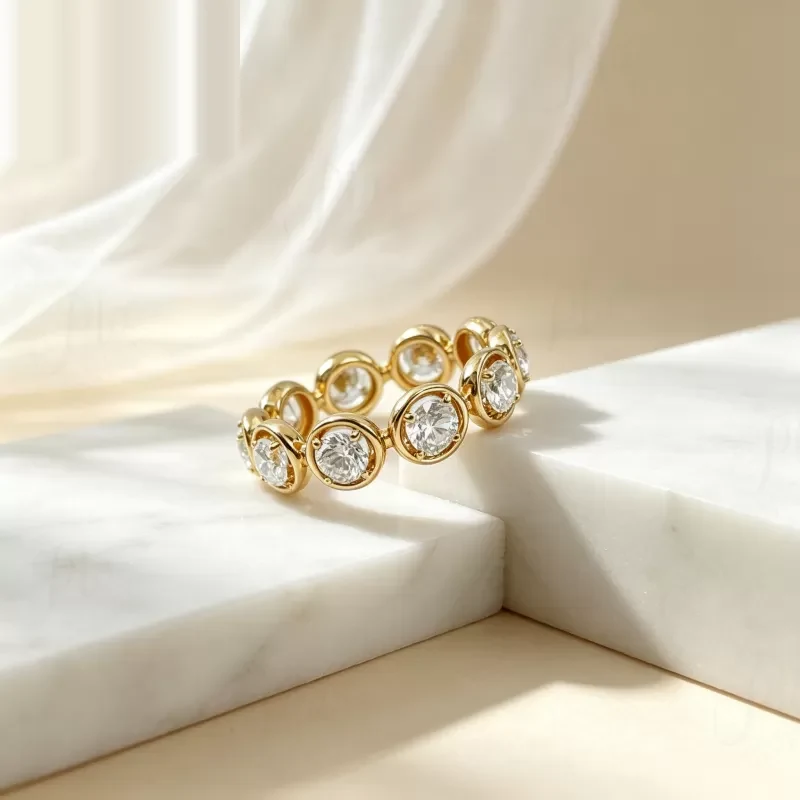
For most boutiques, moissanite earrings outsell rings in unit count because the ticket is lower, the sizing is universal, and the gift buyer does not need to know a ring size. A 6.5 mm round stud reads as a one-carat look on each ear, and at wholesale the margin structure on earrings is usually friendlier than on bridal pieces. The trap is buying based on sparkle alone and ignoring the hardware—and that is where most earring returns actually come from.
Studding the core: round, pearl and halo studs
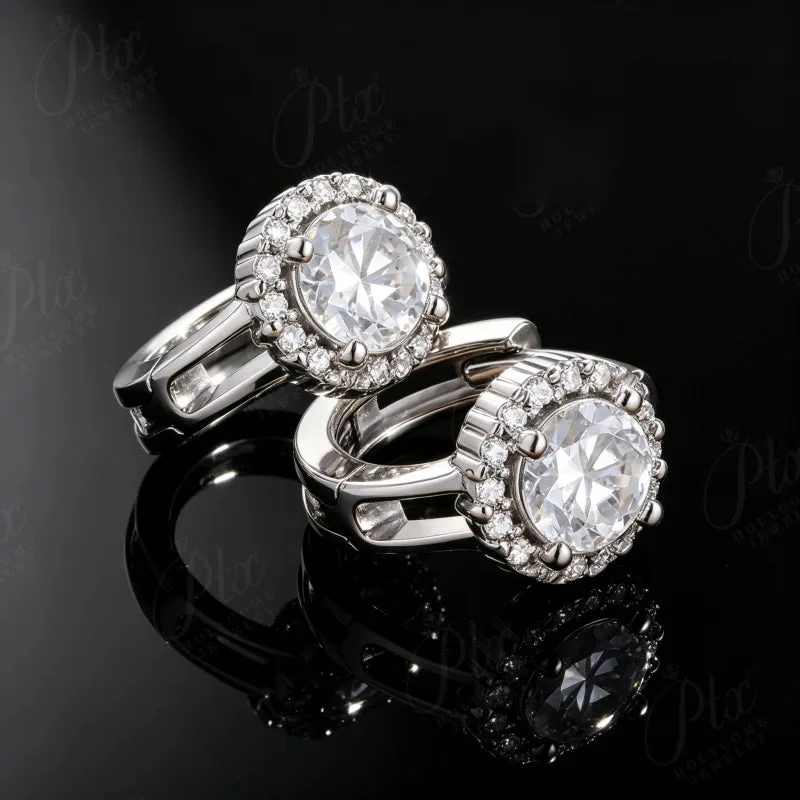
Round brilliant studs in 4 mm, 5 mm, 6.5 mm and 8 mm are the workhorses. The 6.5 mm pair is the sweet spot for adult gift buyers; 4 mm pairs suit teen and second-pierce clients; 8 mm pairs read as statement pieces and sell in evening-wear markets. Halo studs sit between 6.5 mm and 8 mm in perceived size and justify a higher ticket. Pear-shape and cushion studs are trend-driven—carry a couple of pairs, not a wall.
When you buy studs, ask whether the pair is matched from a single production run. A 6.5 mm stone cut last month and a 6.5 mm stone cut this month can differ by a half-grade of white—in a pair on the ears, that difference is visible. Most factories will match pairs on request; some charge a small fee. The fee is worth it.
Backs: the detail that drives returns
Push backs are standard, cheap, and the reason a pair of earrings ends up on the floor of a restaurant. Screw backs lock down and cut lost-earring complaints sharply, but they are harder for older clients to operate. For bridal and gift stock, ask the supplier whether you can ship screw backs by default and include a free pair of plastic clutch backs in the box. That single choice reduces return calls faster than any stone upgrade.
Drops, huggies and hoops
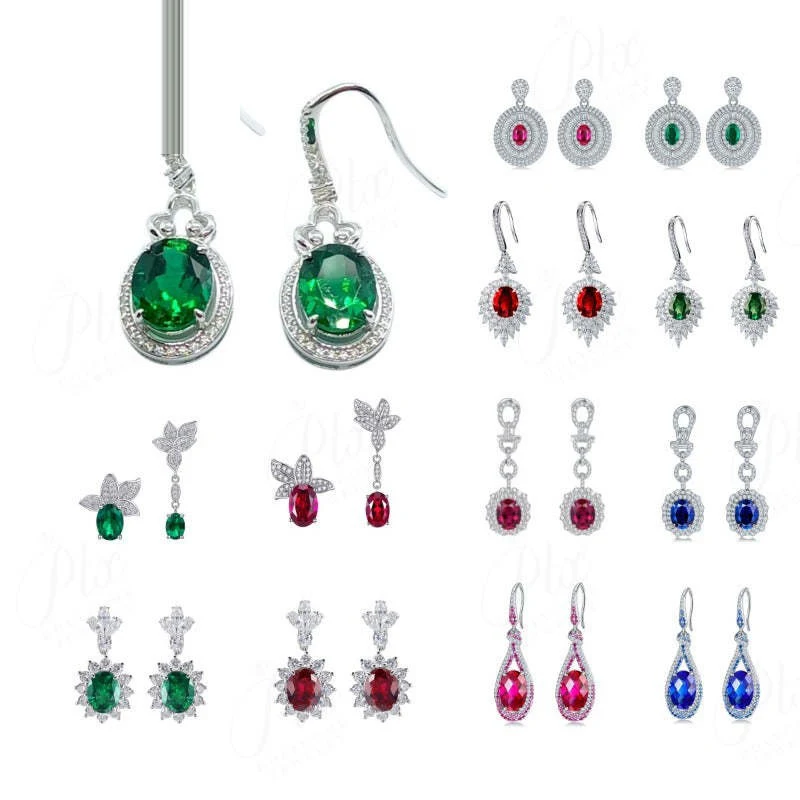
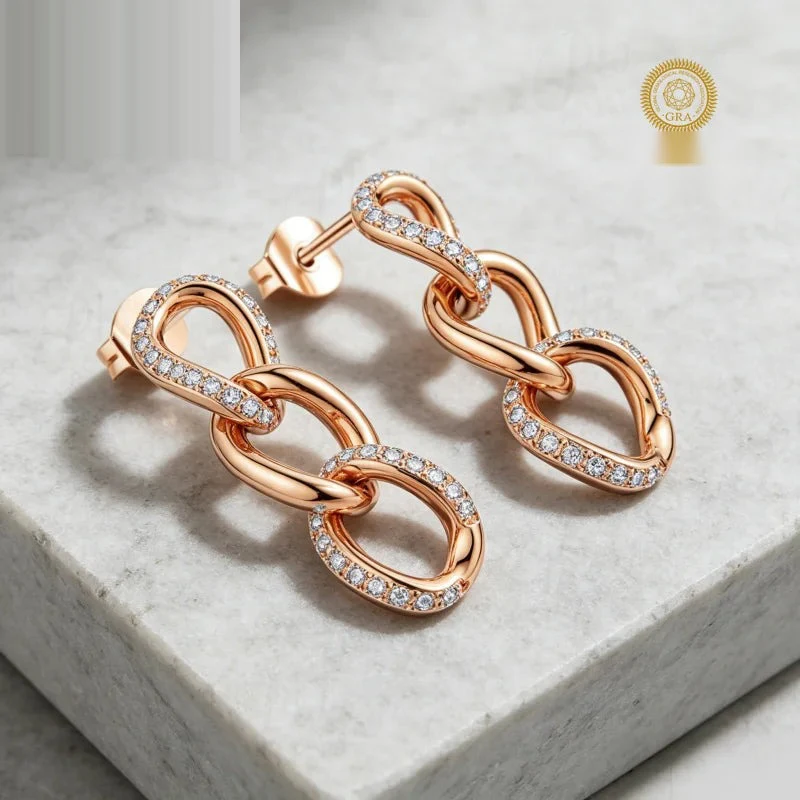
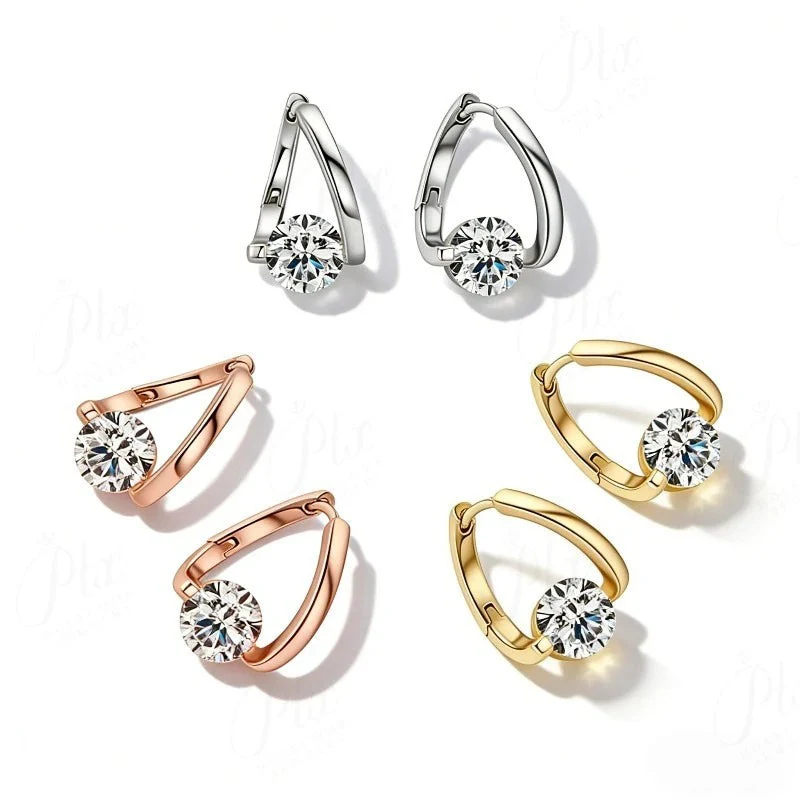
Drop earrings move during wedding and prom season. A pear or oval drop on a lever-back is a stable seller; chandelier drops are seasonal. Huggie hoops with a row of pavé moissanite are one of the strongest everyday styles of the last two years—they stack well with studs and photograph cleanly. Full hoop earrings with continuous pavé are more expensive to produce and more likely to lose a side stone on the inner curve, so buy those in limited depth.
Lever-backs and fish-hook wires are the two common drop findings. Lever-backs close securely and suit fine jewelry; fish-hooks are cheaper and suit fashion drops. Do not mix the two in the same display case—a customer who buys a fish-hook drop and later tries a lever-back will notice the difference in feel and question the value.
MOQ logic for earring parcels
Earrings are sold in pairs and usually in packs of 3 or 5 pairs per SKU at wholesale. Resist the urge to take deep depth on one style. A better opening order is 2–3 pairs across 10–15 SKUs and then reorder what sells. Because earrings are low ticket, you can test a wide assortment without tying up much cash, and that data tells you which studs your local clientele actually prefers.
QC points to check on arrival
- Both stones in a pair must match color grade and cut; mismatched pairs are the most common factory defect.
- Posts must be straight and posts should be 925 silver or 14K—thin plated posts bend within weeks of wear.
- Screw backs should screw smoothly without cross-threading.
- Huggies and hoops should click shut with an audible snap, not wobble.
- Pavé side stones should not protrude past the metal edge where they catch on hair scarves.
Gift presentation: the small detail that closes
Earrings are the most gifted moissanite piece, so the box matters. A slim cream or black earring box with a foam insert that cradles the pair reads as a gift; a plastic bag inside a padded envelope reads as a marketplace find. Ask the supplier whether earring boxes are included per pair, or whether you can supply your own. The cost per box is a fraction of the ticket, and it is the difference between a gift the recipient keeps on a dresser and one that lands in a jewelry drawer.
Add a small polishing cloth to every earring gift. It costs cents and gives the customer something to do with the pair before the first wear—and it signals that the piece is real jewelry, not a fashion accessory. For wedding-party orders, ask the supplier whether you can ship each pair in its own box rather than a shared tray; bridesmaids split the gifts on the day, and individual boxes make the handoff clean.
Earrings are the lowest-risk way to introduce a boutique to moissanite. Start with round studs, add huggies, then layer in drops once you see what your market does with them. Compare the stud range on moissanite earrings before you lock an opening parcel.
Independent background on moissanite — how its hardness and refractive index compare with diamond — is documented in the Wikipedia article on moissanite.
Frequently Asked Questions
Is moissanite a good diamond alternative for retail buyers?
Yes for price-sensitive customers who want brilliance and hardness. Moissanite ranks 9.25 on the Mohs scale, holds up to daily wear and costs a fraction of a natural diamond of the same size, so it resells fast in bridal and fashion lines.
What is the minimum order for wholesale moissanite?
MOQ starts at 50 pieces per design for stock items. Custom cuts and private-label settings usually start at 100–300 pieces depending on the mold.
Do you provide certificates with moissanite stones?
Yes. Every parcel ships with GRA or IGI documentation listing carat weight, color grade and cut. We recommend passing the certificate to your end customer for trust.
How long does sample and bulk production take?
Samples ship in 3–5 days. Bulk runs take 15–20 days under 500 pieces, and 25–30 days for custom work.