Open-to-buy for earrings is where many boutiques first overspend. A 2-carat equivalent pair looks great in the supplier's line sheet and sits on a velvet card in your drawer for fourteen months because no customer who walks through your door has an occasion for it. The mistake is treating earrings as one product. They are five product families stacked in one category, and each one moves on a different clock.
Studs: the workhorse
Moissanite studs in 4mm, 5mm and 6.5mm round are the highest-turn SKUs in the earring category. They are the impulse buy, the birthday gift, the "treat yourself" purchase, and the upgrade-for-second-piercing purchase. Buy them in pairs only, in matched sets, and always ask the supplier to confirm the two stones in a pair are matched for color and table size. A pair where one stone reads half a shade warmer than the other is a return waiting to happen.
Hardware matters more than buyers expect. Push-back friction posts in thin silver bend under a customer's daily tightening. Screw-back posts cost a little more and cut lost-earring complaints by a wide margin. For studs over 6mm equivalent, spec screw-backs in the PO. Under that size, good push-backs are acceptable. Nickel-free ear posts are not optional if you sell to sensitive ears; ask the supplier for the post alloy in writing.
Hoops: size and metal tone drive everything
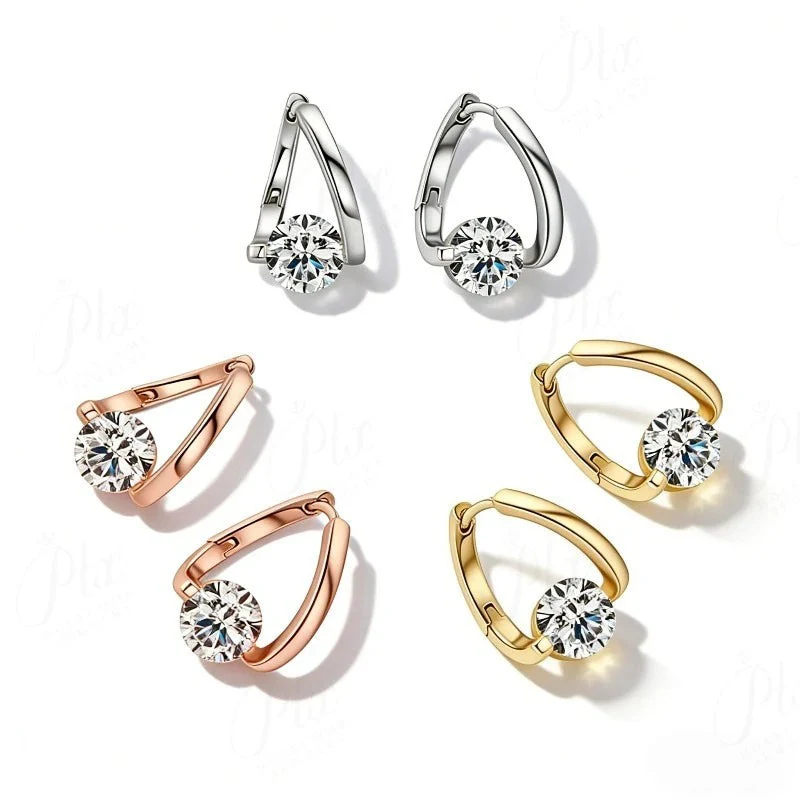
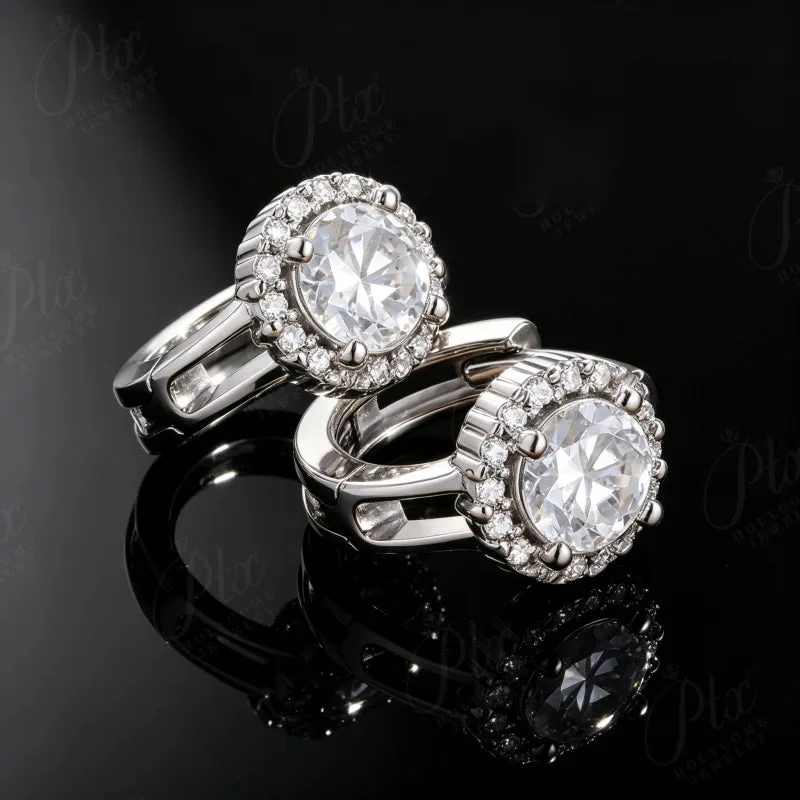
Moissanite hoops sell in three bands. Small pavé huggies under 20mm diameter are the everyday fashion piece, reorder often. Mid-size hoops 30 to 40mm are the evening piece, slower but at a higher ticket. Oversized hoops over 50mm are a trend bet, not a staple, and should be bought in small test quantities before you commit.
The pavé melee on hoops is the failure point. Stones fall out over time when the setting prongs are under-filled, and hoop buyers are hard on their jewelry. Ask whether the melee is bead-set with two beads per stone or merely burnished in. Two beads per stone survives a year of daily wear. Burnished-only melee starts shedding inside a few months. The price difference between the two is small; the return cost is not.
Drops and dangles: the occasion piece
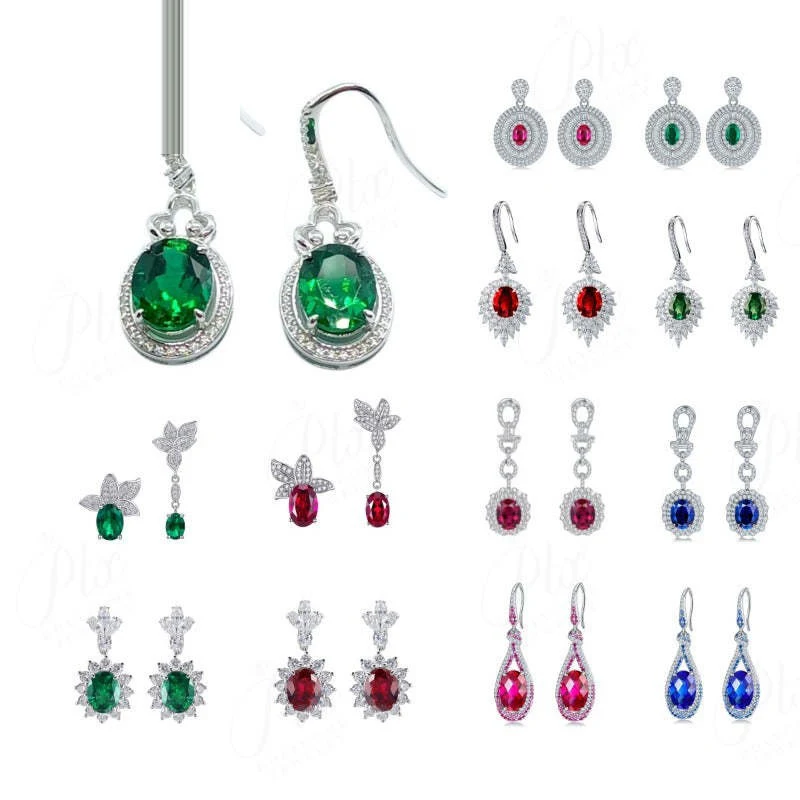
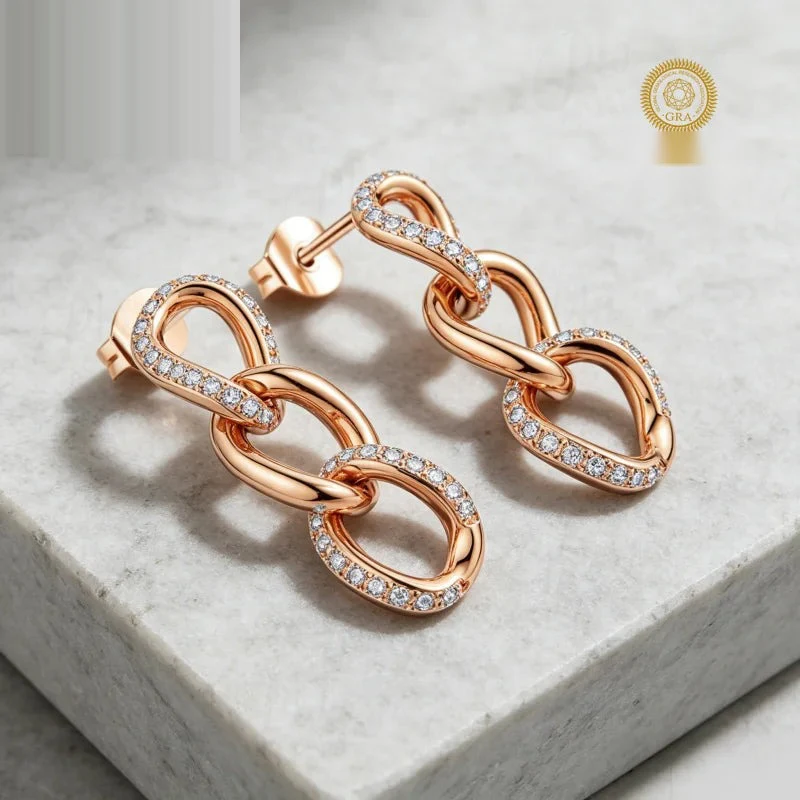
Drops and dangles sell in bursts around prom, wedding season, and holiday gifting. They are not daily wear for most customers. Open with two or three shapes rather than ten, and keep the drop length under 45mm. Longer drops look elegant in a photo and uncomfortable on a real ear; they pull the earlobe down and customers return them.
The hinge on a drop earring is the second failure point. Cheap hinge wires bend, the post loosens, and the earring hangs crooked after a few wears. When you compare suppliers, ask for a close-up of the hinge and a photo of the earring standing upright on a flat surface. A well-made drop hangs straight. A poorly made one tilts.
Climbers, crawlers and linear styles: the trend tier
Ear climbers and linear drop studs move on trend cycles. They look current for six to twelve months and then stall. Buy them in shallow quantities, refresh the design each season, and do not build a core assortment around them. They are useful for social content and window displays even when sell-through is modest, because they photograph well and bring customers into the store who then buy the studs.
Hardware vocabulary you should use on the PO
- Leverback: secure, comfortable, higher perceived quality. Preferred for drops over 2 grams.
- French hook / fishhook: light, inexpensive, easy to lose. Add plastic clutches in the box.
- Push-back post: standard for studs, fine under 6mm.
- Screw-back post: best for studs over 6mm and for children's or second-piercing SKUs.
- Hinged huggie / click-top: the only acceptable closure for pavé hoops; spring-rings on hoops are weak.
How to open the assortment
For a first earring buy, weight roughly half the budget to studs across three sizes, a quarter to pavé huggies in two metal tones, 15 percent to two drop styles for occasion, and the remaining 10 percent to one climber or linear trend test. Reorder the studs on a fixed cycle. Reorder the hoops and drops only after you see your own sell-through. Skip the oversized hoops in the opening order entirely; they are a category you earn after you know your customer.
For matching pieces to pair with the earrings on a display card, browse our ring collection and think about which studs sit next to which rings on your own counter. A customer buying a pair of 6.5mm studs will often come back within a season for a ring in the same metal tone and the same stone quality, if the pair reads as a coordinated line rather than two unrelated products. Stock the studs in white, yellow and rose finishes, and keep each tone grouped on the display card so the eye can move from earring to ring without a color jump.
Pricing the earring tiers
Studs carry the lowest price point and the fastest turn, so they should be priced for volume rather than margin. Hoops carry a mid ticket and a steadier margin. Drops and dangles carry the highest ticket but move in seasonal bursts, which means you can hold margin on them without pressuring volume. Resist the temptation to discount studs to match a competitor's loss leader; the studs are the entry product that earns the customer the right to see the drops. Discount them and you train the customer to wait for the next discount instead of buying today.
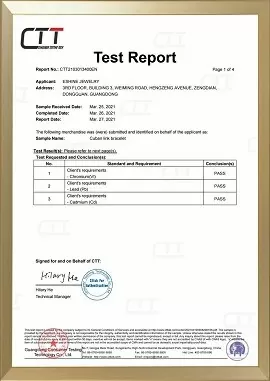
For the legal text behind our material compliance, see the REACH Regulation (EC) No 1907/2006 on EUR-Lex.
Frequently Asked Questions
Is moissanite a good diamond alternative for retail buyers?
Yes for price-sensitive customers who want brilliance and hardness. Moissanite ranks 9.25 on the Mohs scale, holds up to daily wear and costs a fraction of a natural diamond of the same size, so it resells fast in bridal and fashion lines.
What is the minimum order for wholesale moissanite?
MOQ starts at 50 pieces per design for stock items. Custom cuts and private-label settings usually start at 100–300 pieces depending on the mold.
Do you provide certificates with moissanite stones?
Yes. Every parcel ships with GRA or IGI documentation listing carat weight, color grade and cut. We recommend passing the certificate to your end customer for trust.
How long does sample and bulk production take?
Samples ship in 3–5 days. Bulk runs take 15–20 days under 500 pieces, and 25–30 days for custom work.