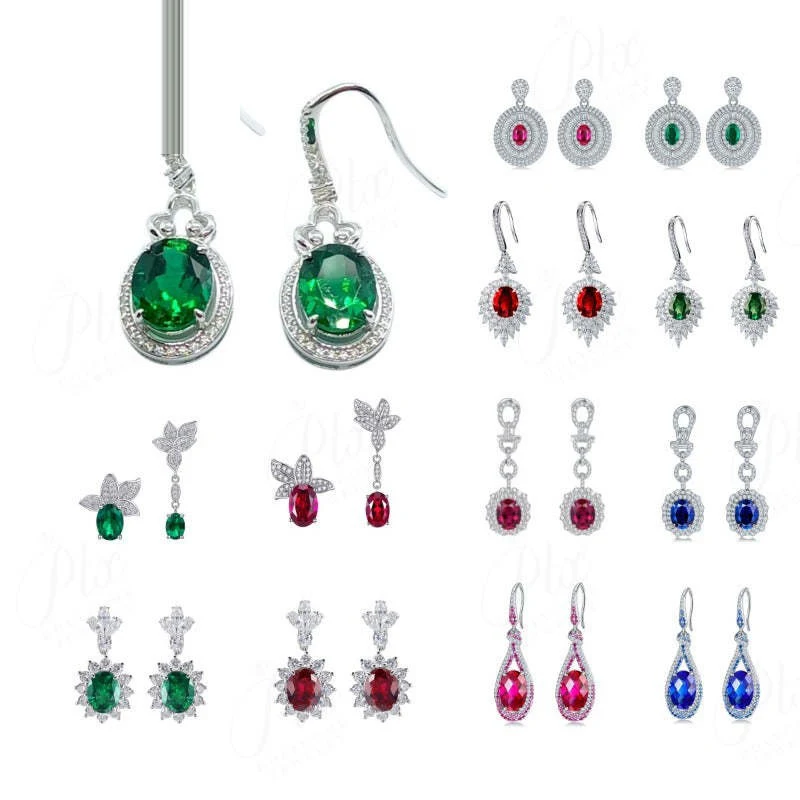
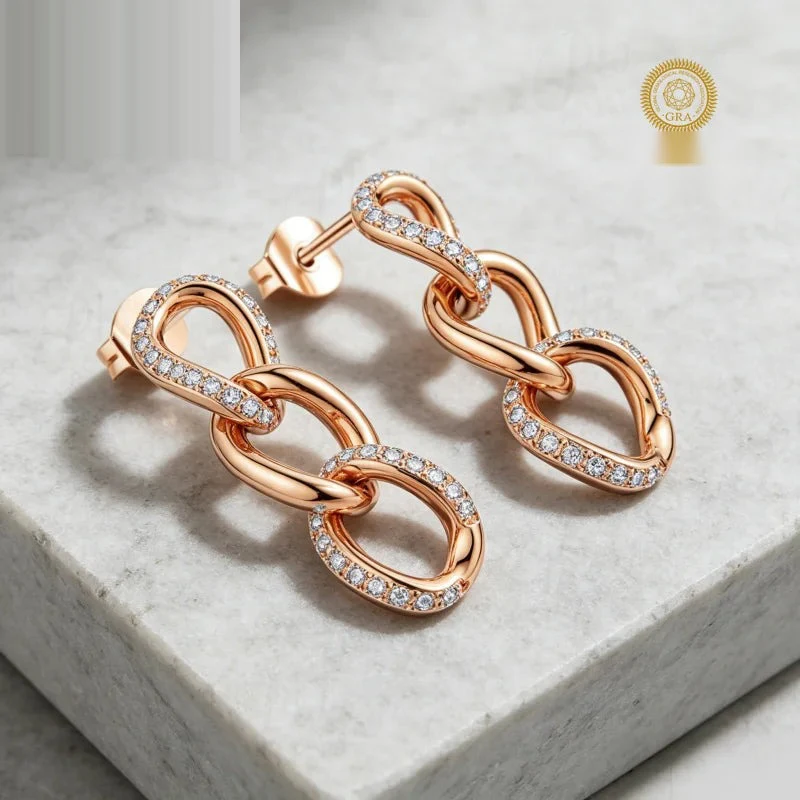
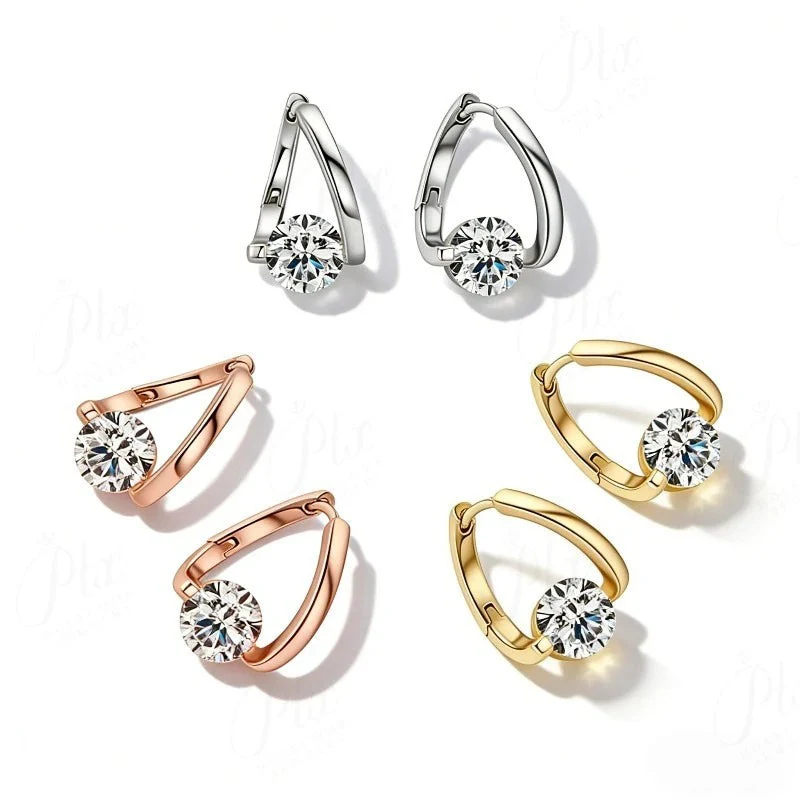
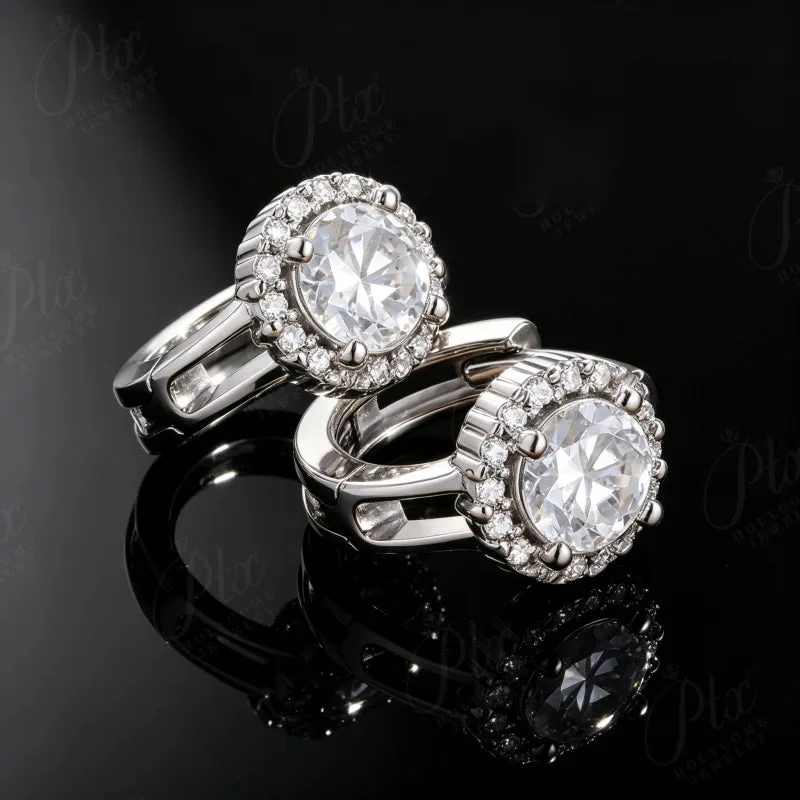
Hoops are the workhorse of the earring category. They go with everything, they photograph well, and they require zero sizing conversation with the customer. That also makes them the most under-specified category in a wholesale order. A buyer who orders "a few pairs of hoops" gets a box of mismatched widths, weak closures, and pavé that rubs off within a month. The hoop that sells is the one where width, stone coverage, closure, and gauge were chosen on purpose.
Width is the primary decision
Hoops are sold by diameter in millimeters, and the diameter does most of the selling work. The smallest hoops, around 10 to 15mm, read as everyday wear. The mid range, 25 to 40mm, is where most sales land—big enough to read, small enough for the office. The statement range, 50mm and up, sells to a specific customer and sits in the meantime.
Stock the ladder. A case that only offers one width tells a customer who wanted a small everyday hoop that you do not have it, and a customer who wanted a statement hoop that you are not serious. Spread your budget across the everyday and mid tiers, and keep one or two statement pairs for the window. Do not anchor the whole order on the biggest hoop, because the biggest hoop sells the slowest.
Pavé coverage: half, full, and inline
Moissanite hoops come in three coverage styles. A half-pavé hoop stones the front-facing arc only, which keeps the price friendly and the look clean. A full-pavé hoop stones the whole circle, which reads as a continuous band of light and carries a higher ticket. An inline hoop sets a single row of stones along the edge, which is the most delicate and modern look.
For a first order, lean into half-pavé and inline. They hit the impulse price point and photograph like luxury. Save full pavé for the customer who specifically asks for "the sparkly ones." When you do stock full pavé, ask how the stones are set. Prong-set stones catch more light but snag hair; bead-set pavé is smoother and more durable for daily wear. The answer changes which customer the hoop suits.
The closure: post vs hinge
Small hoops use a post with a push-back. They are light, cheap, and reliable, but the post can bend if the gauge is thin. Larger hoops use a hinged closure with a click-in or a screw-back. Hinged closures read as more premium, and they are necessary once the hoop gets heavy enough that a post would droop.
Test the hinge on the sample. A good hinge clicks shut with a firm, even feel and holds. A weak hinge clicks shut and slips open when you pull, which means the earring will fall out of the customer's ear the first time she wears it. That is not a warranty problem you want to handle; it is a sampling problem you catch before you order fifty pairs.
Gauge and the droop test
The gauge is the thickness of the hoop wire. A thin gauge looks delicate but bends under the weight of pavé. A heavy gauge looks substantial but reads as cheap costume jewelry if the stones are small. Match the gauge to the diameter: small everyday hoops can be thin; large statement hoops need a heavier gauge so they keep their circular shape on the ear.
Do the droop test on the sample. Hold the hoop closed and hang it from a post at the angle an earlobe would sit. If the hoop rotates forward and shows its back, the gauge is too light for the stones. A hoop that wears correctly hangs vertical and shows the front.
Metal and plating choices
Hoops are sold in sterling silver, gold vermeil, and occasionally solid gold. Sterling silver hoops read bright and white, and they take rhodium plating well for a high-shine finish. Gold vermeil hoops carry the warm look that pairs with fall and winter wardrobes, and they photograph differently than silver—plan your display so the two tones sit next to each other, not mixed randomly on the same card.
Ask how the plating is applied. Hoops bend and flex, and plating that is applied before the pavé is set will wear through at the joints. A good supplier plates the finished hoop after the stones are set, which keeps the surface even across the whole circle. That detail is invisible on the price list and visible after two months of wear.
What to confirm before you order
- The diameter in millimeters of each SKU, not just "small / medium / large."
- Whether the pavé is half, full, or inline, and prong- or bead-set.
- The closure type and a sample of the hinge feel.
- The metal gauge and whether it holds shape on the ear.
- Whether the post backing is included and whether it is a push-back or a screw-back.
Order one sample of each width tier you plan to stock, wear them for a day, and check the hinge, the droop, and the stone security. The hoops that pass that test are the ones you reorder. You can review related earring styles on moissanite rings to cross-match setting quality before you commit to a hoop order.
The Wikipedia article on rhodium explains why rhodium plating is applied to white gold and silver jewellery.
Frequently Asked Questions
Is moissanite a good diamond alternative for retail buyers?
Yes for price-sensitive customers who want brilliance and hardness. Moissanite ranks 9.25 on the Mohs scale, holds up to daily wear and costs a fraction of a natural diamond of the same size, so it resells fast in bridal and fashion lines.
What is the minimum order for wholesale moissanite?
MOQ starts at 50 pieces per design for stock items. Custom cuts and private-label settings usually start at 100–300 pieces depending on the mold.
Do you provide certificates with moissanite stones?
Yes. Every parcel ships with GRA or IGI documentation listing carat weight, color grade and cut. We recommend passing the certificate to your end customer for trust.
How long does sample and bulk production take?
Samples ship in 3–5 days. Bulk runs take 15–20 days under 500 pieces, and 25–30 days for custom work.