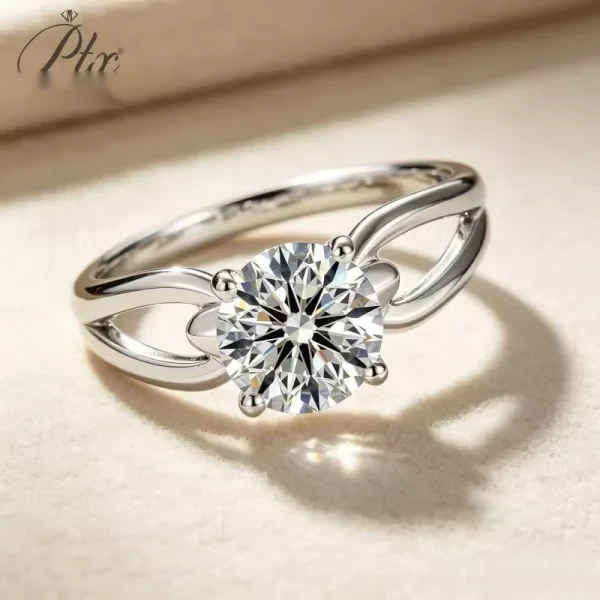
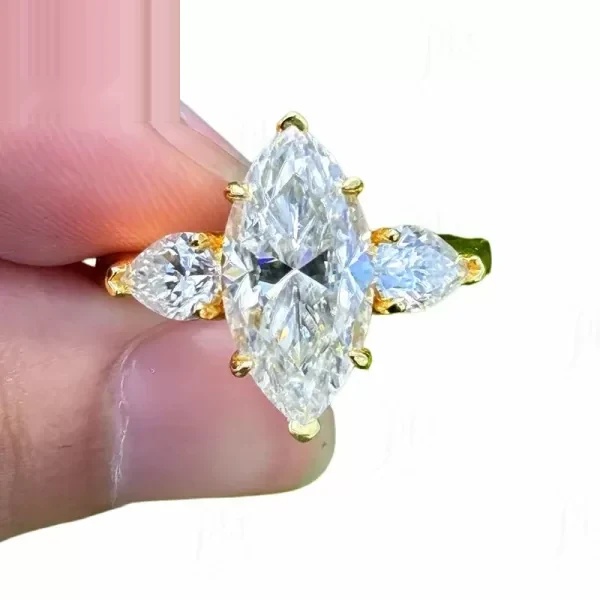
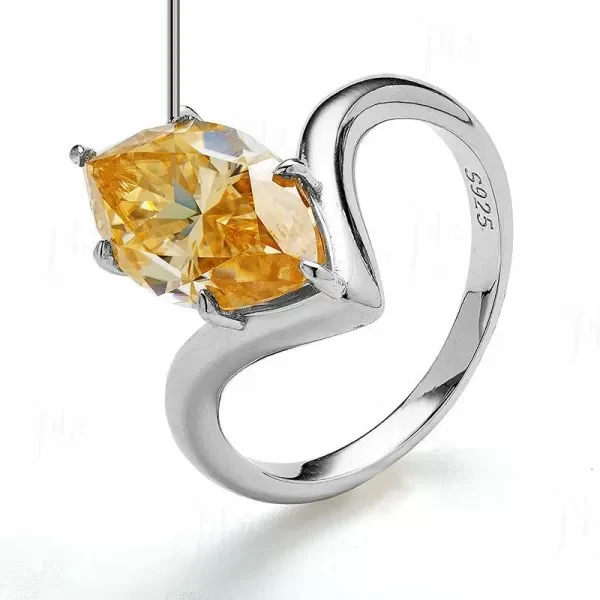
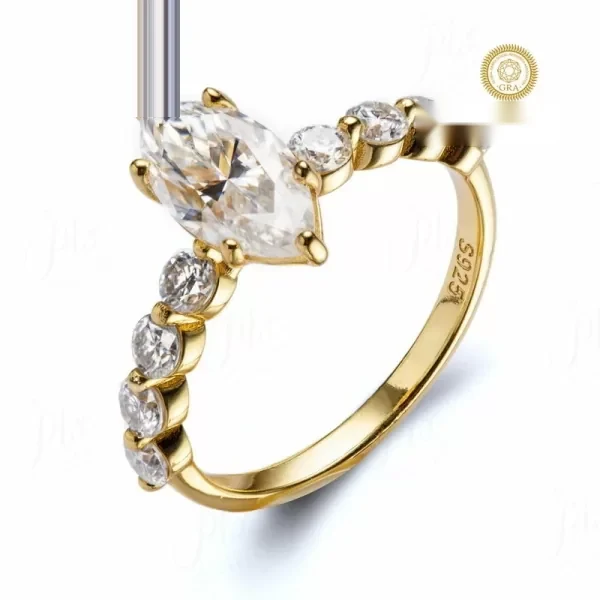
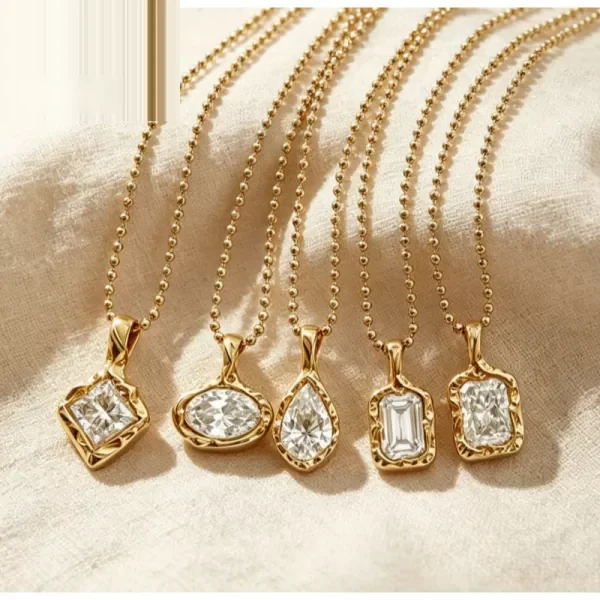
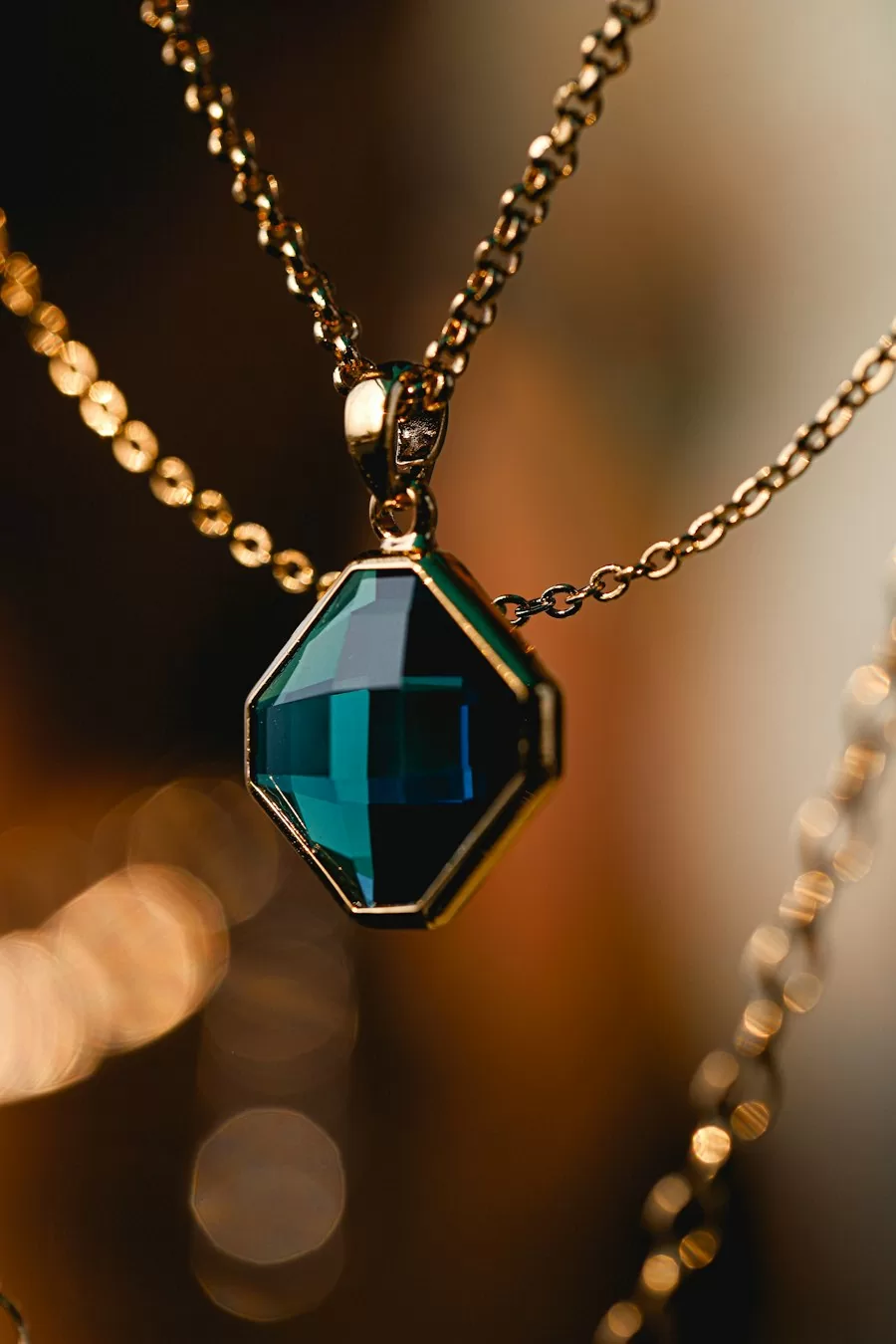
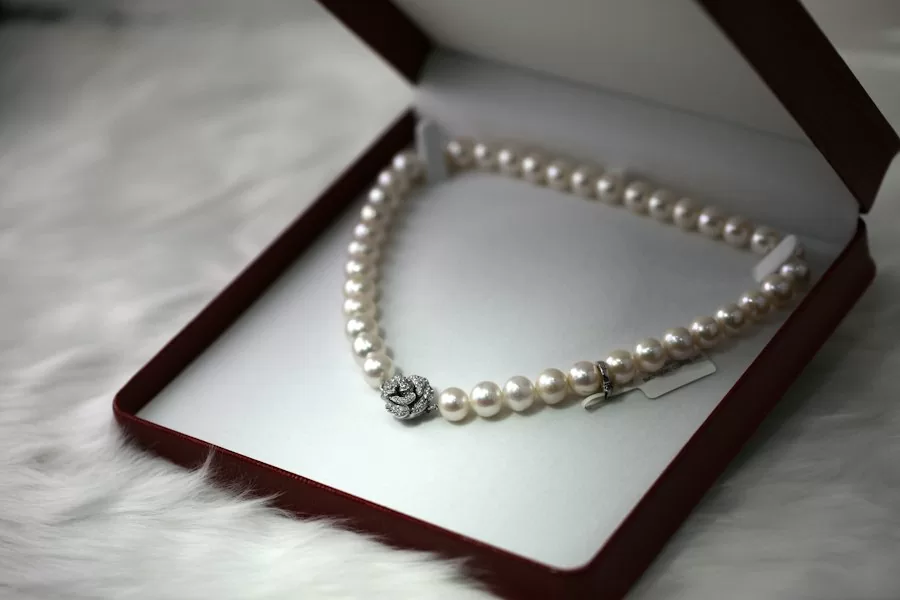
There is a tier of moissanite we do not usually talk about in marketing copy: the top 10% of production, in 3ct-and-up D-VVS stones, set in 18K gold. At that end, the customer is not comparing to a $5,000 mined diamond she cannot afford. She is comparing to a $1,800 lab-grown diamond she can. The honest comparison is more useful than the aspirational one.
This article is for retailers who sell into that $1,200–$3,500 ticket and need to know which stone to recommend when a customer asks the direct question.
Brilliance: moissanite wins on fire, diamond wins on white light
Moissanite's refractive index is 2.65, vs 2.42 for diamond. That means more dispersion (fire — the rainbow flashes) and more total internal reflection (brilliance). In sunlight, a well-cut moissanite visibly flashes more colors than a diamond of the same size. Under indoor warm light, the opposite is often true: moissanite can read "too much," while diamond reads quieter.
For customers who want the ring to sparkle on a video call, moissanite is better. For customers who want a stone that reads "diamond-like" at arm's length, a 3ct-and-up moissanite is harder to disguise than a 1ct. The body color in larger stones can read faintly gray-green in certain light.
Price: the gap is still 5–8x
Lab-grown diamond prices recovered in 2024–2025 but remain roughly 30% below their 2021 peak. At retail, a 2ct D-VVS lab-grown solitaire in 14K runs $1,800–$2,800. The same ring in high-end moissanite runs $380–$650. The ratio is still about 4–5x, not 10x.
| Stone (2ct D VVS, 14K solitaire) | Retail range | Wholesale to retailer | Resale expectation |
|---|---|---|---|
| Mined diamond | $6,500–$9,000 | ~$3,200 | 20–35% of retail |
| Lab-grown diamond | $1,800–$2,800 | ~$900 | 5–15% of retail |
| High-end moissanite | $380–$650 | ~$140 | N/A (consumable) |
Longevity: the quiet advantage of moissanite
Mohs hardness: diamond is 10. Moissanite is 9.25. In practice, that means moissanite will scratch from dust (quartz, 7) the same way diamond will not. It will not chip from everyday wear, but over 10 years the facets can round at the edges. A customer who expects a stone she can hand down should buy diamond. A customer who expects to reset in 5 years can buy moissanite and save the difference.
Customer perception: what to say
Be direct. We recommend this script:
"This is a colorless moissanite, not a diamond. It sparkles more in sunlight, costs about a fifth of a lab-grown diamond of the same size, and is a great everyday ring. If you want a stone that holds resale value, we should look at lab-grown."
Say that, and the customer who walks out will not come back angry. Say the opposite — that moissanite is "as good as diamond" — and she will compare the stone to her friend's engagement ring and return it.
Where high-end moissanite makes business sense
- Everyday wear rings a customer does not want to baby.
- Stackable bands where the ticket would otherwise be prohibitive.
- Bridal alternatives for customers who object to mined-diamond ethics but cannot stretch to lab-grown.
- Men's pinky rings and signets, where a 3ct stone in 18K reads luxurious at $900 retail, not $4,500.
Ethical positioning: where moissanite is stronger than you think
Customers who ask about conflict-free diamond are usually also asking about energy use and water. Moissanite is grown in a closed crucible; the supply chain is one factory floor, not a mine, a sorting office, and three cutting centers. For the small but real segment of buyers who want a stone without the mining story, moissanite is an easier answer than lab-grown diamond, which itself carries energy-use questions that have been raised in European press.
We do not lean on this in marketing. The ethical argument is real, but it is not the primary reason most customers buy. The primary reason is price per carat. Lead with that.
Who should not buy high-end moissanite
Four customer types, in our experience, should be steered away:
- Bridal customers who expect a family heirloom. A moissanite will not hand down as a diamond will. Recommend lab-grown.
- Customers who want the stone to "look like a real diamond" under any lighting. Above 2ct, moissanite's fire reads as synthetic under certain lights. Recommend a smaller lab-grown.
- Customers who plan to resell. There is no resale market for moissanite. The piece is a consumer good, not an asset.
- Customers with a history of scratching jewelry on hard surfaces. Mohs 9.25 loses to quartz dust over a decade. Recommend a harder stone if the ring will see construction work, gym bags, or gardening.
Steering these customers to a different stone costs you a sale today and earns you a customer for life. The jewelry businesses that fail on moissanite are the ones that oversell it.
The margin story for the retailer
A high-end moissanite solitaire at $350 wholesale retails at $1,200–$1,500. That is a 3.4–4.3x markup, comparable to fine jewelry. A lab-grown solitaire at $900 wholesale retails at $1,800–$2,400, a 2.0–2.7x markup. The moissanite ticket is lower, but the percentage margin is higher, and the stock turn is faster. For an independent retailer with limited display case, moissanite wins on dollars per square foot.
For the supplier side of this choice — including the wholesale price ladder for 3ct+ stones — see our high-end moissanite buying articles.
For third-party reference, the Wikipedia article on moissanite details moissanite’s discovery, optical properties and use in jewellery.
Related reading: Moissanite vs Lab Grown Diamond: A Wholesale Buyer's Complete Guide, How to Explain Moissanite vs. Lab-Grown Diamond at the Counter, Margin Math: Moissanite vs Lab-Grown Diamond at the Retail Counter.
Frequently Asked Questions
Is moissanite a good diamond alternative for retail buyers?
Yes for price-sensitive customers who want brilliance and hardness. Moissanite ranks 9.25 on the Mohs scale, holds up to daily wear and costs a fraction of a natural diamond of the same size, so it resells fast in bridal and fashion lines.
What is the minimum order for wholesale moissanite?
MOQ starts at 50 pieces per design for stock items. Custom cuts and private-label settings usually start at 100–300 pieces depending on the mold.
Do you provide certificates with moissanite stones?
Yes. Every parcel ships with GRA or IGI documentation listing carat weight, color grade and cut. We recommend passing the certificate to your end customer for trust.
How long does sample and bulk production take?
Samples ship in 3–5 days. Bulk runs take 15–20 days under 500 pieces, and 25–30 days for custom work.