For wholesale jewelry buyers, choosing between moissanite and lab grown diamonds is one of the most important sourcing decisions you will make. Both stones offer stunning brilliance at a fraction of natural diamond prices, but they serve different market segments, carry distinct profit structures, and appeal to different customer profiles. In this comprehensive guide, we break down the differences across price, certification, durability, customer perception and margin so you can build the right assortment for your specific market.
The Core Difference in Plain Terms
Moissanite is a lab-created silicon carbide gemstone, first discovered in a meteorite crater in Arizona. It is its own unique gemstone species, distinct from diamond. Lab grown diamonds, on the other hand, are chemically, physically and optically identical to mined diamonds. They are real diamonds grown in controlled facilities using either CVD (Chemical Vapor Deposition) or HPHT (High Pressure High Temperature) technology. The distinction matters: when a customer asks for a diamond, a lab grown diamond satisfies that request. When they want an affordable, brilliant alternative, moissanite delivers.
Price and Margin Comparison
Moissanite offers the lowest entry cost and the highest markup for retailers. A 1ct moissanite stone might cost the factory under twenty dollars, allowing retail prices between eighty and two hundred dollars depending on setting. This means fast-moving inventory across price-sensitive segments like gifting, everyday wear and fashion. Lab grown diamonds, while more expensive than moissanite, still cost 40 to 60 percent less per carat than their natural counterparts. A 1ct IGI-certified lab diamond wholesale cost sits in the mid-range, with retail prices that satisfy bridal customers who want genuine diamond quality without the natural diamond premium.
Certification and Customer Confidence
Every Holycome lab grown diamond ships with an official IGI (International Gemological Institute) report, the most widely recognized certification for laboratory-grown stones. The report lists carat, color, clarity, cut grade and a unique report number customers can verify online. Moissanite pieces carry GRA (Gemological Research Academy) certificates that verify stone quality, color grade and clarity. Both certification types give your customers the documentation they expect at the point of sale, and both protect you from returns when the customer wants to verify the stone independently.
Appearance and Brilliance
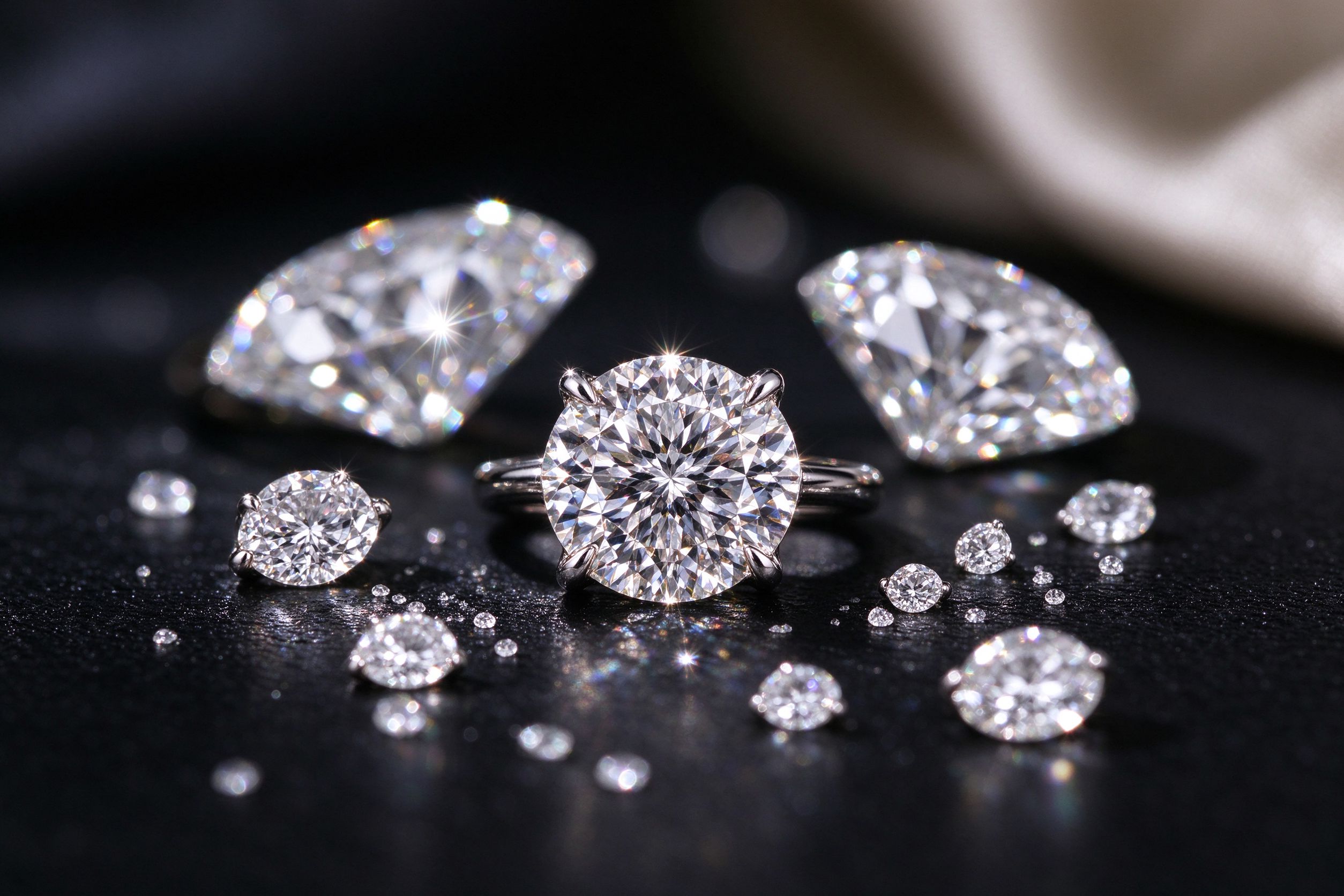
Moissanite actually has a higher refractive index than diamond, meaning it sparkles more with colorful fire. Under direct light, moissanite flashes rainbow colors that some customers love and others find too flashy. Lab grown diamonds have the same white, brilliant fire as natural diamonds. Most customers cannot tell a lab diamond from a natural diamond even under magnification, while moissanite can be identified by a gemologist using a standard tester. At Holycome, we recommend disclosing the stone type to maintain customer trust.
Which Should You Stock?
We recommend a balanced approach based on your customer base. Use moissanite for everyday wear, fashion pieces, gifting, and entry-level engagement rings where price sensitivity is high. Position lab grown diamonds in your bridal, engagement, anniversary and luxury collections where customers want certified diamond authenticity. Many of our most successful retailers carry both stone types and use price laddering to upsell customers from moissanite into lab diamond pieces. Start with a small test order of each, track sell-through, and expand the winners.