Lab-grown diamond wholesale prices have fallen roughly 60-70% since 2021. That collapse has pushed more boutiques to ask whether they should drop moissanite and chase lab-grown instead. The answer depends on three numbers: gross margin percentage, average ticket, and sell-through rate.
The headline margin gap
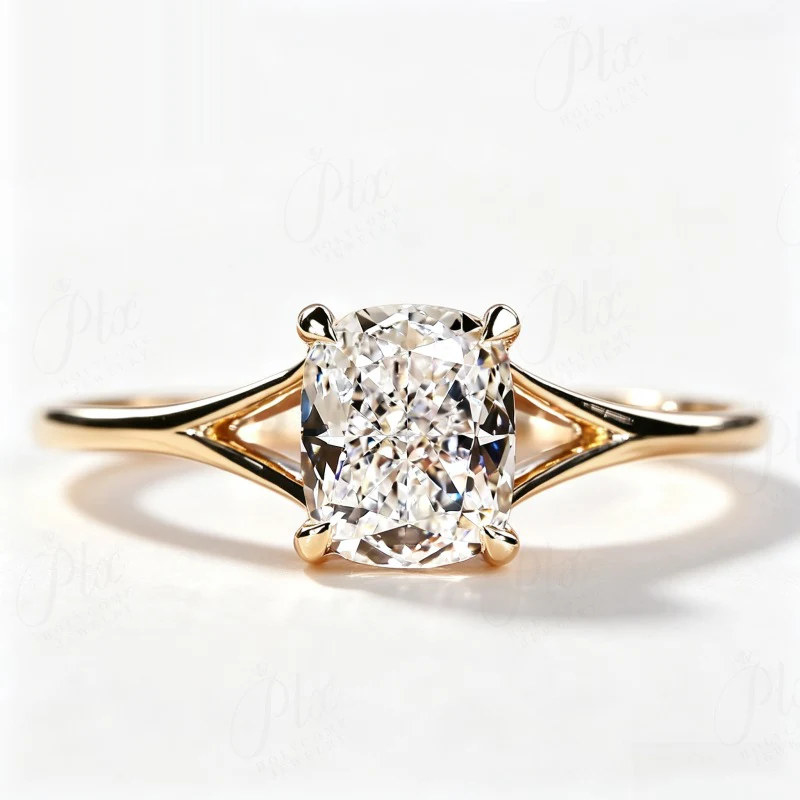
A 6.5mm moissanite solitaire costs a wholesale buyer roughly $35-65 for the stone, plus $25-45 for a sterling silver or 10k gold mounting, landed at about $70-110. The same piece retails at $250-450, which is a 65-75% gross margin.
A comparable 1-carat lab-grown diamond solitaire, cut grade Very Good and color G-H, landed wholesale at about $180-280 for the stone plus mounting - roughly $220-330 landed. The piece retails at $650-950, which is a 55-65% gross margin.
On a percentage basis, moissanite wins by 10-15 points. On absolute dollars per sale, lab-grown wins: a $300 gross profit on a $900 ring beats a $280 gross profit on a $400 ring, even though the percentage is lower.
Where sell-through flips the math
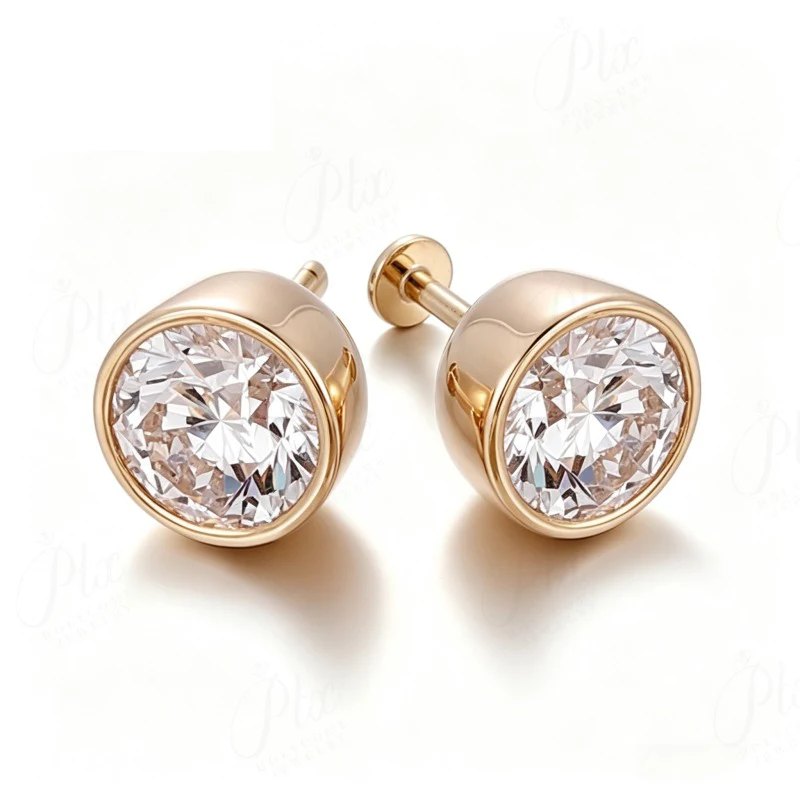
Margin percentages mean nothing if the piece does not sell. Moissanite studs and solitaire pendants move quickly in the $150-400 price band, because the customer is buying a bright, affordable everyday piece. Lab-grown engagement rings sell more slowly but carry a longer tail: a $750 lab-grown ring may sit in the case for 8-12 weeks, but it sells once to a customer who then buys a wedding band, a gift, and a repair appointment.
The practical split is usually 70/30 in favor of moissanite for a boutique with $400-600 average ticket, and 50/50 for a store that positions itself as an engagement destination. Going all-in on either category is a bet on customer profile, not on the stone.
The hidden cost of lab-grown inventory
Lab-grown diamond prices are still deflating. A 1-carat stone you buy today at $220 may be $160 in six months. That is fine if you sell through in six weeks. It is a writedown if the stone sits in the case for a year. Moissanite pricing is comparatively flat - the synthetic silicon carbide supply chain is mature and the wholesale cost moves with manufacturing cost, not with a diamond cartel's marketing.
That price-stability advantage matters on reorders. A moissanite piece you priced at $320 retail in January can be reordered at the same wholesale cost in November. A lab-grown piece you priced at $750 retail in January may be undercut on your own reorder by a competitor buying at today's lower cost.
Which customer buys which
Moissanite wins on the customer who wants a bright, affordable everyday piece - a gift for a 30th birthday, a second stackable ring, a travel piece that can be worn without insurance anxiety. Lab-grown wins on the customer who is buying an engagement ring and wants the diamond story, the certificate, and the resale narrative. Those are not the same customer walking in the same door. Most boutiques serve both, and the mistake is trying to sell moissanite to the engagement customer or lab-grown to the gift customer - the price point alone tells them which aisle they want.
Warranty economics also differ. Moissanite is extremely hard (9.25 on the Mohs scale) and nearly scratch-proof; a 1-year warranty costs you almost nothing in claims. Lab-grown diamond is a real diamond at 10 on the Mohs scale, but the thin 14k or 18k engagement mount is where the warranty claims live - prongs bending, stones loosening, rhodium wearing. Budget your warranty reserve on the mount, not the center stone, whichever category you stock.
Markup reality on the floor
Wholesale cost is only half the equation. The other half is what the customer will pay relative to what they see online. A moissanite solitaire at $350 retail has no Amazon price-match problem, because the customer is buying the piece, the setting, and the in-store service. A 1-carat lab-grown solitaire at $800 retail is one search away from a $550 online listing, and the price conversation starts there. Build your retail pricing for moissanite around the in-store experience; build lab-grown pricing around the certificate and the after-sale service that an online seller cannot offer.
How to model it before you buy
Run a small test: put two 6.5mm solitaires - one moissanite, one 1-carat lab-grown - in the case for 90 days. Track units sold, average ticket, gross profit per piece, and how many customers came back for a second purchase. The numbers from your own customer base beat any category report. That test is the first step of any program we build with buyers choosing between the two categories on our buying guides. At the end of the 90 days, the split that emerges in your own case is the split you should plan the next six months around. Do not let a category trend report override what your own customers are actually buying.
Independent background on moissanite — how its hardness and refractive index compare with diamond — is documented in the Wikipedia article on moissanite.
Frequently Asked Questions
Is moissanite a good diamond alternative for retail buyers?
Yes for price-sensitive customers who want brilliance and hardness. Moissanite ranks 9.25 on the Mohs scale, holds up to daily wear and costs a fraction of a natural diamond of the same size, so it resells fast in bridal and fashion lines.
What is the minimum order for wholesale moissanite?
MOQ starts at 50 pieces per design for stock items. Custom cuts and private-label settings usually start at 100–300 pieces depending on the mold.
Do you provide certificates with moissanite stones?
Yes. Every parcel ships with GRA or IGI documentation listing carat weight, color grade and cut. We recommend passing the certificate to your end customer for trust.
How long does sample and bulk production take?
Samples ship in 3–5 days. Bulk runs take 15–20 days under 500 pieces, and 25–30 days for custom work.