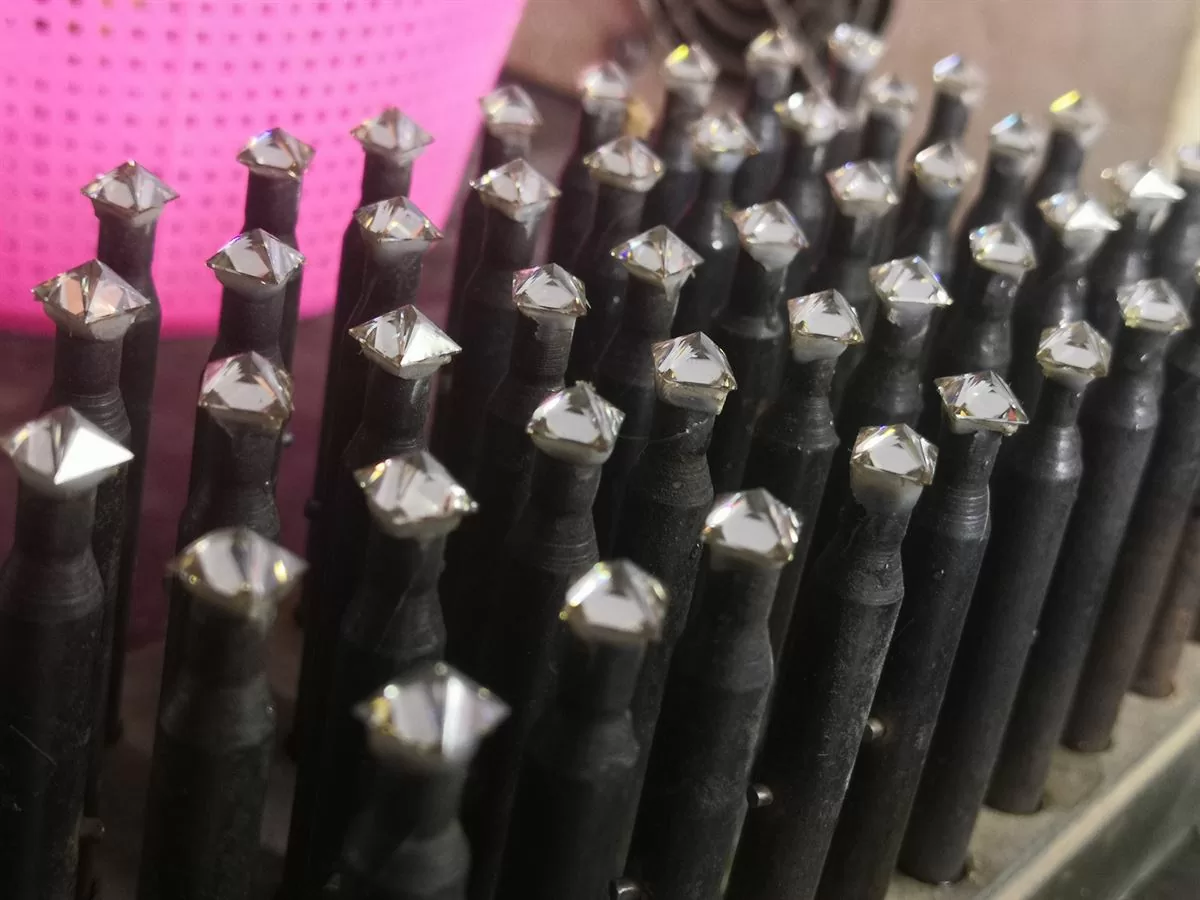
A broad catalog feels like a strong catalog until you do the cash math. Twenty SKUs at ten units each and you are out of cash on items nobody bought. Twelve SKUs at forty units each and you have depth on the pieces that actually sell. The 80/20 rule is unusually sharp in bridal moissanite, and the buyers who win are the ones who accept that depth beats breadth.
The shapes that carry the line
Across most Western and North American boutiques, three shapes account for the majority of moissanite bridal units. The round brilliant solitaire is the default engagement-ring choice and the shape customers picture when they search "engagement ring." The oval halo is the size-upgrade look without the diamond price, and it is the shape that grows fastest as customers move past the classic. The pear or cushion three-stone is the "something different" tier for buyers who want a ring that is not identical to everyone else's. Heart, star, hexagon and Asscher shapes find their buyers, but they are long-tail. Buy them after the core shapes are reordered twice, not before.
A minimal core that still looks complete
You can launch a credible bridal line with fifteen SKUs and look like a real collection. The combination that works is three center shapes — round 6.5mm, oval 8x6mm, pear 9x6mm — times two finishes, rhodium white and yellow-gold flash, times two setting archetypes, solitaire and halo. That is twelve rings. Add two earrings, the 6.5mm studs and the 8mm drop studs, and one 7mm round pendant, and you have a storefront that covers solitaire, halo, earrings and necklaces. It is fifteen SKUs, not two hundred, and it is enough to test the market before you commit more cash.
Never-out sizes
Two items should never be out of stock. The 6.5mm round stud earring and the 7mm round pendant are the gift buyers' default purchase and the add-on that lifts average order value by thirty dollars. Track their sell-through weekly and reorder before you dip below a two-week cover. A customer who comes in for a gift and finds the studs sold out walks to a competitor and may not come back, even if you have the ring they wanted. These two SKUs are cheap insurance for the rest of the catalog.
Pruning the slow stock
Set a rule: any SKU that has not sold through a single unit in ninety days gets marked down once, and if it still has not moved by day 120, it is removed from the active line. You lose the shelf space to a new test SKU rather than carrying it forever. Carrying slow stock "because we might need it next season" is the most common way small boutiques quietly tie up their working capital. A slow SKU is not a safety net; it is a tax on the fast ones.
How to extend from the core
After the core twelve reorders twice, add one new shape per quarter, one new price tier, and one new category — a men's band, a stackable, a charm. That keeps the catalog feeling fresh without tripling your SKU count. Depth on a fast SKU beats breadth on slow ones every quarter. The cash you save by not stocking exotic shapes on spec is the cash you use to discount a slow mover, run a sample sale, or buy better packaging. Treat every new SKU as an experiment with a kill switch, not as a permanent addition.
Seasonality shifts the mix. Engagement-ring sales peak in the run-up to holiday proposal season and again in spring. Gift sales — studs, pendants, stackables — peak before the December gifting window and before Mother's Day. That means your never-out sizes need extra stock from August through November, while the exotic shapes can wait until after the holidays. Plan your reorders around those peaks rather than on a flat monthly cadence, and you will not be out of studs in November or sitting on solitaire stock in July.
Track sell-through by shape and finish, not just by revenue. A $149 halo that sells two units a week is doing more for your cash flow than a $299 premium ring that sells one a month, because the cheaper one turns inventory faster. When in doubt, reorder the unit that turns fastest rather than the unit that earns the most per sale. Slow-turning high-ticket items tie up the cash you need to keep the fast ones in stock, and a stockout on a fast SKU costs more than a slow SKU ever earned. Review the sell-through report at the same time every month so the reorder decisions are data-driven rather than guesswork.
Sample the core shapes in moissanite rings before you commit to a reorder; the ones that sell through in your store are the ones worth deep stock on.
For third-party reference, the Wikipedia article on moissanite details moissanite’s discovery, optical properties and use in jewellery.
Frequently Asked Questions
Is moissanite a good diamond alternative for retail buyers?
Yes for price-sensitive customers who want brilliance and hardness. Moissanite ranks 9.25 on the Mohs scale, holds up to daily wear and costs a fraction of a natural diamond of the same size, so it resells fast in bridal and fashion lines.
What is the minimum order for wholesale moissanite?
MOQ starts at 50 pieces per design for stock items. Custom cuts and private-label settings usually start at 100–300 pieces depending on the mold.
Do you provide certificates with moissanite stones?
Yes. Every parcel ships with GRA or IGI documentation listing carat weight, color grade and cut. We recommend passing the certificate to your end customer for trust.
How long does sample and bulk production take?
Samples ship in 3–5 days. Bulk runs take 15–20 days under 500 pieces, and 25–30 days for custom work.