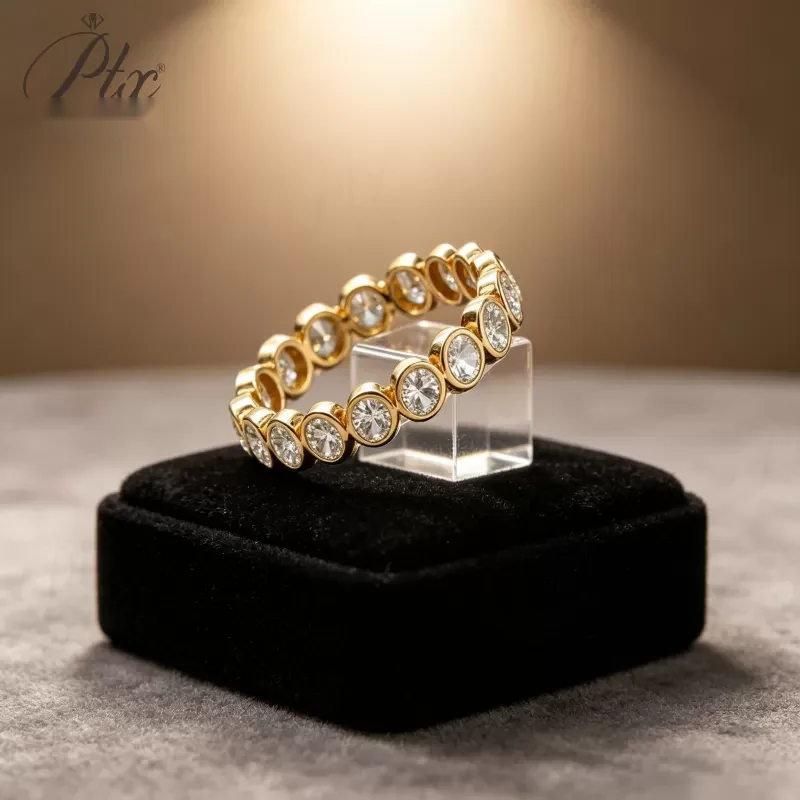
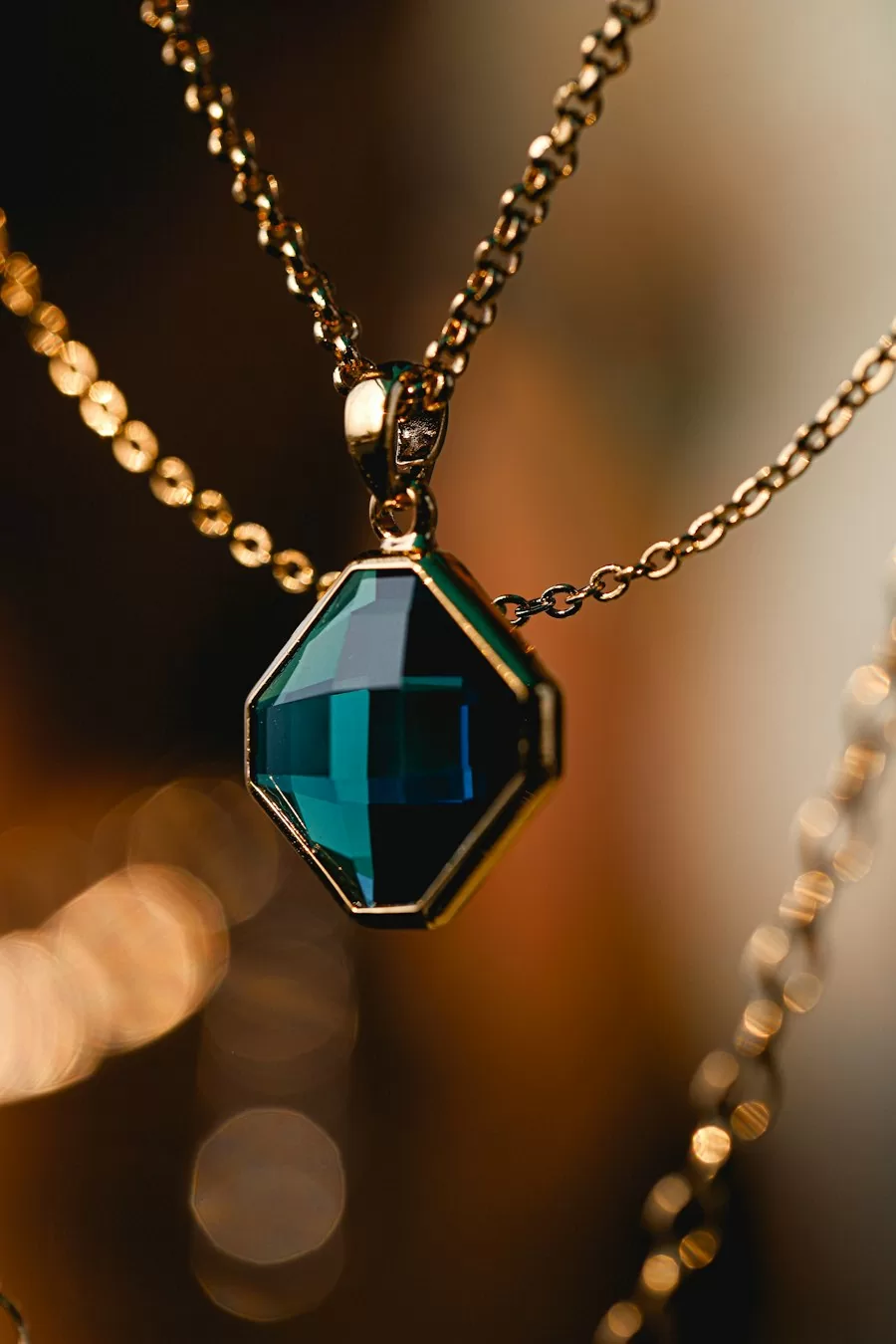
Few gemstones have a story as unexpected as moissanite (per Wikipedia). It did not start in a jewelry box or a mine. It started inside a meteorite that crashed into the Arizona desert tens of thousands of years ago. Telling that story to a customer takes about ninety seconds, and it humanizes a stone that is too often dismissed as a "diamond fake." The real history is far more interesting.
The man behind the name is Henri Moissan, a French chemist working in the late nineteenth century. In 1893, examining rock samples from the Diablo Canyon meteorite crater, now known as Meteor Crater in Arizona, he found tiny crystals that he initially thought were diamonds. Closer study showed they were not diamond at all, but a new form of silicon carbide. The discovery was significant enough that Moissan received the 1906 Nobel Prize in Chemistry, honored for his work on isolating fluorine and for his careful investigation of these rare crystals. The mineral was later named moissanite in his memory.
For decades after that, moissanite existed only as microscopic traces in meteorites and in rare geological deposits. It was a scientific curiosity, not a jewelry material. Natural silicon carbide forms under extreme heat and pressure, conditions rarely found on Earth, which meant the natural crystals were far too small and flawed to cut into gems. The stone essentially sat on the shelf for most of the twentieth century while scientists studied its remarkable properties.
The turning point came when manufacturers learned to grow silicon carbide crystals consistently in a laboratory. Producing large, gem-quality, colorless crystals reliably enough for jewelry is a modern achievement, and commercial moissanite for consumers only reached the market in the 1990s. From there, adoption grew steadily as customers discovered a stone that rivaled diamond in brilliance while being ethically produced and far more affordable. If you want the technical side, our piece on how moissanite is grown covers the crystallization science.
Today's moissanite is a lab-created gem with properties the original meteorite crystals hinted at but never delivered at scale: a hardness around 9.25 on the Mohs scale, meaning it is durable enough for daily wear; a high refractive index that makes it extraordinarily brilliant; and strong fire that flashes rainbow color. It is also, by definition, a sustainable choice, because every stone is grown rather than mined. That combination of science, history, and modern value is why the stone moved from a crater in the desert to engagement rings on hands around the world.
The reason those early crystals could not become jewelry comes down to size and purity. The meteorite specimens Moissan examined were microscopic flecks, scattered through iron-rich rock, far too small to cut and mount. Even the rarer natural silicon carbide found on Earth, known as moissanite in a handful of rock formations, occurs in grains too imperfect for a faceted gem. For nearly a century, the stone existed only under microscopes and in lab notebooks. Its journey into jewelry had to wait until humans could grow the crystal themselves, at scale, with the clarity a gem requires.
That growth story is also what makes modern moissanite such a responsible choice. Because every jewelry stone is manufactured in a controlled setting rather than pulled from the ground, customers concerned about conflict, environmental impact, and traceability can choose it with confidence. The stone that began in a violent cosmic impact now reaches the wearer through a precise, repeatable industrial process. It is that contrast, between an explosive origin and a clean modern supply chain, that makes the narrative so memorable when you tell it in the store.
That long gap between discovery and commercial use is worth emphasizing, because it reinforces that moissanite is a serious gem rather than a recent cheap invention. The science behind it was a Nobel-winning achievement studied for more than a century before manufacturing caught up. When a shopper worries that choosing moissanite means settling for something disposable, this history quietly counters that concern. The material has been examined by some of the finest chemists in history, and its properties were respected long before it ever appeared in a jewelry store.
The name itself is worth explaining. When scientists honored Moissan by naming the mineral after him, they were recognizing a lifetime of careful observation, not a marketing invention. That matters when a customer asks what the word even means. You can tell them it is named for a real Nobel Prize-winning chemist who first found the crystals inside a meteorite, and that single fact reframes the stone as something discovered by a scientist rather than manufactured to imitate another gem. It is a small detail, but it adds credibility that competitors cannot copy.
For retailers, this history is a free sales tool. When a customer hesitates between a diamond and a moissanite, the story of Henri Moissan, the meteor crater, and a Nobel Prize gives the stone a legitimacy and romance that price alone never could. It turns a transaction into a conversation, and it is one of the reasons moissanite has become a category customers actively ask for by name.
Frequently Asked Questions
Is moissanite a good diamond alternative for retail buyers?
Yes for price-sensitive customers who want brilliance and hardness. Moissanite ranks 9.25 on the Mohs scale, holds up to daily wear and costs a fraction of a natural diamond of the same size, so it resells fast in bridal and fashion lines.
What is the minimum order for wholesale moissanite?
MOQ starts at 50 pieces per design for stock items. Custom cuts and private-label settings usually start at 100–300 pieces depending on the mold.
Do you provide certificates with moissanite stones?
Yes. Every parcel ships with GRA or IGI documentation listing carat weight, color grade and cut. We recommend passing the certificate to your end customer for trust.
How long does sample and bulk production take?
Samples ship in 3–5 days. Bulk runs take 15–20 days under 500 pieces, and 25–30 days for custom work.