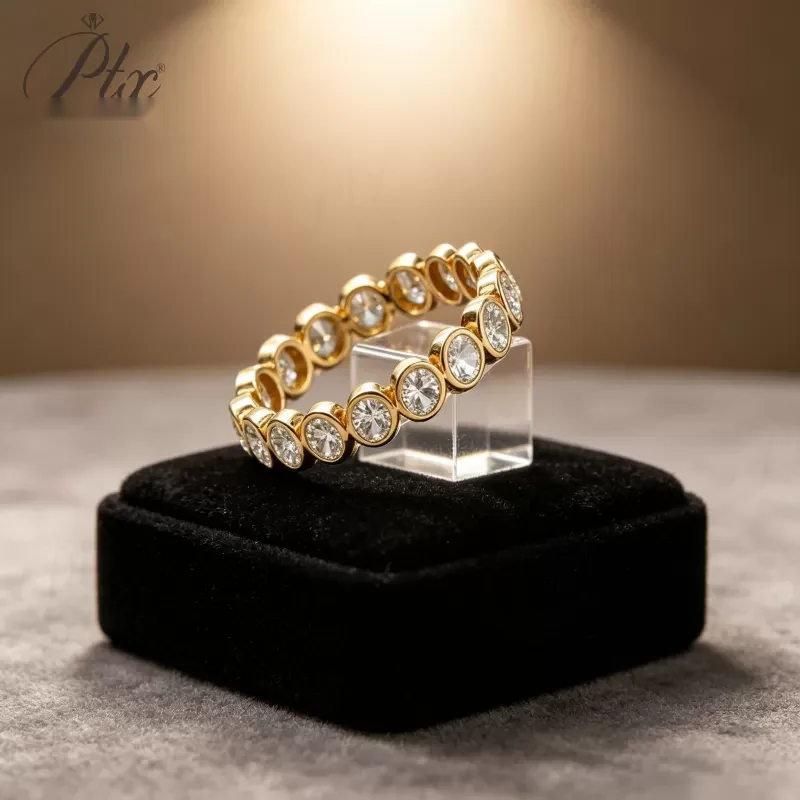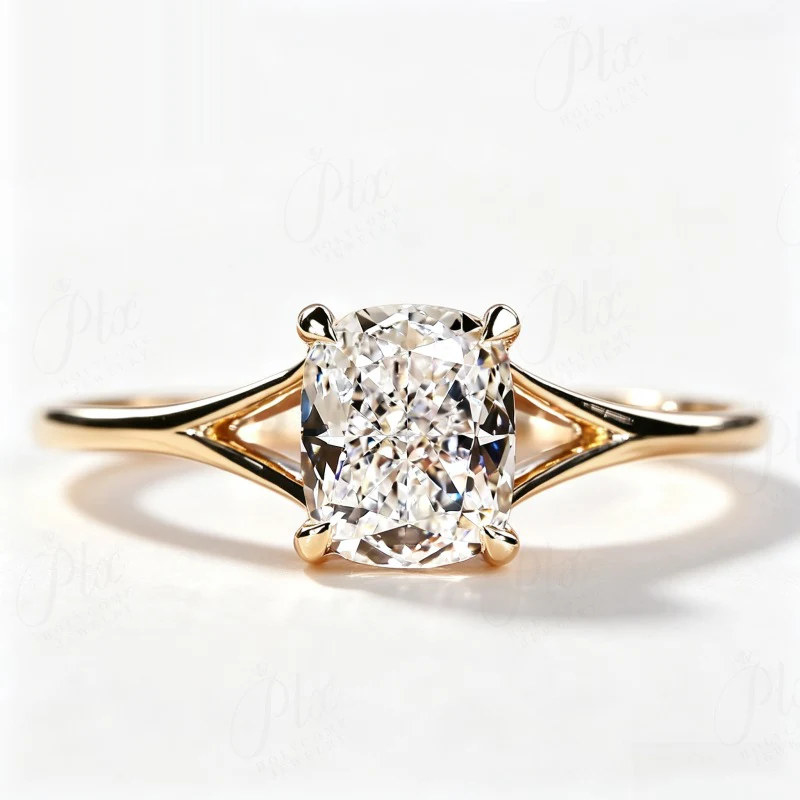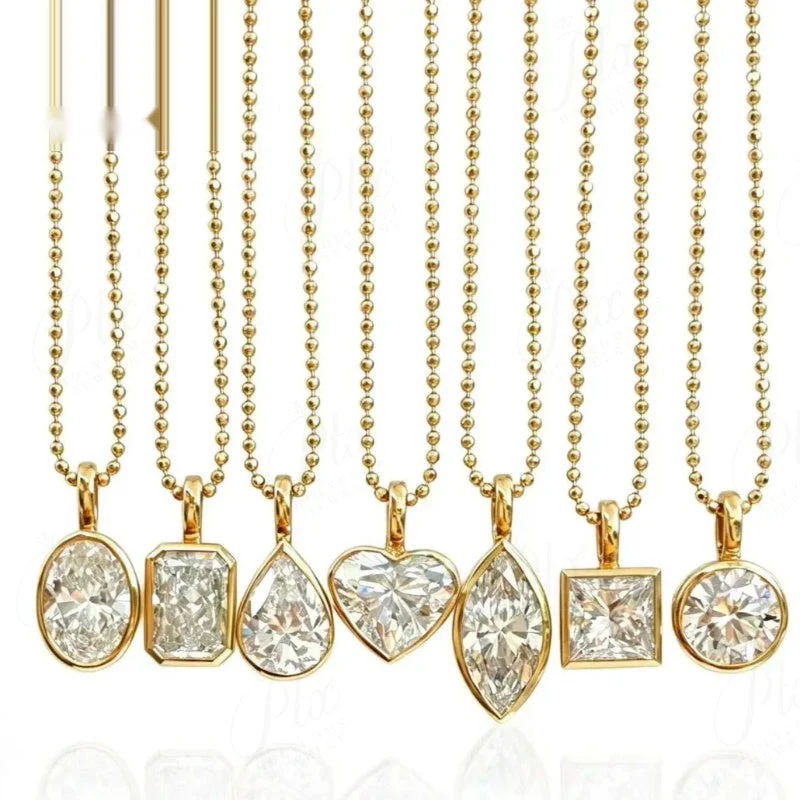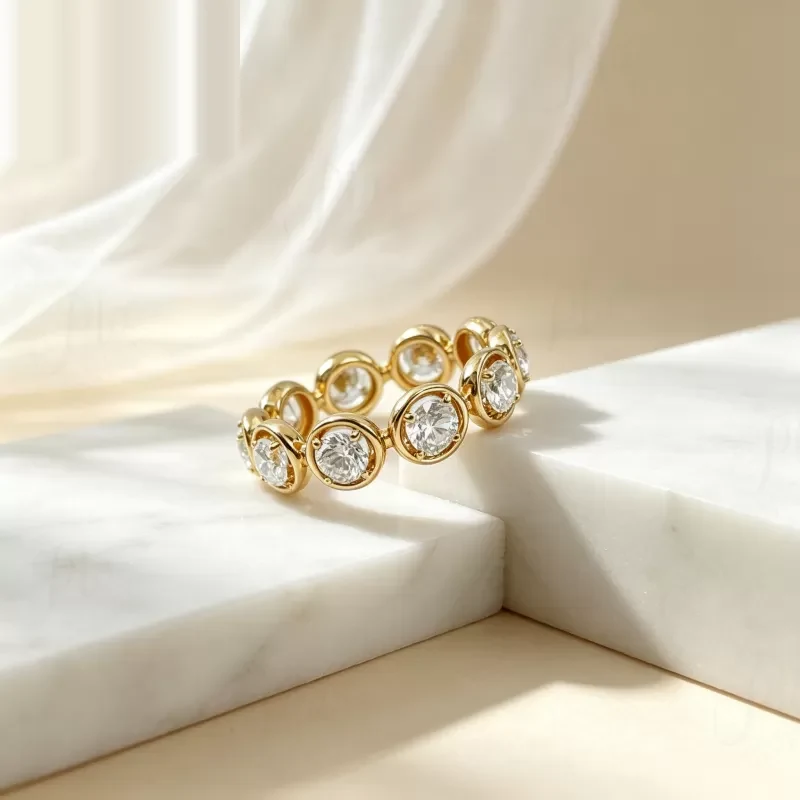
A customer sets a ring on your counter, pulls a keychain diamond tester out of their pocket, touches the heated tip to the stone, and watches the light turn green. "See?" they say. "It's real diamond." You know the stone in front of you is moissanite, bought from your own wholesale line, with its cert card sitting in the pouch. That awkward moment happens on retail counters every single day, and it almost always traces back to one thing: cheap thermal testers cannot tell diamond and moissanite apart.
The reason is physics, not marketing. Thermal conductivity testers were invented around diamond's legendary ability to move heat. Diamond conducts heat roughly five times faster than silver, and early testers were calibrated so that anything near that reading registered as diamond. Moissanite, chemically silicon carbide, conducts heat unusually well too - far better than cubic zirconia, glass, white sapphire, or any common simulant. On a basic single-function tester, the two readings land in the same green zone. The device isn't broken. It simply wasn't built to separate these two stones.
What the modern combo tester actually does
A competent retail counter owns a combination diamond/moissanite tester, usually priced between fifty and a hundred and fifty dollars. These devices run two tests in sequence. First they check thermal conductivity the old way. Then they run an electrical conductivity check, because diamond is an electrical insulator (with rare exceptions among fancy colored stones) while moissanite conducts electricity. The second cycle flips the result: the stone that passed the heat test and conducts a small current is moissanite. Walk any sales associate through this twice and they can resolve the most skeptical customer in under a minute.
It is worth saying plainly that a green light on a thirty-dollar keychain tester proves nothing about either stone. Those units are calibrated coarsely, drift with battery age, and confuse moissanite, CZ, and even some well-made synthetics. Your job at the counter is not to win an argument about the customer's gadget. It is to offer a better test they can watch.
The no-tool tells your staff should know
Sometimes the tester is dead, the battery is out, or the customer wants answers before they'll let a device near the mounting. Moissanite reveals itself a few other ways. Under a 10x loupe, the back facets often show slight doubling because of its strong double refraction, while diamond facets stay crisp. Its brilliance and fire run hotter than diamond's, which buyers who have handled both stones begin to recognize over time. And the honest starting point is the paperwork: a properly represented GRA-certified moissanite stone ships with documentation describing exactly what it is. A stone sold to you as diamond at wholesale prices that turns out to be moissanite is a vendor problem, and you should already know the difference before the customer ever does.
What to say when the customer doubts you
Never dismiss the customer or their tester. Start with agreement: "You're right that basic testers struggle here - let me show you why." Run the combo test in front of them, hand them the loupe, point to the cert, and tell the value story straight. Moissanite costs a fraction of diamond, offers comparable brilliance, and is honestly disclosed. Most buyers who came in skeptical leave relieved they got the better value rather than confused about what they own. If you need the full side-by-side language, our guide on how moissanite compares to diamond gives your staff the exact sentences customers respond to.
When the stone isn't what you ordered
Every now and then a wholesale batch arrives that a basic tester can't explain, and the problem is real rather than theoretical. CZ and other cheap simulants sometimes slip into shipments marketed as moissanite, especially from suppliers who price far below market. Your combo tester catches those immediately - CZ fails the electrical conductivity check. When that happens, document the batch, photograph the stones next to the tester reading, and go back to the vendor. A supplier who expects you to sort out their mistakes at your counter is not a supplier worth keeping long-term. It costs far less to reject a bad vendor on a sample order than to argue with customers about stones you should never have stocked.
Train staff on the tester the way you'd train them on any other tool - a short demo, a supervised practice, then a spot check a month later. Most counter disputes dissolve once the customer sees a professional run a real test and explain it plainly. The few that don't usually weren't going to buy anyway, and you lose nothing by being honest.
The wholesale side of the problem
Vendors who ship consistent, well-graded stones with matching cert cards make your counter easier to defend. Sloppy grading - stones advertised near-white that arrive visibly tinted, or certs that don't match dimensions - is what forces retailers into these arguments in the first place. Build a habit of checking every incoming batch against our receiving inspection checklist, and train your associates on the combo tester the same way you'd train them on ring sizing. The goal isn't to win tests. It's to make every customer leave certain about what they bought, and certain that you told them the truth.
For third-party reference, the Wikipedia article on moissanite details moissanite’s discovery, optical properties and use in jewellery.
Frequently Asked Questions
Is moissanite a good diamond alternative for retail buyers?
Yes for price-sensitive customers who want brilliance and hardness. Moissanite ranks 9.25 on the Mohs scale, holds up to daily wear and costs a fraction of a natural diamond of the same size, so it resells fast in bridal and fashion lines.
What is the minimum order for wholesale moissanite?
MOQ starts at 50 pieces per design for stock items. Custom cuts and private-label settings usually start at 100–300 pieces depending on the mold.
Do you provide certificates with moissanite stones?
Yes. Every parcel ships with GRA or IGI documentation listing carat weight, color grade and cut. We recommend passing the certificate to your end customer for trust.
How long does sample and bulk production take?
Samples ship in 3–5 days. Bulk runs take 15–20 days under 500 pieces, and 25–30 days for custom work.