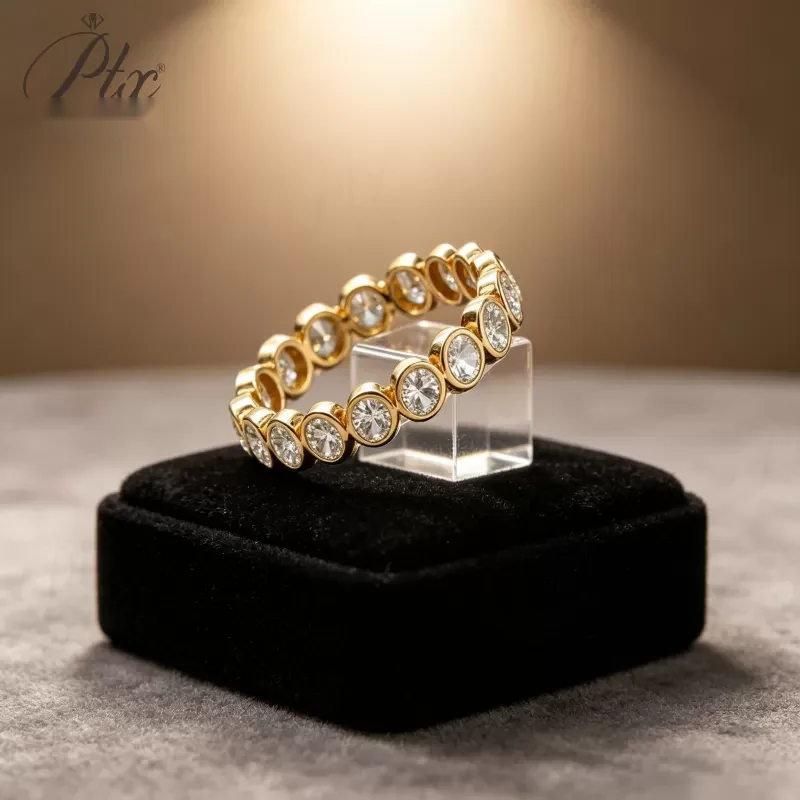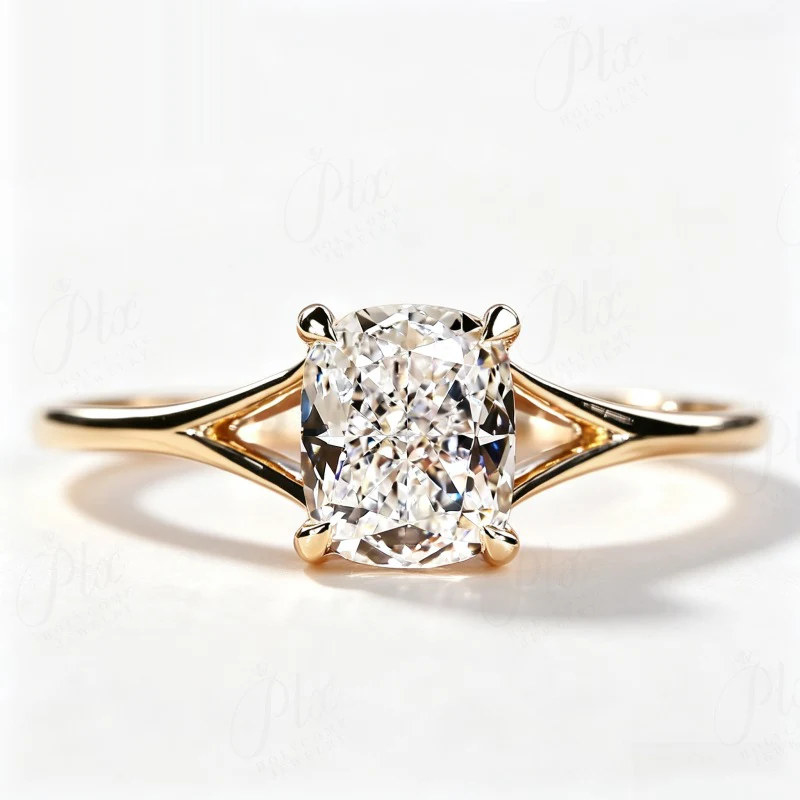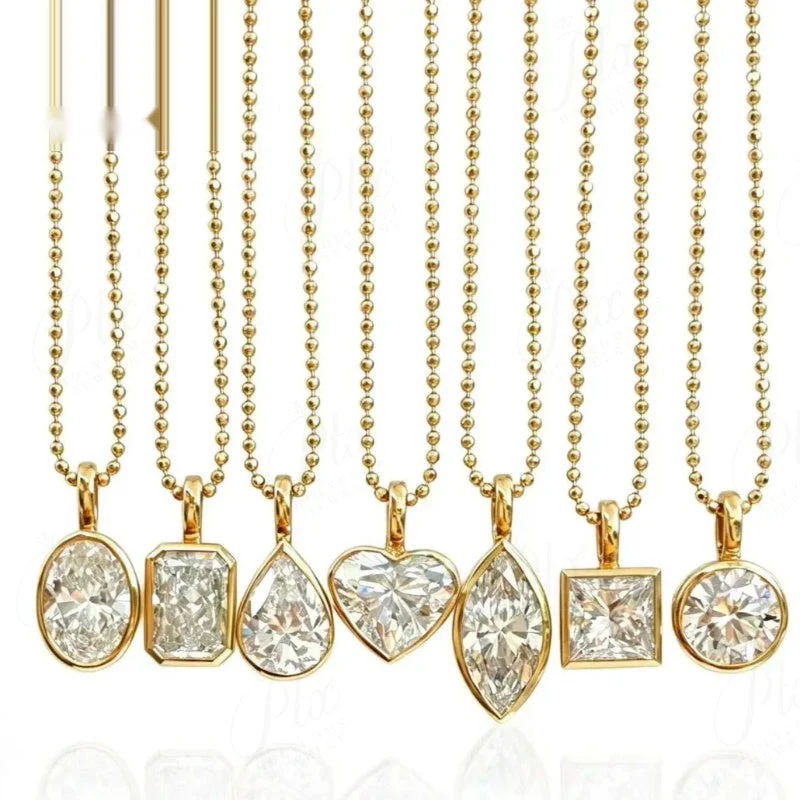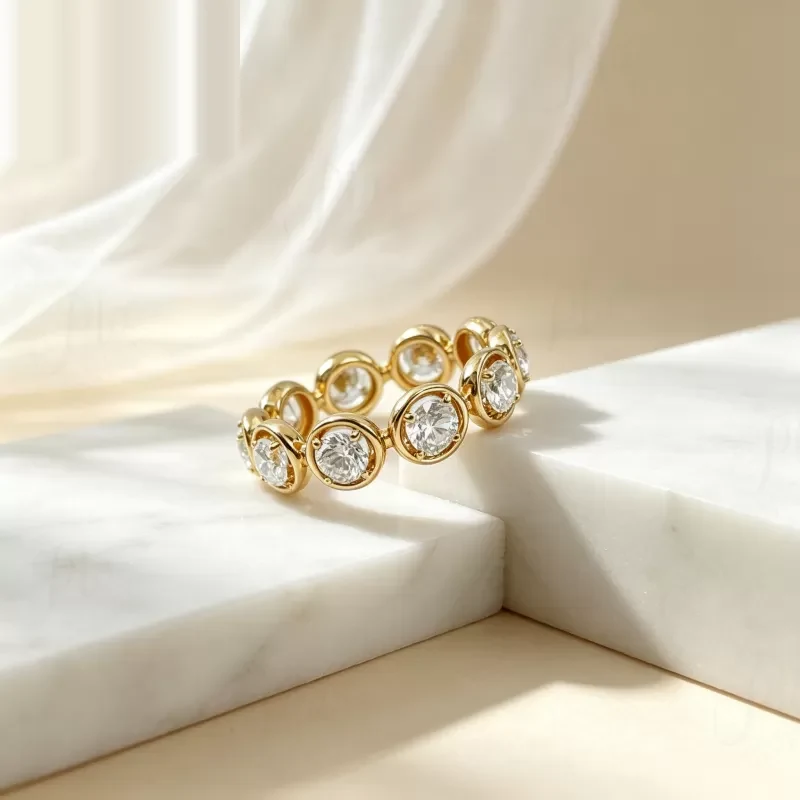
If you have spent any time on the retail floor, you have seen it happen: a customer walks in holding a small diamond tester, presses the tip to a moissanite ring, and suddenly goes quiet. The needle jumps, the beep sounds, and the shopper looks up, confused. For anyone selling moissanite, this moment comes up constantly. Understanding why it happens, and how to explain it calmly, is one of the most useful skills a sales associate can develop.
Diamond testers are not, as many customers assume, magic "real stone" detectors. The handheld units most jewelers own measure thermal conductivity — how quickly heat moves through the material. Natural diamond is exceptional at conducting heat, which is exactly how these tools were calibrated to identify it. The problem is that moissanite conducts heat almost as well as diamond. In fact, moissanite's thermal conductivity sits close enough to diamond's that older and mid-tier thermal testers regularly flag moissanite as diamond. This is not a defect in the stone, and it is not a vendor trying to pass something off. It is a physical overlap in how two very different materials behave at the atomic level.
A newer generation of testers adds an electrical conductivity mode specifically to separate the two. Diamond and moissanite conduct electricity differently, and a two-in-one instrument can usually tell them apart. But most shoppers — and even some small jewelers — only own the thermal version. If a customer brings in one of those, the result will always be ambiguous, and that ambiguity is where your explanation needs to start.
The honest answer is that a single handheld test tells you very little on its own. Reliable identification of moissanite comes from a combination of checks that a trained eye can do without any electronics. Under 10x magnification, moissanite shows doubled facets — you will see reflection through the pavilion facets when you look closely. Diamond is singly refractive, so its facets stay clean and sharp. Moissanite also has a characteristic sparkle pattern: more colored flashes (fire) and slightly less white light return (brilliance) than a well-cut diamond. The refractive index of moissanite, around 2.65 to 2.69, is actually higher than diamond's 2.42, which is part of why it scatters light so vividly. If you want the full optical background, our guide on why moissanite sparkles breaks the science down further.
For a retailer, the practical takeaway is that you should never lean on a customer's tester as proof of anything. Instead, point to the documentation. A properly supplied moissanite piece should arrive with a GRA certificate that lists the stone's carat equivalent, color grade, clarity, and millimeter measurements. Cross-check the laser inscription on the stone's girdle, where present, against the certificate number. If the customer is still skeptical, offer to examine the stone under your loupe together and walk them through the facet-doubling observation. Most people relax once they understand that the tester was never designed to make this distinction in the first place.
You should also coach your team to avoid words like "fake" or "real." Moissanite is a real, durable, lab-grown gemstone with a Mohs hardness of 9.25. It is not an imitation of a diamond in the way cubic zirconia is; it is its own material with its own optical properties. Customers who hear "your tester can't tell the difference" sometimes mishear it as "we are hiding something." Reframe it instead: "The tester was built for one stone. Yours is a different material that happens to look similar under that particular test."
It helps to have a short, scripted answer ready for the most common follow-up questions. "How can I be sure it's moissanite?" gets answered with the loupe and the certificate. "Will my diamond tester at home still be confused?" gets answered honestly — yes, if it is a basic thermal unit, and that is normal, not a problem. "Should I buy an electrical tester?" is usually not worth the money for a customer who only owns one ring; the documentation is enough. The more your team sounds like they have answered this question a hundred times, the faster the shopper relaxes.
For a higher-level conversation, keep a small hand lens and a printed comparison card at the counter showing diamond, moissanite, CZ, and white sapphire side by side. Most customers have never seen these stones next to each other, and the visual difference in fire and luster does more than any amount of explanation. Our piece on moissanite versus white sapphire and zircon is the technical reference your staff can study in advance.
From a wholesale standpoint, this is another reason to insist on consistent certification with every shipment. When every loose stone and finished piece arrives with matching paperwork, your staff can answer the diamond-tester question in under a minute instead of losing a sale. We supply all of our moissanite with GRA documentation and girdle inscriptions where applicable, specifically so retail partners have something concrete to hand customers when the conversation turns technical. If you are still vetting suppliers, our checklist on vetting a new moissanite vendor covers what to ask about certification before your first order.
The next time someone pulls out a tester on your counter, treat it as an opening rather than a threat. It is the moment the customer who was quietly skeptical becomes the one who trusts you. Explain the physics simply, show the certificate, look at the facets together, and the sale usually closes itself.
Gemstone grading terminology used here follows the Gemological Institute of America’s gem encyclopedia.
Frequently Asked Questions
Is moissanite a good diamond alternative for retail buyers?
Yes for price-sensitive customers who want brilliance and hardness. Moissanite ranks 9.25 on the Mohs scale, holds up to daily wear and costs a fraction of a natural diamond of the same size, so it resells fast in bridal and fashion lines.
What is the minimum order for wholesale moissanite?
MOQ starts at 50 pieces per design for stock items. Custom cuts and private-label settings usually start at 100–300 pieces depending on the mold.
Do you provide certificates with moissanite stones?
Yes. Every parcel ships with GRA or IGI documentation listing carat weight, color grade and cut. We recommend passing the certificate to your end customer for trust.
How long does sample and bulk production take?
Samples ship in 3–5 days. Bulk runs take 15–20 days under 500 pieces, and 25–30 days for custom work.