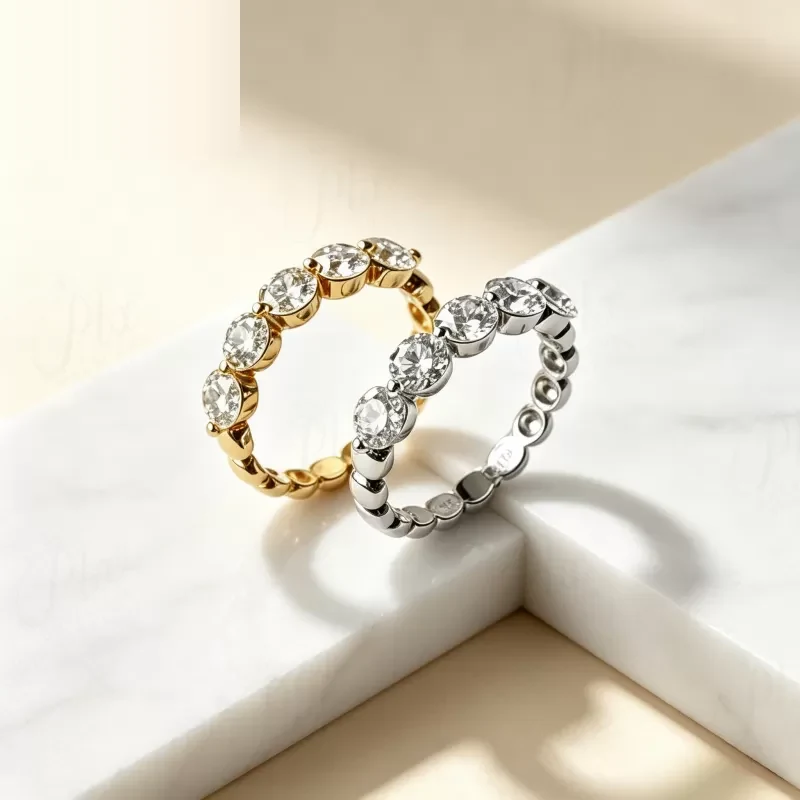
A designer in Stockholm spent three months iterating a custom moissanite bracelet with a supplier who kept replying "ok, will check." By the time the first sample arrived, three details had drifted: the stone spacing was wrong, the clasp was plated rather than solid, and the certificate (FTC jewelry industry guides) card had been left out of the parcel. She had not asked for any of it in writing. The supplier was not malicious - he was filling an order from a verbal conversation, and verbal conversations in cross-border jewelry sourcing lose at least one detail every time.
The fix is not to change suppliers. It is to change how you communicate. A written request, structured so the vendor answers in checkboxes, removes the drift. Below is the message template and the exact items to request on every order, sample or bulk.
Request the spec sheet in writing
Before any production, ask the vendor to send a one-page spec sheet covering: stone shape, mm size, color grade, clarity, cut, certificate type, metal purity, prong style, finish (polished versus matte), inner-band engraving, and clasp type. If the vendor sends a photo instead of a document, ask them to type the numbers. Why this matters: IGI's grading workflow is built around documented specs, and a supplier who will not write numbers down cannot verify what they shipped. We cover the spec-side risks in comparing suppliers beyond price.
Request photos before shipment
For bulk or custom orders, ask for 5 to 10 clear photos of the finished pieces - front, side, inner band, clasp, and the certificate - before the parcel leaves the factory. This catches 90% of drift before shipping. Most reputable suppliers will send these within 24 hours. For the photography angle on your side, see how to read supplier photos correctly.
Request the certificate and labeling
Ask explicitly which certificate travels with each piece, and whether inner bands are stamped with metal purity. Under FTC 16 CFR Part 23, jewelry sold into the US carries specific marking requirements, and your supplier should stamp accordingly. Confirm packaging: velvet pouch, anti-tarnish wrap, and certificate holder. We unpack the certificate question in what a moissanite certificate actually shows.
Request lead time, shipping and reorder terms
Finally, ask in writing for: confirmed lead time, courier, insurance coverage value, tracking timeline, and the reorder price tier for your second buy. A supplier who confirms lead time in writing is far more likely to hit it. For the lead-time logic, see lead times explained.
Setting a response-time expectation up front
One detail buyers skip: agree on response time in the first message. Ask the vendor, in writing, how long they take to reply to questions and to send updates during production. A supplier who commits to a 24-to-48-hour reply window and actually hits it is worth more than the cheapest quote. Cross-border sourcing runs on trust, and trust is built on predictable replies, not on a one-time discount. If a vendor goes silent for more than two working days after you have paid, that is the moment to ask for a status update in writing - and to note it against your own record for the next order. This rhythm is what keeps lead times realistic rather than aspirational.
FAQ: moissanite supplier communication
What should I request from a moissanite supplier in writing?
Request a spec sheet (shape, size, color grade, metal, prong style), pre-shipment photos, the certificate type, metal stamps, packaging, confirmed lead time and reorder pricing. Written answers prevent detail drift.
Is it normal to ask for photos before shipment?
Yes. Most B2B moissanite suppliers will send 5-10 photos of a finished bulk order before dispatch. If a vendor refuses, treat it as a red flag.
What certificate should I ask for with each piece?
SGS, GRA or NGTC cards are standard. Ask for the physical card to travel inside the parcel, and request a photo of it before shipping.
How do I lock lead time with a supplier?
Get the lead time in writing in the order confirmation message, and ask for a shipping update at the halfway point. Verbal "two weeks" often becomes four.
Finally, keep a shared notes sheet for each supplier: lead time quoted, lead time delivered, any drift, and how it was fixed. After three orders you will have a real record of which vendor is consistent and which is apologetic. That sheet is worth more than any price list when it is time to choose where the next season's budget goes.
This written habit also makes onboarding a new staff member far faster - the notes sheet carries the supplier history forward without you having to retell it every time.
Work with a supplier that writes everything down. HOLYCOME sends a spec sheet, pre-shipment photos and certificate copies with every order, plus a written lead-time confirmation. Request our order template.
Frequently Asked Questions
Is moissanite a good diamond alternative for retail buyers?
Yes for price-sensitive customers who want brilliance and hardness. Moissanite ranks 9.25 on the Mohs scale, holds up to daily wear and costs a fraction of a natural diamond of the same size, so it resells fast in bridal and fashion lines.
What is the minimum order for wholesale moissanite?
MOQ starts at 50 pieces per design for stock items. Custom cuts and private-label settings usually start at 100–300 pieces depending on the mold.
Do you provide certificates with moissanite stones?
Yes. Every parcel ships with GRA or IGI documentation listing carat weight, color grade and cut. We recommend passing the certificate to your end customer for trust.
How long does sample and bulk production take?
Samples ship in 3–5 days. Bulk runs take 15–20 days under 500 pieces, and 25–30 days for custom work.