A reseller in Berlin asked us last month which single shape to commit a 5,000-piece order to. He had been splitting his catalog fifty-fifty between round and oval, and his cash was sitting in two slow-moving pools. Across the stores we supply, the answer is not "oval wins" outright - it is that oval wins the ring market and round wins the stud and pendant market. Stocking the split correctly moves weeks of sitting inventory into sold units.
Why oval outsells in the ring category
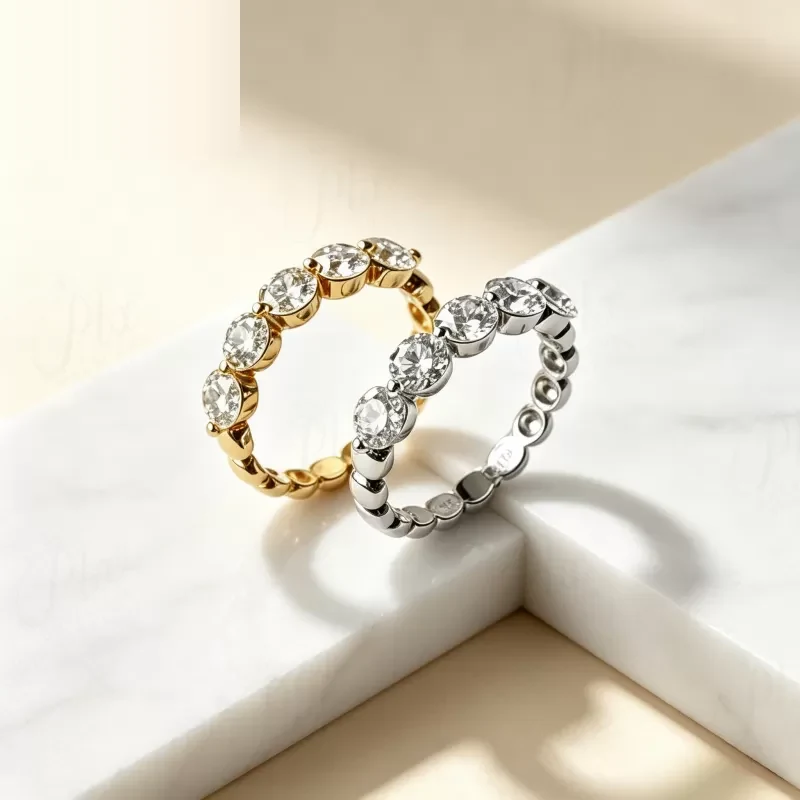
Online, shoppers buy rings for how they look on a hand. An oval 8x6mm stone reads as roughly 1.5 carat equivalent on the finger while physically weighing about 1.0 ct, and that elongation is flattering on shorter or wider fingers. GIA 4Cs lists cut shape as one of the factors that changes perceived size, and oval moissanite leans into that. In the ring listings we track, oval solitaire units run about 2.3x round units on average across a six-month window. The shape is also forgiving on color: the open culet area of an oval hides the faint green or gray tint that an H-I moissanite would show straight up in a round.
Where round still wins
Round brilliant is the default that customers already trust. When someone pictures a diamond, they picture a round, so studs, tennis bracelets and three-stone bands sell round by habit. Round moissanite also photographs more predictably - it disperses fire evenly in every direction, whereas an oval shows a dark bow-tie on poorly cut stones that reads as a flaw on camera. If your returns spike on ovals, check the bow-tie before you blame the marketing. This ties directly into how we brief our resellers on product-page photography, because an unflattering bow-tie shot kills the very shape that should sell.
Price tier differences resellers forget
Cutting cost differs by shape. Oval and cushion carry a lower cutting yield because the rough is oriented to maximize length, which usually keeps them a touch cheaper per piece than a well-cut round of the same mm. But oval demand has bid the popular 8x6mm and 9x7mm sizes up over the last two years, erasing some of that discount. Round, by contrast, has a steady pipeline because it is the bulk size. We price best-selling ring sizes on a stable round schedule and treat oval 8x6mm as the promoted hero SKU. Stock the round sizes 6, 7 and 8 US deep, and keep oval 8x6mm as your page-one hero.
Build the shape mix, don't guess
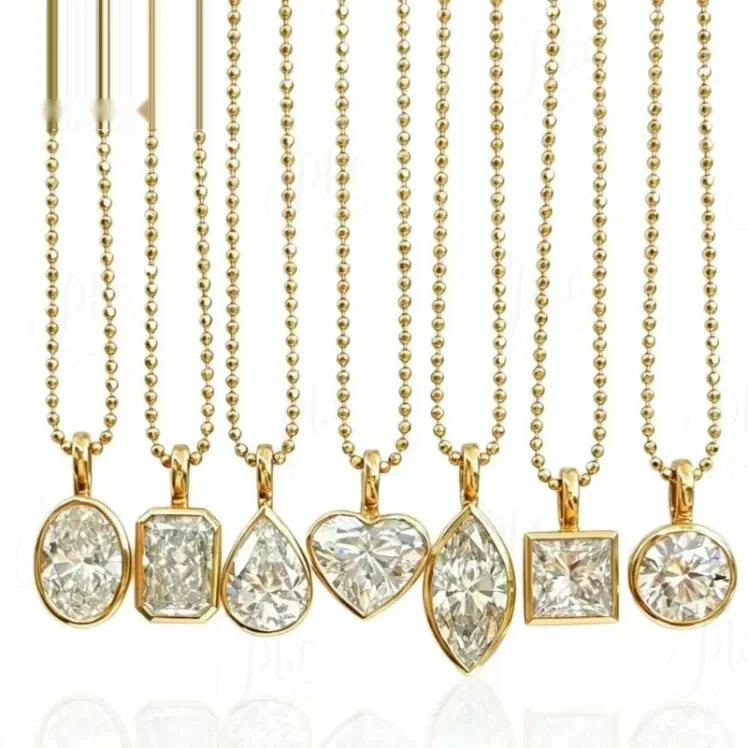
A practical starting mix for a new store: 55% oval in solitaire rings, 70% round in studs, 60% round in tennis bracelets. Track your own sell-through for 90 days, then rebalance. Stores that over-order oval pendants are usually the ones stuck with dead stock, because pendants sell better in round or pear. We send resellers a dimensioned spec sheet with every stud SKU pack so the listing mm matches the stone, which keeps the "bigger than I thought" complaints away.
The honest trade-off: oval gives you the conversion win on solitaire rings, round gives you the reliable reorder on studs. A catalog that only bets on one shape leaves money on the table. Compare the cut specs on offer when you vet a supplier beyond price, because the oval you source now decides your return rate for the next year.
One detail resellers underestimate: the listing title and the shape's mm range. Oval listings that state the exact dimensions (8x6mm, not just "oval") have a higher add-to-cart rate because buyers know the elongation they are getting. Round listings can lead with the mm, since round diameter is intuitive. When a customer searches "8x6 oval," only listings that carry that exact dimension rank for it, so put the mm in both the title and the bullet points. We see stores that write only "oval solitaire" miss that search traffic entirely, while stores that spec the mm capture it. Pair that dimension callout with the shape mix above and your catalog does the explaining for you.
Is oval moissanite cheaper than round?
Usually a little cheaper per mm because cutting yield is higher on oriented ovals, but hot sizes like 8x6mm have tightened. Round is the more stable price.
Why do my ovals show a dark bow-tie?
A bow-tie is the shadow across an oval's center from facet angles. Mild is normal; heavy means a shallow or uneven cut. Reject ovals where the bow-tie reads as a black bar in photos.
Which shape looks biggest on the finger?
Oval, by perceived size. Its elongation covers more finger surface than a round of the same carat weight.
Should I list oval and round as the same price?
You can, but margin differs. Keep oval as the slightly promoted hero and round as the reliable repeat; price them to your actual landed cost per shape.
HOLYCOME cuts oval 8x6mm and round 6.5mm in consistent batches, with cut angles on the spec sheet so your photos match the stone. Order a sample set in both shapes, photograph them on your own lighting, then lock your shape mix.
Frequently Asked Questions
Is moissanite a good diamond alternative for retail buyers?
Yes for price-sensitive customers who want brilliance and hardness. Moissanite ranks 9.25 on the Mohs scale, holds up to daily wear and costs a fraction of a natural diamond of the same size, so it resells fast in bridal and fashion lines.
What is the minimum order for wholesale moissanite?
MOQ starts at 50 pieces per design for stock items. Custom cuts and private-label settings usually start at 100–300 pieces depending on the mold.
Do you provide certificates with moissanite stones?
Yes. Every parcel ships with GRA or IGI documentation listing carat weight, color grade and cut. We recommend passing the certificate to your end customer for trust.
How long does sample and bulk production take?
Samples ship in 3–5 days. Bulk runs take 15–20 days under 500 pieces, and 25–30 days for custom work.