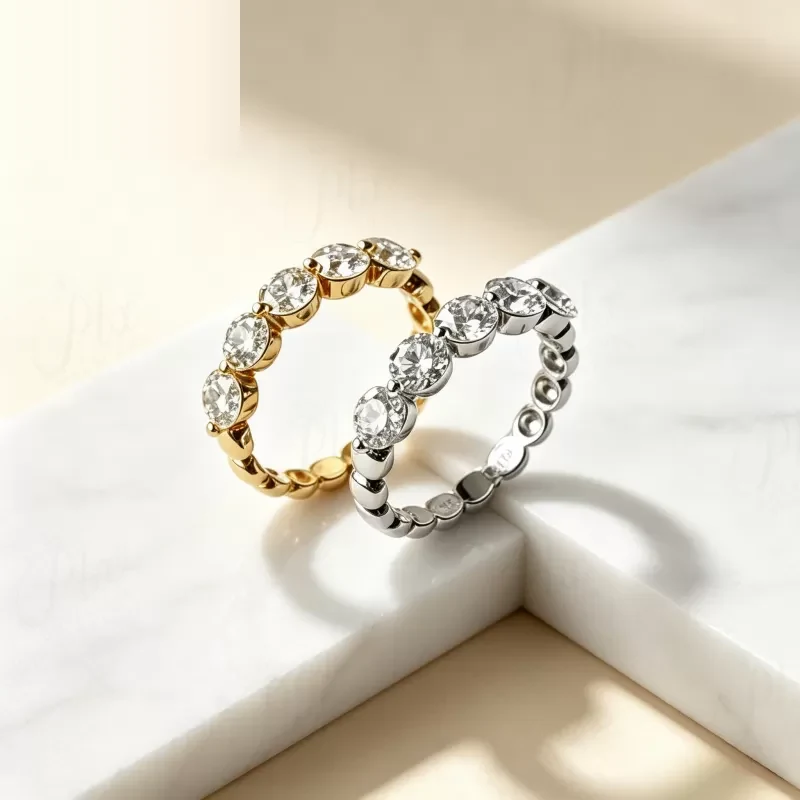
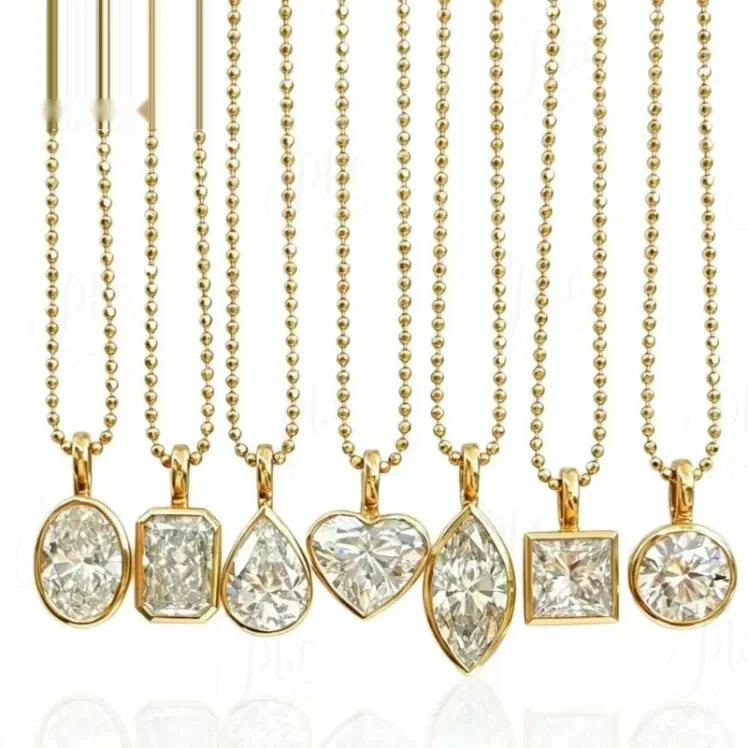
A new reseller once ordered 200 moissanite solitaire rings evenly split across sizes 4 through 11. Twelve months later, 70% of the dead stock sat in sizes 4, 5 and 10. The mistake was treating sizes as equally likely. Ring size demand is not flat - it clusters hard - and that clustering is the difference between a 90% sell-through and a warehouse full of slow SKUs.
The US ring size demand curve
Industry sizing surveys put the average US women's ring at roughly size 6 to 7, with size 6.5 the single most ordered size. The practical stock ratio that emerges from years of wholesale orders looks like this: sizes 6 and 7 together take about 45-50% of a women's solitaire order, size 5 and 8 take another 30%, and sizes 4, 4.5, 9 and 10 together take the remaining 20-25%. Men's bands cluster at 9 and 10, which you can read more about when choosing alloys in which metals hold moissanite best. The alloy conventions are on Wikipedia: Karat.
Stone weight: 1-carat equivalent moves first
On the stone side, the 6.5mm round (marketed as about 1-carat equivalent) is the volume mover for engagement-style solitaires, followed by the 5mm (0.75-carat look) and the 8mm (2-carat look) as the premium tier. Stock your first order in roughly a 5:3:2 ratio across 6.5mm, 5mm and 8mm. The 10mm-plus stones sell, but slowly and to a narrower customer; make them to order rather than sitting 20 units each. We explain how to test that demand before committing in what a good sample order looks like.
What not to over-order
Three traps. First, half sizes below size 5 - you only need 2-3 units each. Second, oversized sizes 10 and above - keep one of each and reorder on demand. Third, matching bridal sets in unusual center-stone weights; stock the solitaire singles first and add bands once a size proves itself. Pair this ratio with the MOQ planning in moissanite MOQ pricing tiers so your first buy clears minimums without bloating.
Half sizes, resizing fees and reorder triggers
Track what actually sells out, not what you hoped would sell out. After your first 60 days, look at two numbers per SKU: weeks out of stock and sell-through rate. Any size in the 6-7 band that sells through in under four weeks is a reorder trigger at double units; any size that sits over 90 days drops to one unit on the next buy. Half sizes like 5.5 and 6.5 frequently outperform the whole-size neighbors, so do not collapse them into "about a size 6" on your inventory sheet. Resizing after sale adds a $15-40 service cost and a two-week delay, which is why stocking the common sizes beats a made-to-order promise for a first-time buyer.
On the bridal side, engagement ring sizes 5.5 and 6.5 pair most often with band sizes 5.5 and 6.5 for wedding-set upsells. If you sell solitaires, stock matching bands in those same two sizes rather than across the board - it captures the upsell without inflating the band SKU count. Choose band alloys that resize cleanly (see our metals guide) and match the first buy to the MOQ tier that keeps the 6/7 core stocked without overcommitting.
Watch the slow sizes so they do not tie up cash
After your first reorder cycle, split the ring stock into three buckets. Fast movers sell out in under six weeks and get reordered at higher units. Steady sizes sell roughly one unit a month and hold their current quantity. Dead sizes sit ninety days or more - mark them down, bundle them, or stop reordering them entirely. The cash tied up in dead sizes is the cash you could have spent on another fast-moving half size. Review the buckets every quarter; a size that was steady in spring can become a fast mover once bridal season starts in autumn. Keeping the ratio honest means you never run out of the size everyone wants while sitting on the one nobody does.
What is the average women's ring size in the US?
Roughly a size 6 to 7, with 6.5 the most common single size. Treat 6 and 7 as your core stock.
Should I stock half sizes?
Yes, but thinly. Sizes 5.5 and 6.5 sell; sizes 4, 4.5 and 9.5 are slow movers. Two units each is enough to start.
Which stone size sells best?
The 6.5mm round (about a 1-carat look) is the volume SKU. Build around it before adding 5mm and 8mm tiers.
How do I handle resizing after purchase?
Choose suppliers whose bands resize cleanly. Avoid fully eternity-set bands, which cannot be sized; solitaire and three-stone settings resize normally.
HOLYCOME ships size-tiered solitaire and band packs in the 6/7-heavy ratio, with half-size depth available. Check our wholesale MOQ tiers or ask for a starter stock plan matched to your channel.
Frequently Asked Questions
Is moissanite a good diamond alternative for retail buyers?
Yes for price-sensitive customers who want brilliance and hardness. Moissanite ranks 9.25 on the Mohs scale, holds up to daily wear and costs a fraction of a natural diamond of the same size, so it resells fast in bridal and fashion lines.
What is the minimum order for wholesale moissanite?
MOQ starts at 50 pieces per design for stock items. Custom cuts and private-label settings usually start at 100–300 pieces depending on the mold.
Do you provide certificates with moissanite stones?
Yes. Every parcel ships with GRA or IGI documentation listing carat weight, color grade and cut. We recommend passing the certificate to your end customer for trust.
How long does sample and bulk production take?
Samples ship in 3–5 days. Bulk runs take 15–20 days under 500 pieces, and 25–30 days for custom work.