Buyers who skip the sample order and pay a 3,000-unit deposit on a video call are the ones who message us later with "the stones look yellow." A sample order is not a courtesy gift; it is the cheapest diligence step in the whole supply chain. A supplier who handles the sample well handles the bulk order the same way. Here is what should arrive on your desk.
The stones: compare, do not just inspect
A useful sample includes at least three calibrated stones in the same mm size across the grades you are considering (for example D, E and F rounds), plus one finished piece in each setting style you plan to sell. Light them on a white tray under neutral daylight and compare side by side, not one at a time. Check that the descriptions match the grade language we cover in moissanite color grades D-F. Reject suppliers who send one free stone and call it a sample - you cannot compare three grades with one stone.
The paperwork: certificates and test reports
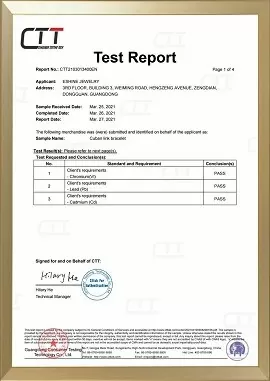
Each sample stone should arrive with its traceability card (the GRA-style card explained in what a GRA certificate covers), and the finished pieces should carry metal stamps matching the claimed fineness - 925 for sterling, per the ISO 9202 fineness standard. On request, a serious supplier provides an independent material test report (the SGS-type report we compare in SGS vs GRA certification) rather than only an in-house card. If the paperwork is vague or the stamps do not match the listing, that is a red flag that scales up in bulk.
The packaging and the small print
Look at how the sample is packed - because the bulk order ships the same way. Rigid box, capped posts, void fill, insured and tracked. Read the small print on MOQ, lead time and reorder; compare it against moissanite MOQ pricing tiers. Watch for suppliers whose sample promises "free engraving" or "custom sizes" that vanish once the deposit is paid. The whole diligence pass is part of how we recommend comparing moissanite suppliers beyond price.
What the sample tells you that a quote never will
A quote is a promise; a sample is proof. Three things only the sample reveals. First, the actual face-up color under your own store lighting, because a supplier's well-lit product photo is not your fluorescent boutique. Second, the build quality of the setting - prong tightness, post length, clasp function, and whether the stones sit level or wobble. Third, the finish consistency between two pieces of the same SKU, which tells you how much variation to expect in a 500-unit run. If one sample ring has tight prongs and the next has a stone that rocks, expect that spread in bulk.
Give the finished pieces a real-wear test before you reorder. Wear the sample ring on your own hand for a week, open and close the clasp of the bracelet fifty times, and drop the stud pair into a bag to see how the post holds. A setting that survives your testing survives a customer. Write notes on each sample as you test, and send those notes back to the supplier with your bulk order - it confirms you are comparing like for like and raises the odds the production run matches the sample you approved. Suppliers who treat the sample as the spec, not as a sales gift, are the ones who scale cleanly.
After you approve the sample, ask for a written confirmation that the bulk order will match it - same stone grade, same metal stamp, same post length. Suppliers occasionally swap to a cheaper grade once production scales, and the only defense is a spec sheet both sides signed off on. When the bulk parcel arrives, compare the first five pieces against the approved sample before you put the rest on the shelf. If those five match, the lot almost always matches; if they do not, stop and raise it immediately rather than selling the mismatch.
Should I pay for the sample?
Yes. Free samples from unknown suppliers are usually one cherry-picked stone. Paying a small sample fee, often credited to the first bulk order, gets you a realistic lot.
How many pieces should a sample include?
Three grades of loose stones plus one finished ring, one pair of studs and one bracelet if those are your planned lines. That tests stones, settings and packaging at once.
What is the biggest red flag?
A supplier who refuses side-by-side graded stones or an independent test report, or whose sample packaging is flimsy. The sample predicts the bulk.
How long should a sample take?
Seven to fourteen days by tracked courier. Weeks of silence after payment is a warning sign.
HOLYCOME sends graded comparison sample packs with traceability cards, metal stamps matching our listings, and insured tracked shipping. Review our certification approach, or request a sample order to test stones, settings and paperwork on your own bench.
Frequently Asked Questions
Is moissanite a good diamond alternative for retail buyers?
Yes for price-sensitive customers who want brilliance and hardness. Moissanite ranks 9.25 on the Mohs scale, holds up to daily wear and costs a fraction of a natural diamond of the same size, so it resells fast in bridal and fashion lines.
What is the minimum order for wholesale moissanite?
MOQ starts at 50 pieces per design for stock items. Custom cuts and private-label settings usually start at 100–300 pieces depending on the mold.
Do you provide certificates with moissanite stones?
Yes. Every parcel ships with GRA or IGI documentation listing carat weight, color grade and cut. We recommend passing the certificate to your end customer for trust.
How long does sample and bulk production take?
Samples ship in 3–5 days. Bulk runs take 15–20 days under 500 pieces, and 25–30 days for custom work.