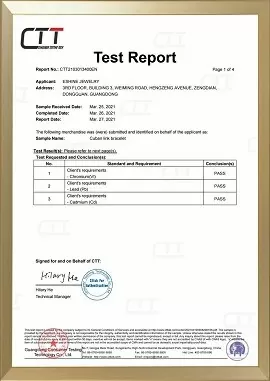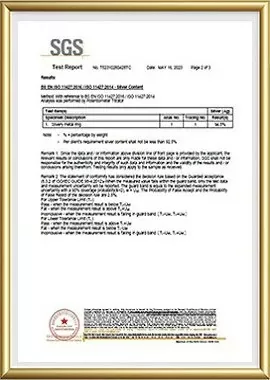
Every export-facing supplier advertises "certified moissanite," and every listing drops a certificate (per GIA's diamond grading standards) image. But those images are not the same thing. A reseller who paid $900 for a "certified" lot came to us after a gem tester flagged three stones as ordinary CZ - the GRA card in the parcel matched nothing. This article separates the paperwork that protects you from the paperwork that just fills a page.
What GRA is - and what it is not
GRA certificates ship with a large share of wholesale moissanite out of China. In practice, they are industry-lab cards that state carat, cut, color grade and clarity, often with a laser inscription matching the card. They are useful as a traceability label and a resale talking point, but they are not an independent gemological grade on the level of IGI, which grades mined and lab-grown diamonds for the trade. Do not mistake a GRA card for a third-party material proof. We unpack the card itself in what a GRA certificate actually covers.
What SGS adds that GRA does not
SGS is a global inspection, verification, testing and certification company. When a supplier offers an SGS report, the valuable line is not "this is a nice stone" - it is a physical test result: refractive index, density, and sometimes nickel-release or metal-alloy composition for the setting. That matters because it is an independent lab report you can verify by report number. For EU and UK markets, the compliance reference buyers care about is the REACH nickel restriction under EUR-Lex, and the testing behind it is exactly the kind of independent report SGS-type labs issue.
What to actually ask your supplier for
Three questions. First, is the report from an independent third party (SGS, Intertek, a national lab like NGTC) or an in-house card? Second, can the report number be verified on the lab's website, not just printed on a PDF? Third, does the report cover the material identity of the stone, not just its dimensions? A supplier who answers all three is worth trusting; one who sends only a GRA card image is selling traceability, not proof. We cover the full diligence pass in comparing moissanite suppliers beyond price and what a real test order looks like in our sample-order checklist.
Build a one-screen supplier file before bulk payment
Once you have the paperwork, store it where the dispute can find it. Keep a one-screen file per supplier: the SGS or equivalent report number, the lab verification link, the nickel-release or alloy test for EU-bound settings, and photos of the first sample batch. When a future customer claims a stone is CZ, you pull the file, read the refractive index result, and reply with numbers instead of argument. Suppliers who update this file on every shipment are the ones who stay on your approved list; suppliers who go quiet after the first order drop off.
One detail buyers miss: independent reports usually cover one production lot, not your supplier's entire output forever. Re-pull a fresh report for the first bulk lot after a price change, a new factory line, or a six-month gap in orders - that is when materials quietly drift. We keep this diligence step alongside the full supplier comparison in comparing moissanite suppliers beyond price, and the same evidence goes into every sample pack we send.
A practical test on the spot: ask the supplier to read the report aloud. If they cannot tell you the refractive index number or the density from memory, the report is decorative rather than understood. Suppliers who know their own numbers are suppliers who stand behind the lot; suppliers who fetch a PDF and cannot explain it are reselling someone else's paperwork. Run that question in the first five minutes of any new conversation and it filters the serious factories from the trading booths before you spend money on samples.
Is a GRA certificate fake?
It is not fake traceability, but it is not an independent gemological grade either. Treat it as a label, not proof of material identity.
Is SGS certification required to sell moissanite?
Not legally, but it is the cheapest risk reducer you can buy. A verified independent report blocks the "you sent CZ" dispute.
Can I verify an SGS report number myself?
Yes. Ask for the report number and check it on the issuing lab's verification portal before bulk payment. Be wary of PDFs with no lookup.
Do I need IGI grading for moissanite?
IGI focuses on diamond and colored-stone grading; it is uncommon for commodity moissanite. Independent material-test reports of the SGS type are the practical standard instead.
HOLYCOME ships orders with GRA traceability cards on calibrated stones and can provide third-party material test reports on request for bulk lots. See how we compare or request a verified sample pack before you order.
Frequently Asked Questions
Is moissanite a good diamond alternative for retail buyers?
Yes for price-sensitive customers who want brilliance and hardness. Moissanite ranks 9.25 on the Mohs scale, holds up to daily wear and costs a fraction of a natural diamond of the same size, so it resells fast in bridal and fashion lines.
What is the minimum order for wholesale moissanite?
MOQ starts at 50 pieces per design for stock items. Custom cuts and private-label settings usually start at 100–300 pieces depending on the mold.
Do you provide certificates with moissanite stones?
Yes. Every parcel ships with GRA or IGI documentation listing carat weight, color grade and cut. We recommend passing the certificate to your end customer for trust.
How long does sample and bulk production take?
Samples ship in 3–5 days. Bulk runs take 15–20 days under 500 pieces, and 25–30 days for custom work.