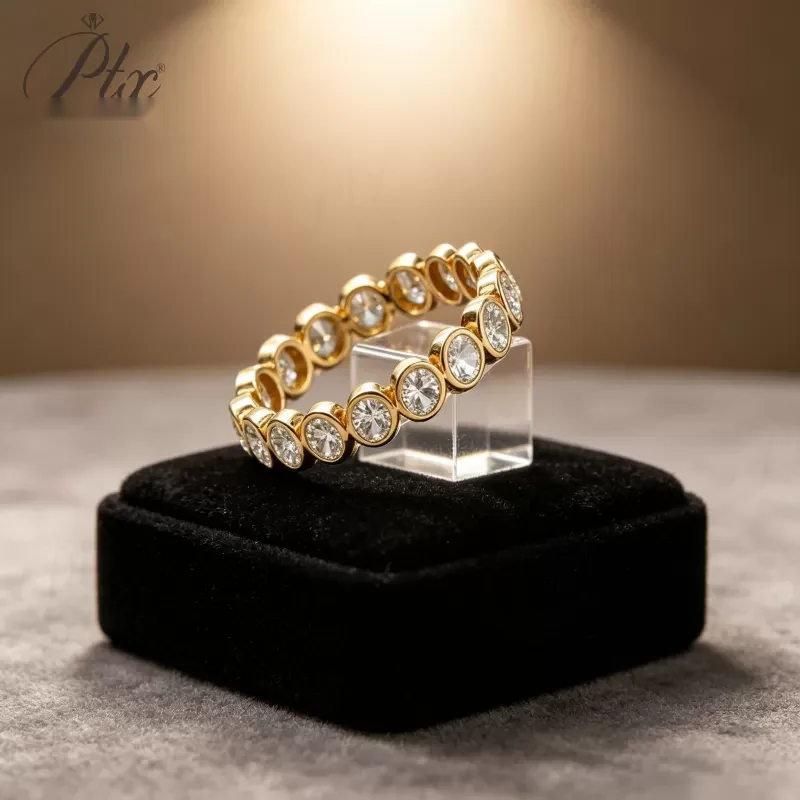
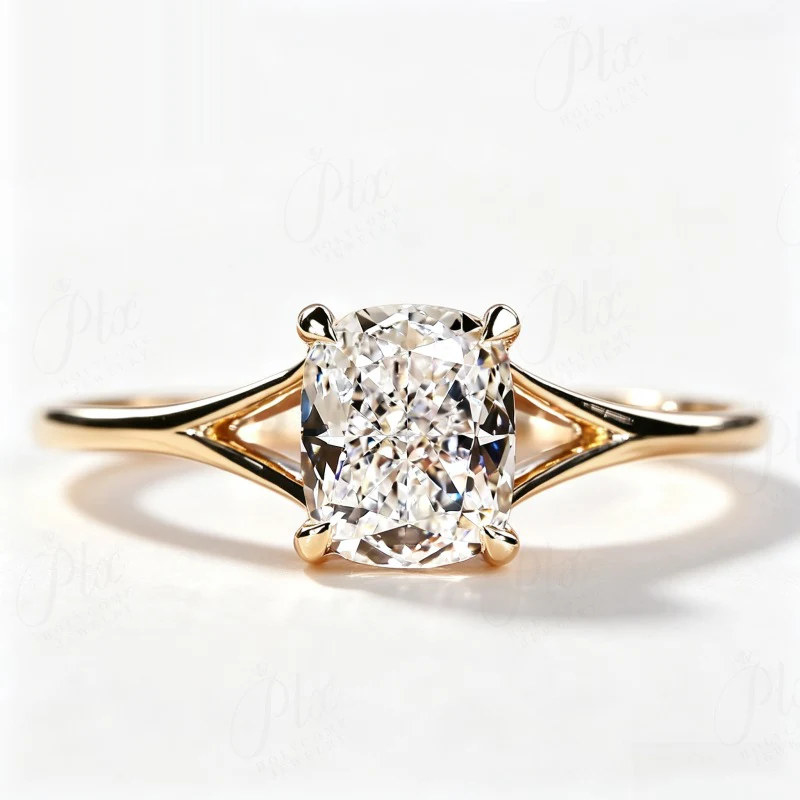
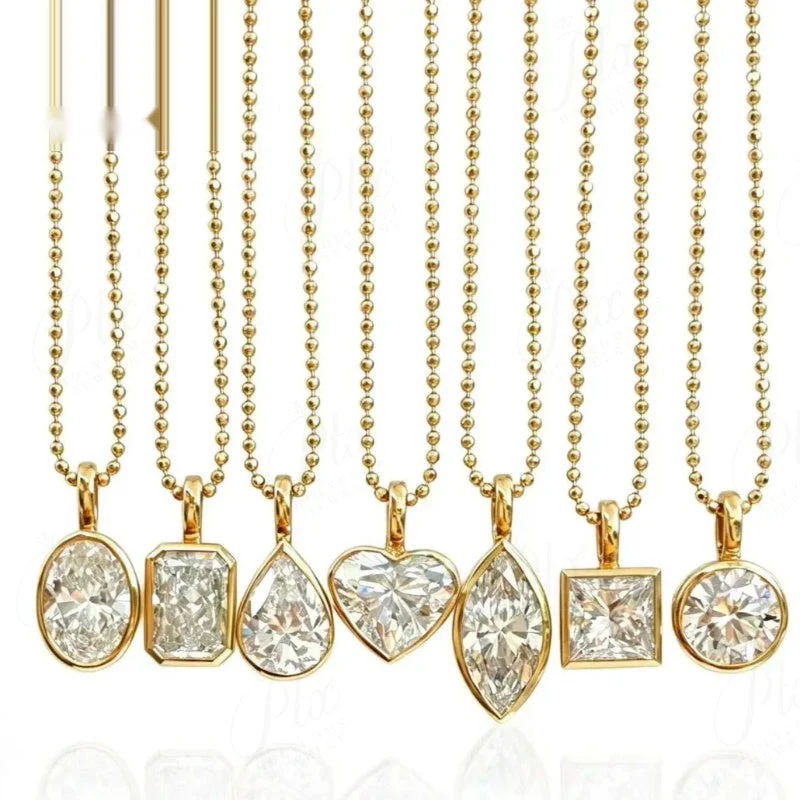
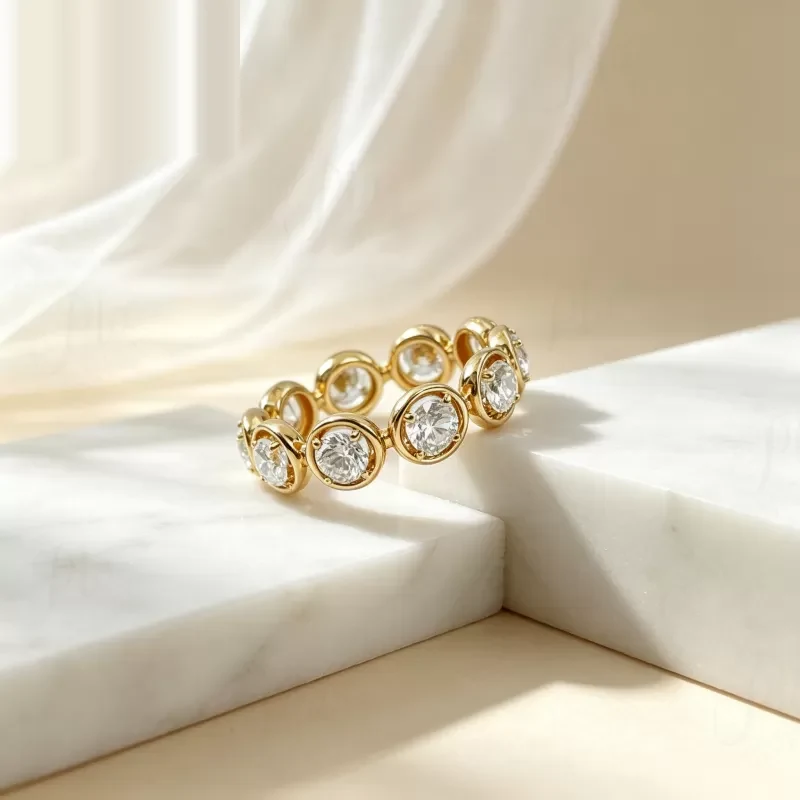
A customer sits down and asks for a two-carat engagement ring. You bring out a moissanite (per Wikipedia) option in a 8.0mm round. They hold it next to a friend's 2.00ct diamond and say it looks smaller. It does not, actually. What happened is that the industry trained everyone to measure stones by carat weight, and moissanite does not weigh the same as diamond at the same millimeter size. Fixing that gap starts with a chart your team keeps behind the counter.
Why moissanite weighs less
Diamond has a specific gravity of about 3.52. Moissanite sits around 3.21. Two stones of identical millimeter diameter and cut proportions will therefore have different weights. The moissanite is lighter, usually around 85 to 90 percent of the diamond's weight. That means a 6.5mm round moissanite that visually matches a 1.00ct diamond actually weighs about 0.88 to 0.92 carats. If your labels only say "0.90ct moissanite," the customer compares the number against a 1.00ct diamond and feels shortchanged.
The reference chart
Retailers who sell moissanite almost always quote the diamond-equivalent size, not the actual carat weight. Use this as your baseline for round brilliants:
- 4.0mm = approximately 0.25ct diamond equivalent
- 4.5mm = approximately 0.33ct equivalent
- 5.0mm = approximately 0.50ct equivalent
- 5.5mm = approximately 0.65ct equivalent
- 6.0mm = approximately 0.80ct equivalent
- 6.5mm = approximately 1.00ct equivalent
- 7.0mm = approximately 1.25ct equivalent
- 7.5mm = approximately 1.50ct equivalent
- 8.0mm = approximately 2.00ct equivalent
- 9.0mm = approximately 3.00ct equivalent
Fancy shapes run slightly different because of their length-to-width ratios. An 8x6mm oval reads roughly 1.5ct equivalent, while a 9x7mm oval reads about 2.0ct. Cushions and pears are closer to their mm sizes than ovals, but not exact. Always compare on a physical reference board rather than quoting numbers from memory.
How to label and talk about it
The safest wording on tags and listings is "6.5mm round moissanite (approx. 1.00ct diamond equivalent)." That is honest, it matches what the customer sees, and it avoids the awkward moment when they weigh the stone later. Never label a 6.5mm moissanite as "1.00ct." The actual weight is printed on the GRA certificate, and a savvy buyer will notice. Frame the equivalent size as a visual reference, not as the stone's weight.
Customers shopping for a larger look at a lower price usually care more about face-up size than carat number. Lead with the millimeter diameter and the visual comparison, not the weight. A well-scripted line: "This is a 6.5mm stone, which is the same face-up size as a one-carat diamond. Because moissanite is less dense, it weighs slightly less, but on the hand it reads as a full carat."
Why this affects your inventory buys
When you buy loose stones from a supplier, you will often see both the actual carat weight and the mm size. Buy by mm size for bridal, because that is what the customer sees. The price per piece will not line up cleanly with diamond pricing per carat, and that is fine. Use the chart above to group stock into popular brackets: half-carat look, one-carat look, two-carat look. Our guide to which shapes to stock and our sizes and pricing breakdown go deeper on buildout. For customers who want to understand the bigger comparison, link them to moissanite versus lab diamond.
Fancy shape equivalents at a glance
Oval, cushion, pear, and emerald cuts do not map one-to-one onto the round chart because their length-to-width ratios change face-up size. As a rough planning baseline:
- 7x5mm oval reads about 0.80ct equivalent; 8x6mm reads about 1.50ct; 9x7mm reads about 2.00ct.
- 6mm cushion reads about 0.80ct equivalent; 7mm reads about 1.25ct; 8mm reads about 2.00ct.
- 7x5mm pear reads about 1.00ct equivalent; 8x5mm reads about 1.50ct; 9x6mm reads about 2.00ct.
- 6x4mm emerald reads about 0.75ct equivalent; 7x5mm reads about 1.25ct.
These are planning numbers, not certificates. Always have a physical reference on hand because the eye cares more about length than width, and a long oval will read larger than a short oval at the same mm dimensions.
Common sizing mistakes to avoid
The first mistake is buying by carat weight listed on the stone's spec sheet. That weight reflects the actual silicon carbide mass, not the diamond comparison the customer cares about. The second is stacking the mm chart next to a diamond of the same size under harsh case lighting, which makes moissanite fire look overdone. Compare under soft, warm light, the same way the customer will see it at home. The third is forgetting to update your website product descriptions. If your online listing says "1.00ct moissanite" when the stone is actually 6.5mm, the customer who weighs the ring on arrival will feel misled. Lead with mm, footnote the equivalent, and the return rate drops.
Keep a printed mm chart behind the counter and a physical reference set on a gray velvet pad. Once staff stop quoting carat weight as the headline number, the "it looks smaller" objection disappears.
Frequently Asked Questions
Is moissanite a good diamond alternative for retail buyers?
Yes for price-sensitive customers who want brilliance and hardness. Moissanite ranks 9.25 on the Mohs scale, holds up to daily wear and costs a fraction of a natural diamond of the same size, so it resells fast in bridal and fashion lines.
What is the minimum order for wholesale moissanite?
MOQ starts at 50 pieces per design for stock items. Custom cuts and private-label settings usually start at 100–300 pieces depending on the mold.
Do you provide certificates with moissanite stones?
Yes. Every parcel ships with GRA or IGI documentation listing carat weight, color grade and cut. We recommend passing the certificate to your end customer for trust.
How long does sample and bulk production take?
Samples ship in 3–5 days. Bulk runs take 15–20 days under 500 pieces, and 25–30 days for custom work.