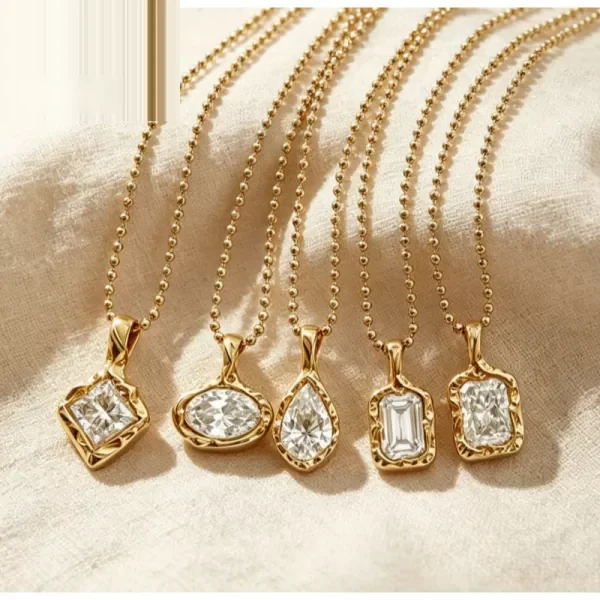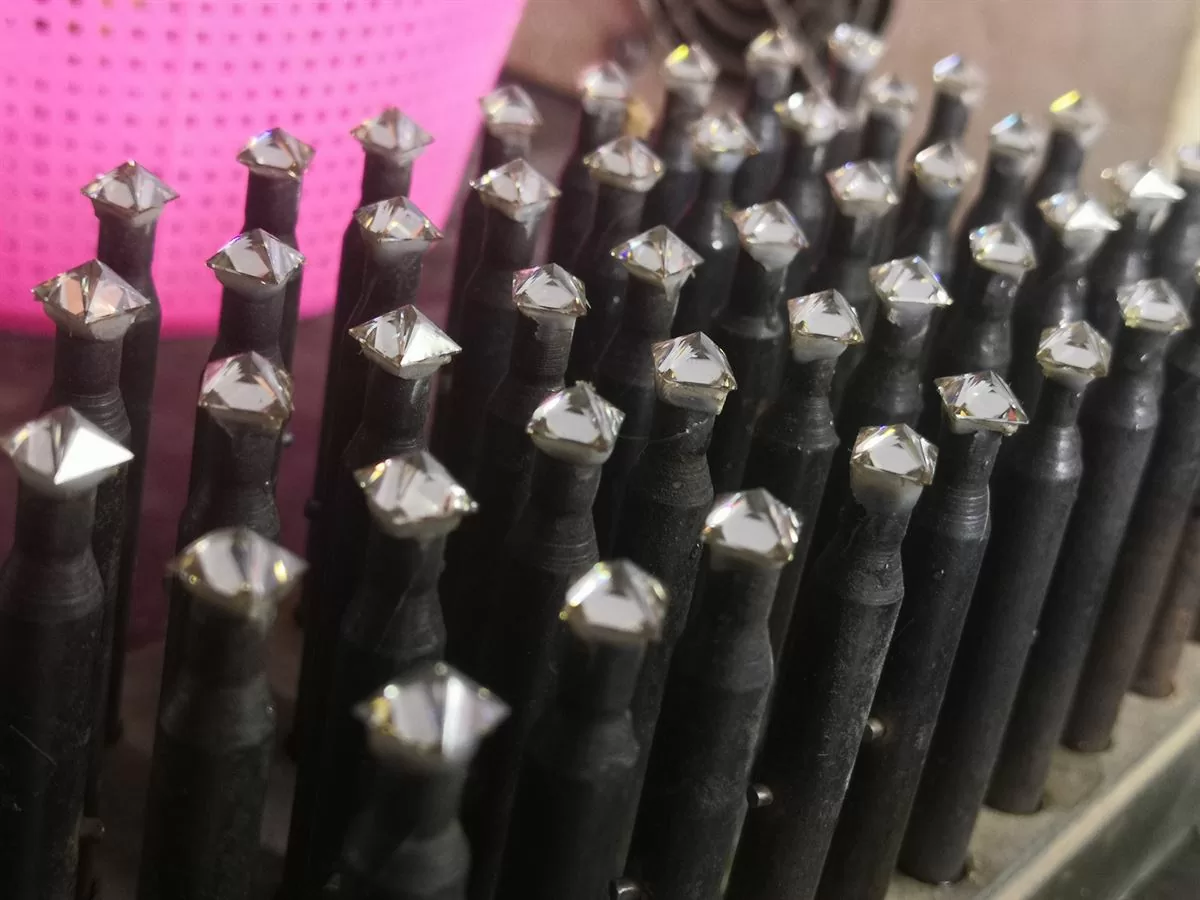
Early moissanite had a reputation it has mostly outgrown. Stones grown ten years ago often carried a visible yellow-green cast that showed face-up in daylight, and the trade's old habit of describing it as "near-colorless" was generous. Modern high-pressure growth has closed most of that gap, but color still separates a $45 pendant from a $180 engagement-ring center, and wholesale buyers who do not read the grade (per GIA's diamond grading standards) correctly either overpay or hand their competitor a better-looking stone.
How the trade talks about color
Moissanite is not graded by GIA on a regular commercial basis, so suppliers borrow the diamond shorthand. In practice you will see three buckets. Colorless, in the D–E–F range, reads white face-up with no tint against a plain white sheet of paper. This is the bridal tier and what customers expect when they pay for "colorless" in a listing. Near-colorless, roughly G–H–I, shows a faint warm or slightly gray cast that appears more clearly face-down than face-up. This is the value tier. Tinted, at J and below, shows visible yellow, green or gray body color and is generally sold in fashion pieces rather than bridal.
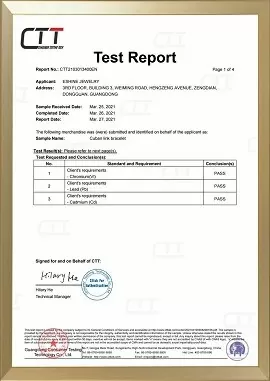
Certificates from GRA and similar graders assign a letter, but grading standards drift between labs. The grade on paper is a starting point, not the final answer. Two factories both quoting "DEF" can ship stones that look meaningfully different under store lighting.
What the customer actually sees
Moissanite's fire, the colored flashes that scatter across a room, is so strong that a slight tint is partly masked in normal lighting. A near-colorless stone in a halo setting can look indistinguishable from a colorless one, because the surrounding melee and the warmth of yellow gold pull the eye away from any body tint. Where tint shows up is in narrow, predictable situations: a large stone over 1.5 carat equivalent on a plain white-metal solitaire, viewed side-by-side with a known-white reference, and under cool north light or overcast daylight.
This is why buying for bridal solitaire at 1ct equivalent and above should stay in the colorless bucket. Below that size, and in yellow or rose gold settings, near-colorless is usually a non-issue for the end customer and costs you noticeably less. The saving is not cosmetic on the invoice; it shows up as margin you can reinvest in better packaging.
Why side-stone matching trips buyers up
A parcel arrives with a colorless center and near-colorless melee. On the bench, under warm bulb light, the whole ring looks white. On a customer's finger under the cooler light of a shop window, the center stays white and the side stones look faintly yellow. That mismatch is the most common color complaint in returns. When you order a halo or pavé ring, the PO should state that melee must be matched to the center stone's actual grade, not to a generic stock bucket. If the factory cannot confirm that, buy the center and the melee separately and have your own bench check the pair.
What to request from the supplier
Do not buy color blind. Ask for face-up video of the stone on both a white and a neutral gray background, shot in daylight LED and again under warm bulb light. Ask for a side-by-side against a known D-reference if you are unsure whether the grade you are quoted is the grade you are getting. And ask for the side-stone matching confirmation mentioned above. These three requests cost the supplier nothing and filter out most of the parcels that would otherwise end up back on your bench.
How this changes your buy plan
Stock colorless centers for solitaire engagement rings over 6.5mm. Stock near-colorless for halos, three-stone settings, yellow-gold bridal, and all fashion pieces under 0.7ct equivalent. The price delta between the two buckets is real, commonly 15 to 25 percent, and you will not recover that premium from a customer who cannot see the difference. For a first assortment, a workable mix is roughly two-thirds colorless for bridal centers and one-third near-colorless for everything else. Your own sell-through data will tell you within two reorders whether your local market is more or less sensitive to tint than average.
Geography also moves the dial. Buyers in warmer climates and markets that favor yellow gold tolerate a faint warm tint more readily, because the gold setting harmonizes with it. Buyers in cooler climates and markets that favor white platinum expect a whiter stone and notice a gray cast faster. If you sell across regions, weight your colorless buy toward the white-metal SKUs and your near-colorless buy toward the yellow-gold SKUs, rather than choosing a single grade for the whole line.
One last practical point: buy color in person before you commit to a grade you have not seen. A five-minute video call with the supplier, comparing two stones under the same light, teaches more than a dozen certificates. The grade on paper is a negotiating position; the stone on video is the product.
For a wider view of how grade, cut and setting interact, see our wholesale buying guides.
Frequently Asked Questions
Is moissanite a good diamond alternative for retail buyers?
Yes for price-sensitive customers who want brilliance and hardness. Moissanite ranks 9.25 on the Mohs scale, holds up to daily wear and costs a fraction of a natural diamond of the same size, so it resells fast in bridal and fashion lines.
What is the minimum order for wholesale moissanite?
MOQ starts at 50 pieces per design for stock items. Custom cuts and private-label settings usually start at 100–300 pieces depending on the mold.
Do you provide certificates with moissanite stones?
Yes. Every parcel ships with GRA or IGI documentation listing carat weight, color grade and cut. We recommend passing the certificate to your end customer for trust.
How long does sample and bulk production take?
Samples ship in 3–5 days. Bulk runs take 15–20 days under 500 pieces, and 25–30 days for custom work.