Even good factories ship 2-5% imperfect pieces. The difference between a buyer who absorbs that error and a buyer who charges it back to the supplier is a 15-minute receiving routine done before the stock goes in the case.
Step 1 - Count and match the packing slip
Open the shipment at your bench, not at the front counter. Lay every piece out on a clean white cloth and count against the packing slip. Most discrepancies here are benign - a missing earring back, a swapped SKU - but they are also the cheapest to fix while the shipment is fresh. Photograph the open box, the packing slip, and the laid-out pieces within the first hour. That timestamp matters if you later need to claim a transit-damaged stone or a short count.
Step 2 - Magnification pass on settings and plating
Run a 10x loupe across every piece. Look for four failure modes specifically:
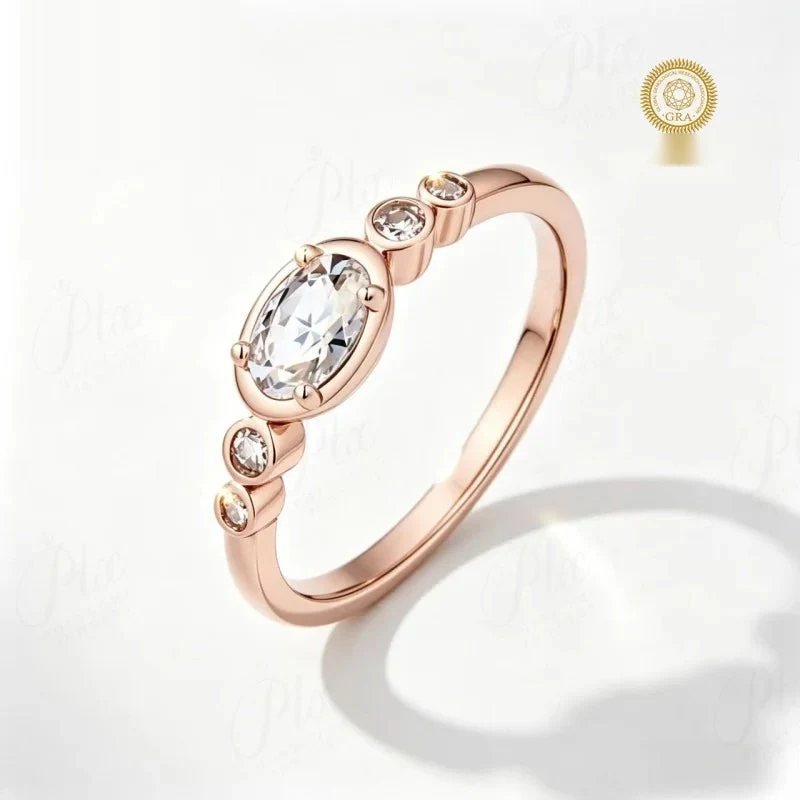
- Tilted stones - a prong that has set the center stone at a slight angle, visible face-up from 30 cm. This is the single most common factory error and the one customers notice first.
- Prong finish - sharp or balled prong tips that catch on hair and sweaters. Run a fingertip around the head; any snag goes back.
- Plating consistency - rhodium or gold flash that looks thin near the inner shank, or a visible seam where two castings meet.
- Engraving and stamping - karat mark, maker's mark, and size stamp should all be legible and in the correct location.
This pass takes about 90 seconds per ring. A 20-piece order clears in half an hour, and you will catch the one piece that would otherwise have walked out on a customer.
Step 3 - Size, weight, and paperwork
Verify every ring size on a stick. Manufacturers ship wrong sizes at roughly 1-2% of orders - almost always one size off, because the bench stamped the wrong mandrel. Pull a cheap digital scale and check piece weight against the spec sheet; a 20% light band usually means the factory substituted a thinner casting to save on metal, and that piece will not hold up to resizing.
Match any GRA certificate serial number to the stone. Girdle inscriptions are tiny - use the loupe - but they should exist on engagement-grade center stones. If the card says 6.5mm and the stone measures 6.3, log the discrepancy; the factory may have shipped a lower-grade stone and corrected it on the paperwork.
What to do with the rejects
Set aside the failed pieces in a sealed bag with a note: SKU, date received, fault, and photo. Email the supplier within 48 hours - not a week later. Most factories will replace on the next order or credit the invoice, but only if the claim arrives while the production run is still on the bench. After two weeks, the bench has moved on and the conversation gets harder.
Keep a simple log in a spreadsheet: date, PO, pieces received, pieces rejected, reason. Over a year this log becomes your negotiating leverage at renewal - a supplier with a 4% reject rate is not the same supplier as one at 0.5%, and your reorder pricing should reflect that.
When the reject rate crosses 5%
A 2-3% reject rate on a bulk order is normal. At 5% or higher, the problem is not one bad bench run - it is a process change at the factory. Common causes: a new plating vendor, a subcontractor doing settings, or a cost-saving move that swapped casting alloy. Do not just accept replacements on the next PO. Ask for photos of the production line, request that the next run be 100% inspected before shipment, and hold back 10-15% of the balance payment until you receive and clear the replacement batch. A supplier that pushes back on a pre-shipment photo pass is telling you something.
Photograph every rejected piece against a ruler and a neutral gray card. The photo is your evidence in the dispute, and it is also your internal training tool - staff who have seen a tilted head and a sharp prong tip once will catch them faster the next time. An hour of photo documentation on a bad batch saves ten hours of arguments over email.
For buyers who want the factory side of the same process, the incoming routine pairs well with what suppliers run on their own line - the two checklists catch different failures. It also pairs naturally with the moissanite rings you will be putting into the case, because most of the errors you are checking are settings and sizing, not the stone itself. Run the routine for three shipments and it becomes muscle memory; the first bad piece you catch before it reaches a customer pays back the entire hour you spent learning the system.
The Wikipedia article on rhodium explains why rhodium plating is applied to white gold and silver jewellery.
Frequently Asked Questions
How do I verify a factory before placing a bulk order?
Request a production video, business license, export records and a paid sample run. A factory that accepts a 50-piece test order is usually a real manufacturer.
What payment terms do you offer?
30% T/T deposit with the balance against the bill of lading. This protects both sides on first orders and can move to net terms after a track record.
What is your normal reject rate?
3–5% under 10x loupe inspection for cast and set pieces. Defective units are replaced free in the next shipment.
Where is the factory located?
Wuzhou, Guangxi, China—the core lab-grown and moissanite manufacturing cluster. Shipments go via Guangzhou or Shenzhen ports.