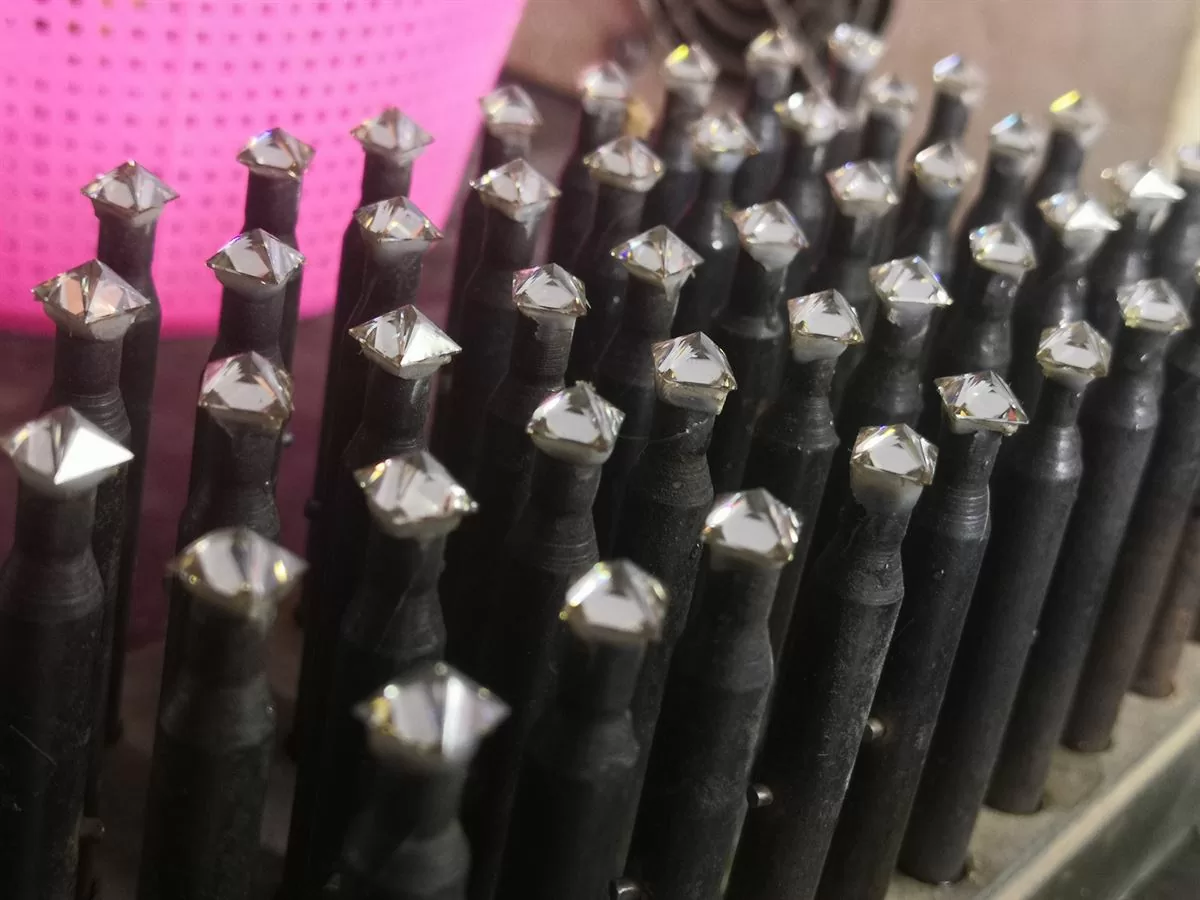
A store in Seattle received a parcel of 150 rings, shelved them, and started seeing returns within three weeks: cloudy stones, loose prongs, mismatched sizes. A 10-minute incoming check on day one would have caught every one of them and triggered an RMA before the stock ever reached a customer. QC at the buyer's dock is the cheapest quality control you will ever do.
Problem breakdown: what slips through
Most retail returns trace to a handful of defects that are obvious under a 10x loupe and a scale. The industry average incoming-defect rate on uninspected parcels runs 8-12%; suppliers who pre-inspect and who give you a photo log bring that down to under 2%.
| Defect | How it shows up later | Incoming check |
|---|---|---|
| Cloudy or included stone | Customer complains stone looks dirty | Loupe under bright light, table-up |
| Loose prong | Stone wiggles at 30 days | Gentle prong probe, 1.5kg pull feel |
| Wrong size | Ring does not fit on the fitter mandrel | Mandrel check per SKU |
| Thin plate showing silver | Yellowish tint after a month | Magnyfied check under edge light |
| Certificate mismatch | Girdle number does not match GRA paper | Loupe girdle vs. certificate number |
The 10-point incoming checklist
Run this on a 10% pull sample per SKU on the first order, and on 100% of any parcel from a new supplier. It takes minutes and pays back in RMA labor.
- Stone grade. Moissanite is Mohs 9.25, so it will not scratch in normal wear. What fails is optics: inspect table-up under a 10x loupe for clouding, cracks or heavy carbon. DEF/VVS should look eye-clean at arm's length.
- Girdle laser vs. certificate. Read the girdle laser number under the loupe and match it to the GRA certificate. A mismatch means the paper is not for the stone in the setting.
- Prong tightness. Probe each prong with a wooden stick. A 1.5kg pull should not move the stone. Our own bench pulls every prong at 1.5kg before plating; industry norm is a visual glance.
- Prong polish. Prong tips should be smooth, not sharp. Sharp tips catch hair and scar fabric.
- Size on mandrel. Verify the marked size on a steel mandrel. Half-size drift is common and invisible until the fitter calls it.
- Weight check. Compare to the spec sheet. A 6.5mm solitaire in solid 14k should not weigh what a hollow piece does.
- Plate uniformity. Look at the inner shank and the basket under edge light. Our 0.5um rhodium covers evenly; a 0.3um plate often shows silver through on high-friction spots.
- Finish scratches. Run a microfiber cloth across the crown. Any drag means a polishing step was skipped.
- Weld and solder. On earrings and pendants, check that bails and posts are soldered, not glued.
- Packaging and certificate in the parcel. Confirm the GRA paper and the anti-tarnish pouch are inside before you sign the delivery receipt.
What to do when the check fails
First-order buyers
Pull-sample 10% per SKU. If the defect rate on the pull exceeds 2%, hold the whole lot and open an RMA with photo evidence. A supplier who pre-inspects (we photograph the QC bench per lot) will resolve this inside the 30-day RMA window without argument.
High-volume boutiques
Move to 100% incoming inspection on new SKUs, then drop to 10% once a lot history is clean. We export to EU and US retailers under ISO-documented QC, and our third-party audit report is available to active accounts.
Private-label programs
We stage the lot on our QC bench for your own QA visit or video call before it ships. The defect log for your lot becomes part of the reorder file, so each cycle starts cleaner than the last.
Frequently Asked Questions
What defect rate is acceptable on a wholesale parcel?
Under 2% on a pull sample is the best-practice bar. Anything above 5% on the first lot from a new supplier should trigger a full RMA and a supplier conversation.
What tools do I need for incoming QC?
A 10x loupe, a steel ring mandrel, a small jewelry scale and bright daylight or a 6500K lamp. That is enough to catch 90% of the defects that become returns.
How do I verify a GRA certificate matches the stone?
Read the laser-inscribed number on the girdle under the loupe and match it to the number on the GRA paper. The shape, mm and carat weight should also match.
Should I inspect 100% of every parcel?
On a new supplier or a new SKU, yes. Once you have three clean lots at 10% pull, dropping to a 10% random sample is reasonable for ongoing reorders.
Takeaways
- Run a 10-minute incoming check on every new parcel before shelving.
- Loupe the stone, match the girdle to the certificate, probe the prongs.
- Hold the lot and open an RMA if the pull-sample defect rate tops 2%.
- Request our QC photo log with your next parcel; it ships on request.
See our QC inspection process, review shipping and RMA terms, or browse in-stock rings.
Independent background on moissanite — how its hardness and refractive index compare with diamond — is documented in the Wikipedia article on moissanite.