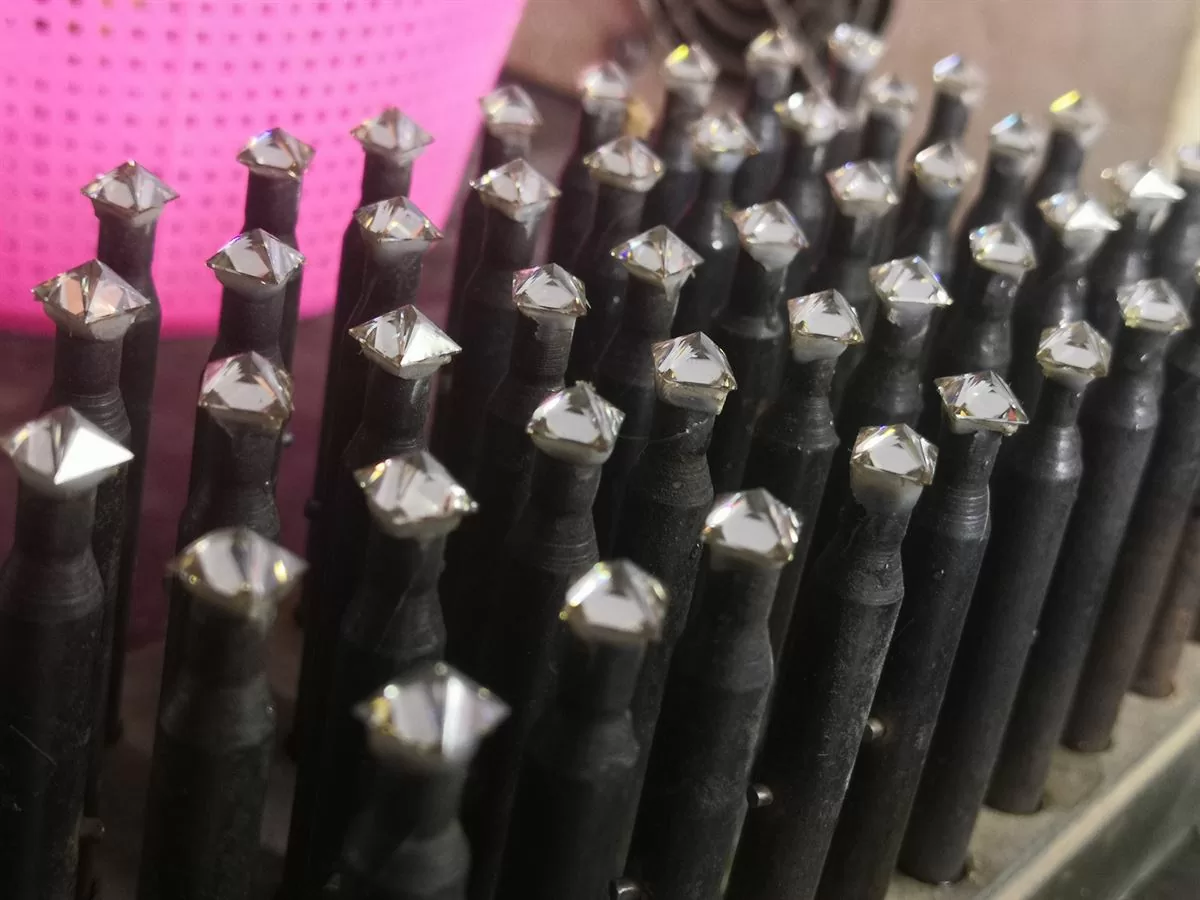
A retailer in Sydney opened a 200-piece moissanite parcel on a Friday evening, thumbed through the trays, signed the delivery note, and went home. On Monday they counted 198 units, spotted two cloudy stones, and noticed one ring where the GRA card said 1.0ct but the caliper read 6.2mm (that is 0.9ct). The supplier's RMA window is 7 days. By the time the email went out, day eight had arrived. This is the 15-minute incoming inspection routine that catches those errors while the RMA window is still wide open.
What usually slips through an unchecked parcel
Most incoming errors are not dramatic fakes. They are boring counting and measuring mistakes that a tired buyer misses after a long shipment. The supplier's factory QC is good, but parcels get routed, combined and repacked across freight legs, and something always shifts.
| Check | What goes wrong | How often |
|---|---|---|
| Piece count vs. packing list | 1–3 units missing or double-counted | About 1 in 4 parcels |
| Caliper vs. stone size | Card says 1ct, stone is 0.9ct | 2–3% of units |
| Loupe look at prong seats | Burr, gap, tilted stone | 1–2% of units |
| Plating sheen | Dull spot, scratch, brass-through | Under 1% but visible |
| Cert number vs. database | Mismatched or copied card | Rare, but catastrophic |
The Sydney buyer's two missing units and two cloudy stones sit in the first two rows. A 15-minute count and caliper pass catches both before the RMA clock starts mattering.
The 15-minute incoming inspection routine
- Count against the packing list (3 min). Lay every piece on a tray and count out loud. Do not trust the tray divider counts — trays shift. Photograph the count before you sign the delivery note.
- Caliper the stone (4 min). On every solitaire or stud, measure diameter and depth. Round 1.0ct moissanite should read 6.4–6.6mm; 1.5ct reads 7.3–7.5mm. A stone that measures under the card's claimed size is a reject.
- Loupe the prongs (4 min). 10x loupe, look at each prong tip. You want burnished, even tips with no gap under the girdle. A tilted stone or a prong that does not reach the crown is a reject.
- Plating and polish (2 min). Hold the piece under a bright light. Look for dull patches, scratches, or brass color showing through at high-wear spots (ring shank, ear post back).
- Cert match (2 min). Check the GRA card number, carat and cut against the stone you just calipered. The card weight should match the measured size within one step.
Moissanite at 9.25 Mohs rarely arrives scratched. What fails on arrival is the setting, the plating, or the paperwork — which is exactly what a loupe and caliper catch and a thumbs-through-tray does not.
What to do when you find a defect
Missing units or short count
Photograph the trays and the packing list the same day. File the RMA within 7 days; most suppliers will top up the missing units on the next reorder rather than ship a separate parcel.
Stone mismatch (card vs. caliper)
Set the piece aside. Do not sell it. A card that says 1.0ct on a 0.9ct stone is a misrepresentation risk at the register, even if the stone itself is fine. Ask for a replacement stone or a credit against the reorder.
Prong or plating defect
These are manufacturing defects, not freight damage. Photograph the defect in daylight and attach it to the RMA. We replace defective units at our cost, including return freight, within 30 days of delivery.
Frequently Asked Questions
How long should incoming inspection take?
A 100-piece parcel takes about 15 minutes if you work through the five steps in order. A 200-piece parcel takes 25–30 minutes. The time pays for itself the first time you catch a short count inside the RMA window.
What tools do I need?
A 10x loupe, a digital caliper measuring to 0.01mm, a bright desk lamp, and your packing list. Total tool cost is under $40 and lasts years.
What if I find a defect after the 7-day RMA window?
Tell us anyway. Defects that are clearly manufacturing (loose prongs, plating failure, wrong stone size) are covered by our 30-day defect window even if the short-count window has closed.
Do I need to inspect every piece or can I sample?
Count every piece and caliper every solitaire. You can sample loupe and plating checks at 10% on reorders from a supplier you already trust, but the first two parcels from any new supplier get a 100% pass.
Should I inspect in front of the courier?
Not usually — that takes too long. Photograph the outer carton seals on arrival, then inspect at your bench within 24 hours. The courier handles freight damage; the supplier handles manufacturing defects.
Takeaways
- Count before you sign. A photographed tray of pieces is your receipt.
- Caliper every solitaire. The GRA card weight must match the measured diameter.
- Loupe the prong tips. A gap under the girdle is a 60-day return waiting to happen.
- File RMAs in writing within 7 days for short counts; 30 days covers manufacturing defects.
Next step: download our incoming inspection checklist, request a sample parcel to practice on, MOQ 20 pcs ships in 5 business days.
Read more in QC checklist guide, view certification standards, browse stock rings, or report a defect.
Independent background on moissanite — how its hardness and refractive index compare with diamond — is documented in the Wikipedia article on moissanite.