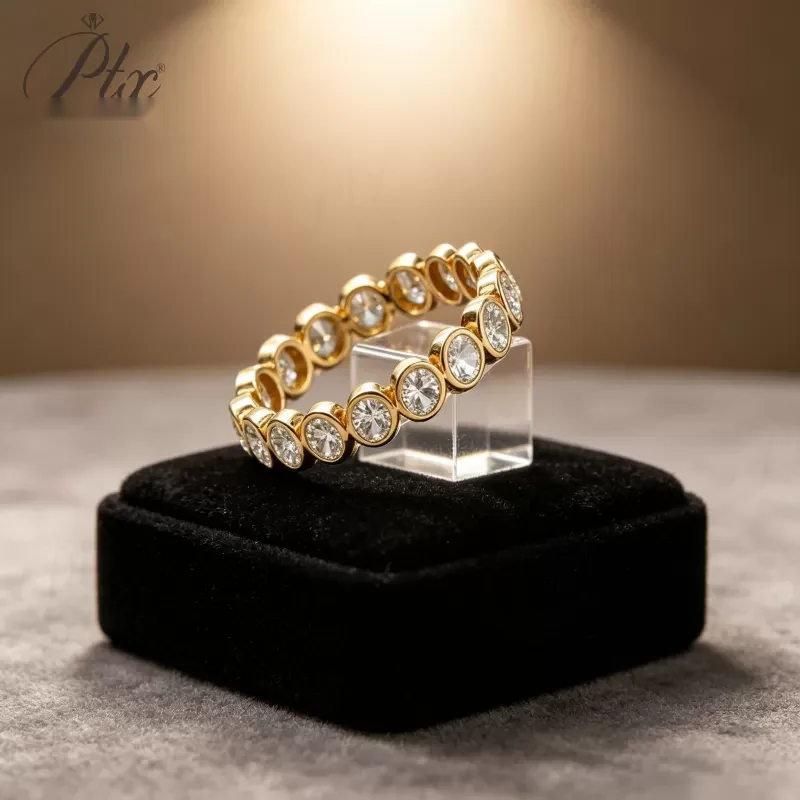
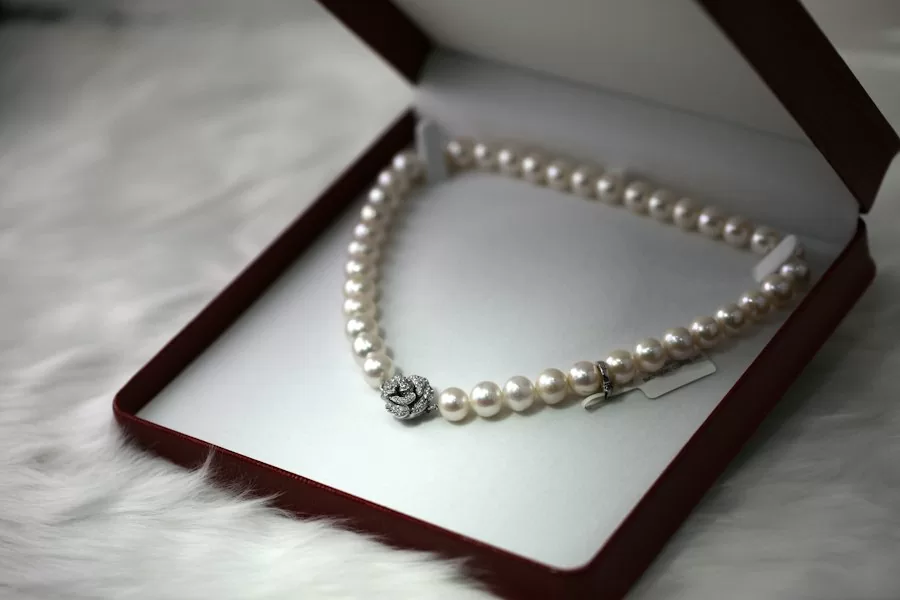
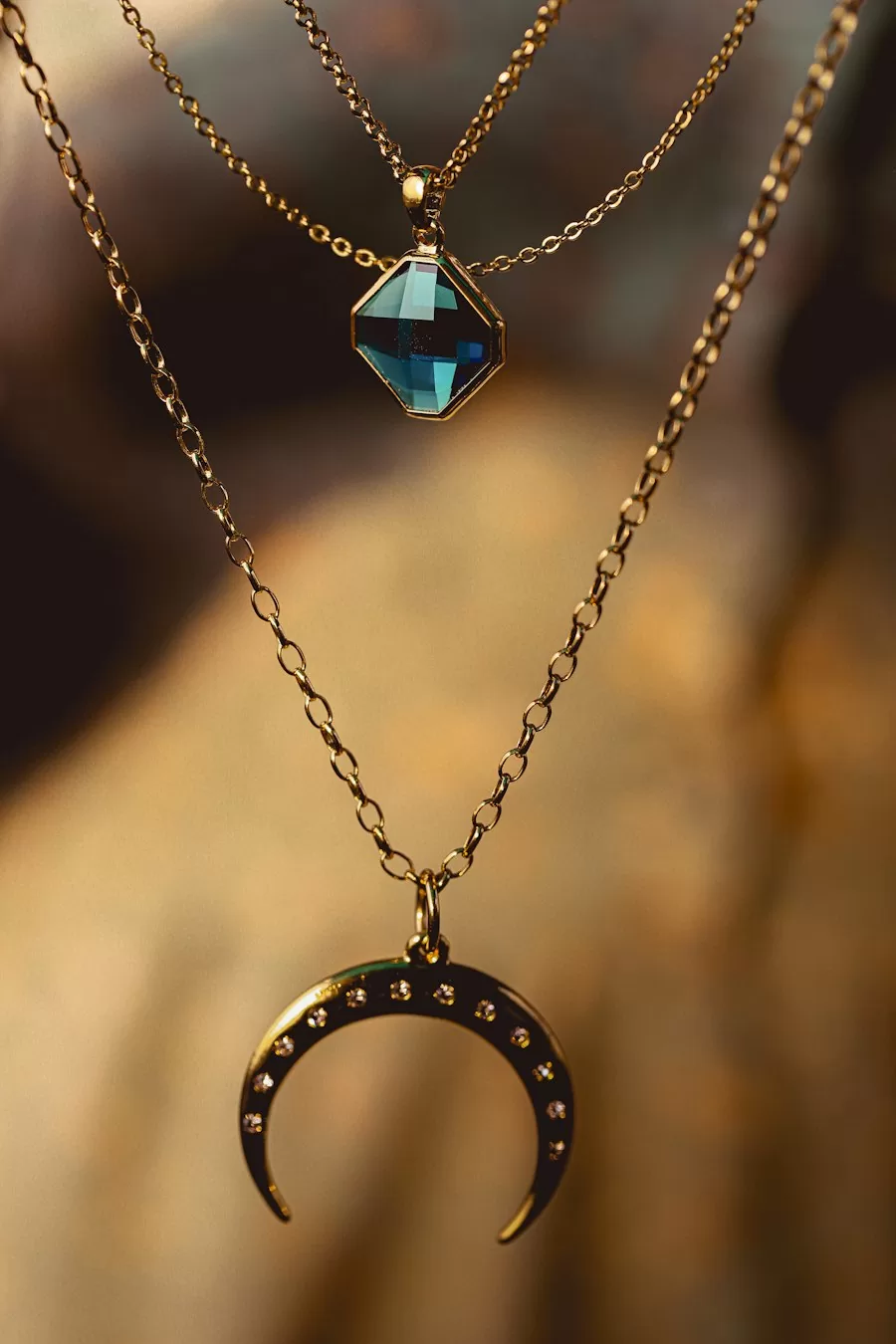
Bridal customers rarely walk in and say "show me everything." They walk in with a number in their head, even if they do not say it out loud. When a retailer's moissanite case jumps from a $250 solitaire to a $1,800 designer set, the shopper who arrived thinking around $800 feels nowhere to land and leaves to think about it. The fix is not cheaper rings—it is structured price tiers. A well-planned moissanite assortment covers the budgets most couples actually bring, and it does so without diluting your margin.
Tier one: the accessible entry point
The entry tier is where first-time bridal browsers start. Retail pricing between roughly $300 and $600 covers a 6.5mm to 7mm round or oval moissanite in a slim solitaire, a simple six-prong setting, and a solid 10k or 14k gold band. This tier is not where you make your biggest margin per piece, but it is where you build trust. A couple who never expected to afford a brilliant colorless stone walks out engaged and becomes your word-of-mouth engine.
Source this tier in fast-moving standard shapes—round, oval, and cushion—because these are the styles entry buyers choose most. Keep settings minimal and classic; this is not where experimental designs belong. The goal is a clean, reliable, in-stock option that lets a nervous buyer say yes today.
Tier two: the sweet spot
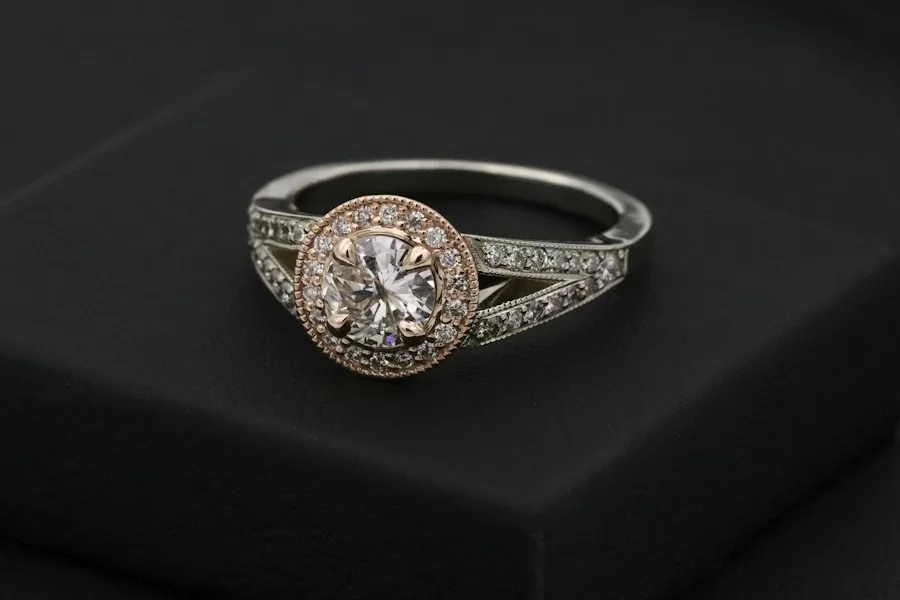
The middle tier, roughly $600 to $1,400, is where most of your bridal revenue will actually land. Here you can offer 8mm to 9mm stones, halo settings, pavé shoulders, and choices in 14k or 18k gold across yellow, rose, and white. This is the tier where the piece starts to look "high-end" on a hand, and where customers start trading up from the entry tier the moment they see the halo sparkle under the case lights.
This is also your best margin zone. The wholesale cost delta between a solitaire and a halo is smaller than the retail price delta shoppers perceive, so you capture more gross profit per sale. Mix in a few fancy shapes like pear and emerald cut at this tier to give shoppers something that feels unique without pushing into designer pricing. Train your staff to move couples here: show the entry ring for reference, then show the halo as the "step up" most buyers end up choosing.
Tier three: the statement piece
Above $1,400, you are selling to buyers who want a head-turning ring—a 10mm-plus stone, a three-stone setting, platinum, or a contoured bridal set. This tier moves slower, but each sale is high margin and high emotional impact. You do not need deep inventory here; two or three strong statement pieces in the case, plus a custom ordering option, is enough. Customers at this price point expect choice, not just off-the-shelf stock, which is where custom and OEM services from your vendor become a selling feature.
The statement tier is also where you can showcase your best photography for the website. A dramatic halo on a styled model drives online leads that convert into store appointments for the middle tier. Think of the top tier as your marketing as much as your inventory.
Balancing stock across tiers
A practical starting mix is roughly 40% entry, 45% middle, 15% statement. Entry pieces turn fast and replenish often; middle pieces carry the profit; statement pieces sit longer but pull the whole case upward in perceived value. Watch your own sell-through for two seasons and adjust—some markets skew heavily to the middle tier, others demand more entry volume near university towns.
Do not forget the bands. Engagement rings sell, but matching wedding bands are the attach sale that lifts every ticket. Stock contoured and straight bands in each metal across the tiers so a couple can complete the set in one visit. The customer who leaves "to think about the band" rarely comes back for it.
Watch which tier outperforms and rebalance. If your middle tier sells out twice as fast as you predicted, push a little more of your next order into it and trim the entry tier accordingly. The assortment is a living thing, not a fixed plan. Review sell-through every quarter: pull the slowest two or three SKUs, discount them to clear space, and test two new shapes in their place. That keeps the case feeling fresh for repeat browsers and stops slow stock from tying up cash that could be earning at the tier that actually moves.
Price tiers are not about putting shoppers in boxes. They are about meeting people where they actually are. When every budget has a beautiful, genuine option in your case, you stop losing couples to "let me think about it" and start closing the sale in the room. The retailers who win are not the ones with the cheapest ring; they are the ones who make every couple feel that the option they can afford is actually a great choice, not a consolation prize.
The history and conventions of engagement rings are outlined in the Wikipedia entry on engagement rings.
Frequently Asked Questions
Is moissanite a good diamond alternative for retail buyers?
Yes for price-sensitive customers who want brilliance and hardness. Moissanite ranks 9.25 on the Mohs scale, holds up to daily wear and costs a fraction of a natural diamond of the same size, so it resells fast in bridal and fashion lines.
What is the minimum order for wholesale moissanite?
MOQ starts at 50 pieces per design for stock items. Custom cuts and private-label settings usually start at 100–300 pieces depending on the mold.
Do you provide certificates with moissanite stones?
Yes. Every parcel ships with GRA or IGI documentation listing carat weight, color grade and cut. We recommend passing the certificate to your end customer for trust.
How long does sample and bulk production take?
Samples ship in 3–5 days. Bulk runs take 15–20 days under 500 pieces, and 25–30 days for custom work.