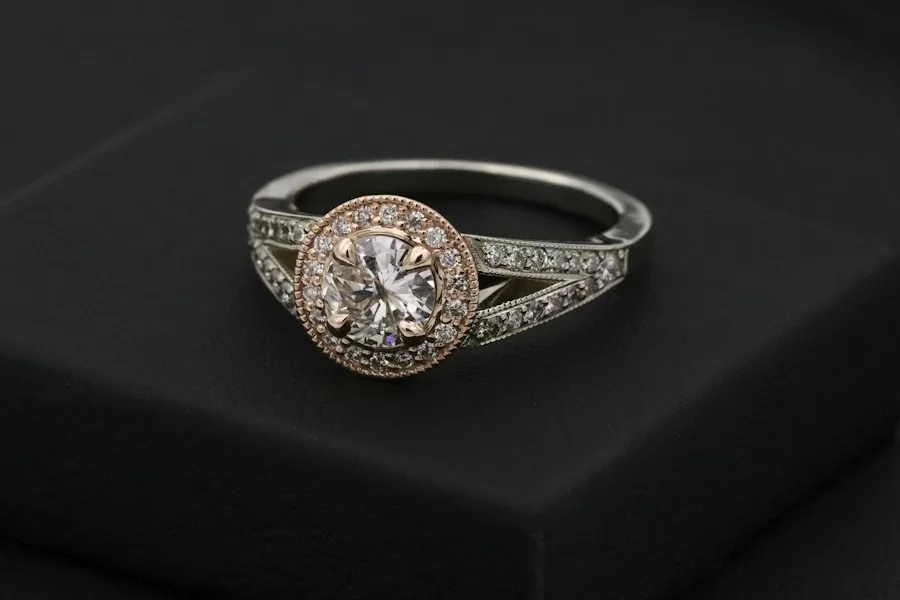
Ask a customer what "three stones" mean, and you will usually hear the same answer: past, present, and future. That emotional payload is why three-stone engagement rings consistently outperform plain solitaires in average ticket price. For a retailer, the design is also a margin opportunity, because the two side stones add visible carat presence without forcing the center stone up in size. Buying this category wholesale means knowing which combinations actually walk out the door.
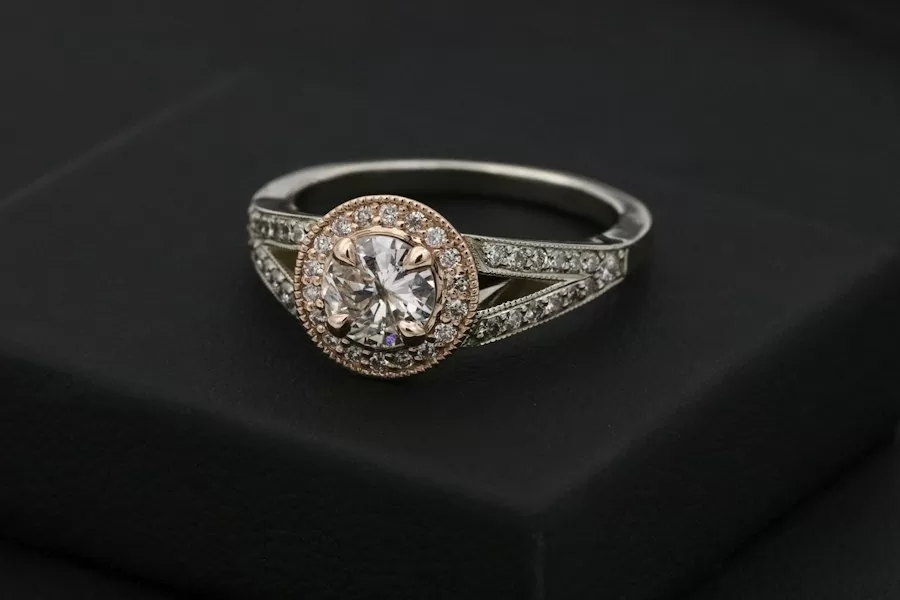
Start with the center stone, because it dictates everything else. Round centers remain the safest seller, pairing naturally with round or baguette side stones for a classic, symmetrical look. Oval centers are the fashion-forward choice, and they pair beautifully with tapered baguettes that echo the oval's length. Emerald-cut centers lean modern and architectural, while pear centers feel romantic and draw the eye along the finger. Cross-reference your center choices with our breakdown of which moissanite shapes bridal buyers prefer before you commit to depth on any one cut.
The side stones are where many buyers overspend or underspend. They should support the center, not compete. A common mistake is ordering side stones in a lower color grade than the center, which makes the main stone look mismatched under store lighting. Keep side stones within one grade of the center for a seamless face-up look. Baguettes read clean and contemporary; rounds add sparkle; trillion cut sides bring a bold, geometric edge. Each side stone you add raises the retail price, so stocking all three styles gives your sales staff room to upsell within the same customer's budget.
Metal choice quietly drives returns. Yellow and rose gold warm a three-stone design and feel romantic; white gold or platinum keeps it crisp and modern. Because three-stone settings have more prongs and corners, construction quality matters more than on a solitaire. Thin side-stone prongs catch on gloves and scarves, so verify that the setting uses sturdy, well-polished prongs rather than delicate ones. Our piece on prong, bezel, and cathedral settings covers the structural details that separate a durable ring from a fragile one.
Pricing this category wholesale is where the margin opens up. A three-stone ring uses roughly one center plus two smaller side stones, and smaller moissanite stones cost far less per piece than a single large center. That lets you offer a ring that looks two carats total for a wholesale cost closer to a one-carat solitaire. Translate that into retail with the math in our guide to markup and margin on moissanite, and you will see why this category deserves floor space.
The narrative behind the design is worth training your staff to deliver. Three stones read as a couple's shared history, and that emotional hook justifies a higher price better than any technical spec. A solitaire says "we are engaged." A three-stone ring says "here is our story so far, and what comes next." When a sales associate frames it that way, customers who came in expecting to spend on a solitaire often upgrade to the three-stone option once they hear the meaning. Keep sample rings on hand so they can feel the difference in width and presence.
Watch the total depth and profile as well. A three-stone setting sits higher off the finger than a solitaire, and that can interfere with a snug-fitting wedding band later. If you also sell wedding bands, make sure the three-stone rings you stock pair cleanly with a straight or contoured band so the bridal set sits flush. Customers who love the look will want to wear both rings together every day, and a setting that leaves a gap looks like a design flaw rather than a feature. This is the same matching logic covered in our guide to how wedding bands fit around an engagement ring.
Because the design carries both meaning and visible weight, it also photographs beautifully for your store's online and social channels. The three-stone silhouette is instantly recognizable and reads as premium in a flat lay, which helps justify the price point on a website where the customer cannot try it on. Pair strong imagery with honest specs and the listing does half the selling for you, driving both online orders and appointments that walk into the store. It is one of the easiest bridal designs to market because the story writes itself.
Stocking advice: keep ready-to-wear samples in the three most popular center shapes (round, oval, emerald) in white gold, and offer yellow and rose gold as made-to-order. That gives every couple something to try on while avoiding overstocking metal colors that move slowly. Treat the three-stone ring as your premium bridal upsell, and it will quietly become one of the most profitable pieces on your counter.
For third-party reference, the Wikipedia article on moissanite details moissanite’s discovery, optical properties and use in jewellery.
Frequently Asked Questions
Is moissanite a good diamond alternative for retail buyers?
Yes for price-sensitive customers who want brilliance and hardness. Moissanite ranks 9.25 on the Mohs scale, holds up to daily wear and costs a fraction of a natural diamond of the same size, so it resells fast in bridal and fashion lines.
What is the minimum order for wholesale moissanite?
MOQ starts at 50 pieces per design for stock items. Custom cuts and private-label settings usually start at 100–300 pieces depending on the mold.
Do you provide certificates with moissanite stones?
Yes. Every parcel ships with GRA or IGI documentation listing carat weight, color grade and cut. We recommend passing the certificate to your end customer for trust.
How long does sample and bulk production take?
Samples ship in 3–5 days. Bulk runs take 15–20 days under 500 pieces, and 25–30 days for custom work.