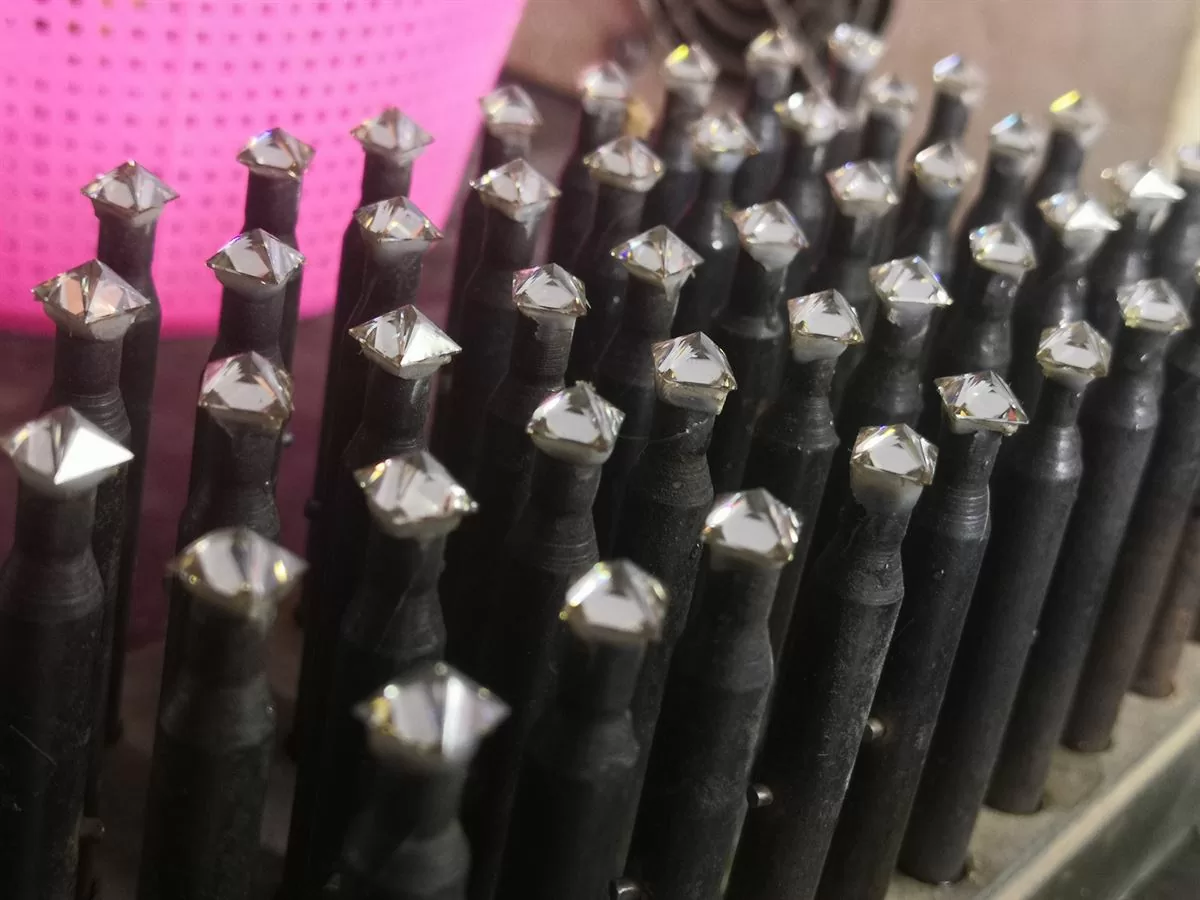
Moissanite scores 9.25 on the Mohs scale, second only to diamond among common jewelry stones, and it is tough enough for daily wear. Durability is not the same as invisibility to neglect, though. Most "damaged" moissanite returns a retailer sees are not broken stones at all—they are dulled rhodium, bent prongs, soap film, or a customer storing the piece next to a harder stone. A four-minute care conversation at the counter prevents nearly all of it.
The stone itself: what can and cannot happen
Moissanite will not scratch around the house. It can be chipped by a direct industrial blow, but normal knocks on door frames are not the risk. What it will do is collect body oils, lotion residue and soap film in the pavé gaps, which makes a bright stone look gray under warm light. The fix is a soft brush, warm water and a drop of mild dish soap—ultrasonic cleaners are safe for most settings but should be avoided on pavé pieces because the vibration can loosen side stones over time.
Ammonia-based jewelry dips are marketed at home, but they degrade rhodium faster and should not be part of the customer's routine. A soft brush and soapy water is enough for 99% of moissanite cleaning. If the stone looks dull after a proper clean, the issue is almost always the metal finish, not the stone.
Rhodium plating: set expectations early
Most wholesale moissanite pieces ship in 925 sterling silver finished with a rhodium coat. That coat gives the white-metal look customers expect, and it wears off—usually between six months and two years depending on body chemistry and wear. When the plate thins, the silver beneath can read slightly warm or gray. This is not a defect. It is a service conversation. Tell the customer at sale time that rhodium replating is a normal service you offer, and you will not get an angry email six months later asking why the piece "changed color."
Storage: the quiet killer
Because moissanite is nearly as hard as diamond, it can scratch softer jewelry stored against it, and it can itself be scratched if kept next to other moissanites or diamonds. Tell customers to keep each piece in its own soft pouch or compartment—not loose in a jewelry drawer with keys, watches and other rings. A three-compartment travel pouch is a cheap add-on that improves customer satisfaction dramatically.
Chemicals to avoid
- Chlorine in pools and hot tubs can pit and discolor the metal, especially sterling silver.
- Bleach and household cleaners can damage the rhodium and dull pavé gaps.
- Perfume, hairspray and lotion should go on before the jewelry, not after.
- Take rings off for heavy lifting, gardening and gym work—the stone survives, the prong tips do not.
Repair versus replace: when to send it back
A loose prong is a ten-minute repair. A bent shank on a thin silver band is sometimes cheaper to replace than to straighten. A chipped moissanite is rare, but when it happens the stone can usually be replaced in the existing setting rather than the whole piece. Retailers who offer these service options at the counter turn a warranty claim into a paid service ticket. Write the repair price list on the care card—customers who know the cost up front are less likely to try home fixes that make the problem worse. Keep a small stock of replacement prongs, a microfiber cloth and a prong pusher at the bench; most six-month checks take under five minutes per piece.
The service loop that builds loyalty
A retailer who offers a free polish and prong check at six months turns a one-time buyer into a repeat customer. It also catches a loose prong before the stone falls out—the single most common warranty claim. Print a small care card with the piece, hand it over at the counter, and point at two lines: clean with warm soapy water, and bring it back for a free check at six months. That card does more for your return rate than any warranty clause.
Warranty wording that protects you
A warranty that covers "any defect for life" will be tested by customers who scratch their piece on a concrete floor. Write the warranty narrowly: manufacturing defects in stone setting and metalwork for twelve months, rhodium replating at a nominal service charge, prong retightening free at six and twelve months. Narrow wording is not unfriendly—it is honest, and it prevents the claim disputes that turn a happy customer into an angry review. Post the warranty on the care card and on the product page so there are no surprises at the service desk.
For the care card wording and replacement parts most retailers end up needing, see our jewelry care and after-sales guides. Moissanite is easy to look after when the customer knows what to expect.
The 92.5% silver composition and properties of sterling silver are described in the Wikipedia entry on sterling silver.
Frequently Asked Questions
Is moissanite a good diamond alternative for retail buyers?
Yes for price-sensitive customers who want brilliance and hardness. Moissanite ranks 9.25 on the Mohs scale, holds up to daily wear and costs a fraction of a natural diamond of the same size, so it resells fast in bridal and fashion lines.
What is the minimum order for wholesale moissanite?
MOQ starts at 50 pieces per design for stock items. Custom cuts and private-label settings usually start at 100–300 pieces depending on the mold.
Do you provide certificates with moissanite stones?
Yes. Every parcel ships with GRA or IGI documentation listing carat weight, color grade and cut. We recommend passing the certificate to your end customer for trust.
How long does sample and bulk production take?
Samples ship in 3–5 days. Bulk runs take 15–20 days under 500 pieces, and 25–30 days for custom work.