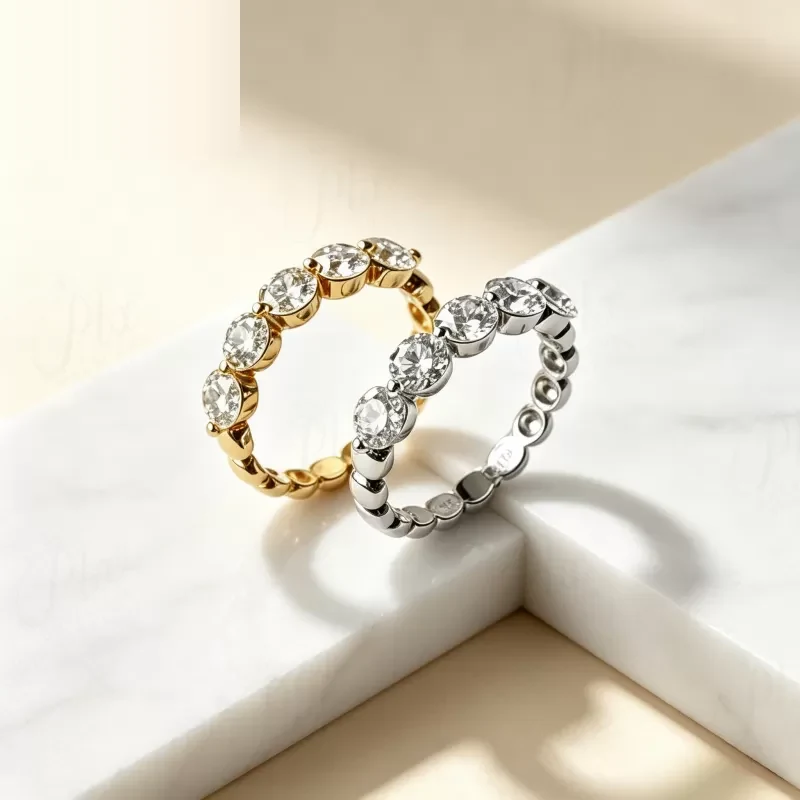
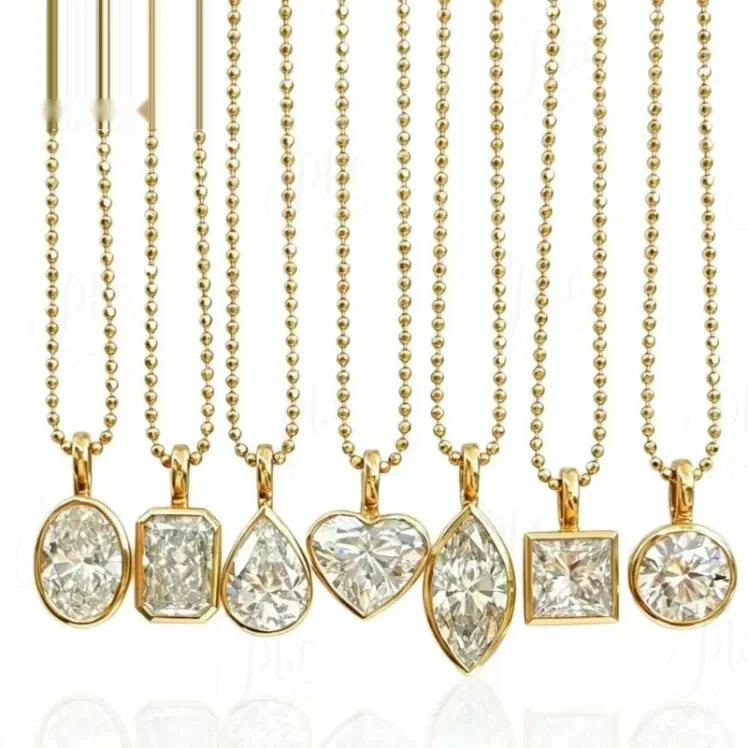
A reseller came to us with 4,000 product rows and no way to reorder a bestseller, because every supplier had named the same stone differently - "6.5mm round," "1ct solitaire," "round-6.5-D" - and his warehouse team guessed at checkout. A catalog is only as good as its SKU system, and moissanite's mix of mm sizes, shapes and metals makes messy naming expensive fast.
Build the SKU from fixed attributes
A readable SKU encodes the facts that never change. Use the pattern: SHAPE-MM-METAL-GRADE-VARIANT. So an 8x6mm oval in 925 silver, D-F grade, would be something like OVL8X6-AG-DF-R1. Keep it short, uppercase, hyphen-separated, and never put a vague word like "elegant" in the code. The benefit is that any team member can read the SKU and know the product. We already cover the earring side in stud earring SKU planning; extend that same logic across rings and bracelets.
The attribute fields that prevent returns
Separate the SKU code from the product data fields. Every row should carry: shape, exact mm, carat equivalent, color grade, metal, ring size, and a flag for graded vs ungraded. Ring size is the killer field - best-selling sizes 6, 7, 8 should each be their own variant, not one "one size" row. The mm field beats the "1ct" label because a customer comparing your 6.5mm to another store's "1ct" needs the same unit. Pair this with consistent imagery from product-page photography so the photo matches the SKU row.
Variants, not duplicate rows
Do not create a separate product for "oval silver ring" and "oval gold ring" - create one product with metal as a variant. Duplicate rows double your SEO work and your inventory count, and they make reordering a nightmare. The exception is size bands that move differently: a 3mm and 4mm tennis bracelet are genuinely different products - see 3mm vs 4mm tennis bracelets for where the line sits. Rule of thumb: if the customer thinks it is the same ring in a different finish, it is a variant.
Compliance fields in the catalog
Your catalog is also your compliance record. Each row needs a gem-name field that says "moissanite," not "diamond alternative" or "white stone," because the FTC Jewelry Guides, 16 CFR Part 23 require accurate gem identification. Add a field for the certificate number on graded rows so you can pull the paperwork fast. When you later onboard a new supplier, map their stone codes onto your fixed attribute schema instead of importing their naming as-is. That translation step done once saves years of support tickets.
The payoff shows up in three places: fewer wrong orders, faster reorders, and product pages that load with consistent data. Catalog hygiene is boring, and it is one of the highest-return hours you can spend.
Agree on a code map with your supplier before the first order. Many factories use their own internal codes, and importing them untranslated into your store is how the 4,000-row mess starts. Ask for a cross-reference sheet: their code, your SKU, mm, shape and grade. Keep that sheet in your catalog file and update it whenever a new size ships. This one translation step means a reorder takes five minutes instead of a warehouse hunt, and it prevents the wrong stone from being picked off a shelf.
Keep a separate archived field for retired SKUs instead of deleting them. When a customer returns to rebuy a ring in a discontinued size, the old SKU and its photos still exist to reference, and you can flag it as out of stock rather than losing the listing history. Deleting old rows breaks internal links and repeats, so archive but do not erase.
Review the catalog once a quarter. Drop SKUs that have not sold in ninety days, and double the stock fields on the ones that have. A catalog that is never pruned drifts toward dead weight; a quarterly pass keeps it tight and reorder-ready.
How do I name sizes without confusing customers?
Show mm and carat equivalent on every row. Use mm as the SKU key and the customer-facing label; never rely on "1ct" alone.
Should metal be a variant or a separate product?
A variant, unless the product is structurally different. Same design in silver/yellow/rose is one product with three variants.
Do I need a graded flag per SKU?
Yes. Graded hero SKUs and ungraded accents price and reorder differently, and customers expect the certificate on the graded ones.
How many fields per row is too many?
Six core fields is enough: shape, mm, metal, grade, size, certified flag. Add more only when a real return reason demands it.
HOLYCOME ships stones on a consistent mm-and-grade spec sheet that maps cleanly onto your SKU fields, so onboarding our catalog is a one-time translation. Request our spec template with your sample order and build the schema before you scale.
Frequently Asked Questions
Is moissanite a good diamond alternative for retail buyers?
Yes for price-sensitive customers who want brilliance and hardness. Moissanite ranks 9.25 on the Mohs scale, holds up to daily wear and costs a fraction of a natural diamond of the same size, so it resells fast in bridal and fashion lines.
What is the minimum order for wholesale moissanite?
MOQ starts at 50 pieces per design for stock items. Custom cuts and private-label settings usually start at 100–300 pieces depending on the mold.
Do you provide certificates with moissanite stones?
Yes. Every parcel ships with GRA or IGI documentation listing carat weight, color grade and cut. We recommend passing the certificate to your end customer for trust.
How long does sample and bulk production take?
Samples ship in 3–5 days. Bulk runs take 15–20 days under 500 pieces, and 25–30 days for custom work.