Moissanite is forgiving as a stone. The setting around it is where most problems begin. Because moissanite is often priced well below a mined diamond, retailers sometimes treat its setting as an afterthought, and that is exactly how a $300 ring becomes a returned ring and a bad review. Here are the five setting errors that show up most often on a jeweler's bench, and how to avoid them.
1. Prongs left too long or too thin
Moissanite's fire comes partly from how much light reaches the pavilion. Overly long prongs block light and snag on clothing, while prongs that are too thin bend and loosen. The setter should fold each prong neatly over the stone's crown with no sharp tip left catching skin. After setting, run a fingernail along every prong tip; if it catches, it needs a burnish. Loose prongs are the number one cause of stones coming home in a customer's hand, and the customer blames the stone, not the bench.
2. Choosing a bezel that hides too much of the stone
Bezel settings are secure and modern, but a heavy bezel on a small moissanite swallows the sparkle that buyers came for. Moissanite already has a higher refractive index than diamond; caging it in thick metal wastes the very trait that sells it. If you stock bezel styles, test them on a real stone before reordering in volume, and favor thin, well-finished bezels.
3. Halo and pavé work that crowds the center stone
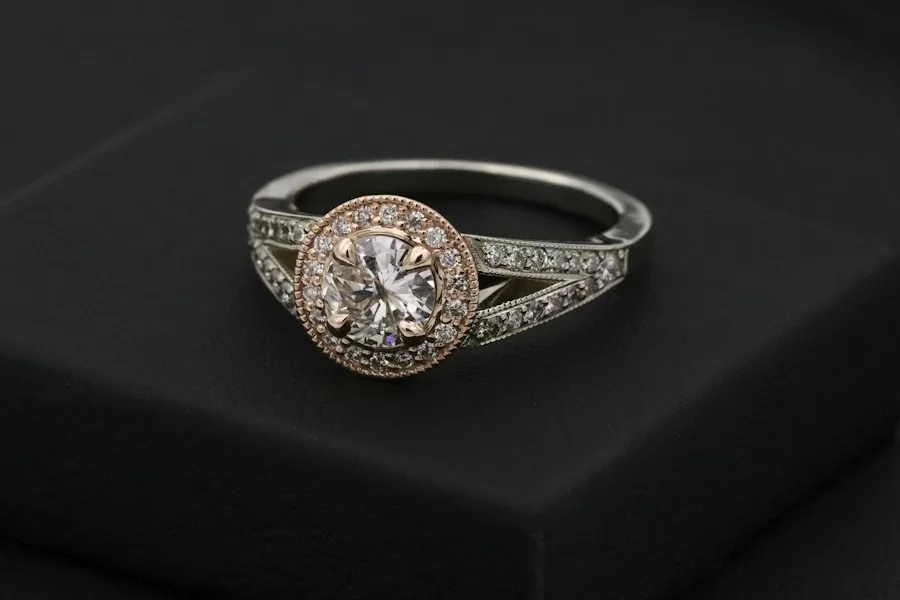
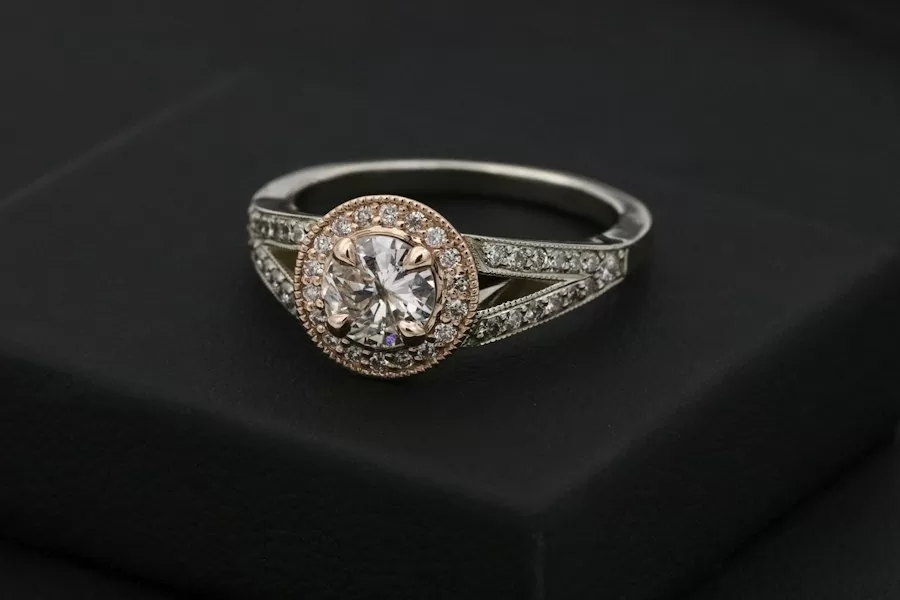
A halo of tiny moissanites or diamonds should frame the center stone, not compete with it. When the halo sits too high or too close, light reflection clashes and the whole ring looks busy. Pavé settings, meanwhile, demand tight bead work; loose pavé stones fall out first. Inspect pavé rows under magnification on every received order. A single missing bead in a stock photo is not worth the warranty work later.
4. Forgetting that moissanite is doubly refractive
Under a loupe, moissanite shows facet doubling, a normal optical property. Inexperienced setters or repair hands sometimes mistake this doubling for poor cut or damage and over-polish or over-tighten trying to "fix" it. Train anyone who touches your repairs that the doubling is inherent, not a defect. Our breakdown of moissanite's 4Cs covers what to expect, and our piece on setting styles matches designs to stone shapes.
5. Sizing a finished ring without checking the setting
Sizing down a cathedral or pavé band can pull the setting out of alignment and torque the center stone. Before promising a same-day resize, confirm whether the band has stones or metalwork that will be affected. Forcing a size change on a set ring is how prongs loosen overnight. Read up on what resizing and repair actually involve before you quote a customer a turnaround.
6. Under-finishing the polish around the seat
A sixth issue shows up on cheaper finished stock: a rough or jagged seat where the stone meets the metal, or polishing compound trapped under the prongs. This reads as sloppy up close and irritates skin over time. Run a cotton bud around the stone seat on every incoming ring. If it catches, send the piece back rather than trying to sell it. Customers notice roughness on a ring they will wear every day, and they will blame the whole brand for a finishing detail the factory skipped.
7. Shipping loose stones without proper protection
If you ever ship a finished ring back to a customer or between stores, the setting itself is at risk. Thin prongs bend in transit, and a well-set stone can arrive with a snagged tip. Use a proper padded pouch or ring box inside a rigid outer package, and never let the ring rattle loose in an envelope. A single crushed return shipment costs more than a year of padded packaging would have. Treat the outgoing piece with the same care you wish it had been given when it arrived from the factory.
Build a simple pre-sale inspection habit
The cheapest fix is the one you catch before the customer leaves. A ninety-second check per ring, covering prong tightness, pavé beads, finish, and sizing marks, catches nearly every issue on this list. Pair that inspection with honest setting advice at the counter and your return rate should drop measurably within a season. Keep a log of every returned piece and tag it by cause, and within six months you will see exactly which setting mistake your factory keeps making. Share that log with your supplier; most factories will fix a repeated defect once it costs them reorders. Good setting work is not glamorous, but it is the difference between a store that sells moissanite and a store that builds a reputation on it.
For third-party reference, the Wikipedia article on moissanite details moissanite’s discovery, optical properties and use in jewellery.
Related reading: The Five After-Sales Questions Moissanite Retailers Hear, and How to A, The Economics of Premium Moissanite: Wholesale Margins for Retailers, The Moissanite Pieces That Actually Sell: A Retail Inventory Baseline.
Frequently Asked Questions
Is moissanite a good diamond alternative for retail buyers?
Yes for price-sensitive customers who want brilliance and hardness. Moissanite ranks 9.25 on the Mohs scale, holds up to daily wear and costs a fraction of a natural diamond of the same size, so it resells fast in bridal and fashion lines.
What is the minimum order for wholesale moissanite?
MOQ starts at 50 pieces per design for stock items. Custom cuts and private-label settings usually start at 100–300 pieces depending on the mold.
Do you provide certificates with moissanite stones?
Yes. Every parcel ships with GRA or IGI documentation listing carat weight, color grade and cut. We recommend passing the certificate to your end customer for trust.
How long does sample and bulk production take?
Samples ship in 3–5 days. Bulk runs take 15–20 days under 500 pieces, and 25–30 days for custom work.