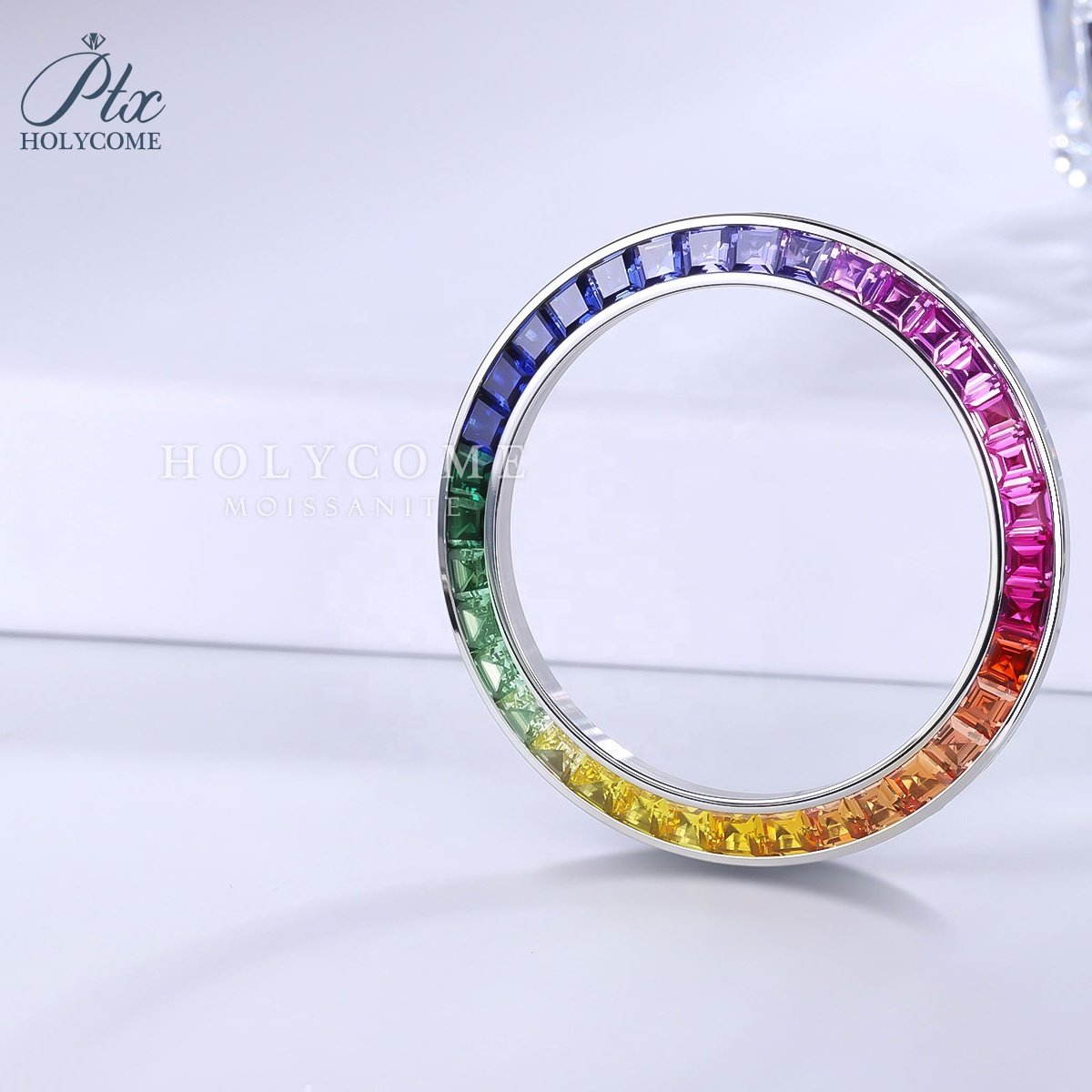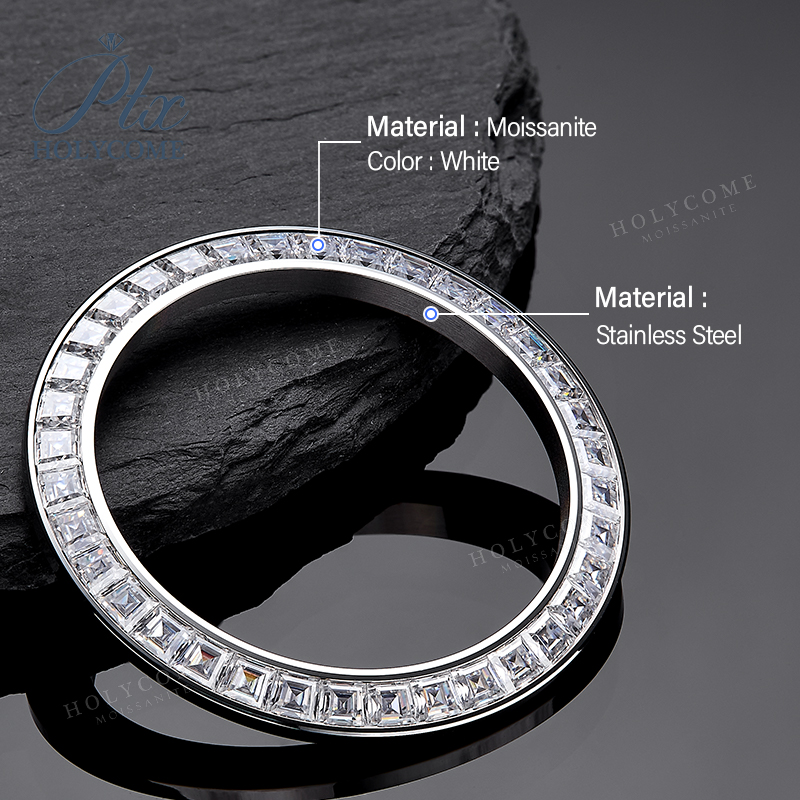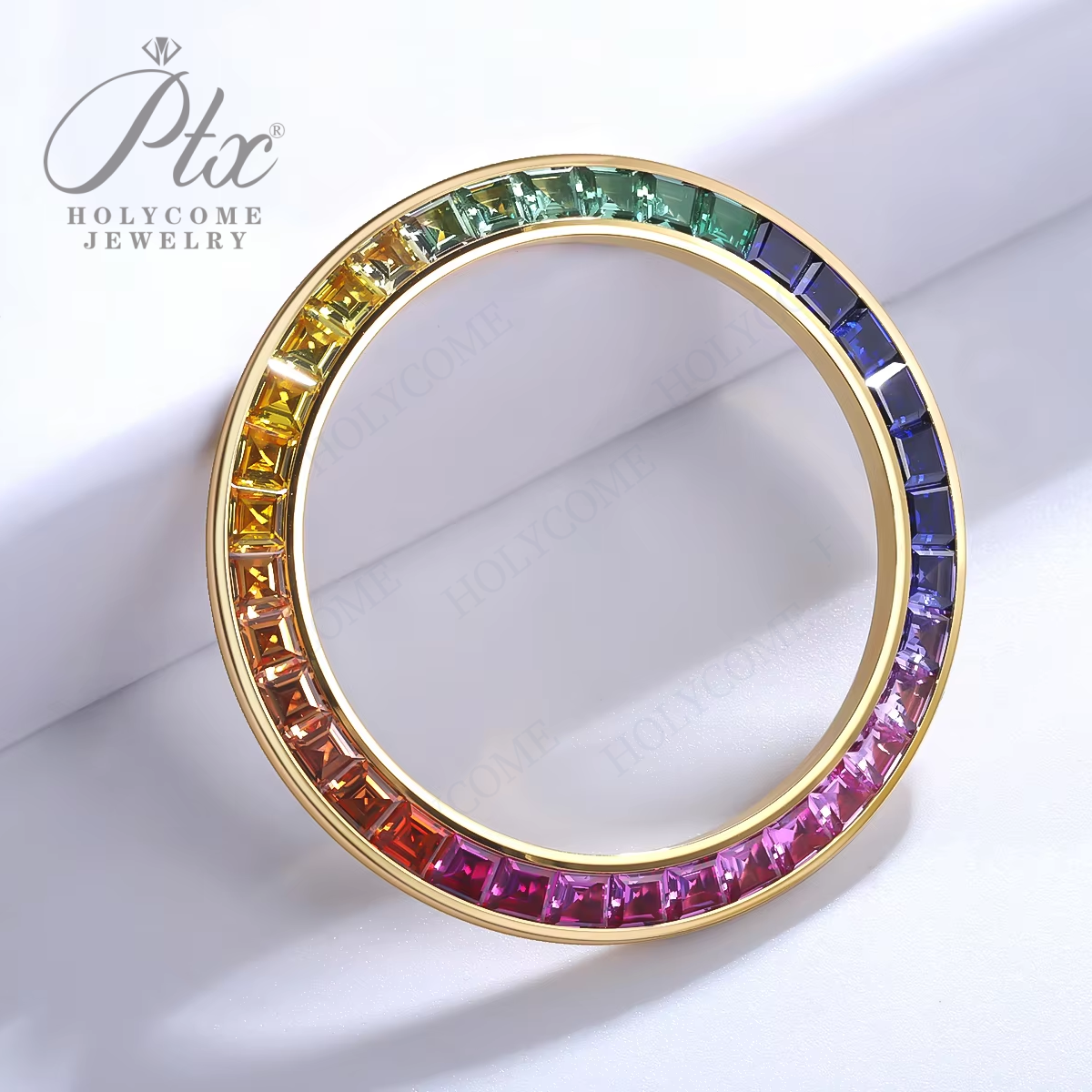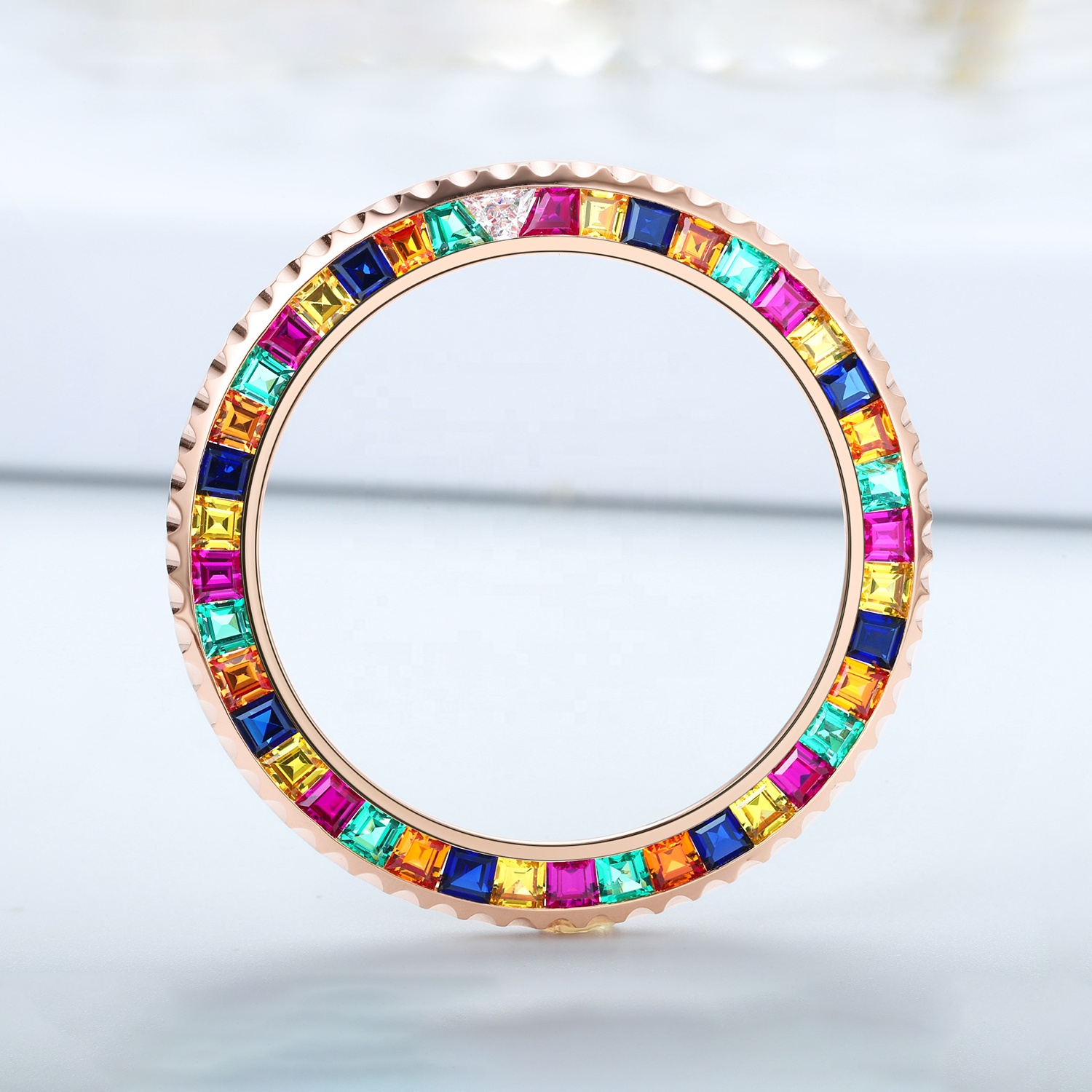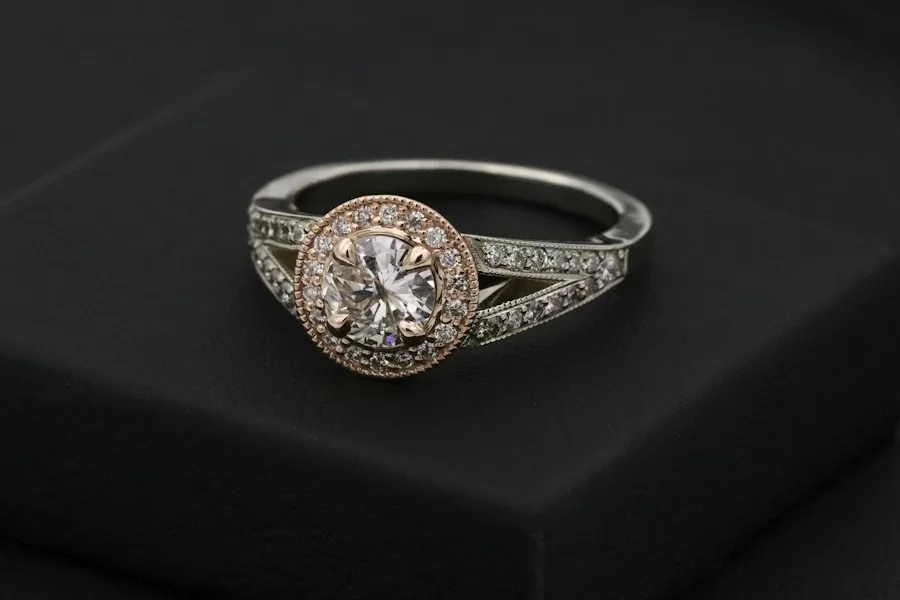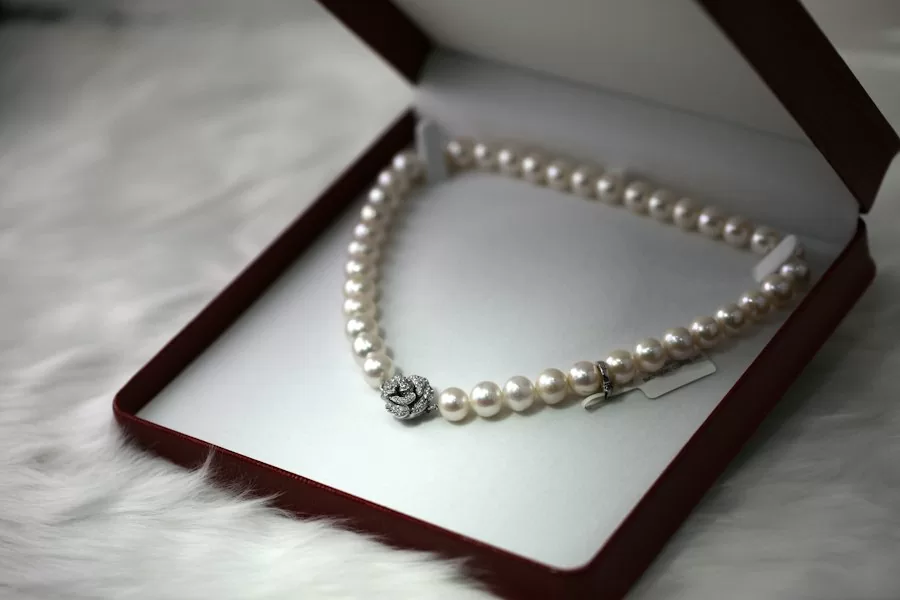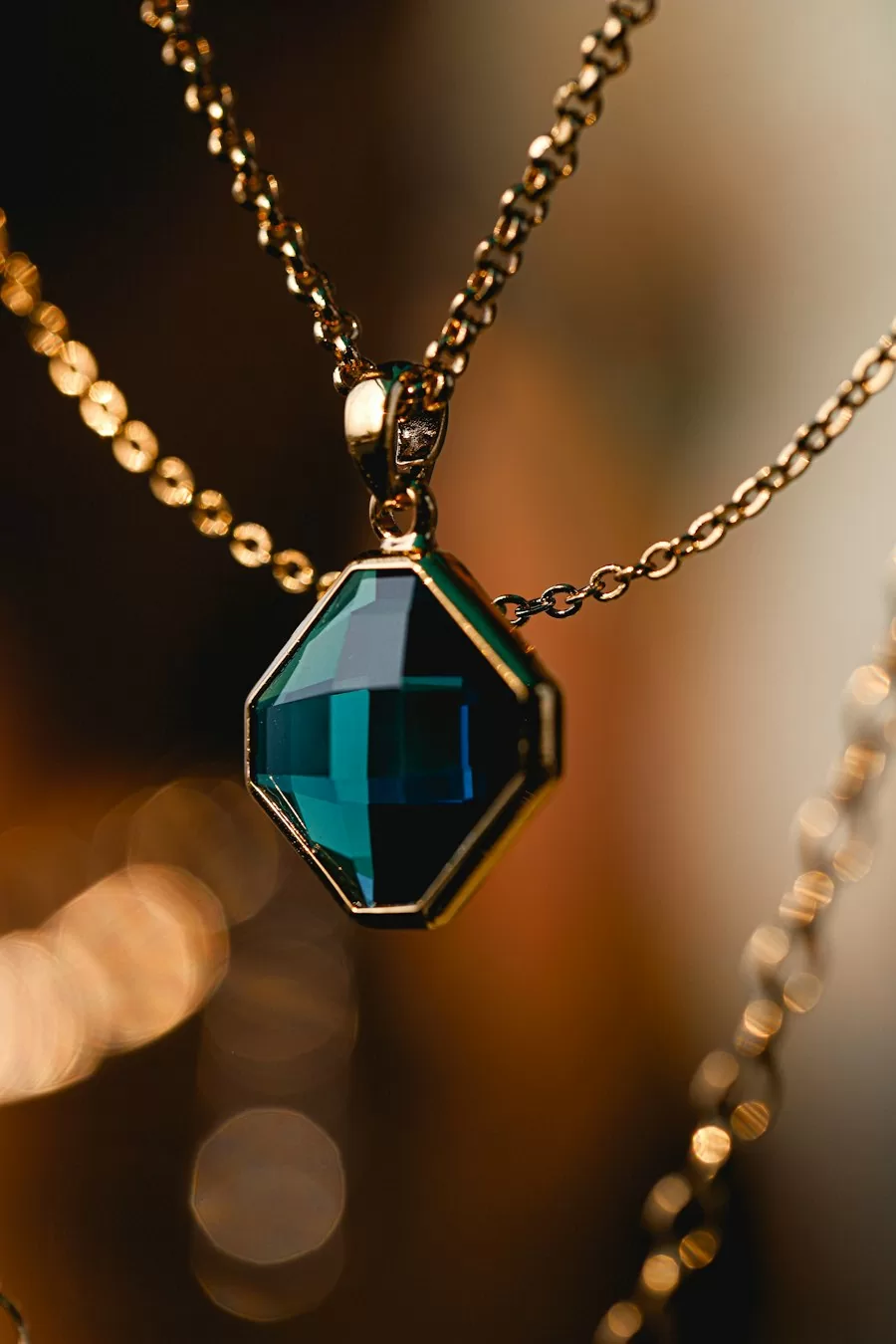
A center stone gets all the attention, but the side stones are often what make a ring feel designed. A trail of pavé down the shank, a pair of tapered accents beside a solitaire, or a halo of small stones around the center adds sparkle, lengthens the finger visually, and lifts the price point a retailer can charge. For moissanite buyers, choosing accents well is a small decision with a big effect on both beauty and durability.
The main accent styles to know
Moissanite accents show up in a few familiar configurations. A halo frames the center stone with a ring of small stones, making the center look larger and adding flash. Pavé settings seat tiny stones in drilled holes along the band, held by minute beads of metal. Channel settings line stones neatly into a groove in the shank. Three-stone designs use two larger side stones beside the center, often in a tapered or baguette cut. Each reads differently: halos feel glamorous, pavé feels delicate, channels feel sleek and modern. Stock a mix so customers can choose a mood rather than just a stone.
Match color grade to the center stone
The most common flaw in accent work is a mismatch. If your center stone is near-colorless, the side stones must be the same grade, or the contrast becomes visible up close. A whiter center next to slightly grayish accents reads as cheap, and customers notice. When you order accents from a vendor, specify that they should match your center-stone color and clarity grade. Understanding the grading system helps; review moissanite color grades D–E–F and I–J so you can request matching pairs in confidence.
Proportion matters
Side stones should support the center, not fight it. As a rough guide, total accent weight should stay a fraction of the center stone so the center remains the focal point. Over-sized accents on a modest center stone look unbalanced and date quickly. Thin, delicate bands suit small pavé; wider bands can carry bigger accents comfortably. Think about how the piece will sit next to a wedding band too; high halos and raised accents sometimes interfere with a flush fit, a detail covered in ring setting styles from prong to halo.
Durability of small settings
Small stones held by tiny prongs are the most vulnerable part of any ring. Pavé beads can loosen over years of daily wear, and a lost micro-pave stone is hard to replace invisibly. That is not a reason to avoid accents—it is a reason to set expectations. Tell customers that pavé pieces benefit from occasional prong checks, and build that service into your warranty. Choose settings with well-formed beads rather than skimpy ones, and inspect pavé work under magnification when receiving stock; that same close-up discipline separates premium setting work from careless production.
Which accent styles retail best
For most moissanite retailers, slim pavé bands and classic halos are the steady sellers. They pair well with engagement rings, stack beautifully, and photograph with lots of sparkle. Three-stone styles attract customers who want symbolism, while channel-set bands appeal to those wanting a low-maintenance look. Start with halos and slim pavé in your best-selling center shapes, then expand into three-stone and channel designs once you see your customer preference. This mirrors the shape-buying logic in which moissanite shapes bridal buyers should stock.
Buy accents as matched sets
When you order finished rings with accents, confirm the accents come already matched and set by the same workshop that cut and graded the center stone. Mixing stones from different sources risks color inconsistency. If you buy loose side stones to set yourself or through a partner, request matched parcels in one batch so shade stays uniform across a ring. Consistent color is the detail that separates a premium piece from a busy-looking one.
Price accents as a premium, not an afterthought
Because accent work is labor-intensive, retailers sometimes underprice it out of nervousness that customers will balk. Resist that. A ring with well-matched pavé is genuinely more work to produce than a plain solitaire, and shoppers recognize the extra sparkle. Price it on the perceived value of the design rather than the raw cost of the small stones, and use side-stone styles to nudge customers toward a higher ticket without making them feel upsold. A halo that makes a center look larger sells itself.
Side stones are where good moissanite inventory gets interesting. They let you offer a range of designs from a small set of center shapes, lift your average order value, and give customers that "designed" feeling that justifies a higher price. Match the grades, mind the proportions, inspect the tiny prongs, and stock the halo and pavé styles that photograph and wear beautifully—your accents will quietly become some of your best-moving pieces.
Gemstone grading terminology used here follows the Gemological Institute of America’s gem encyclopedia.
Frequently Asked Questions
Is moissanite a good diamond alternative for retail buyers?
Yes for price-sensitive customers who want brilliance and hardness. Moissanite ranks 9.25 on the Mohs scale, holds up to daily wear and costs a fraction of a natural diamond of the same size, so it resells fast in bridal and fashion lines.
What is the minimum order for wholesale moissanite?
MOQ starts at 50 pieces per design for stock items. Custom cuts and private-label settings usually start at 100–300 pieces depending on the mold.
Do you provide certificates with moissanite stones?
Yes. Every parcel ships with GRA or IGI documentation listing carat weight, color grade and cut. We recommend passing the certificate to your end customer for trust.
How long does sample and bulk production take?
Samples ship in 3–5 days. Bulk runs take 15–20 days under 500 pieces, and 25–30 days for custom work.