The question every jeweler hears
"Will this hold its value?" Customers ask it about every white gemstone, and most jeweler instincts are to dodge. With moissanite, the honest answer is more useful than the dodge. Moissanite is not an investment-grade stone, and no responsible retailer should imply that it appreciates the way a mined diamond might. But it sits in a completely different category from cubic zirconia, and explaining that difference is what closes the sale with a thoughtful buyer.
What cubic zirconia is actually worth
Cubic zirconia is a costume gemstone. It is manufactured in massive volume, costs pennies per carat at the wholesale level, and is designed to look the part for a season or two. A CZ ring bought at a mall kiosk has essentially no resale value. The metal band may be worth scrap silver price, which on a typical piece is a few dollars. The stone itself has no secondary market, because anyone who wants a CZ can buy a new one for less than the reseller's asking price.
CZ also ages. It scratches, clouds and dulls within a couple of years of daily wear, because the material is softer than moissanite and less resistant to abrasion. A three-year-old CZ piece looks like a three-year-old CZ piece.
Where moissanite sits
Moissanite scores 9.25 on the Mohs scale, second only to diamond among commonly used gems. That means it does not scratch, cloud or dull under normal wear. A ten-year-old moissanite ring, cleaned properly, looks close to new. The stone itself has no robust secondary market — there is no wholesale exchange trading used moissanite the way diamond dealers trade used diamonds — but the jewelry piece, as a whole, retains functional value because the stone still looks new and the setting is wearable.
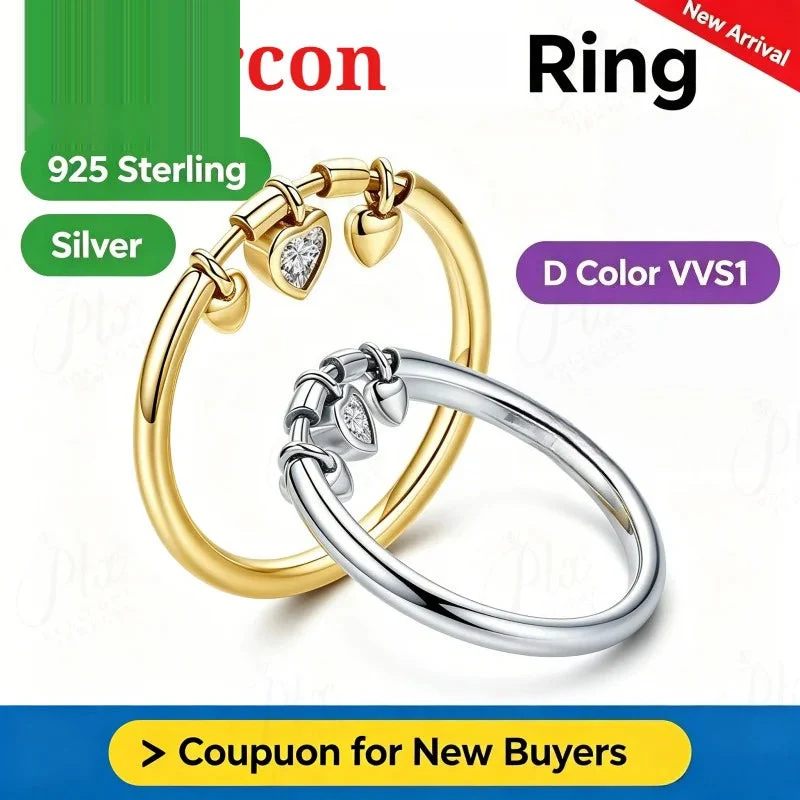
Practically, this means two things. First, a customer who buys a moissanite ring wears it for a decade and can still pass it along, sell it secondhand for a meaningful fraction of what they paid, or trade it in. Second, the metal — 925 sterling silver, 10k or 14k gold — has its own melt value, which CZ pieces rarely justify recovering.
What you can say without overpromising
The phrasing that works in the case is direct: "Moissanite is not an investment. It will not appreciate the way a rare diamond might. But unlike cubic zirconia, it does not scratch or cloud, so the piece stays wearable for a lifetime. We also offer a trade-up program, so the money you spend today moves forward into a larger stone later." That sentence tells the truth, sets expectations, and points the customer toward a reason to buy from you rather than a marketplace.
Appraisals and insurance, done honestly
Customers sometimes ask for a retail appraisal on a moissanite piece so they can add it to a home insurance policy. That is a reasonable request, and you should be able to provide one that states the replacement value at retail, not a hypothetical investment value. A home insurer covers the cost of replacing a lost or stolen piece with a comparable one, and a moissanite ring has a clear, marketable replacement cost. What you should not do is write an appraisal that implies the stone appreciates, or that compares its value to a mined diamond of similar carat. Either framing will come back to you when the customer tries to file a claim.
Be clear with the customer: the piece is insured at replacement value, the metal carries its own melt value, and the trade-up program is the real "value retention" mechanism. That is the honest math, and customers remember honesty long after they forget the price.
Building a trade-up program that protects you
A trade-up program is what turns "resale value" from a vague promise into a real benefit. Offer credit — typically 50 to 75 percent of the original purchase price — toward a larger moissanite piece, with the stone returned to you and a certificate on file. The returned stone can be recut, reset, or sold into a secondary line. Keep the program written, limited to customers who keep their receipt, and staffed consistently.
When a customer pushes back with "but will I be able to sell it later?" the honest answer is that no white simulant has a liquid wholesale market the way a rare diamond does. What moissanite offers instead is a piece that looks new for decades, a trade-up path that moves forward, and a metal value that CZ cannot match. Say that plainly, and the customer who was worried about being stuck with a bad purchase becomes the customer who trusts your store. Say it with confidence, because the gap between moissanite and CZ is real and easy to demonstrate under a loupe. For how this fits into a broader customer-education program, see our retail buying guides.
Sterling silver terminology used in this guide follows the Wikipedia entry on sterling silver.
Frequently Asked Questions
Is moissanite a good diamond alternative for retail buyers?
Yes for price-sensitive customers who want brilliance and hardness. Moissanite ranks 9.25 on the Mohs scale, holds up to daily wear and costs a fraction of a natural diamond of the same size, so it resells fast in bridal and fashion lines.
What is the minimum order for wholesale moissanite?
MOQ starts at 50 pieces per design for stock items. Custom cuts and private-label settings usually start at 100–300 pieces depending on the mold.
Do you provide certificates with moissanite stones?
Yes. Every parcel ships with GRA or IGI documentation listing carat weight, color grade and cut. We recommend passing the certificate to your end customer for trust.
How long does sample and bulk production take?
Samples ship in 3–5 days. Bulk runs take 15–20 days under 500 pieces, and 25–30 days for custom work.