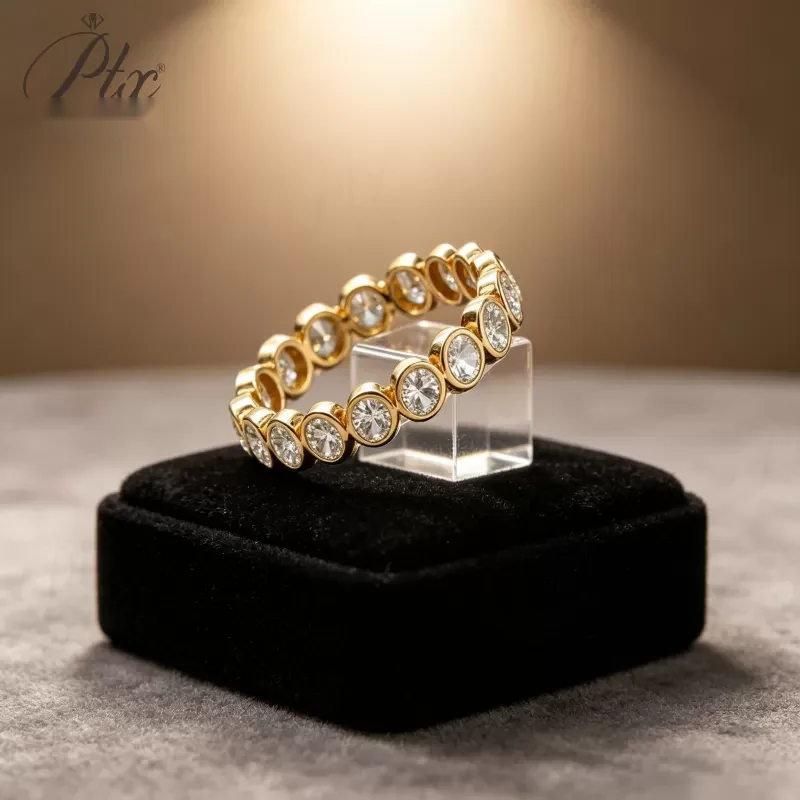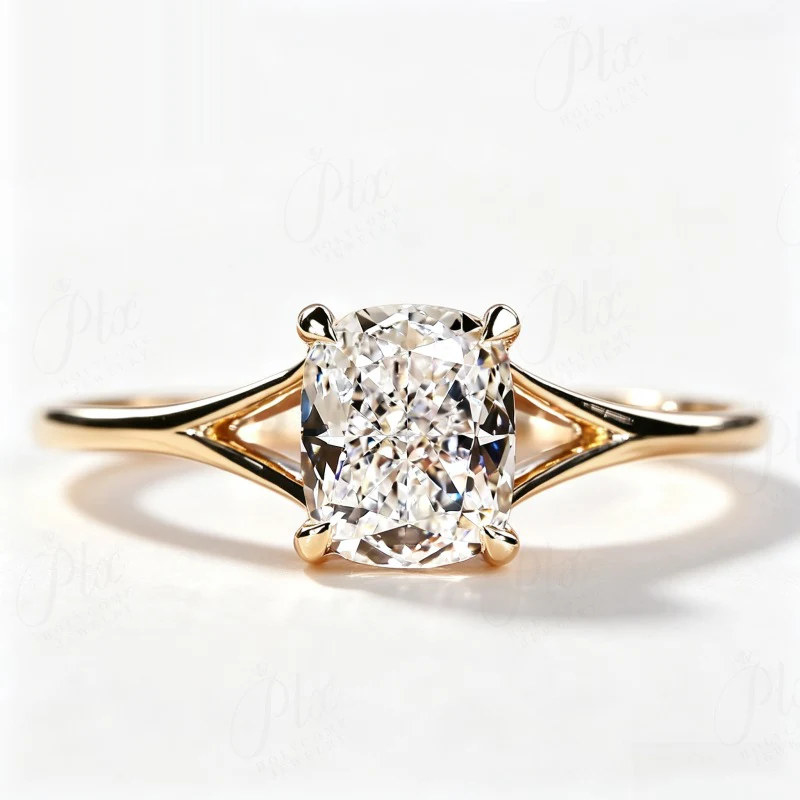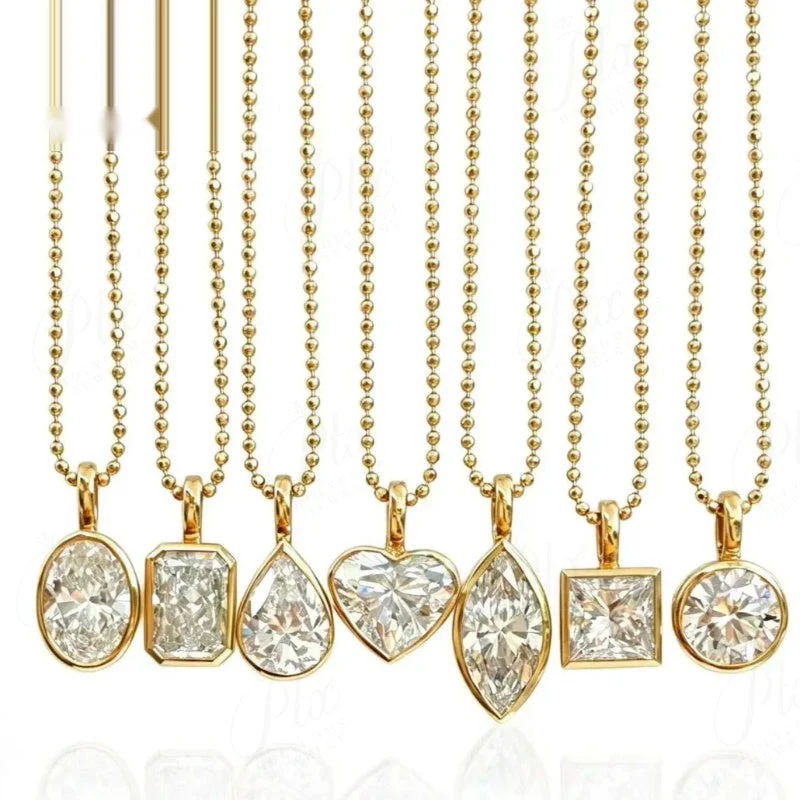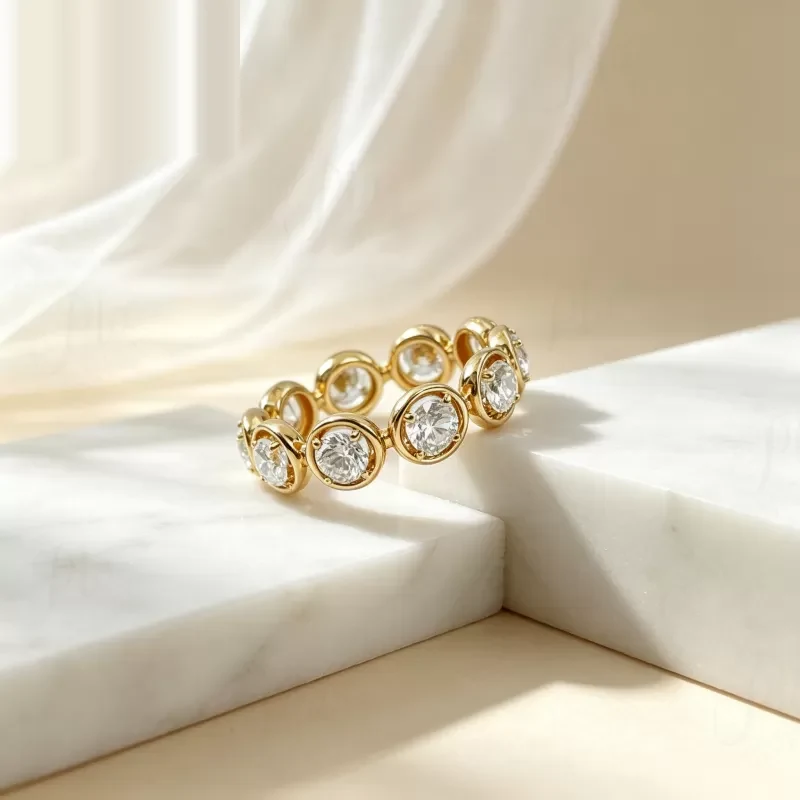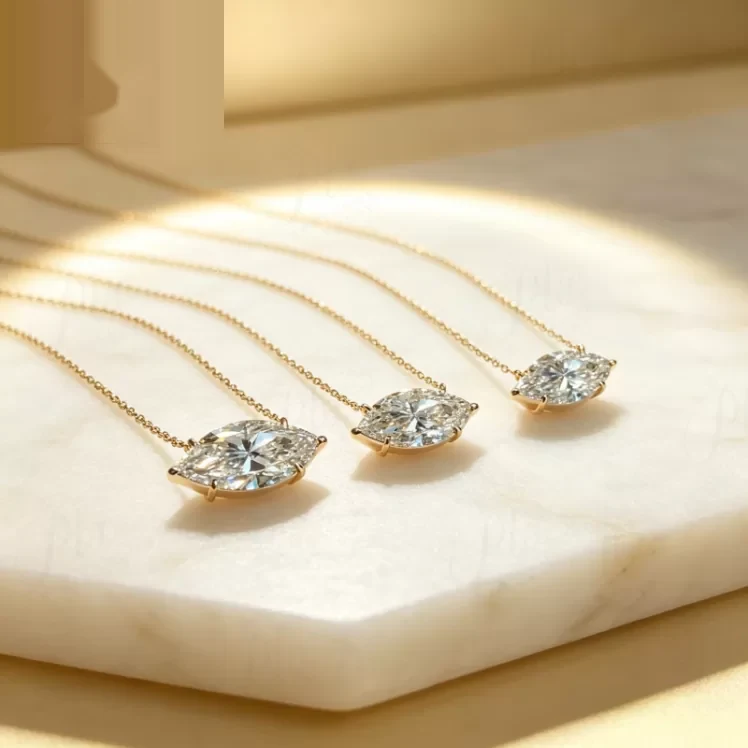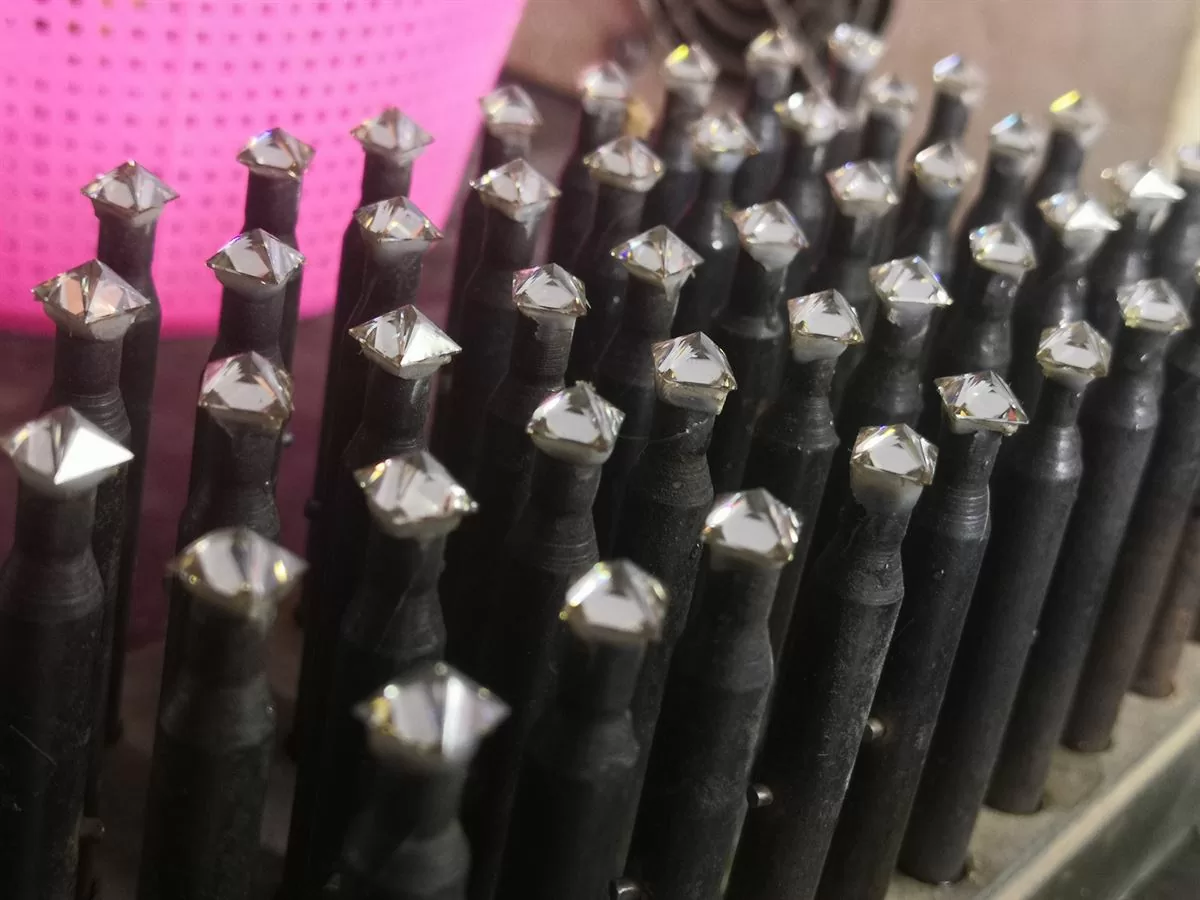
Every jeweler who stocks moissanite (per Wikipedia) eventually faces the customer question: "So why wouldn't I just buy a diamond?" The answer you give determines whether that customer leaves with a $450 ring or leaves the store entirely. Retailers who treat moissanite and diamond as competitors lose. Retailers who treat them as tiers win.
The honest comparison, on the counter
Mined diamond rates 10 on Mohs; moissanite rates 9.25. Diamond has the higher refractive clarity, but moissanite visibly out-fires it in bright window light because of its higher dispersion. A one-carat equivalent moissanite engagement ring typically retails for a small fraction of a comparable one-carat mined diamond, even after a healthy boutique markup. Lab-grown diamond sits between the two in price and is the natural bridge product, not the enemy. Customers who understand this comparison self-select into the tier that fits their budget and values; your job is to present it cleanly rather than argue for one stone over another.
Why customers still want the "real" story
The objection is rarely about physical performance. It is about meaning. A bride-to-be wants to be able to say what she is wearing. Your job is to give her language: moissanite is a lab-grown, conflict-free, ethically produced gem with measurable durability, and it lets her partner spend on the honeymoon, a down payment, or the wedding itself instead of the stone. Phrase it that way and the price difference stops sounding like a downgrade and starts sounding like a choice. Avoid the word "alternative." It implies the diamond is the real thing and the moissanite is the compromise.
Tier the counter, don't blur it
A clean three-tier layout protects both margins:
- Accessible bridal (moissanite): 925 silver or vermeil mounts, 1 to 2 carat equivalent stones, $250 to $650 retail ticket. Drives foot traffic and first purchases.
- Upgrade tier (lab-grown diamond): solid gold mounts, certified 0.7 to 1.2 carat stones, $1,200 to $3,500. Captures customers who want diamond grading language and a GIA or IGI certificate.
- Legacy tier (mined diamond, selective SKUs): one or two investment-grade solitaires for customers who specifically ask. Keep this small; it is an appointment product, not a floor product.
Margin behavior differs by tier
Moissanite rings carry the highest percentage margin because the wholesale input is low. Lab-grown diamond carries a lower percentage but a higher absolute dollar profit per sale. Mined diamond carries slow turns but strong appointment-driven sales. If your case mixes them without a layout logic, customers anchor on the cheapest piece and you erode the premium tiers. A customer who walks in expecting $400 and sees a $3,000 lab-grown ring next to it will still buy the $400 ring; she will not, however, feel that the $400 ring is a compromise. That is the win.
What to put on the placards
Write one short factual line per tier. Moissanite: "Lab-grown gem, 9.25 Mohs, certified." Lab-grown diamond: "Grown above ground, certified grading." Mined: "Naturally formed, certified." Avoid the word "fake" in any direction. It devalues the moissanite and reminds the lab-grown buyer they are not buying mined stone. Avoid "cheaper" and "affordable" on the moissanite placard; use "accessible" or simply describe the stone without a price word.
The resale question, answered honestly
Customers who ask "what will it be worth?" deserve a straight answer. Moissanite is not an investment stone; neither is a lab-grown diamond, for that matter. Both are worn, loved, and passed down as jewelry, not resold for a profit. Framing moissanite as a wearable piece that holds its appearance for decades is honest and accurate. A mined diamond's resale value is also a fraction of its retail price, which is rarely explained at the counter. Once the customer understands that no bridal stone is a financial asset, the comparison shifts to which stone she wants on her hand. Positioned this way, moissanite stops being the compromise and starts being the sensible choice.
Warranty and after-sales differ by tier
Moissanite rings from a reputable supplier typically carry a one-year warranty on stones and prongs, and the rhodium plating holds up well under normal wear. Lab-grown diamond rings often come with a grading report but a shorter warranty on mounting. When you present the tiers at the counter, mention the warranty plainly; it is one of the few objective differences that survives the customer walking out the door. Customers remember the warranty sentence more than they remember the price.
Handling the "is it real?" follow-up
Some customers will ask, in front of friends, whether moissanite is "real." The cleanest answer: "It is a real gemstone, grown in a laboratory. It is not cubic zirconia, and it is not a simulacrum of a diamond. It has its own refractive index, its own certificate, and its own durability rating." That answer defuses the question without making the customer defend her choice. Positioned this way, moissanite is the door-opener, not the compromise. It brings in customers who would never have walked past a mined-diamond counter, and many of them move up to your upgrade tier over time. See our buying guides for how each tier's wholesale pricing should be built.
Frequently Asked Questions
Is moissanite a good diamond alternative for retail buyers?
Yes for price-sensitive customers who want brilliance and hardness. Moissanite ranks 9.25 on the Mohs scale, holds up to daily wear and costs a fraction of a natural diamond of the same size, so it resells fast in bridal and fashion lines.
What is the minimum order for wholesale moissanite?
MOQ starts at 50 pieces per design for stock items. Custom cuts and private-label settings usually start at 100–300 pieces depending on the mold.
Do you provide certificates with moissanite stones?
Yes. Every parcel ships with GRA or IGI documentation listing carat weight, color grade and cut. We recommend passing the certificate to your end customer for trust.
How long does sample and bulk production take?
Samples ship in 3–5 days. Bulk runs take 15–20 days under 500 pieces, and 25–30 days for custom work.