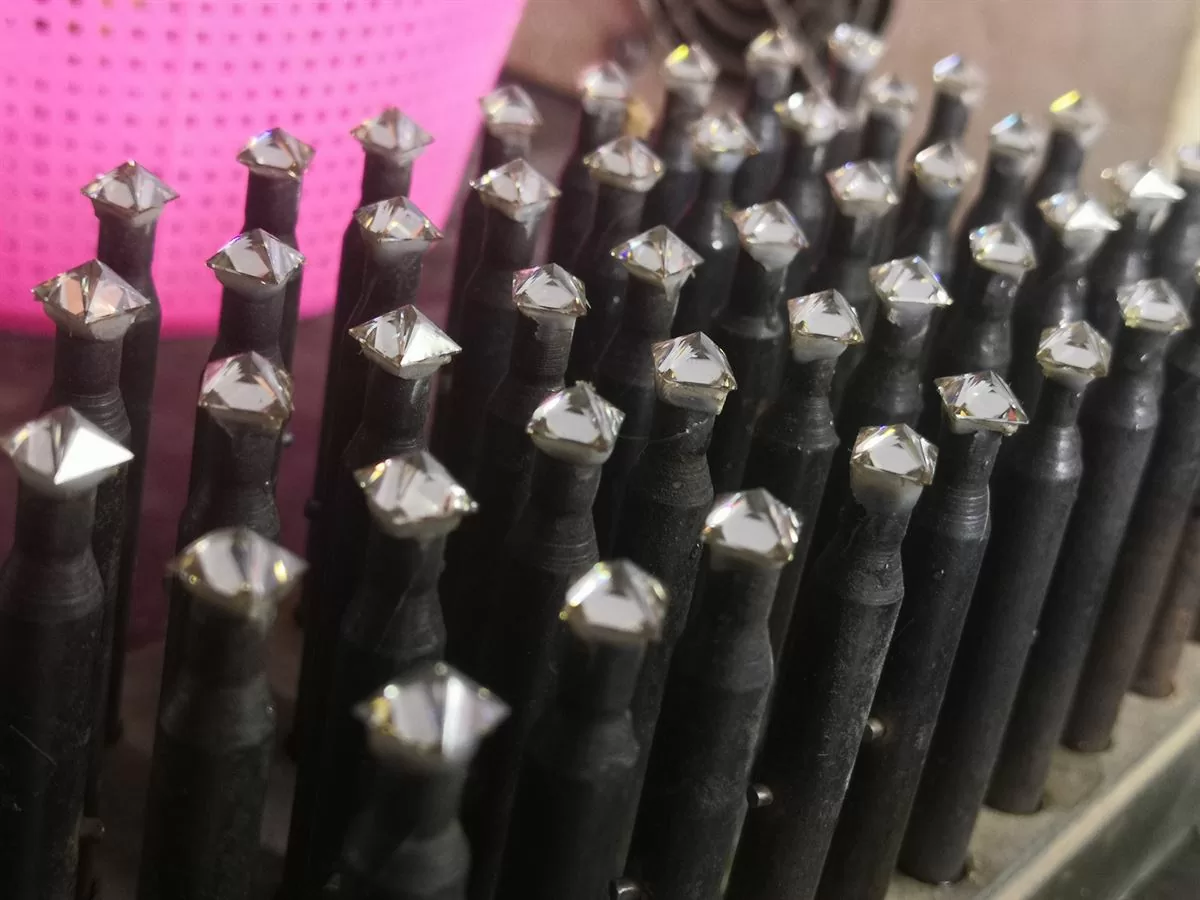
A parcel of 50 loose 6.5mm moissanites arrives in a small plastic bag with 50 GRA cards. The cards all say "D-E color, excellent cut." Spread the stones on a white tray and they are not the same stone. Three are faintly gray. One is noticeably larger than the rest. Two have a dark window through the table. Sorting those differences is the skill that separates a buyer who can build a matched pair of stud earrings from one who cannot.
Set up the sorting station
You need three things: a neutral white LED light (around 5500K), a white ceramic or matte paper tray, and a 10x loupe. Do not sort under store lighting - warm retail lights flatter every stone and hide the color differences you are trying to find. Do not sort on a black tray; it makes pale stones look cleaner than they are.
Pour the parcel out and rough-sort by size first. Roll the stones across the tray and eyeball the diameters against a ruler. A 6.5mm parcel should read 6.45-6.55mm across all stones. Anything outside that band goes into a "check" pile. Manufacturers occasionally mix a 6.4mm (1.0 ct equiv) with a 6.5mm (1.0-1.1 ct equiv) in the same parcel, and the difference is visible when the customer holds two studs up.
Face-up color sorting
Stand all stones table-up on the tray under the white light. Squat so your eye is level with the tray and look across the row. Color differences that are invisible from above pop at this angle - a faintly yellow, gray, or olive stone will sit visibly different from the rest.
Bucket the row into three groups: clean (matches the best 80%), off (faint but noticeable), and reject (clearly different). The clean bucket is your sellable inventory. The off bucket can be sold as "near-colorless" at a slight discount or used for lower-price pendants where the face-up color reads differently against skin. The reject bucket goes back to the supplier with photos - a 3-5% reject rate on a parcel is normal and should be credited on the next PO.
Light return and symmetry
Pick up each stone by the girdle between thumb and forefinger and rotate it under the light. Look for three things:
- Windows - a dark patch through the table that shows the background rather than reflecting light. Caused by a shallow cut.
- Arrows pattern - in a round brilliant, the eight arrows should be roughly even. Twisted arrows mean poor symmetry.
- Doubling - moissanite is doubly refractive, so facet edges look slightly doubled under the loupe. Excessive doubling at face-up means the pavilion is too deep.
A parcel that passes all three checks is a matched parcel. A parcel that fails on 10% or more of stones should not be accepted as "D-E excellent cut" - the cards are optimistic, and your customer will find the difference on the day they compare two studs.
Matching a pair of studs from the parcel
Stud earrings are the hardest parcel exercise because the customer compares the two stones on the same face, under the same light, at the same time. Pull two stones from the clean bucket and set them table-up next to each other on the tray. Rotate them 90 degrees relative to each other. If one stone has a slightly deeper color or a slightly brighter flash at that rotation, they are not a pair. Keep cycling stones until you find two that read identically at every rotation.
Expect to set aside 10-15% of a good parcel as unmatched singles. Those singles are not waste - use them for pendants, where the customer sees only one stone at a time. The single-stone pendant is where the off-bucket and the unmatched singles go to earn their cost back. A buyer who sorts carefully ends up with both a matched pair program and a single-stone pendant line from the same parcel.
Build the habit
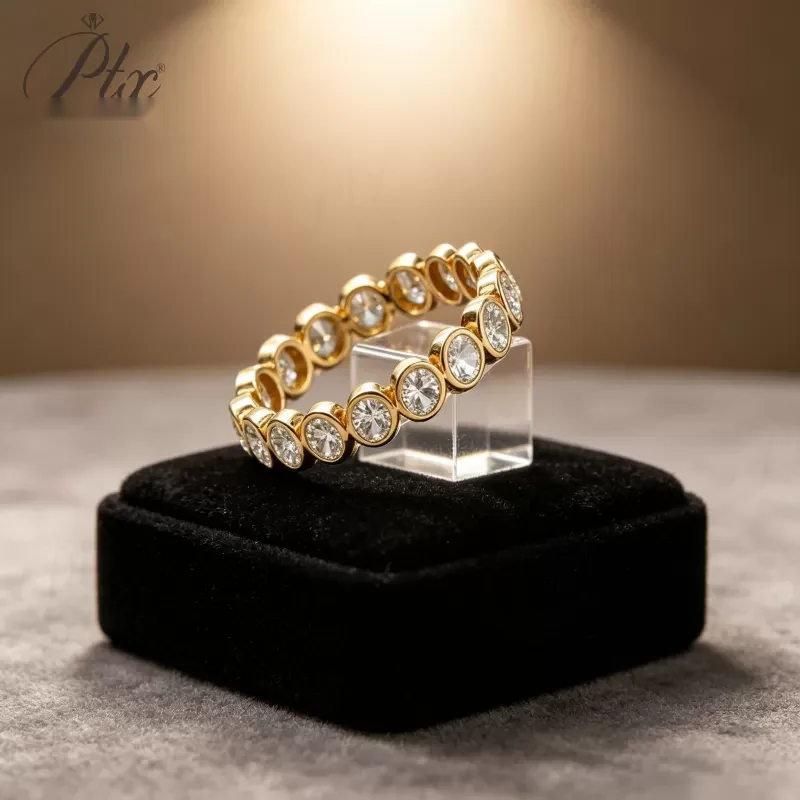
Twenty minutes per parcel, every parcel. The first time you do this you will second-guess every stone. By the fifth parcel you will sort 50 stones in 15 minutes and pull the three rejects before the mounting bench ever sees them. That sorting step is the cheapest quality control in the wholesale business, and it is the difference between a matched pair of studs and a customer who notices the two stones are not the same color when they get them home. It is the same discipline we apply to every parcel that leaves our workshop for moissanite rings programs. Over a year, the habit saves you more in returned goods than any single QC gadget you could buy. Sort the parcel once, on the bench, before the stones ever reach the mounting floor; the cost is twenty minutes and the payback is a matched pair program that sells out before the next restock.
For third-party reference, the Wikipedia article on moissanite details moissanite’s discovery, optical properties and use in jewellery.
Frequently Asked Questions
Is moissanite a good diamond alternative for retail buyers?
Yes for price-sensitive customers who want brilliance and hardness. Moissanite ranks 9.25 on the Mohs scale, holds up to daily wear and costs a fraction of a natural diamond of the same size, so it resells fast in bridal and fashion lines.
What is the minimum order for wholesale moissanite?
MOQ starts at 50 pieces per design for stock items. Custom cuts and private-label settings usually start at 100–300 pieces depending on the mold.
Do you provide certificates with moissanite stones?
Yes. Every parcel ships with GRA or IGI documentation listing carat weight, color grade and cut. We recommend passing the certificate to your end customer for trust.
How long does sample and bulk production take?
Samples ship in 3–5 days. Bulk runs take 15–20 days under 500 pieces, and 25–30 days for custom work.