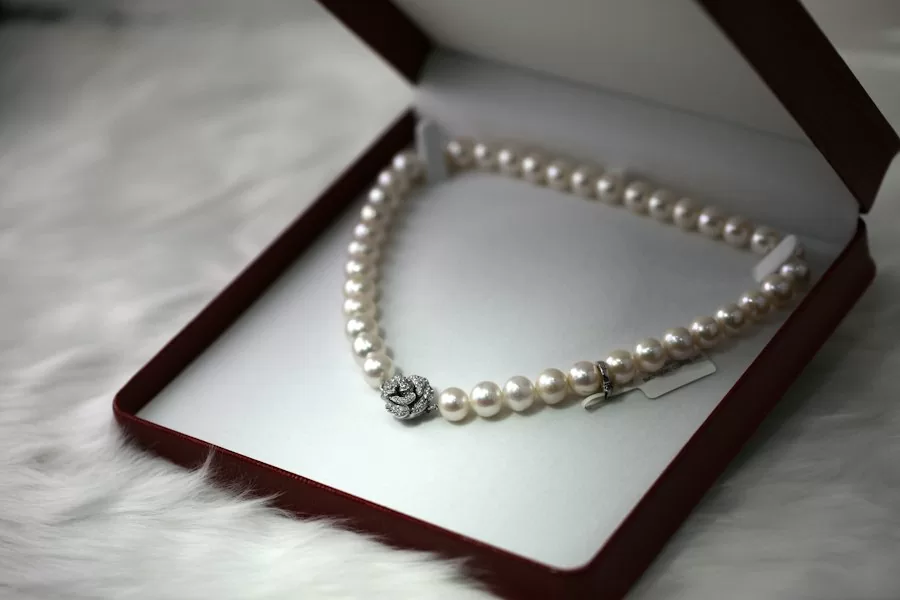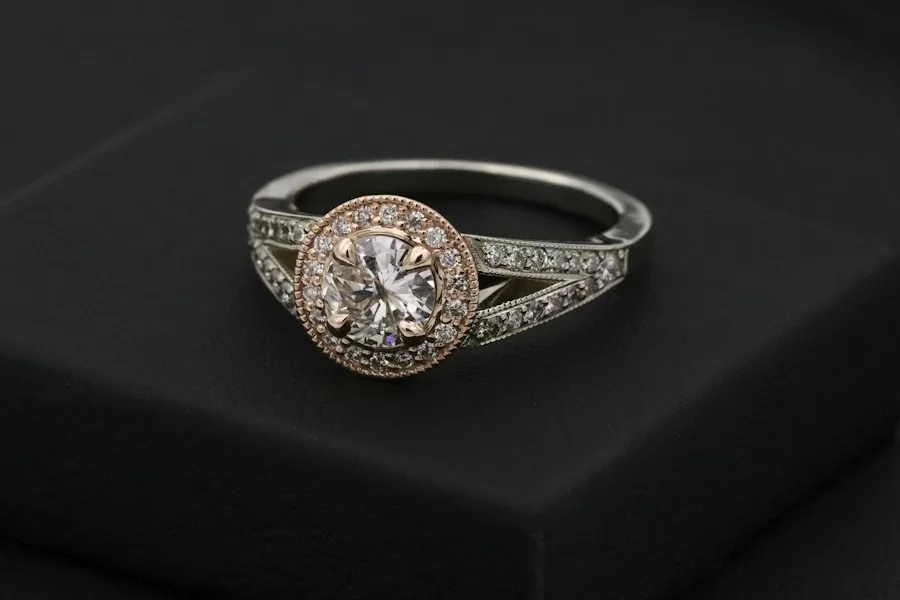
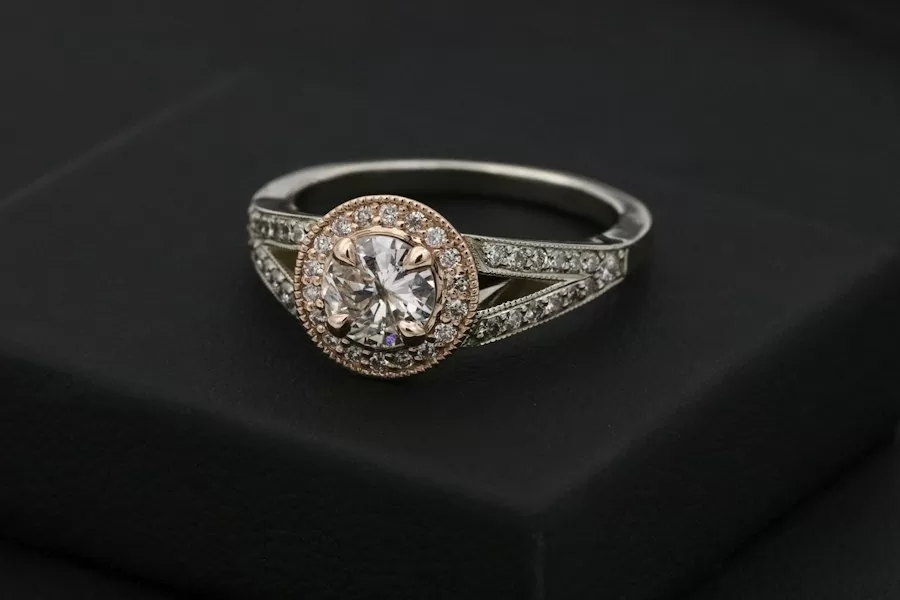
Among engagement ring styles, the three-stone setting occupies a rare position. It looks substantial in a case, photographs beautifully, and carries a meaning couples grasp instantly. The three stones represent the past, present, and future of a relationship, which makes the ring as much a sentiment as a purchase. For a moissanite retailer, that combination of visual presence and emotional narrative is worth stocking deliberately rather than leaving to chance.
Why the style keeps selling
Solitaire rings are timeless, but they can read understated. Halo rings maximize sparkle, but they can read trendy. The three-stone sits in between: classic enough to feel bridal, substantial enough to feel like a commitment. It also widens the visual spread across the finger, which makes a smaller center stone look more generous than its carat weight suggests. That optical benefit matters when customers are comparing value.
Because moissanite's fire is visible from every angle, the side stones do the same work as the center stone in photographs. A three-stone moissanite ring reads as a complete, balanced piece on a screen, which helps online sales. See our notes on shooting moissanite for ecommerce to make the most of that.
Center and side-stone combinations that work
The most common layout pairs a round center with two smaller round side stones. It is the safest seller because it is symmetrical and universally flattering. Beyond that, shape combinations drive interest:
- Oval center with two round sides: elongates the finger, a strong choice for customers who want length.
- Pear center with two round or pear sides: romantic and distinctive, popular with buyers who want something less conventional.
- Cushion center with two tapered baguettes: a modern, architectural look that skews toward younger design-led buyers.
Keep the side stones proportional. Sides that are too large compete with the center and flatten the design; sides that are too small look like afterthoughts. A center-to-side ratio of roughly 2.5 to 1 reads balanced on most hands.
Metal and setting details to watch
Three-stone rings often use cathedral or gallery-style settings to lift the center stone and let light pass through. That lift is what makes the moissanite sing. Check that the side stones sit level with the center and that there are no exposed prongs catching on gloves or hair. For a deeper dive on construction, our settings guide walks through the tradeoffs.
White metal is the default for bridal, but yellow-gold three-stone sets have grown as vintage-inspired engagement styling returns. Stocking one or two warm-metal samples catches buyers who want a ring that does not look like everyone else's.
How to sell it at the counter
Lead with the story, then the proportions. A customer drawn to a three-stone ring has usually come for the meaning, not just the look. Confirm that the style matches her lifestyle: the extra prongs and side stones mean slightly more places for soap and lotion to collect, so an active wearer may prefer a lower-profile solitaire. Being honest about that trade builds trust and reduces returns.
Offer a matching band that sits flush. A three-stone center with a wedding band that clashes or leaves a gap is a common disappointment. Our guidance on band fit applies here, even though it was written for lab diamond sets. The geometry is identical.
Pricing and margin on three-stone sets
Three stones cost more to source than a solitaire, but they also retail for more and photograph better, which lifts the perceived value. Price the piece as a complete design rather than adding up three individual stones; customers are buying the composition, not a parts list. Because the style reads as bridal, it also carries a lower discount tolerance than fashion pieces. Reserve promotional offers for bundling a matching band, not for marking the ring itself. When a customer hesitates, lead with the meaning and the hand-flattering proportions rather than the price. The three-stone buyer has usually already decided she wants something with a story, and your job is to confirm that the proportions and metal are right for her.
Buying depth for retail
Do not spread your three-stone budget across every shape. Lead with one round-center and one oval-center style in white gold, one warm-metal variant, and a single statement piece with baguette sides. That covers the mainstream buyer, the trend buyer, and the design-led buyer without tying up capital. When one of them sells through, reorder that exact combination. Three-stone rings turn best when you stock the meaning people recognize and skip the rest. Over time, the shapes your local market asks for will become obvious, and you can add a second statement variant based on that demand rather than on guesswork.
Independent background on moissanite — how its hardness and refractive index compare with diamond — is documented in the Wikipedia article on moissanite.
Frequently Asked Questions
Is moissanite a good diamond alternative for retail buyers?
Yes for price-sensitive customers who want brilliance and hardness. Moissanite ranks 9.25 on the Mohs scale, holds up to daily wear and costs a fraction of a natural diamond of the same size, so it resells fast in bridal and fashion lines.
What is the minimum order for wholesale moissanite?
MOQ starts at 50 pieces per design for stock items. Custom cuts and private-label settings usually start at 100–300 pieces depending on the mold.
Do you provide certificates with moissanite stones?
Yes. Every parcel ships with GRA or IGI documentation listing carat weight, color grade and cut. We recommend passing the certificate to your end customer for trust.
How long does sample and bulk production take?
Samples ship in 3–5 days. Bulk runs take 15–20 days under 500 pieces, and 25–30 days for custom work.