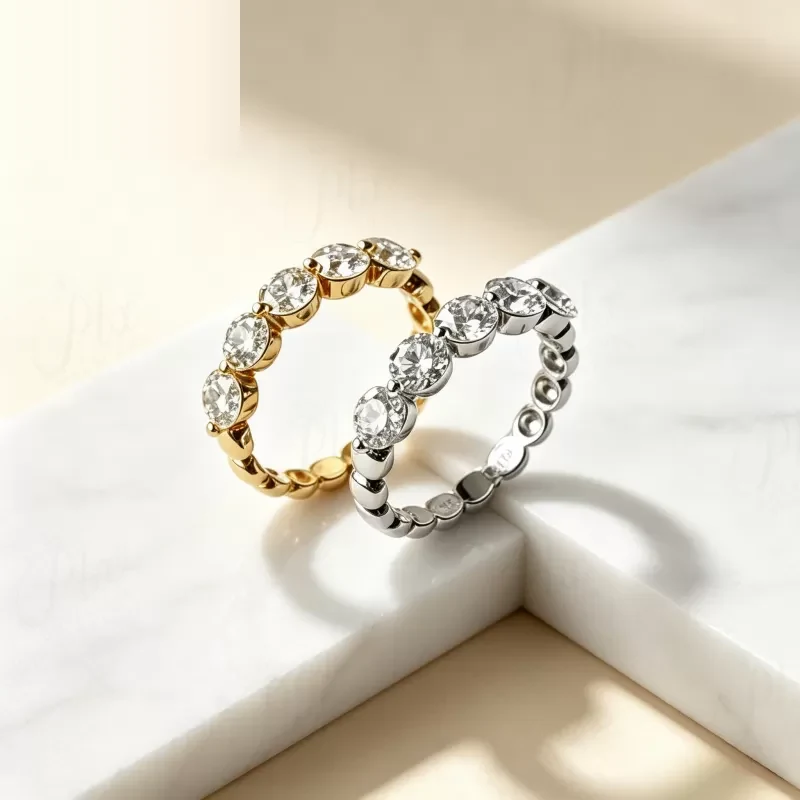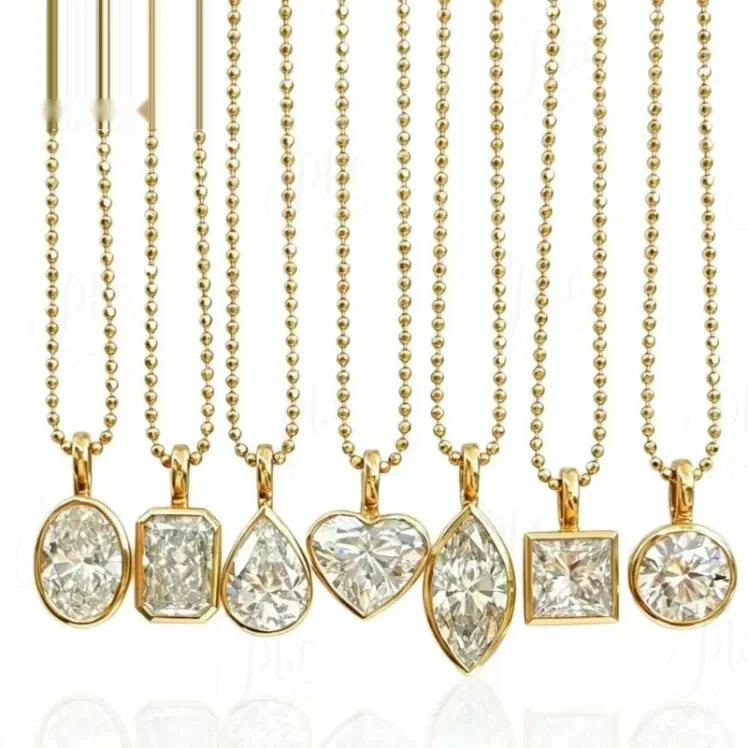
A new reseller in Lyon asked us why the same 6.5mm round moissanite was quoted at $18 on a 5-piece order, $12 on a 50-piece order, and $8.50 on a 500-piece order. He assumed the supplier was tier-gaming him. He was not - that spread is how MOQ bands work in moissanite wholesale. The price per stone moves because the factory's fixed costs - cutting setup, polishing batch, cert printing, plating run - are spread across a different number of units at each band.
Band 1: Sample order (1 to 5 pieces)
The sample tier exists so you can hold the stone, check the color and photograph it on your own light. It is priced near retail because the factory is running a one-off cutting pass for you, splitting a polishing batch with no volume. Expect to pay 1.5 to 2x the eventual bulk price. This tier is not where you make margin - it is where you avoid a 500-piece mistake. We see stores that skip the sample and order 50 pieces on a photo; the return rate on those first orders runs materially higher. This is the same logic behind sample-first sourcing that serious resellers follow.
Band 2: Trial order (10 to 50 pieces)
At 10 to 50 pieces, the factory can group your SKU into a standard production run. Cutting setup cost drops because the rough is being oriented alongside other orders of the same size. Polishing goes into a shared barrel, and cert cards print in a small batch. This is the tier where most small resellers should live for their first season - enough units to test sell-through, not so many that slow-moving sizes tie up cash. The price here is typically 60 to 70% of the eventual bulk price. If your supplier quotes the same price at 5 pieces and 50 pieces, they are not actually running tiered production; they are using one flat wholesale rate, which is a sign of a trader rather than a factory.
Band 3: Bulk order (100 to 500 pieces)
At 100 to 500 pieces, the factory can dedicate a cutting session to your SKU. That means the rough is selected for your size, the cut angles are locked to your spec sheet, and the plating run on settings is sized to your order. Price per stone drops to 45 to 55% of the sample-tier price. This is where margin improves, but it is also where cash gets tied up in slow-moving sizes. A practical split: put your top three selling shapes at the bulk tier, keep the long tail at the trial tier. Compare this against MOQ pricing tier structures other suppliers publish, and you will see the band pattern repeat.
Band 4: Container / private label (1,000+ pieces)
Above 1,000 pieces per SKU, factories will discuss private label, custom cut angles, and packaging with your brand. This tier assumes you have 12 months of sell-through data on the SKU. Jumping straight to container volume without that data is the most common way new brands end up with a pallet of slow-moving oval pendants. The price here is the floor the factory will offer - usually 35 to 45% of the sample-tier price - but the risk is also the largest. MOQ tiers are standard in manufacturing, and a factory that offers container pricing to a first-time buyer without asking your sell-through history is discounting the order, not respecting the relationship.
How to climb the bands without over-buying
Order the sample. Sell through the trial. Move to bulk on the SKUs that prove themselves. Only discuss private label when a single shape has re-ordered twice at the bulk tier. Resellers who follow this ladder tie up less cash and get better price per stone over time than resellers who try to negotiate the container price on day one. Pair the band climb with a clear SKU taxonomy, so the sizes you bulk-order are the ones your data says move.
The takeaway: MOQ is not one number, and the spread between tiers is not a markup - it is how factory fixed costs amortize. Read the bands, climb them in order, and let your sell-through decide when to step up.
What is the minimum order for moissanite?
Most factories start at 1 to 5 pieces for samples, 10 to 50 for trial, 100+ for bulk. There is no single MOQ; the tier changes the price.
Is the sample-tier price worth it?
Yes. It is a small cost that prevents a 500-piece mistake on color, cut or sizing you cannot see in photos.
When should I move to bulk pricing?
When a SKU has sold through its trial order twice. Do not bulk-order based on a single good month.
Can I negotiate container pricing on day one?
You can ask, but a serious factory will want sell-through history first. Jumping to container volume risks a pallet of slow stock.
HOLYCOME quotes sample, trial and bulk bands in the same sheet, so you can see exactly when the price steps down. Ask for the tiered quote, start with a sample set, and climb the bands as your sell-through proves each SKU.
Frequently Asked Questions
Is moissanite a good diamond alternative for retail buyers?
Yes for price-sensitive customers who want brilliance and hardness. Moissanite ranks 9.25 on the Mohs scale, holds up to daily wear and costs a fraction of a natural diamond of the same size, so it resells fast in bridal and fashion lines.
What is the minimum order for wholesale moissanite?
MOQ starts at 50 pieces per design for stock items. Custom cuts and private-label settings usually start at 100–300 pieces depending on the mold.
Do you provide certificates with moissanite stones?
Yes. Every parcel ships with GRA or IGI documentation listing carat weight, color grade and cut. We recommend passing the certificate to your end customer for trust.
How long does sample and bulk production take?
Samples ship in 3–5 days. Bulk runs take 15–20 days under 500 pieces, and 25–30 days for custom work.