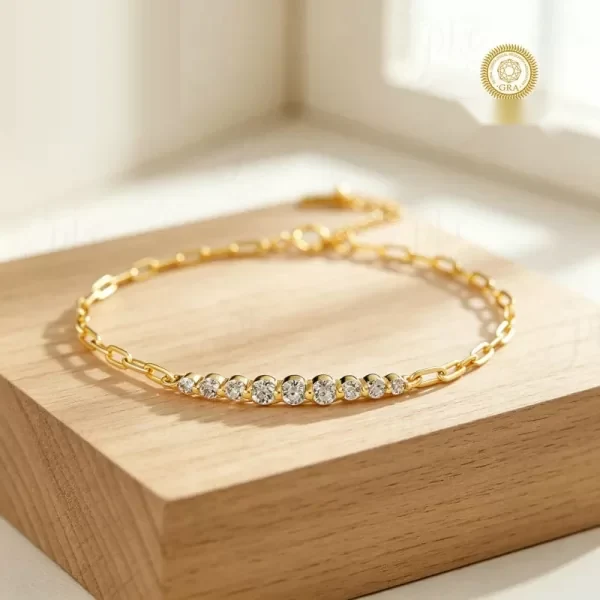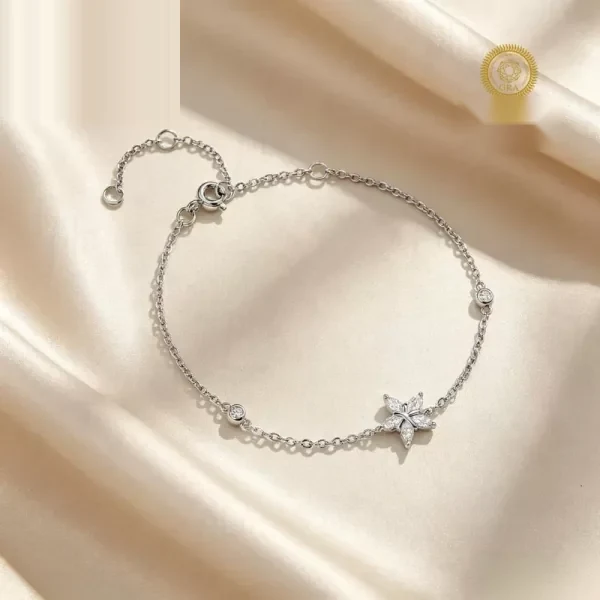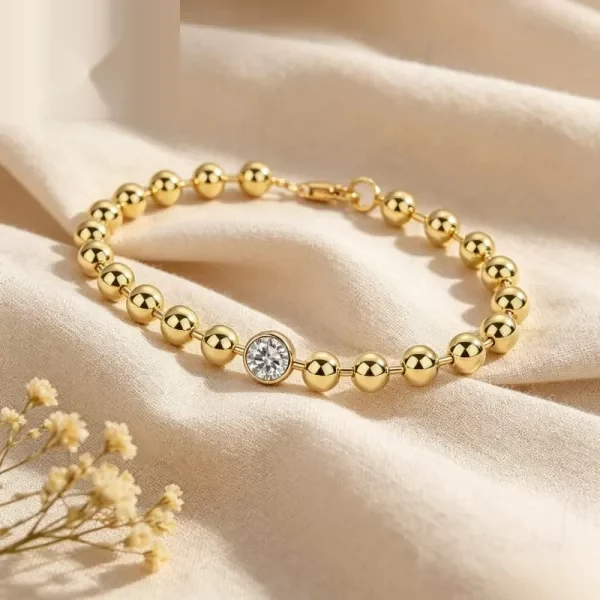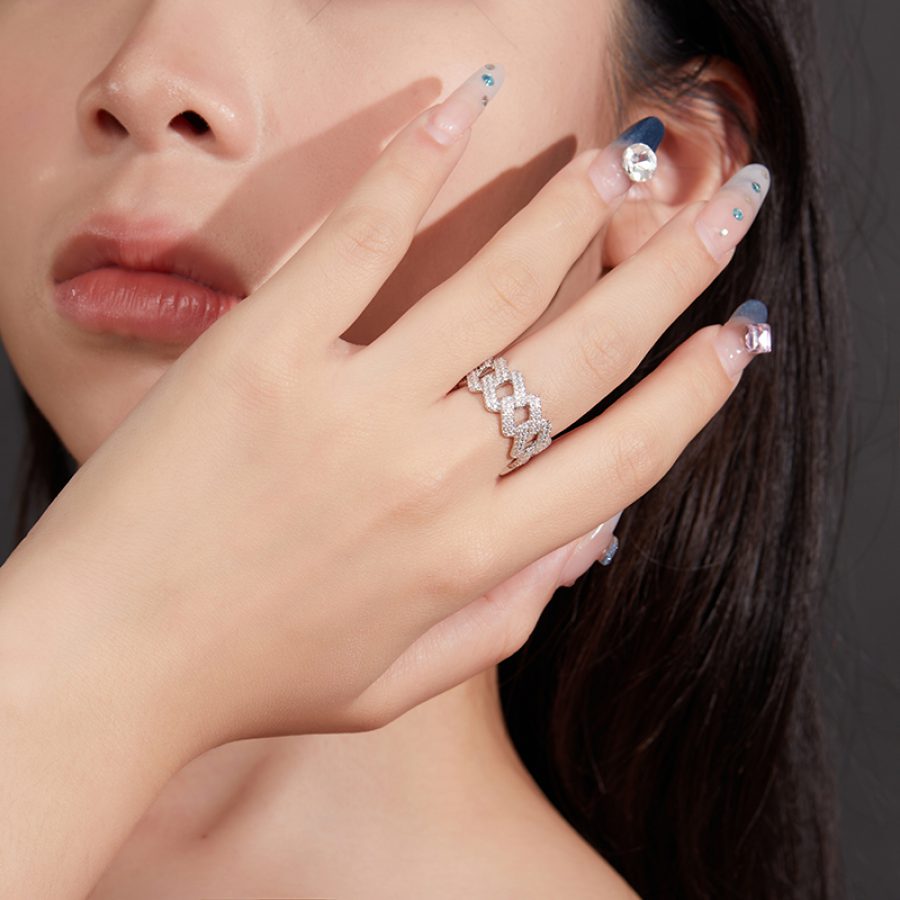
Tennis bracelets are the moissanite category most often bought as a gift. That single fact shapes the SKU: the buyer is usually a man or a parent shopping for someone whose wrist they have never measured, and the piece has to look right in a box, survive shipping, and fit on arrival. Choose the wrong width or the wrong clasp and the bracelet either underwhelms or comes back in three months with a broken lock.
Pick the width by the buyer, not the wrist
The retail lineup usually runs 3mm, 4mm, and 5mm stone widths. The 3mm bracelet reads as delicate everyday jewelry and fits a small wrist. The 4mm bracelet is the default gift piece—noticeable without being loud, priced between the other two. The 5mm bracelet is the statement piece that competes with a diamond tennis bracelet in the customer's mind. Open with roughly 60 percent 4mm, 25 percent 3mm, and 15 percent 5mm. Reorder the 4mm first; it moves fastest.
Carat totals are the ticket, not the price
A 7-inch 4mm tennis bracelet carries roughly 4 to 5 carats of total moissanite weight. Shoppers do not think in carats for a bracelet the way they do for a solitaire, but they do remember the number on the card. List the total carat weight on the ticket next to the retail price. It gives the gift buyer a concrete thing to say—"five carats of moissanite, in sterling silver"—and justifies the price against the CZ tennis bracelets at half the cost.
Clasp choice is a safety decision
Box clasps with a side safety catch are the standard for a reason. Fold-over clasps are cheaper to source but open on impact, and a bracelet that falls off a wrist is a return and a lost customer. Pull-string and adjustable bracelets are a fashion look, not a fine-jewelry look. For a gift that has to last, take the box clasp with dual safety latches. Inspect every sample by opening and closing the clasp ten times; it should firm up, not get loose.
Sizing and the extender question
Standard lengths are 7 and 7.5 inches. Women with smaller wrists need 6.5; men's versions run 8. The cleanest solution for a gift buyer is a 7-inch bracelet with a half-inch extender chain. The extender costs almost nothing to source and solves the fit problem for the recipient. Build extenders into your opening order for every 4mm SKU. Skip them on the 3mm delicate version; the extender changes the look. When a customer comes in to be sized, measure over the wrist bone with a flexible tape rather than guessing—a bracelet that slips past the hand but catches the bone is the right fit, and that number is what you record for the next order.
Ask about stone color and cut grade
Tennis bracelets live or die on consistency. Every stone in the row should match the one next to it in color, cut, and size. Wholesale stock usually runs DEF color and a near-excellent cut, but budget-tier batches mix in slightly off-color stones that show in bright light. When you order the sample bracelet, hold it under a daylight lamp and scan the row end to end. A visible mismatch in any three-stone span means the factory is mixing parcels; reject the batch and ask for a consistent one. The cost of consistent stones is small, and the customer who spots a mismatched stone will not come back.
Men's and wider-wrist versions
Men's moissanite tennis bracelets are a growing category. They run 8 to 8.5 inches and use 4mm or 5mm stones on a heavier link. Open with one SKU—a 4mm in sterling silver with a box clasp—rather than a full men's lineup. The demand is real but lumpy; you will sell three in a month, then none for two months, then four at once. A single held SKU covers that pattern without tying up cash in a dozen sizes.
Metal tier matters for gifting
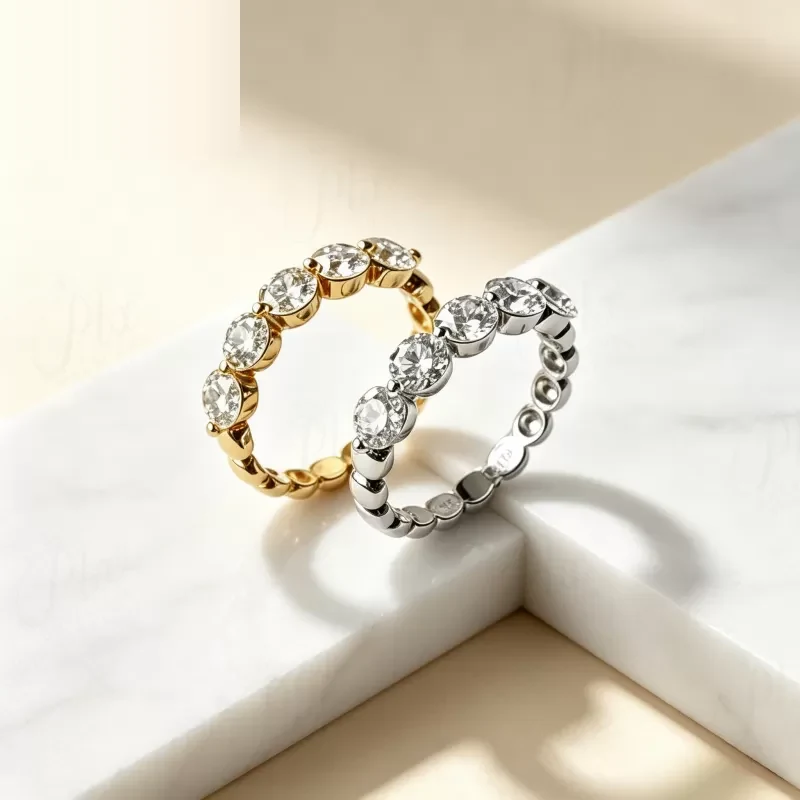
Sterling silver with rhodium plating is the default everyday tier and the fastest turn. Vermeil adds a warm gold tone that brides and mothers love. Solid 14K gold is the bridal-gift tier that moves in small volumes but at a strong margin. Do not open with solid gold unless you already know a customer segment asking for it; the unit cost ties up shelf cash that silver would have turned twice.
Display and cross-sell
A tennis bracelet shown next to a matching stud pair sells both. Display the 4mm bracelet and the 6.5mm stud pair on the same card and price the pair as a bundle at a small discount. The bride picking up her engagement ring will often add the bracelet as a "treat for herself" on the same visit. Buyers building this category can see the current width and clasp options on moissanite bracelets before locking the SKU mix.
The Wikipedia article on rhodium explains why rhodium plating is applied to white gold and silver jewellery.
Frequently Asked Questions
Is moissanite a good diamond alternative for retail buyers?
Yes for price-sensitive customers who want brilliance and hardness. Moissanite ranks 9.25 on the Mohs scale, holds up to daily wear and costs a fraction of a natural diamond of the same size, so it resells fast in bridal and fashion lines.
What is the minimum order for wholesale moissanite?
MOQ starts at 50 pieces per design for stock items. Custom cuts and private-label settings usually start at 100–300 pieces depending on the mold.
Do you provide certificates with moissanite stones?
Yes. Every parcel ships with GRA or IGI documentation listing carat weight, color grade and cut. We recommend passing the certificate to your end customer for trust.
How long does sample and bulk production take?
Samples ship in 3–5 days. Bulk runs take 15–20 days under 500 pieces, and 25–30 days for custom work.