Two years ago a reseller ordering 500 graded 6.5mm stones had to book production weeks out. Today the same order ships in days, and the price per piece has softened. That is not a sales pitch - it is a real supply shift, and resellers who understand why it is happening can buy into it instead of being surprised by it.
Production capacity is scaling up
Cultured moissanite is grown in controlled thermal processes, and the factories that mastered the recipe have added growth runs and polishing lines. Rough output has climbed, which widens the pipeline of graded stones across the popular 6.5mm and 8x6mm sizes. lab-grown diamond on Wikipedia notes how lab-created gem supply has expanded across the sector, and moissanite sits in the same broader manufactured-gem wave. More rough means steadier stock and shorter lead times - the practical win for a store that used to wait weeks for a solitaire reorder.
Certification and grading are standardizing
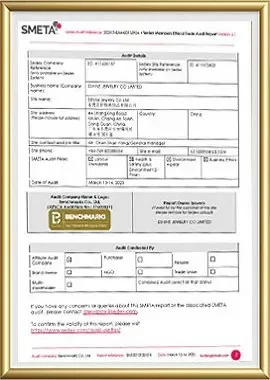
As supply grew, so did the paperwork around it. GRA-style certificates, plus tighter internal QC for color and cut consistency, mean parcels arrive more uniform than they did three years ago. We covered the lab side in SGS vs GRA certification, and the point for 2026 is that buyers can now trust a "graded parcel" promise more reliably. Standardization lowers friction: resellers do not have to screen every stone, and listings can quote a consistent grade. Consistent QC practice also makes supplier audits easier when you source direct from China production.
Demand is pulling the supply forward
The growth is not just supply-side. Buyers keep choosing affordable, diamond-like sparkle over mined stone for engagement and everyday wear, and that demand signals factories to produce more. Compare the trade in lab-grown diamond vs moissanite for resellers: both are growing, but moissanite's price point and higher fire keep it a distinct, fast-moving lane. When demand and capacity both climb, prices stay soft and selection widens - which is exactly the environment a reseller wants to buy in.
What this means for your buying in 2026
Soften your assumptions about scarcity. You can order deeper in the popular sizes without booking months ahead, and you can ask for more consistent grades at the same landed cost. The risk flips: instead of "will I get stock," the question becomes "am I over-ordering slow sizes." Use the mm ladder from buying loose moissanite by carat tiers, keep depth in 6.5mm and 8x6mm, and test a supplier's consistency before scaling. A growing supply rewards buyers who track sell-through, not buyers who hoard.
The headline for 2026: moissanite is moving from a niche alternative to a mainstream stocked category. That means better availability, tighter consistency and lower per-piece cost - if you buy with a size-and-grade plan rather than a blanket order.
Lead times are the practical signal of this shift. Where a solitaire reorder once needed a two-week booking, popular sizes now turn around in days. That changes how you plan inventory: you can hold less safety stock because replenishment is faster, but you still keep depth in the sizes that sell. Watch your supplier's stock page through 2026 - if lead times stretch back out, demand is outrunning capacity and it is time to book ahead again. Treat availability as a monthly check, not a one-time assumption.
The flip side to watch is over-supply pricing pressure. If every store stocks the same 6.5mm oval, price competition on that exact size tightens. Your edge becomes consistency, grading and service rather than the stone itself - the moissanite is now a commodity, and the reseller who ships accurate, well-documented parcels wins the repeat order. Treat 2026 as the year the product became table stakes, and your service becomes the differentiator.
Net out the opportunity: wider supply means more choice, faster reorders and softer cost - but also more competition on the same popular sizes. Buy on a plan, document every parcel, and let consistent service be the reason buyers return to you rather than to the next cheap listing.
Is moissanite getting cheaper in 2026?
Per-piece wholesale cost has softened as capacity grew, especially in popular sizes. Expect steadier prices, not a crash.
Will quality drop as supply grows?
No - standardizing certification and QC has lifted consistency. Buy graded parcels and the quality holds.
Should I stock deeper because supply is easy?
Stock the fast sizes deeper, but keep slow sizes lean. Easier supply means you can reorder faster, so you do not need to hoard.
Is moissanite a mainstream category now?
Moving that way. Engagement and everyday-sparkle demand is broadening, and production is following.
HOLYCOME is expanding 2026 production in near-colorless 6.5mm and 8x6mm graded stones, with consistent QC and fast reorders. Request a sample and the current size ladder to position your catalog before the peak buying season.
Frequently Asked Questions
Is moissanite a good diamond alternative for retail buyers?
Yes for price-sensitive customers who want brilliance and hardness. Moissanite ranks 9.25 on the Mohs scale, holds up to daily wear and costs a fraction of a natural diamond of the same size, so it resells fast in bridal and fashion lines.
What is the minimum order for wholesale moissanite?
MOQ starts at 50 pieces per design for stock items. Custom cuts and private-label settings usually start at 100–300 pieces depending on the mold.
Do you provide certificates with moissanite stones?
Yes. Every parcel ships with GRA or IGI documentation listing carat weight, color grade and cut. We recommend passing the certificate to your end customer for trust.
How long does sample and bulk production take?
Samples ship in 3–5 days. Bulk runs take 15–20 days under 500 pieces, and 25–30 days for custom work.