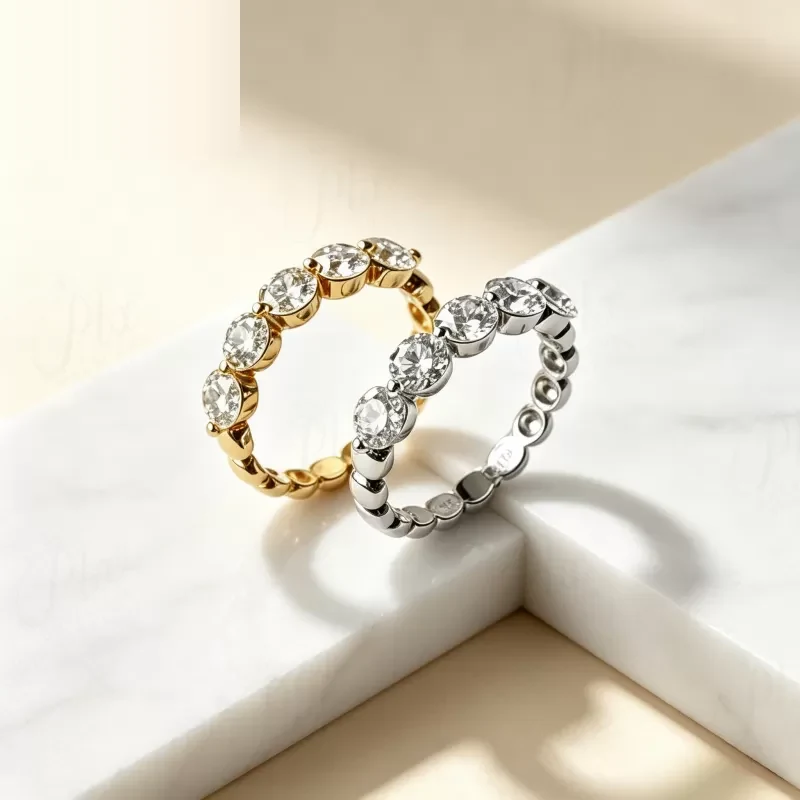
You just unboxed a 50-piece parcel of round-brilliant moissanite and your first job is to explain to a retail buyer why the stone in front of them looks nothing like the diamond they were expecting. You can do that with a marketing line, or you can do it with numbers. This primer gives you the numbers so your sales staff can answer the first ten questions a customer will ask, without improvising.
What moissanite is made of
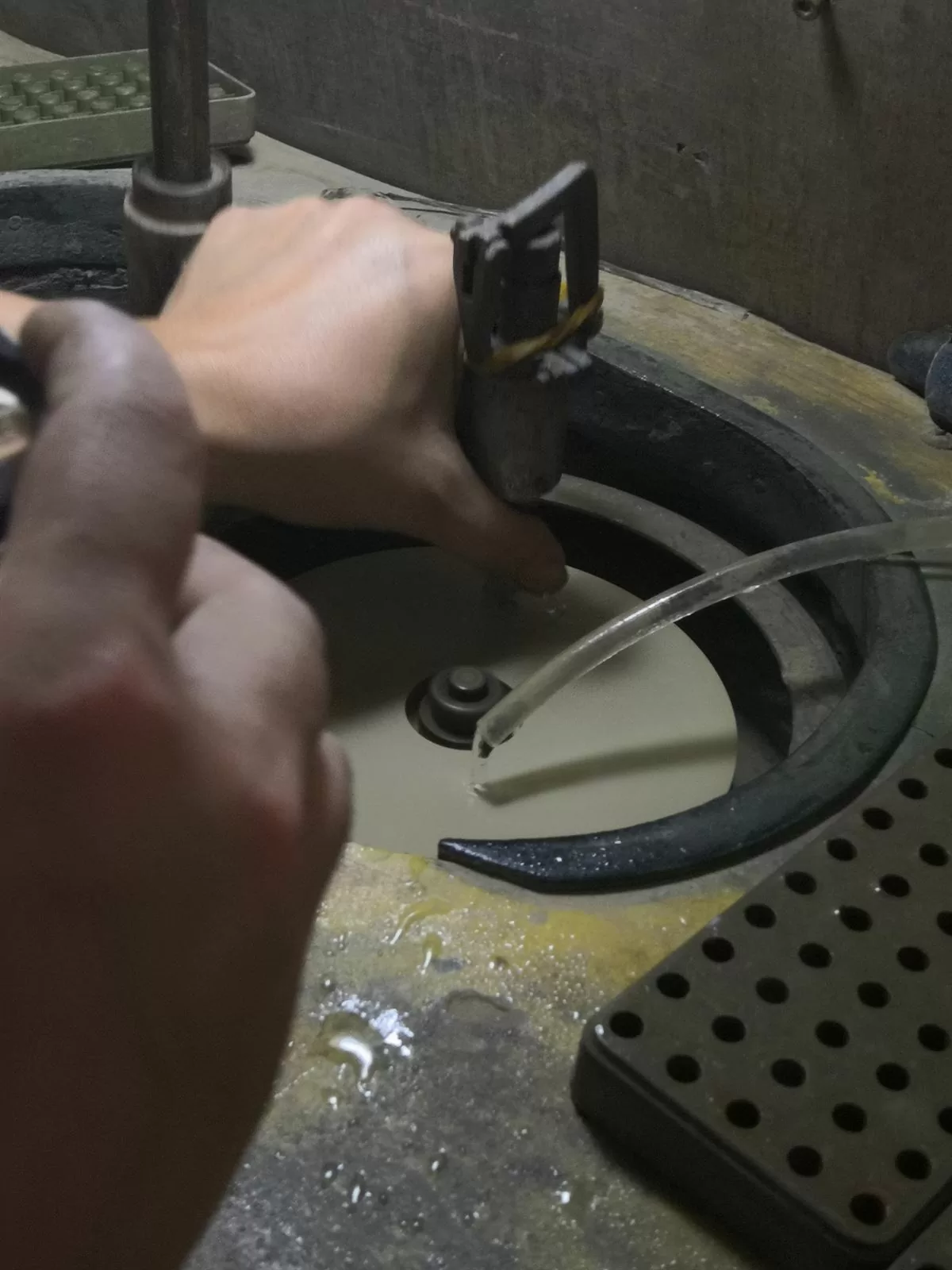
Gem-quality moissanite is silicon carbide (SiC), a compound of one silicon atom bonded to one carbon atom. Natural moissanite was first identified by French chemist Henri Moissan in 1893 in meteorite fragments from Diablo Canyon, Arizona. Those natural crystals are vanishingly rare—most are microscopic and kept in museum collections. Every commercial moissanite stone sold today is laboratory-grown, produced in a high-temperature chamber by a modified Lely or temperature-gradient solution growth process that pulls a single-crystal boule from a silicon carbide melt over roughly two weeks.
For a reseller, that means moissanite is not “fake diamond”. It is its own mineral species, graded on its own optical terms, and the FTC requires it to be sold under its own name rather than as a substitute. You can read the full mineral record on Wikipedia on moissanite.
The numbers that drive the sparkle
Three measurements matter when a customer leans in to compare a moissanite side-by-side with a diamond, and every one of them is a selling point you can write on a card:
- Refractive index (RI): moissanite reads 2.65–2.69, versus diamond at 2.42. Higher RI means the stone bends light more sharply as it enters, producing sharper internal contrast between bright and dark facets.
- Dispersion (fire): moissanite scores 0.104 on the dispersion scale, against diamond at 0.044. That is roughly 2.2× the spectral fire—the rainbow flashes customers notice first under spotlights.
- Mohs hardness: 9.25, sitting between sapphire/ruby at 9 and diamond at 10. It is the second-hardest jewelry stone commonly set in rings, which means a daily-wear ring will not scratch in a pocket.
The trade-off is double refraction. Because SiC is anisotropic, light entering the stone splits into two rays. Look through the table of a well-cut moissanite and you will see faint doubling of the back pavilion facets. That doubling is a useful identification cue and the reason cutters orient the rough carefully. The GIA 4Cs framework still applies to cut, color, clarity and carat weight, even though the stone itself is not diamond—which is why a “3EX D-color VVS” moissanite is a meaningful grade, not a marketing phrase.
Why the trade shifted to moissanite
Industrial silicon carbide was a standard abrasive through the 20th century, used in grinding wheels and sandpaper. Gem-grade moissanite entered consumer jewelry in 1998, and by the mid-2010s Chinese cutting factories had scaled production enough to push wholesale prices for a 1-carat-equivalent D-color round into the $5–$15 range. For a reseller buying 100+ pieces, that price point opens a retail tier that diamond and even lab-grown diamonds cannot reach. The customer who walks in expecting a $300 solitaire can leave with a real, 9.25-hardness stone instead of a cubic zirconia fashion piece.
What to tell your buyer
When a customer asks “is this real?”, the honest answer is: yes, it is real moissanite—silicon carbide, lab-grown, Mohs 9.25, 2.2× the fire of diamond. It is not diamond, and it is not cubic zirconia. If they want to verify the stone themselves, explain the diamond tester result and walk them through the certificate story in our GRA guide. Position the stone as a designed product with its own optics, not as a cheaper imitation.
Frequently asked questions
Is moissanite a real gemstone?
Yes. It is silicon carbide with a defined mineral species, measured hardness, and graded optics. The FTC treats it as a separate product that must be disclosed by name, not as a substitute for diamond.
Why does moissanite look more rainbow than diamond?
Because its dispersion (0.104) is more than double diamond’s (0.044). That is a structural property of SiC, not a flaw in the cut.
Is all moissanite lab-grown?
Commercially, yes. Natural moissanite exists but is too rare and too small to cut for jewelry.
What size should I stock first?
Most resellers move 6.5 mm (1-carat equivalent) fastest, followed by 5 mm and 8 mm. See our MOQ and pricing tiers article for stocking math.
For a reseller, the practical takeaway is that moissanite sells on optics, not on rarity. When you write a product description, lead with the dispersion number and the Mohs rating, then back it up with the GRA card. Customers who understand the 2.2× fire comparison will pay the retail ticket without asking whether the stone is “real diamond”; customers who do not understand it will keep comparing against diamond pricing, which is a race to the bottom. Train your sales floor to open with the optics, not with the price.
Wholesale CTA: HOLYCOME ships D-color, VVS, 3EX-cut moissanite loose stones with GRA certificates from 10 pces per SKU. Request a sample parcel or our current price list to compare against your existing supplier.