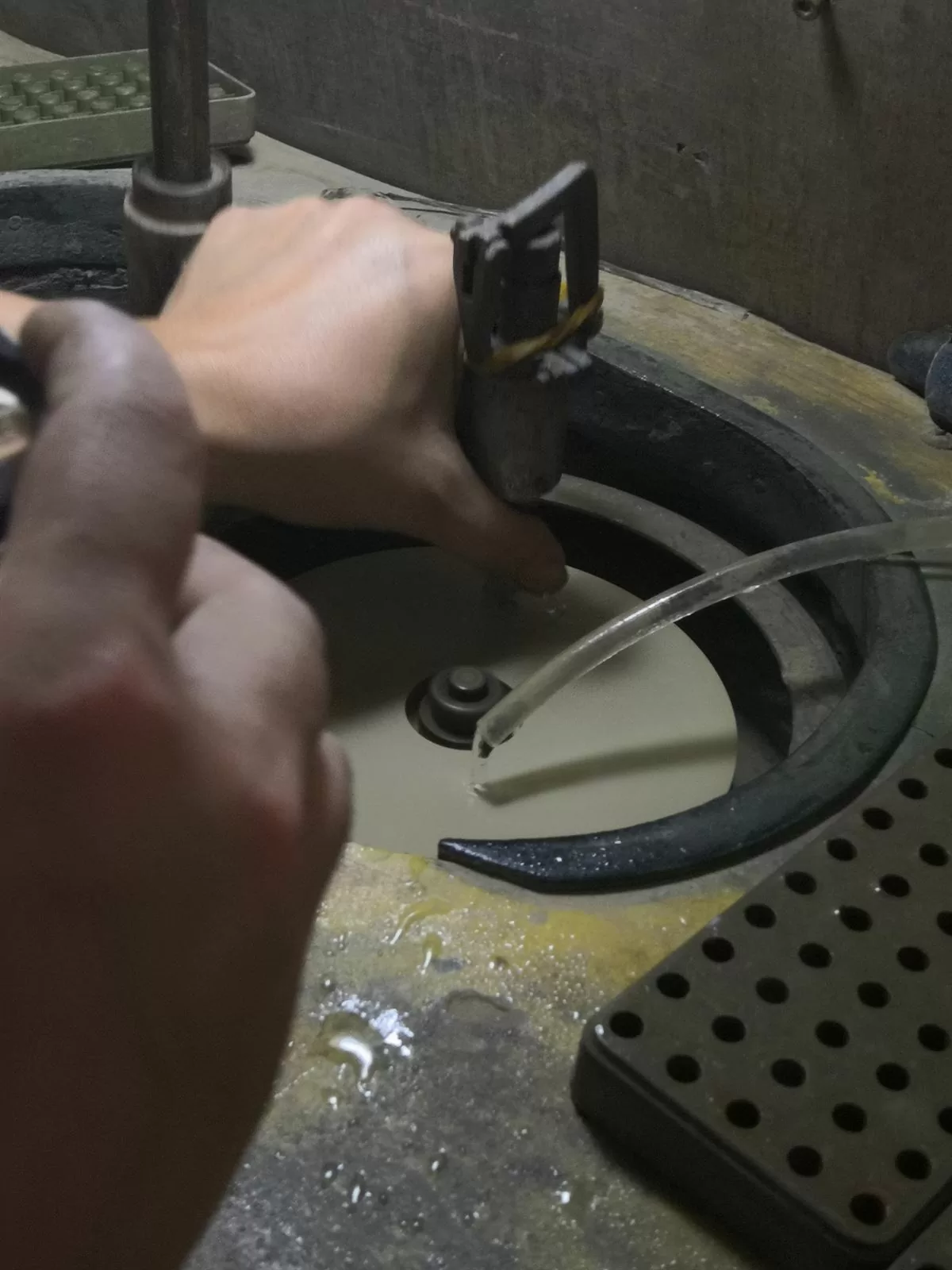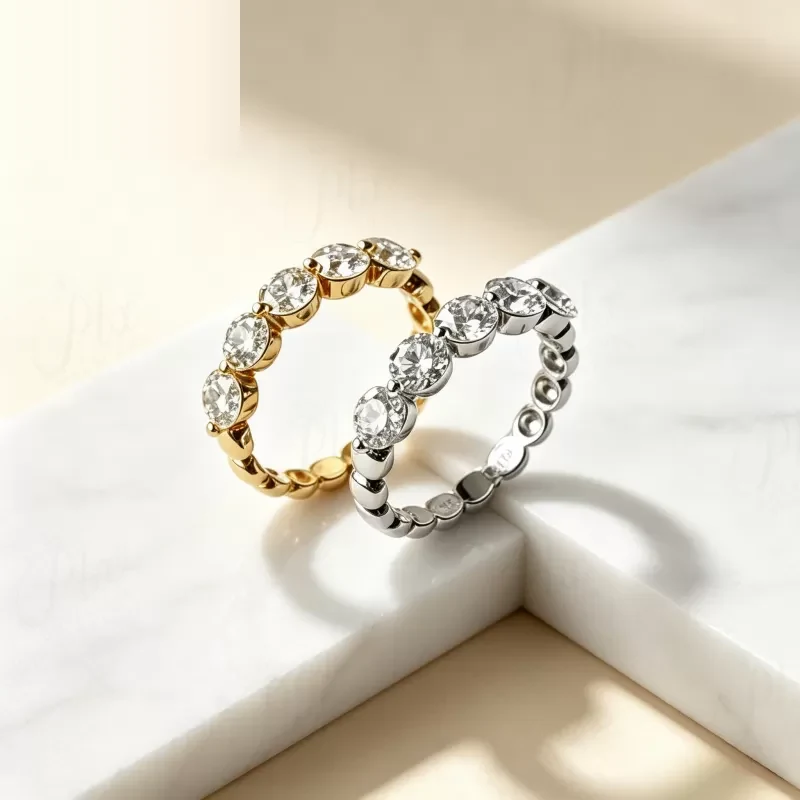
A reseller in Toronto sent us a side-by-side photo last quarter: two 6.5mm round moissanite solitaires, both listed by their supplier as "D-color," both carrying a GRA card, and one was visibly grayer than the other under the same north-window light. He wanted to know which supplier he should drop. The answer was not that one supplier lied - it is that "D-color moissanite" is not a standardized grade the way GIA grades a diamond. Two factories using the same label can run three points of color difference between batches, and that gap is what your customer sees on a 1-carat equivalent stone.
Why moissanite grades are not GIA grades
GIA grades diamonds against master stones under controlled light, and the 4Cs framework is what most buyers already understand. GIA's 4Cs page describes color as a comparison to a set of master diamonds, which is not how moissanite is graded. Moissanite is lab-grown silicon carbide, and the trade has borrowed diamond color letters for convenience. A "D-color" moissanite from one cutting house means "no visible tint to our eye"; from another it means "closest to white in our batch." There is no independent master-stone set being applied, which is why the same letter can drift between factories and between production runs.
What actually moves between batches
Three things change batch to batch: the green-gray undertone, the cut angles that produce fire, and the internal clarity of the stone. On color, the difference between a true near-colorless moissanite and a slightly gray one is most visible face-up on a white setting, not loose on a tray. On cut, two stones both marked "excellent" can carry different table percentages and crown angles, which changes how much rainbow fire shows in direct light. On clarity, moissanite almost never has diamond-like feathers, but lower-tier stones can carry a hazy internal cloud that mutes the sparkle - visible only when you tilt the stone toward a 60W bulb. IGI reports on lab-grown stones using the same color and clarity language, which is why buyers confuse the two; moissanite does not get the same disciplined grading discipline.
How to check tier differences before reordering
Pull three stones from a fresh parcel and compare them against a stone you already know - one that photographed well and drew no color complaints. Lay all three on a white strip of paper under north daylight, side by side. If the new stones read more than a half-step warmer or grayer than your known-good sample, the batch has shifted. Photograph the trio on your own lighting before you list them; if the hero shot suddenly looks off, that is the batch change showing up on camera, and it ties directly into the product-page photography workflow you already run. Ask the supplier for a cut-sheet with table percent, crown angle and pavilion angle, not just the letter grade. A factory that can hand you the angles is one that controls its cut; a factory that only ships a GRA card is guessing at the label.
What this means for your catalog
If you run a store that promises "D-color moissanite" in the title, a batch shift is a returns problem, not a quality problem. Keep a reference stone from your best-selling SKU in a labeled envelope and re-check every incoming batch against it. When you understand how the grade labels stack up against moissanite color grade ranges, you stop treating the letter as a guarantee and start treating it as a starting point. Reorder the same SKU from the same cutting house rather than shopping the label across suppliers - that is the single biggest lever for batch consistency. We send resellers a cut sheet with every loose stone order, so the angles you spec are the angles you receive.
The takeaway: moissanite versus moissanite is a real comparison, and the letter on the card is the start of it, not the end. Build a reference stone, check every batch, and write your listing around what your own photos show rather than what the card says. That is how you stop losing customers to a tint they were never promised.
Is "D-color moissanite" as consistent as a D diamond?
No. Diamond color is graded against master stones; moissanite color is a factory self-assessment. Expect some batch-to-batch drift even from the same supplier.
How much color difference is normal between batches?
Within one to two subjective color steps is typical. More than that on a known-good reference is a batch shift worth pushing back on.
Does a GRA card guarantee the grade?
The GRA card describes the stone in front of the inspector, but the grading language is not independently master-set the way diamond grading is. Treat it as a reference, not a guarantee.
Should I buy all my moissanite from one supplier?
For consistency on hero SKUs, yes. Use one cutting house for your best sellers and reserve second suppliers for backup sizes, so batch drift stays on the slow-moving tail.
HOLYCOME ships loose moissanite with a cut-sheet and a sample reference stone on first orders, so your batch-to-batch checks start from a known baseline. Request a sample set, run your own side-by-side, then lock the SKUs that photograph true.
Frequently Asked Questions
Is moissanite a good diamond alternative for retail buyers?
Yes for price-sensitive customers who want brilliance and hardness. Moissanite ranks 9.25 on the Mohs scale, holds up to daily wear and costs a fraction of a natural diamond of the same size, so it resells fast in bridal and fashion lines.
What is the minimum order for wholesale moissanite?
MOQ starts at 50 pieces per design for stock items. Custom cuts and private-label settings usually start at 100–300 pieces depending on the mold.
Do you provide certificates with moissanite stones?
Yes. Every parcel ships with GRA or IGI documentation listing carat weight, color grade and cut. We recommend passing the certificate to your end customer for trust.
How long does sample and bulk production take?
Samples ship in 3–5 days. Bulk runs take 15–20 days under 500 pieces, and 25–30 days for custom work.